Cubilete Hill · Silao, Guanajuato
National Shrine of Christ the King
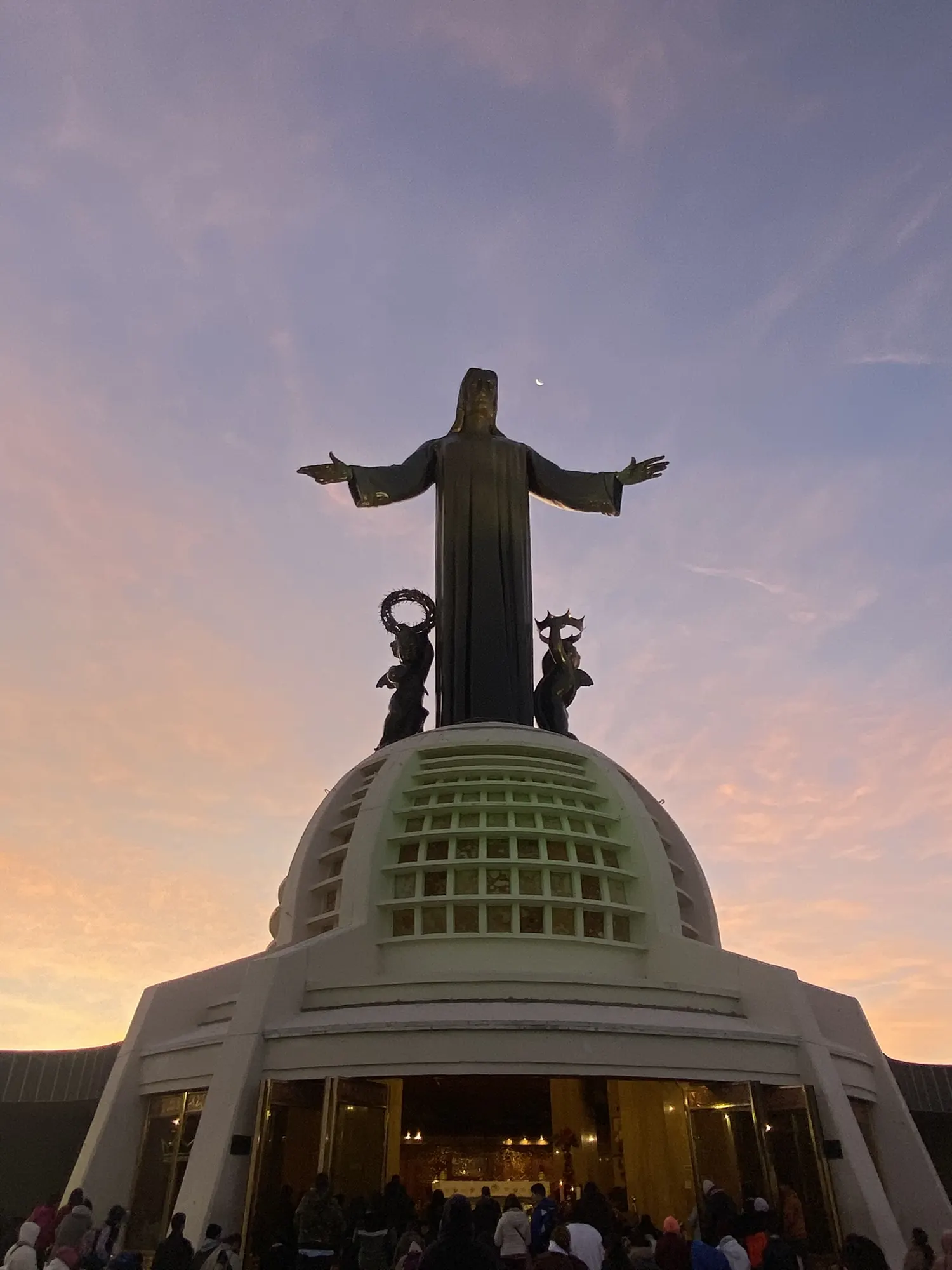
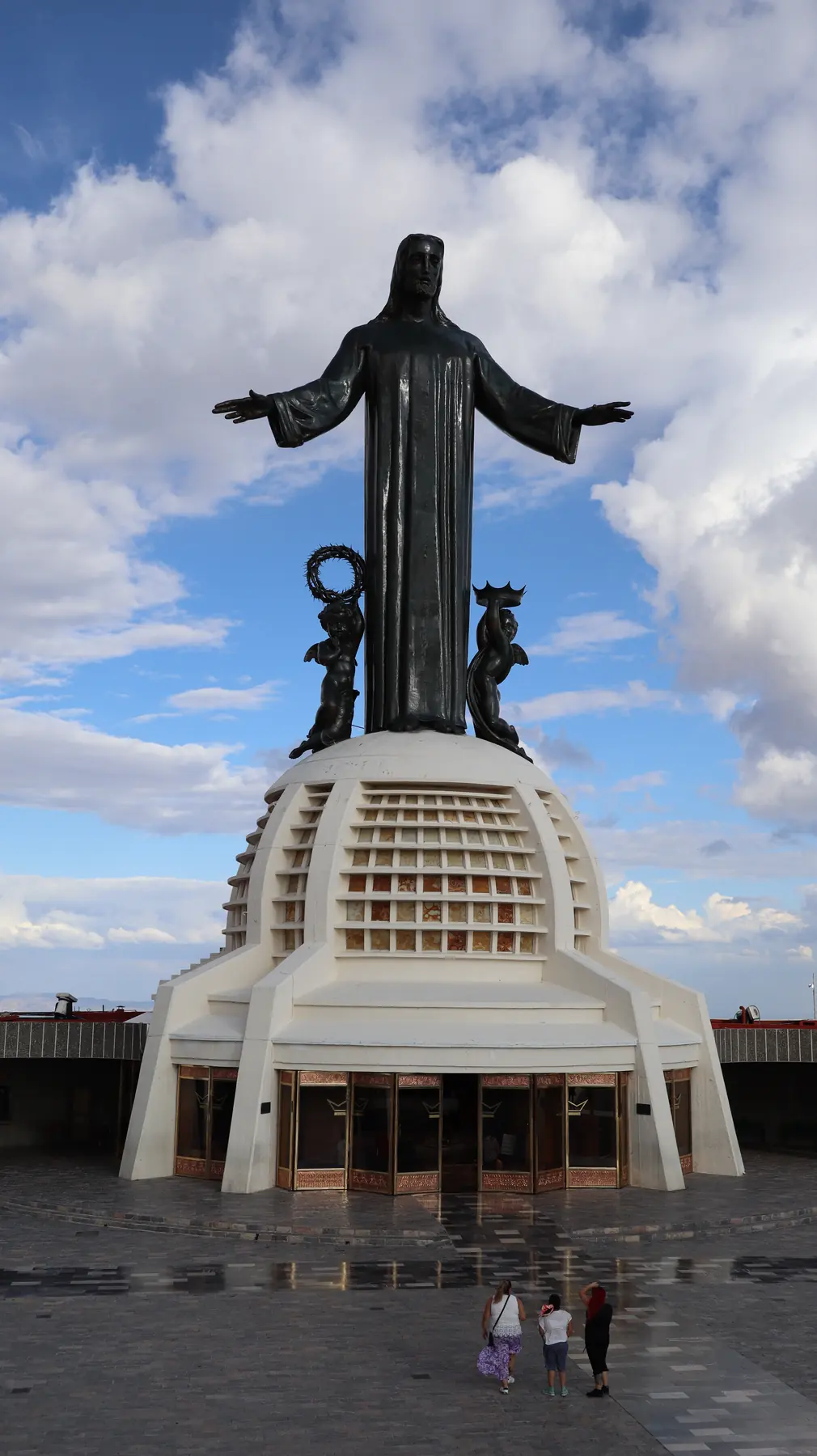
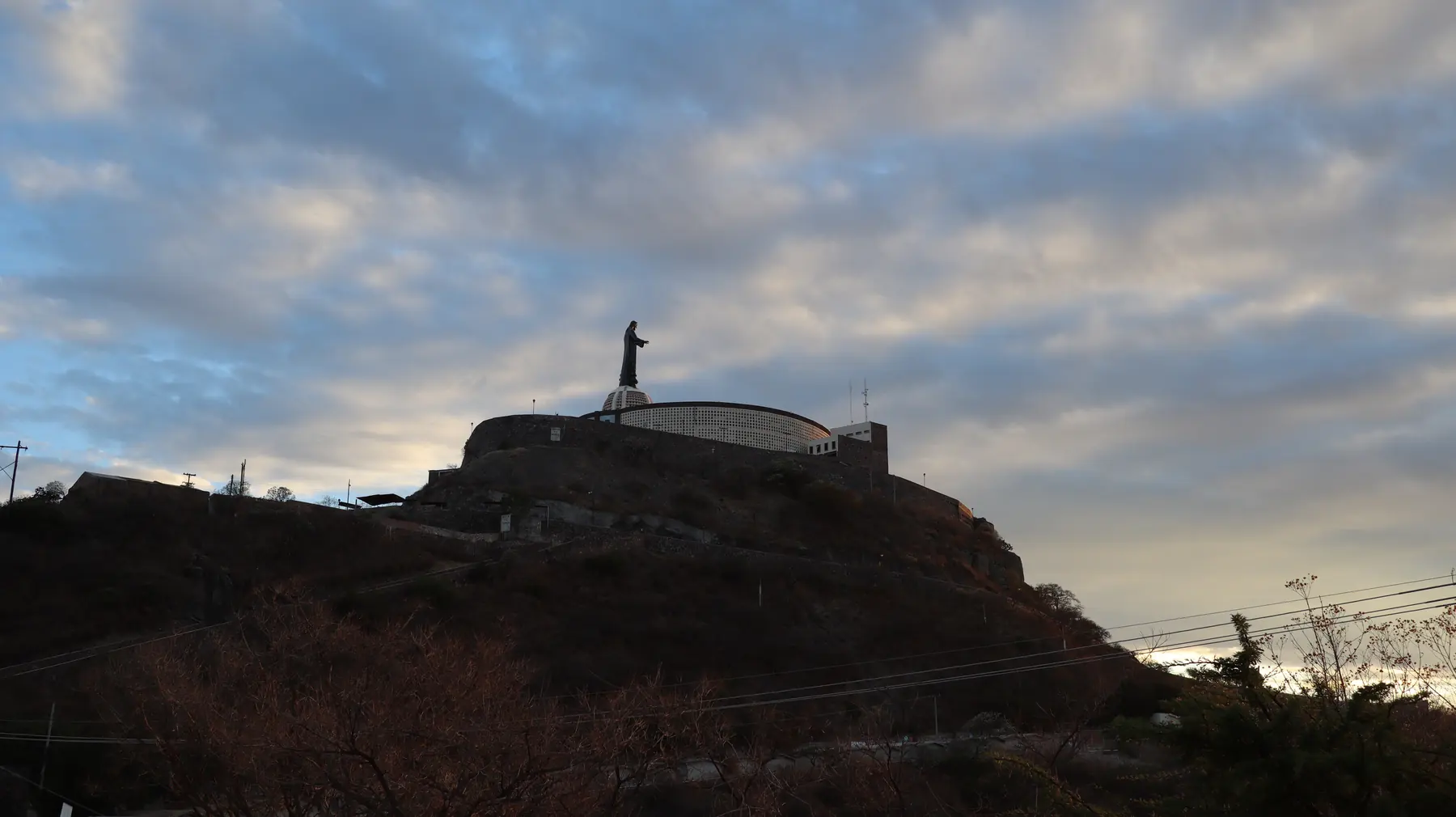
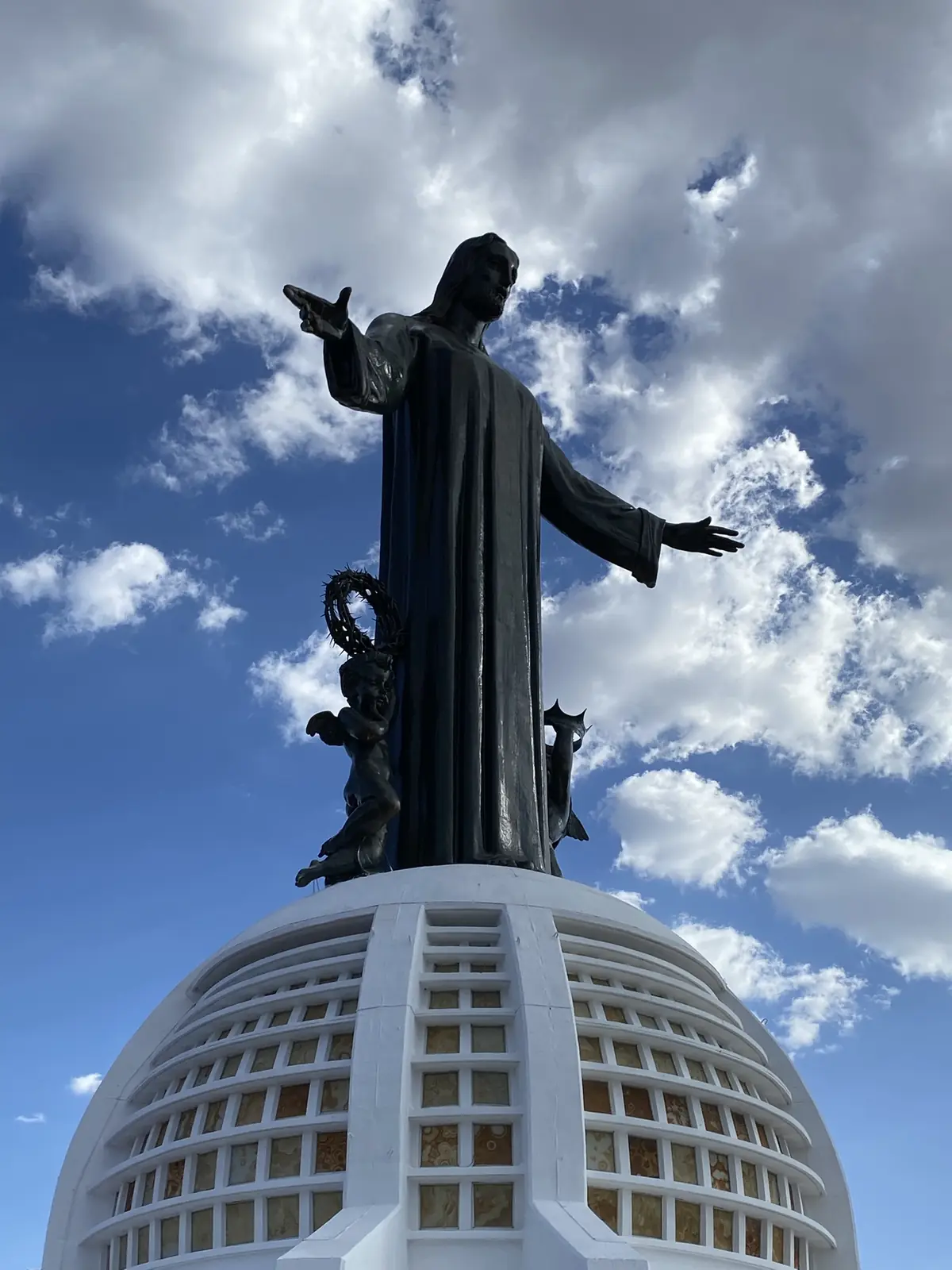
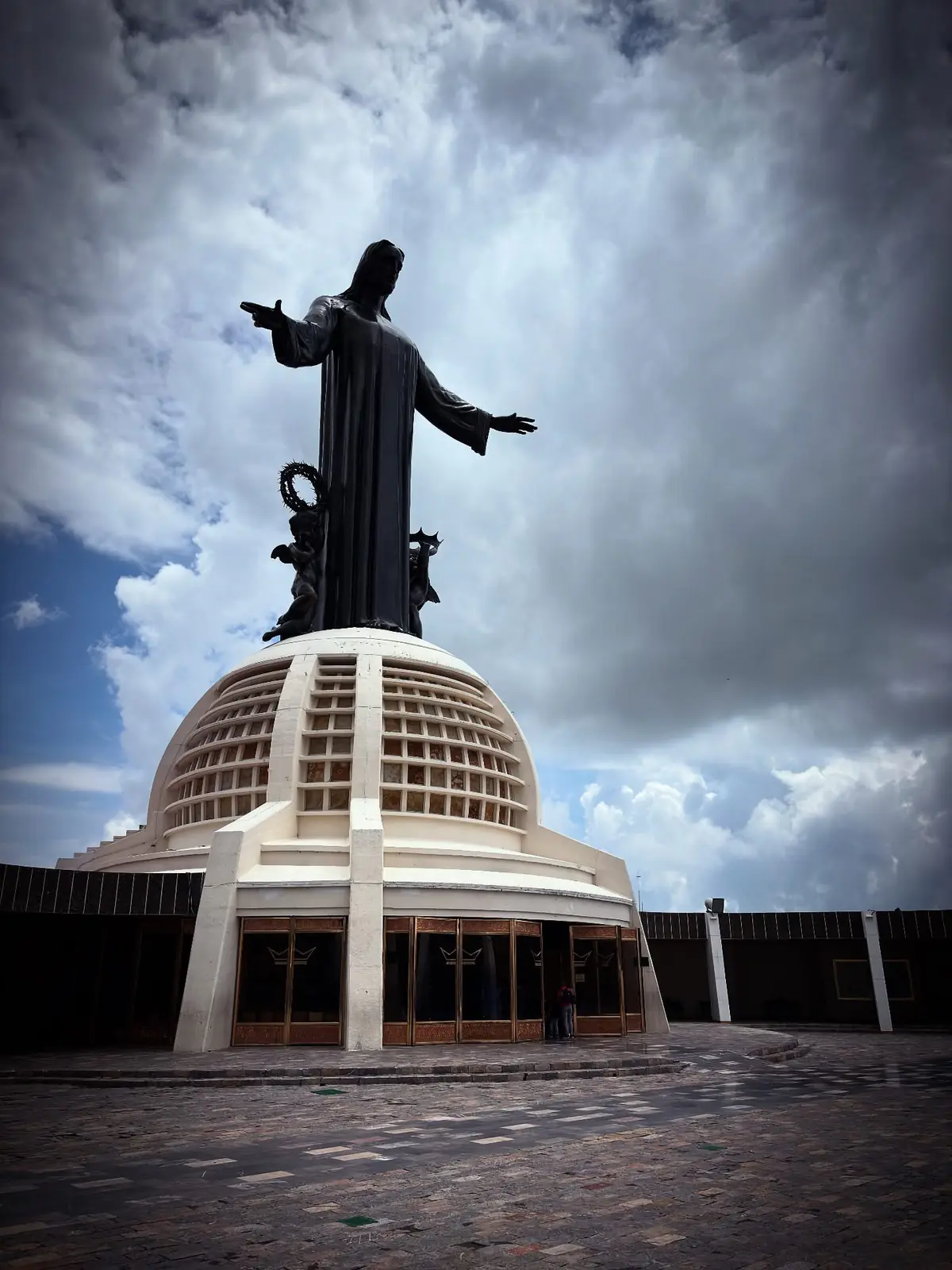
The Christ of the Mountain stretches out His arms over Mexico from the summit of Cubilete Hill.
History
National Shrine of Christ the King
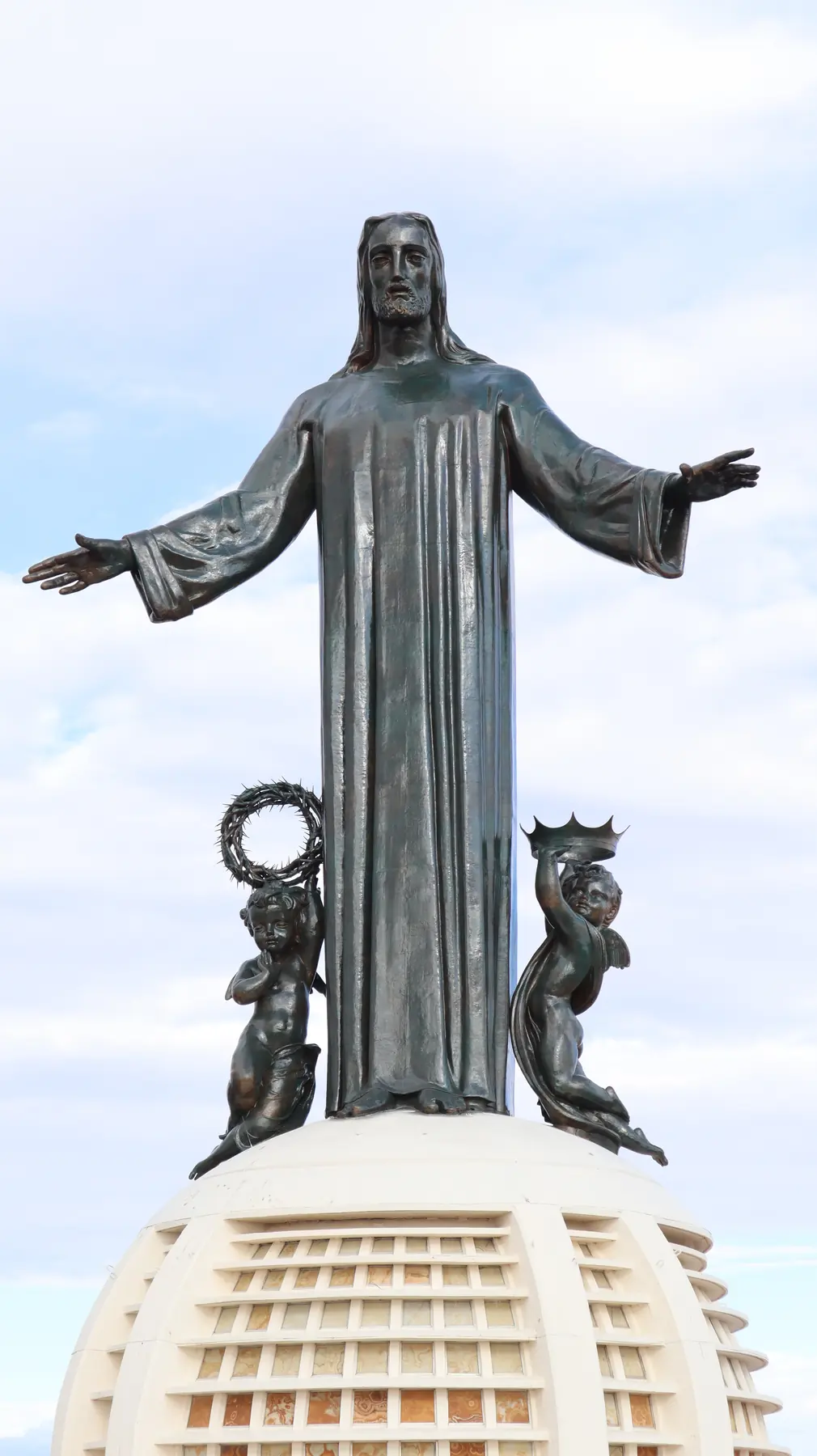
When we contemplate Christ the King on the summit of Cubilete Hill, we see a majestic image designed by the artist and sculptor Fidias Elizondo. And when we learn its story, we discover the remarkable perseverance of a longing that began with what is known as the Dream of Valverde.
In November 1919, from the church of the Lord of Forgiveness, the Most Reverend Emeterio Valverde Téllez, sixth Bishop of León, gazed at Cubilete Hill in the distance and felt in his heart the desire to celebrate the Mass of the Wheat Vigil on its summit. When he shared this wish, the idea reached Mr. Felipe Bravo, president of the Mexican Nocturnal Adoration in Silao, who proposed erecting a monument to the Sacred Heart of Jesus to commemorate that Mass. Construction of the first monument to the Sacred Heart of Jesus began on March 12, 1920.
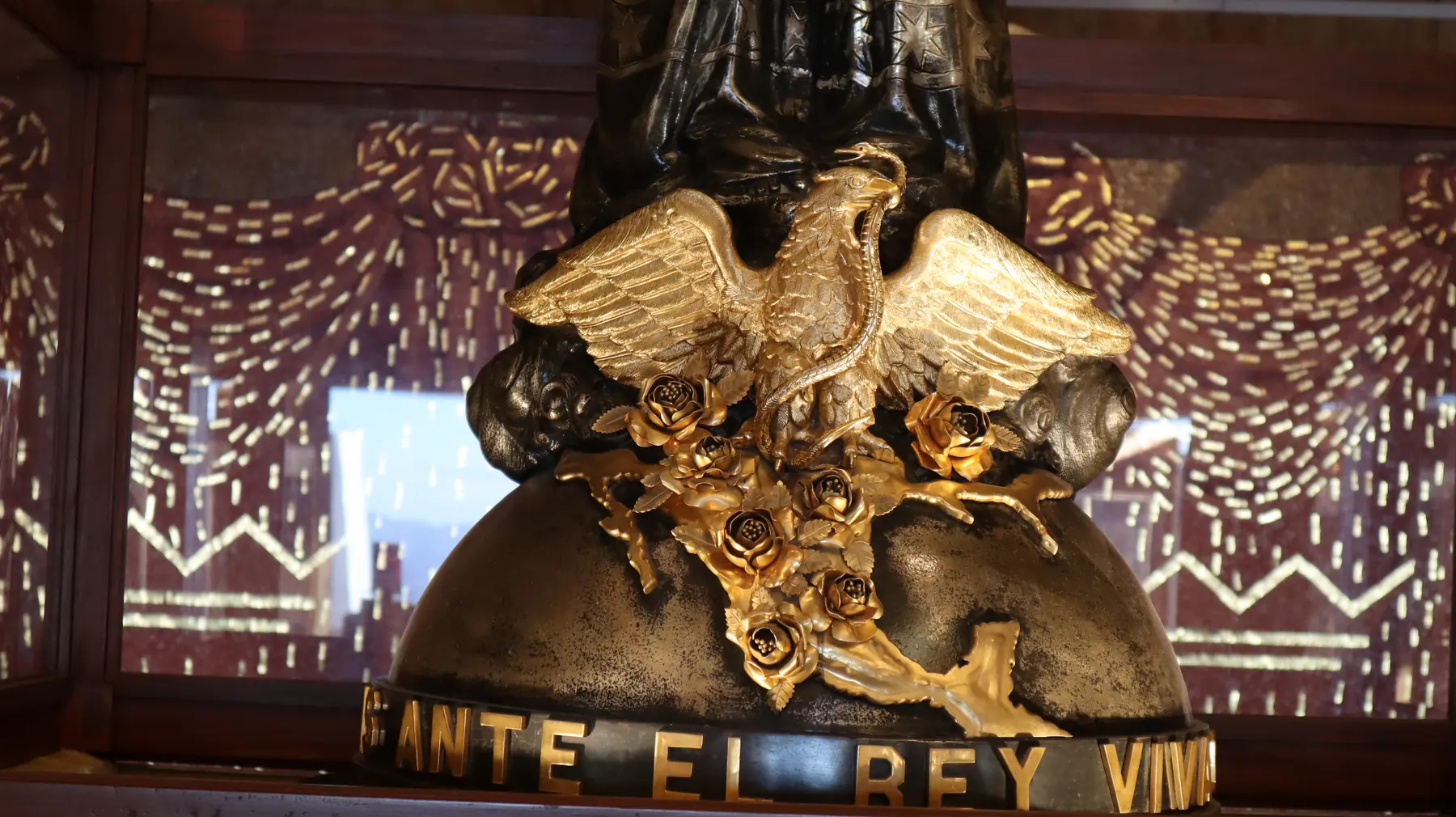
The first monument was carved in quarry stone by people from Silao. The statue measured 3 meters, and together with its pedestal and altars it reached 9 meters in height. It was blessed on April 11, 1920. Later, with the outbreak of the Cristero Resistance against the Calles Law and its prohibitions, and amid religious hatred, it was sacrilegiously dynamited on January 30, 1928. Only the head and the heart survived intact; both are displayed today in the Shrine Museum.
The second monument was meant to be a larger and more glorious place. Its first stone was laid on January 11, 1923, by the Apostolic Delegate, Archbishop Ernesto Filippi. The act was judged unconstitutional, the Apostolic Delegate was expelled from Mexico, and permission to build was denied.
The third monument had to be built in secret, in a side chapel of the Metropolitan Cathedral Basilica of León, in 1937. The architect of the chapel was Nicolás Mariscal and the sculptor of Christ the King was Alfonso Ponzanelli. For the first time the image was no longer the Sacred Heart but Christ the King: in 1925, with the encyclical Quas Primas, Pope Pius XI had established the annual feast of Jesus Christ, King of the Universe, and Mexico would be among the first nations to offer a monument to Christ as King. The chapel was consecrated by Bishop Emeterio Valverde Téllez on January 11, 1938.
A key figure for the fourth and fifth monuments was Fr. José Ascensión Betancourt, who built the fourth monument, known as the “Monument of the Clouds”, and blessed it himself on April 11, 1942. This priest later became the first chaplain of the National Votive Shrine of Christ the King of Peace.
The fifth and current monument was designed by the architect Nicolás Mariscal Piña. The project was approved by the Mexican Bishops’ Conference on November 1, 1943, and permission to build it was granted by the President of Mexico, Manuel Ávila Camacho.
On December 11, 1944, Bishop Valverde blessed and laid the first stone of the fifth monument. That same day he blessed the Expiatory Hermitage, built on the spot where the first monument had been dynamited, to ask forgiveness for that sacrilegious attack.
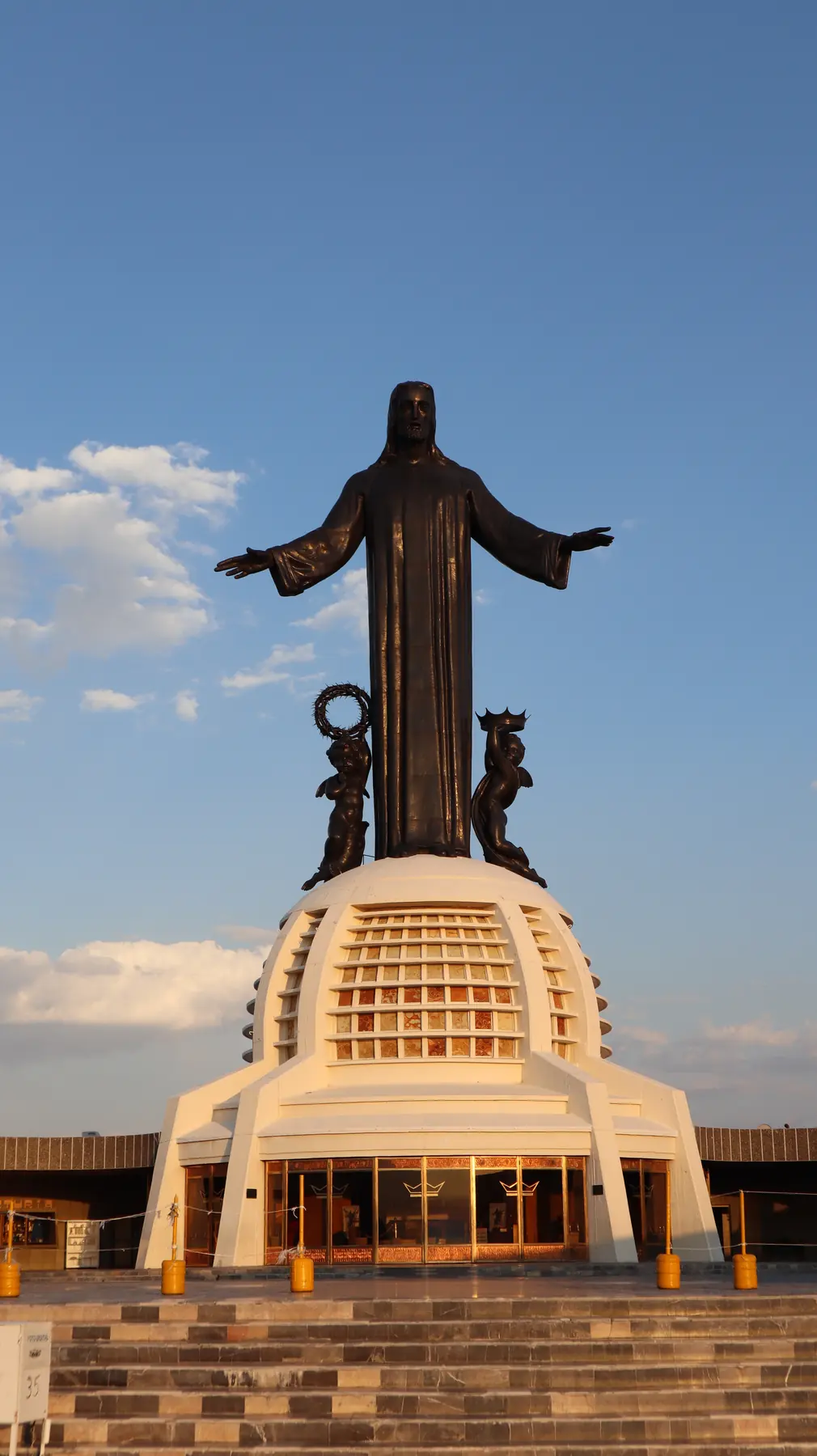
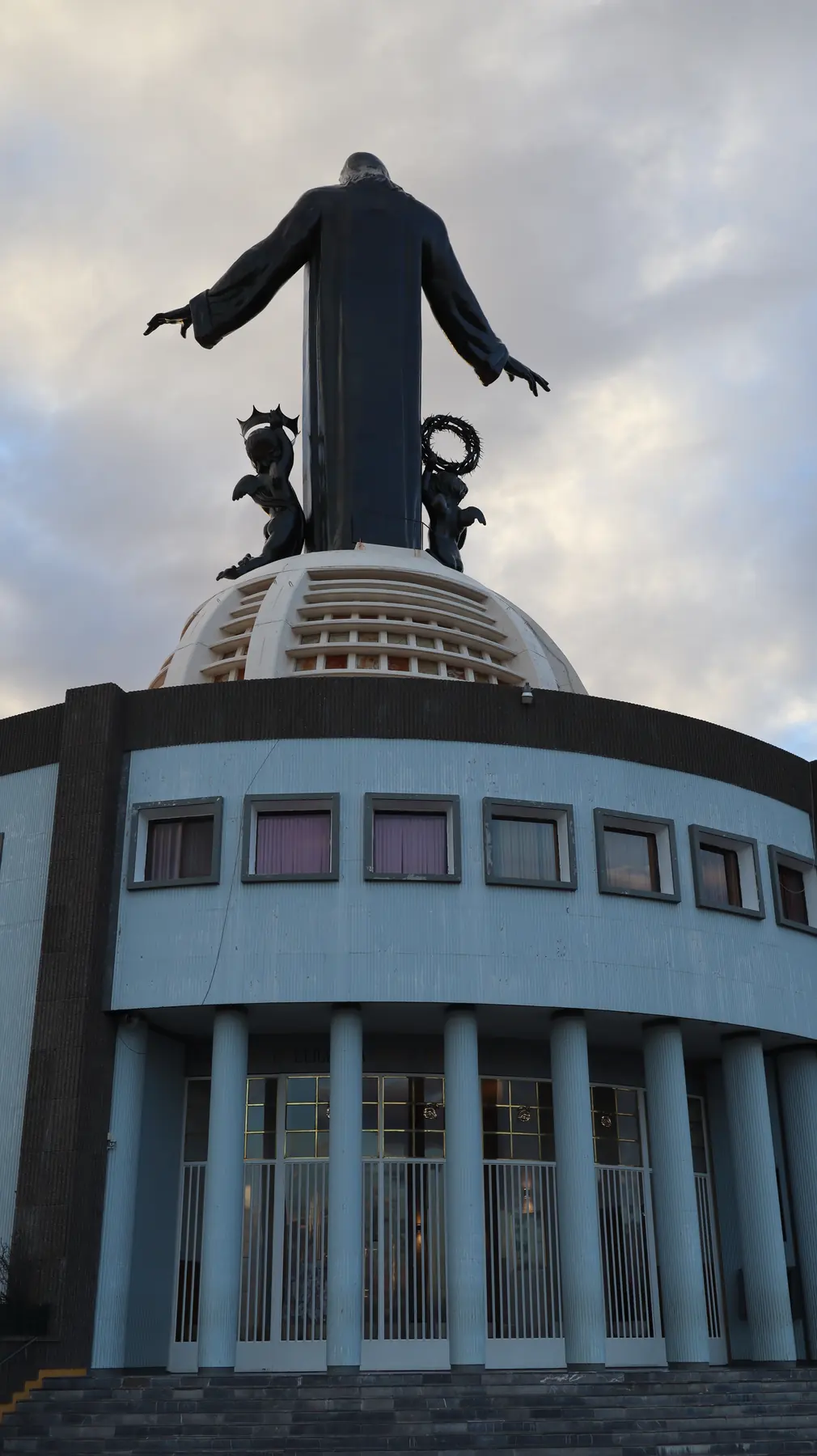
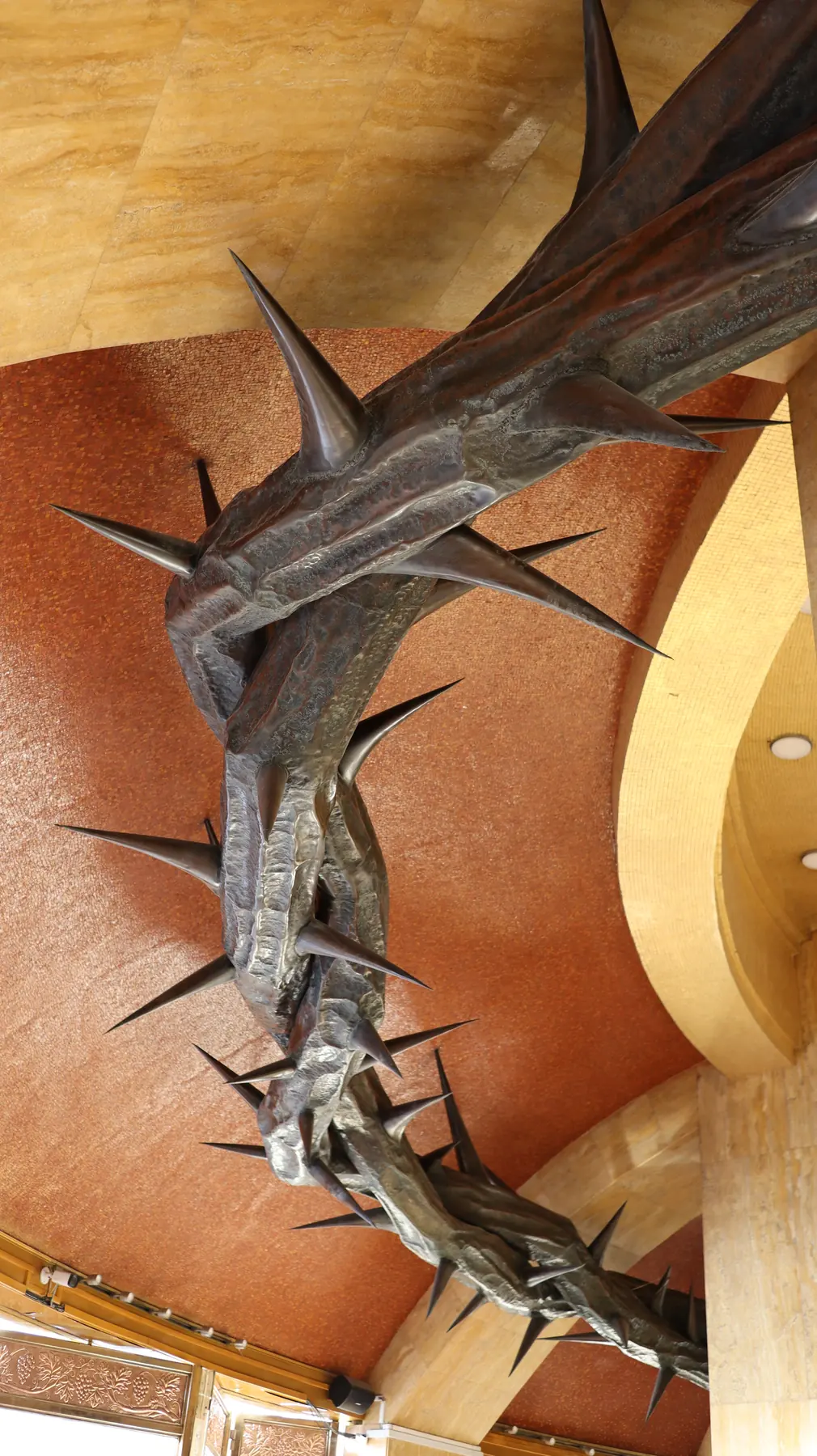
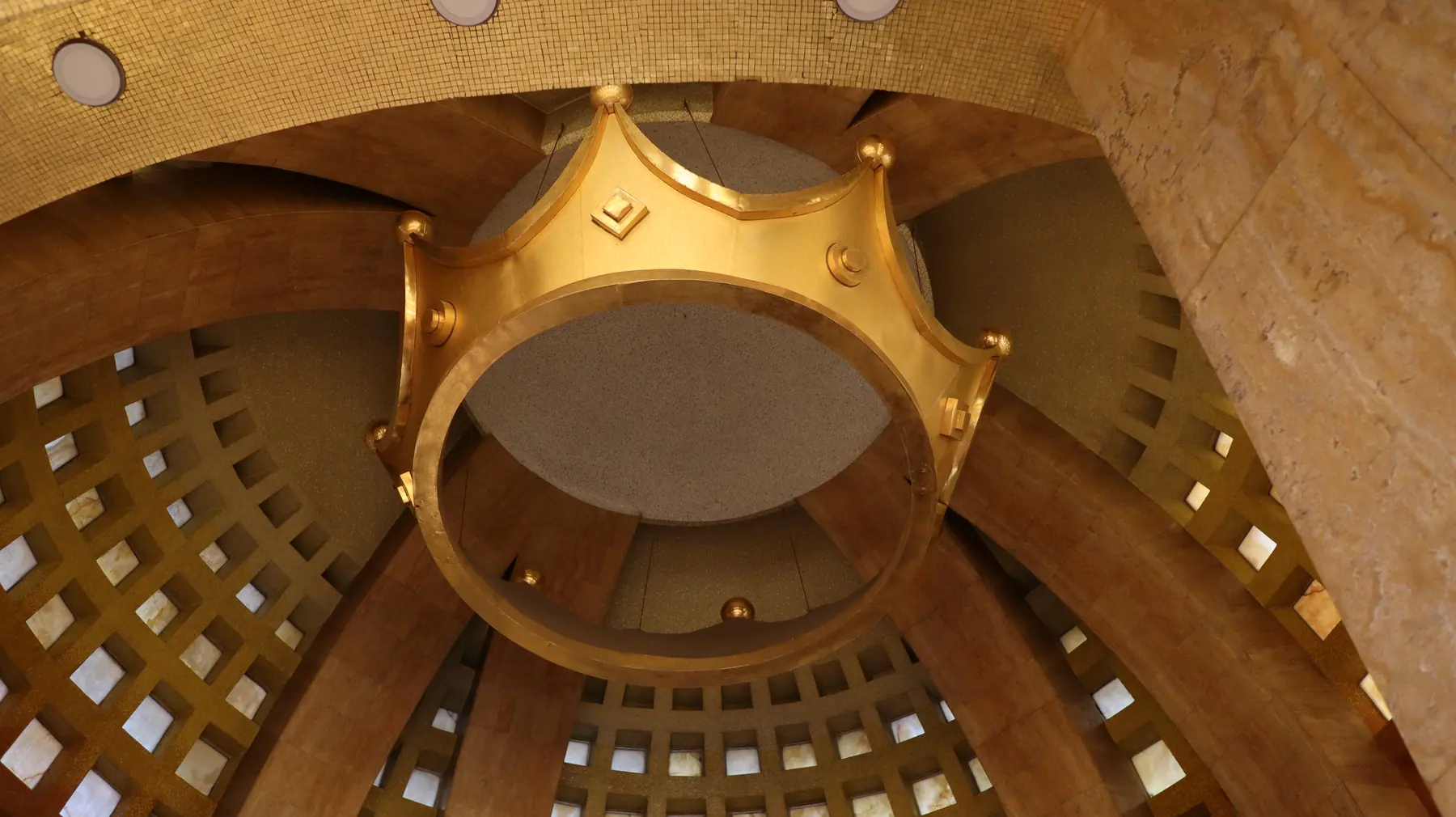
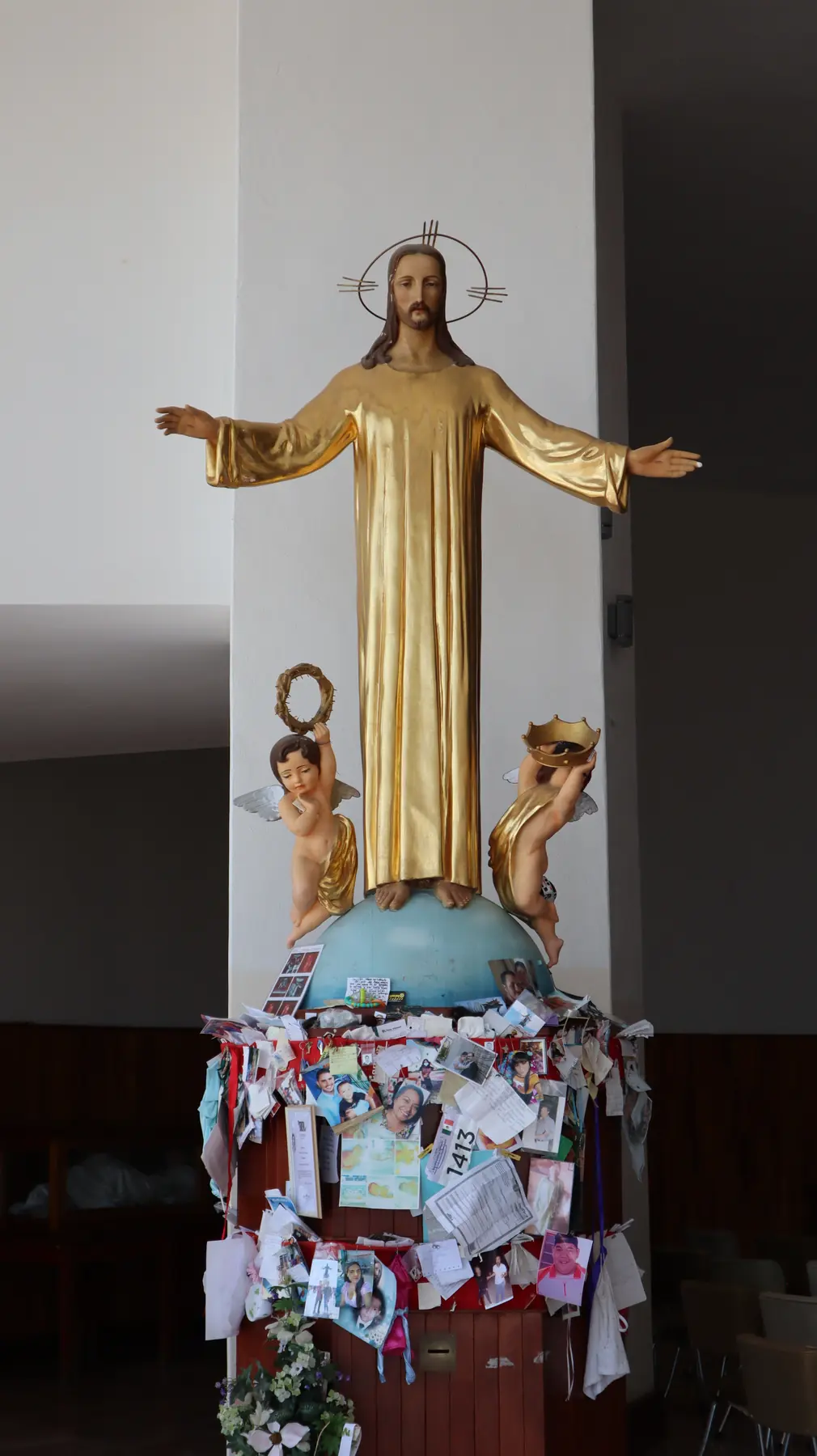
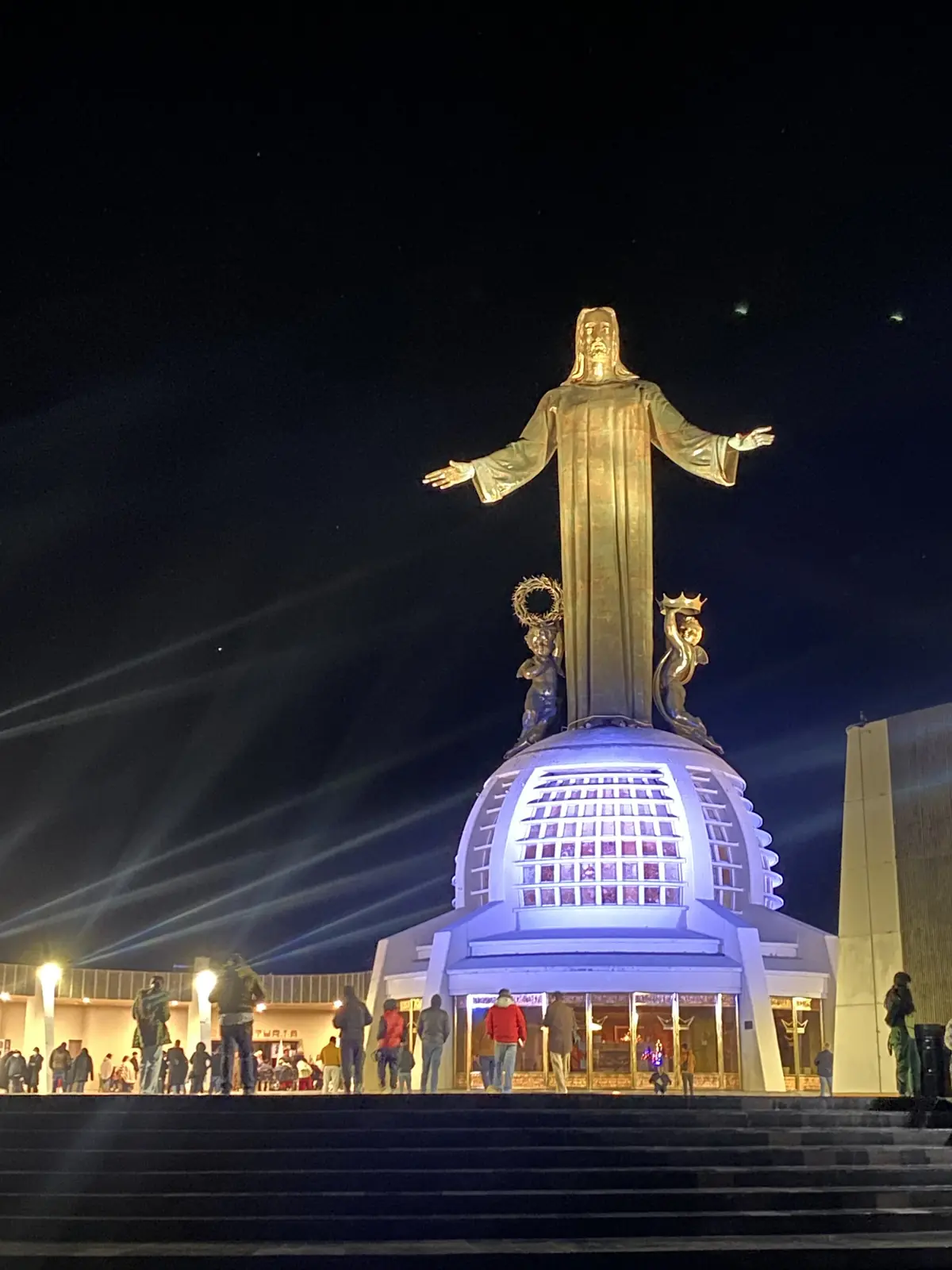
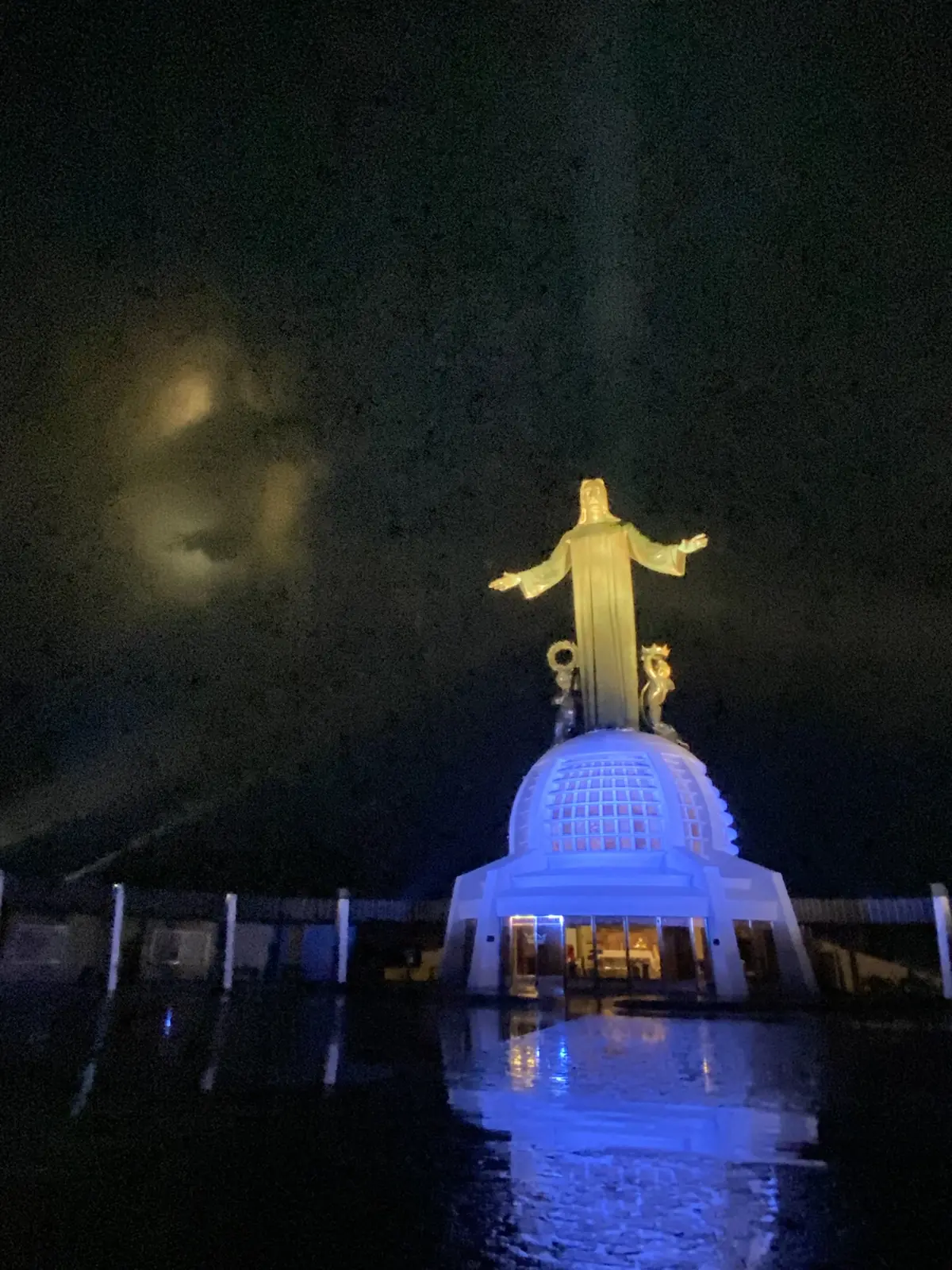
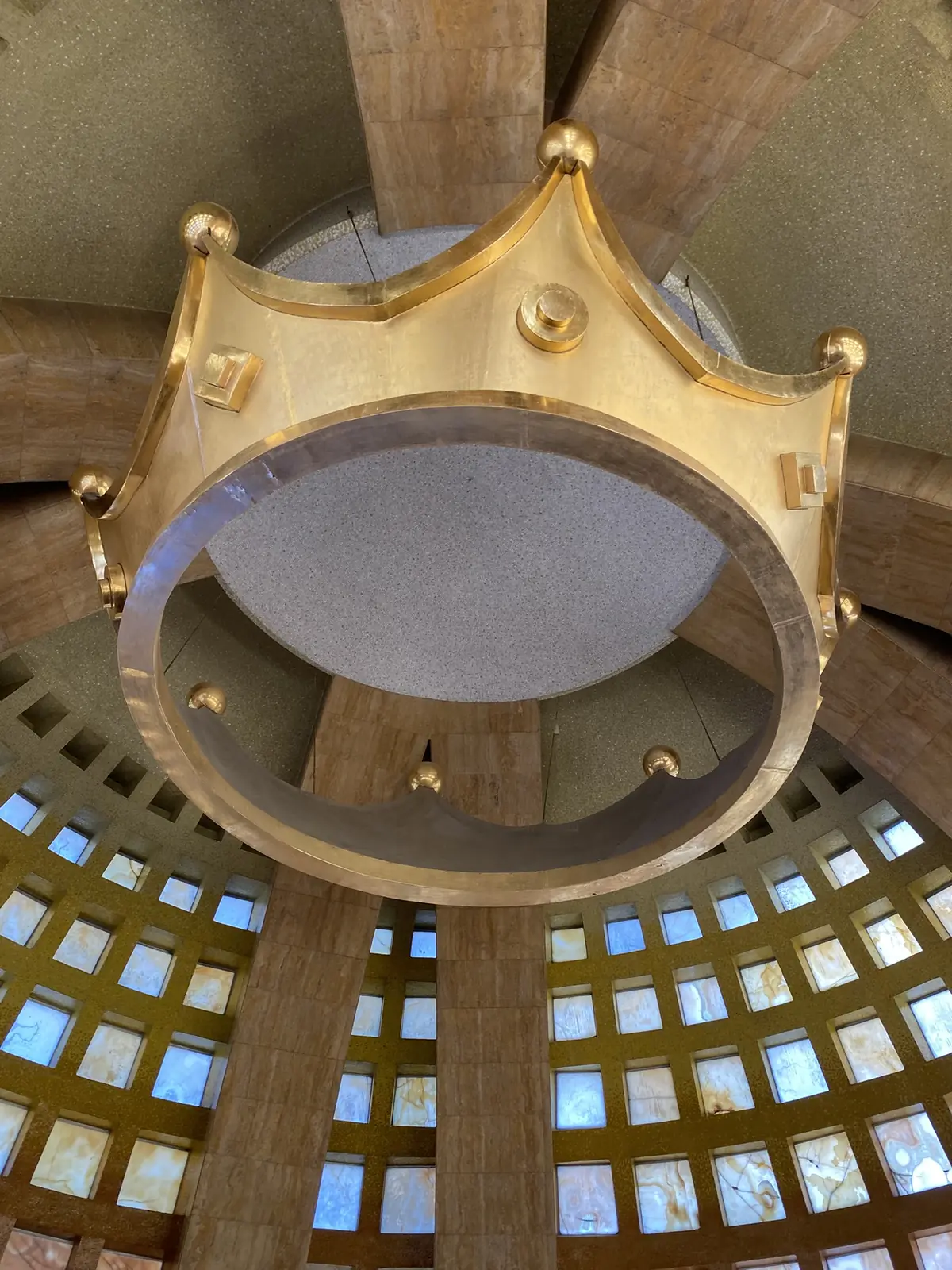
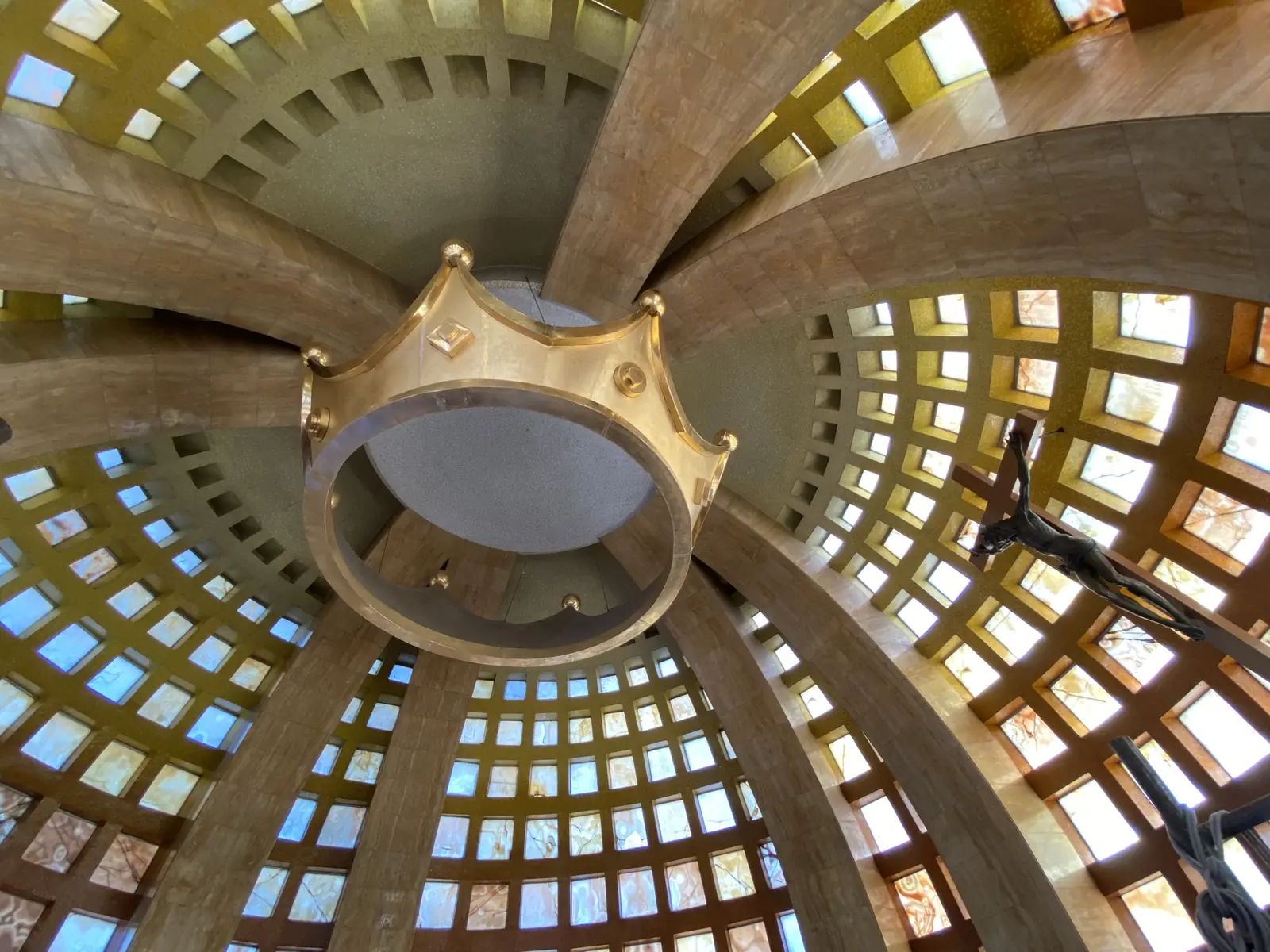
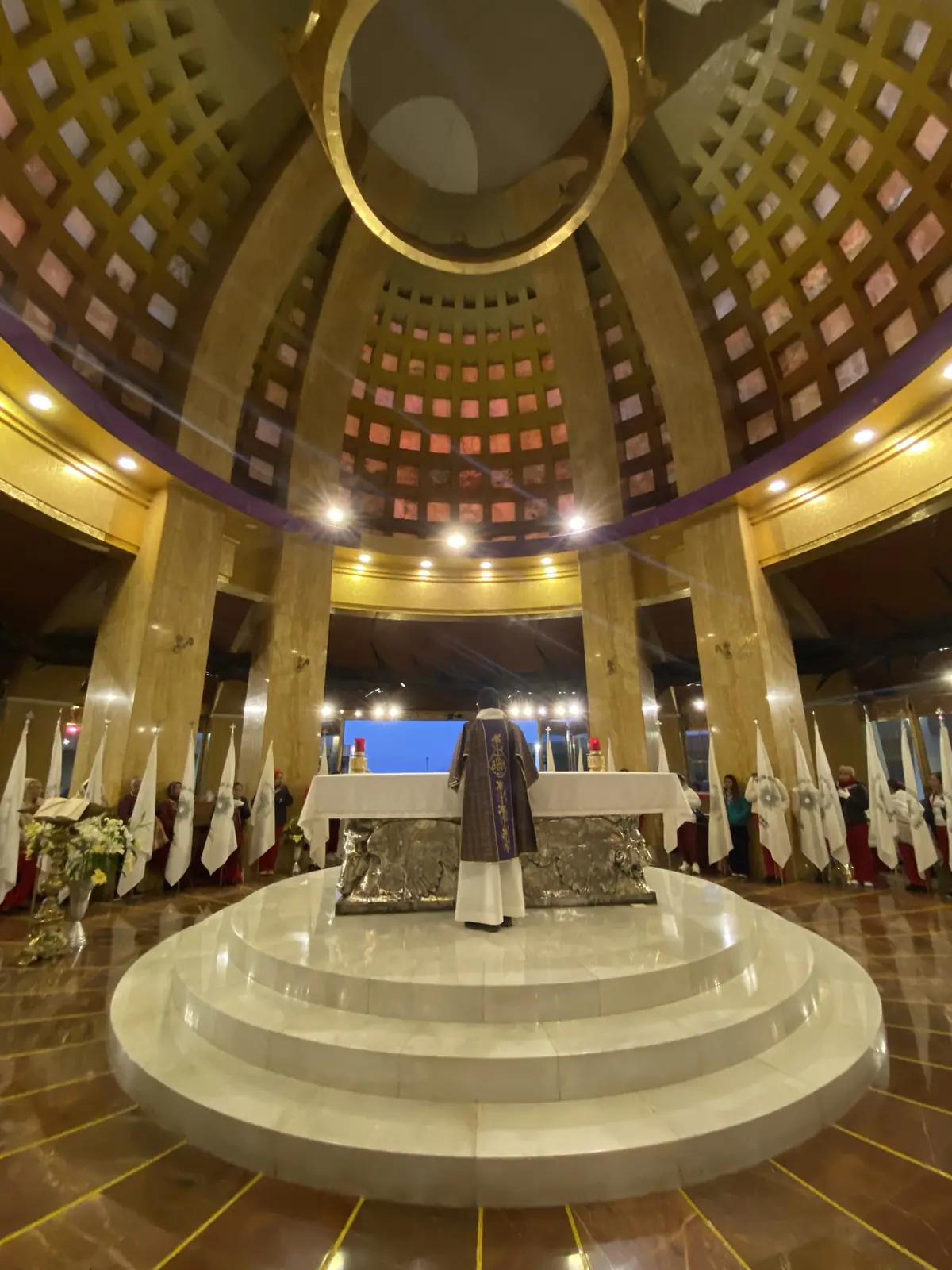
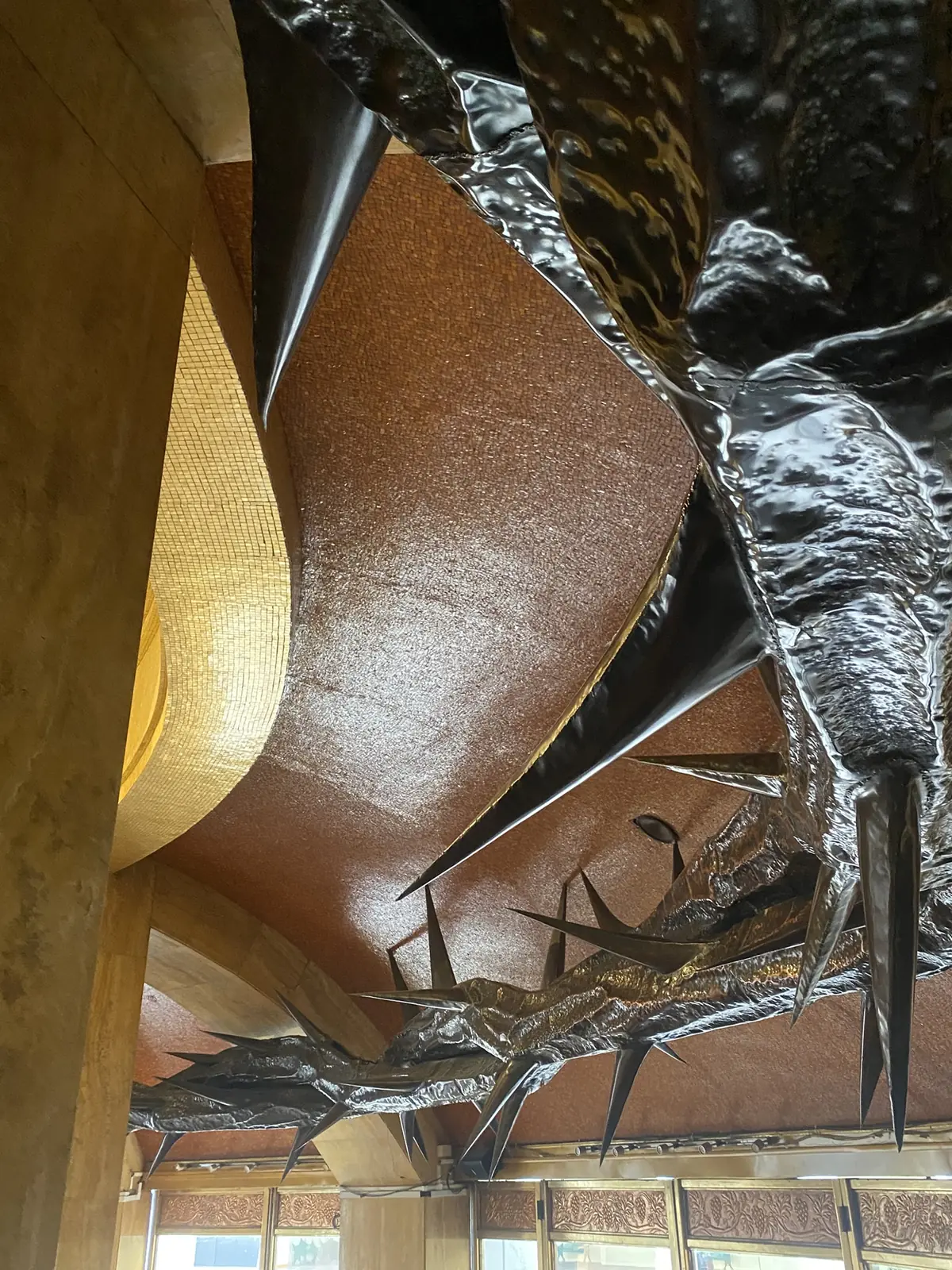
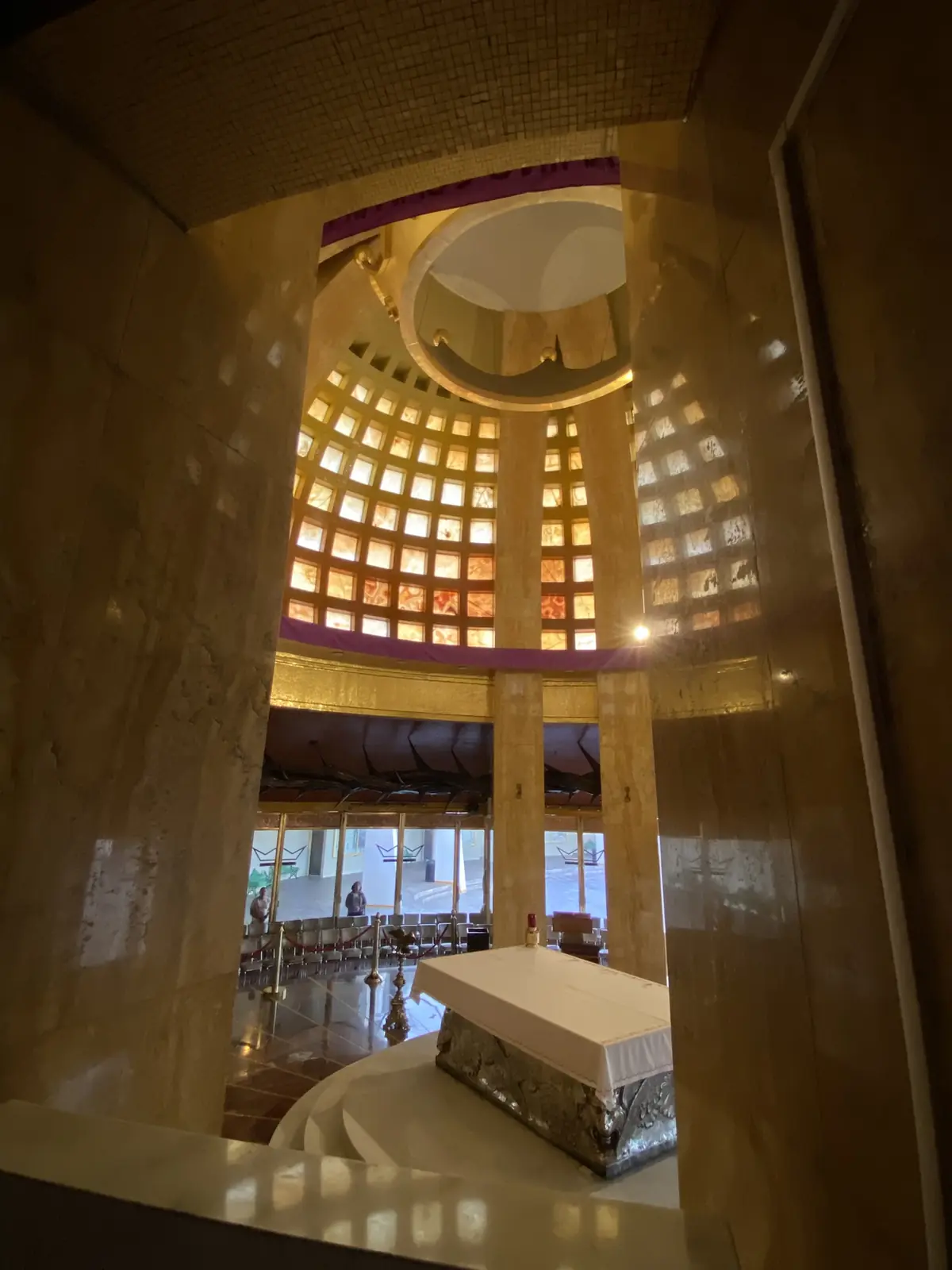
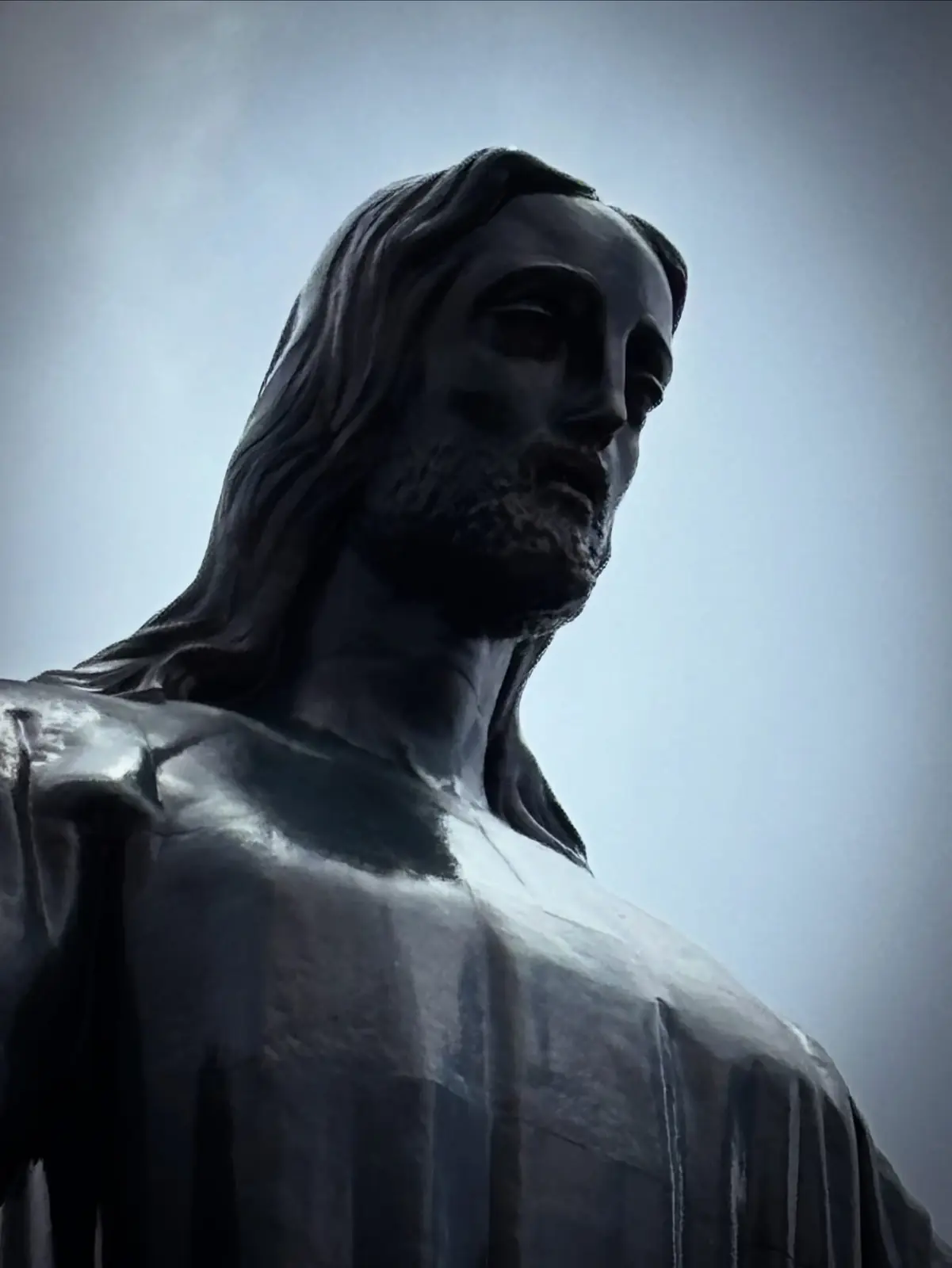
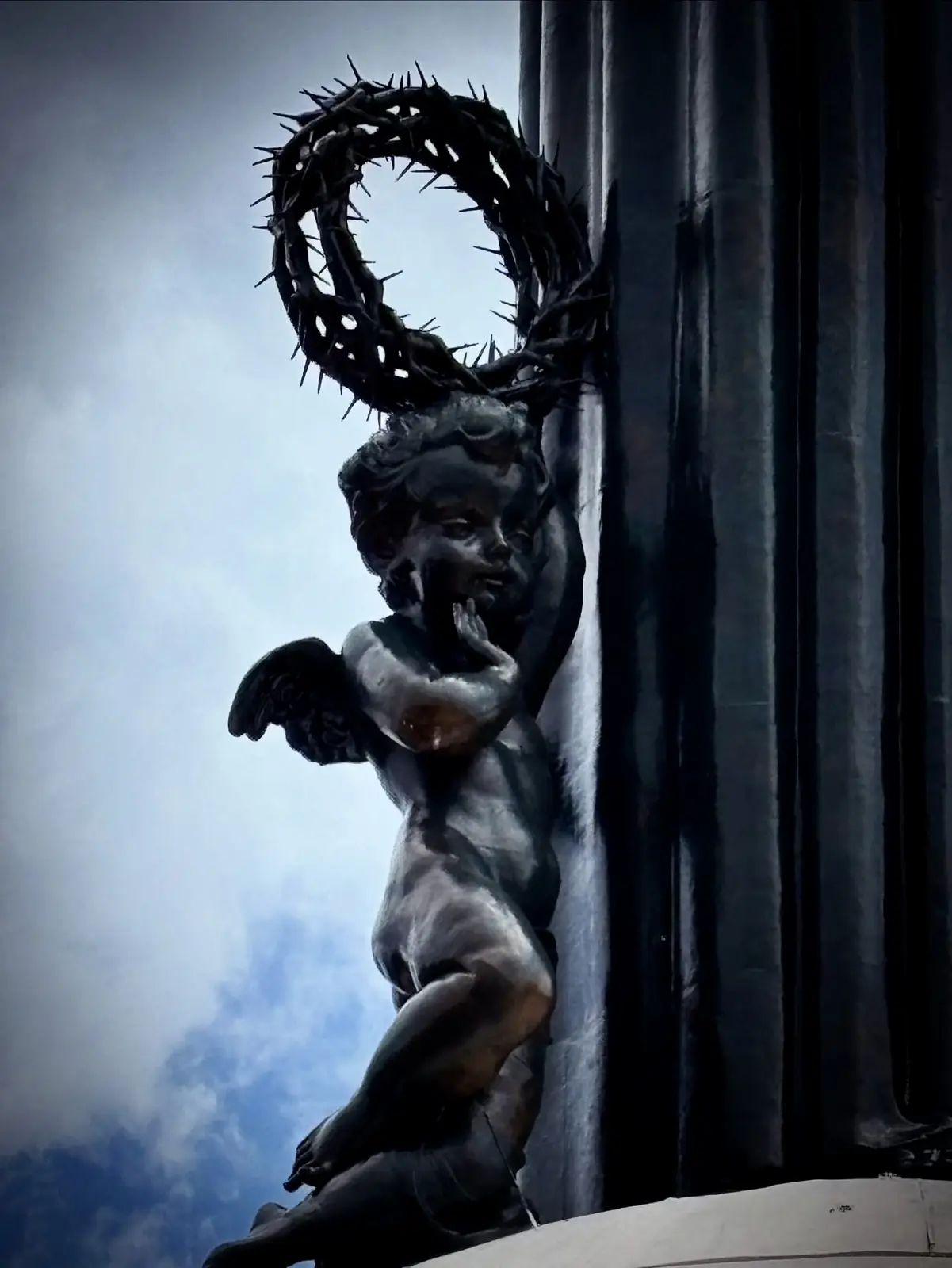
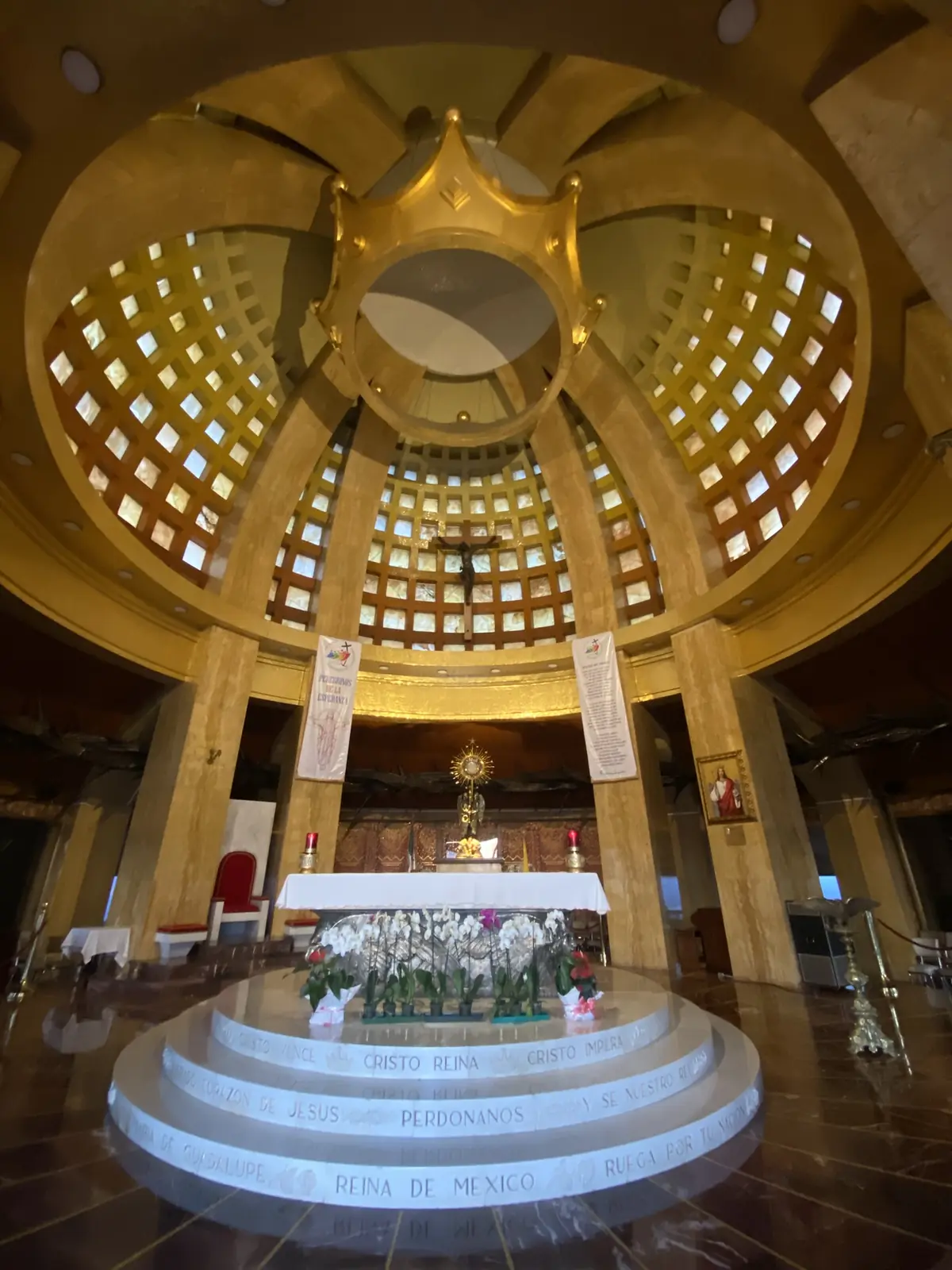
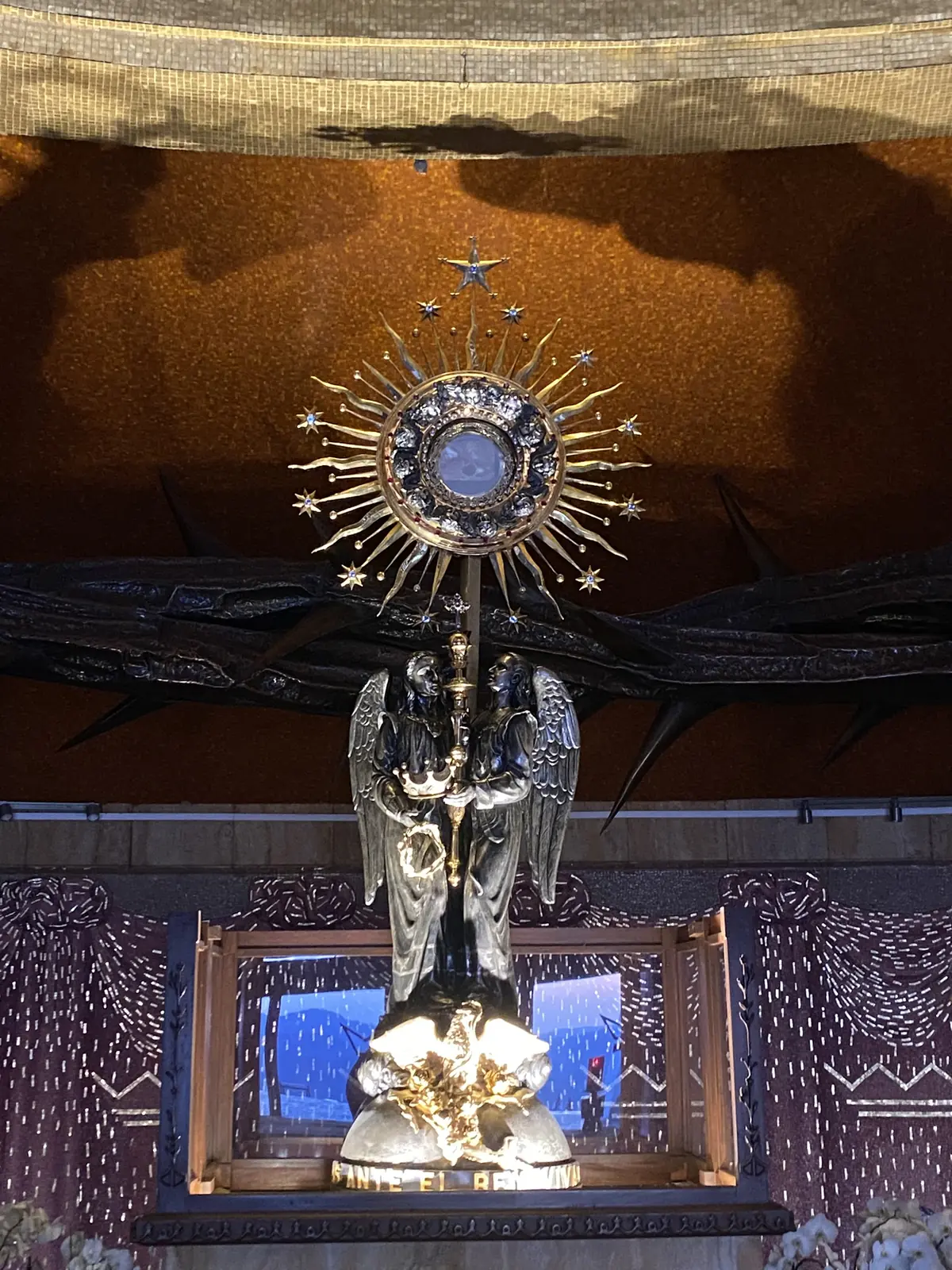
The monument has two parts: a basilica in the shape of a sphere, symbolizing the Universe, and standing upon it the statue of Christ the King, with two angels offering Him the crown of martyrdom and the royal crown. The Hellenic-style statue, the work of the Monterrey-born artist Fidias Elizondo, symbolizes the Divine Kingship of Christ, Lord of the Universe.
Bishop Valverde Téllez died on December 26, 1948. The work was well advanced, and he left it in the hands of Bishop Manuel Martín del Campo Padilla, who resolved to fulfill the Dream of Valverde. On December 11, 1950, he blessed the Shrine in the name of His Holiness Pius XII, on the 25th anniversary of the encyclical Quas Primas of Pius XI, which established the feast of Jesus Christ, King of the Universe.
Since 1920, through the different stages of its history and its monuments, the National Votive Shrine of Christ the King of Peace has become a place of pilgrimage for young people, reaching 75,000 young pilgrims in 2026. It also welcomes adult pilgrimages from pastoral schools with up to 15,000 pilgrims, and the famous Kings’ Horseback Pilgrimage, in which more than 6,000 riders arrive from the surrounding municipalities. Dioceses from across Mexico and members of the Mexican Nocturnal Adoration come to fulfill the vow of the Mexican Bishops: that Christ the King may reign in Mexico.
Long live Christ the King and Holy Mary of Guadalupe!
Opening hours
Monday to Sunday
5:20 a.m. to 8:00 p.m.
Holy Mass
Monday to Saturday
6:00 a.m. and 12:00 p.m.
Sunday
5:30, 7:00, 8:00, 9:00, 10:00 and 11:00 a.m.
12:00, 1:00 and 2:00 p.m.
Times may change due to pilgrimages or large crowds.
Spirituality
What does Christ the King mean?
Christ the King is one of the most important titles of Jesus. He was not a king in the earthly sense, yet He is the Divine King of the Universe, who unites all creation with the Father. Saint Paul expresses this when he writes that Christ must reign until God has put all things under His feet, “so that God may be all in all” (1 Cor 15:25-28).
When is the feast of Christ the King celebrated?
The Church celebrates the kingship of Christ on the last Sunday of the liturgical year, the Thirty-Fourth Sunday in Ordinary Time, which falls in the last weeks of November.
When did the feast begin?
Pope Pius XI instituted the feast in 1925, and it was first celebrated in 1926. It was originally set at the end of October; Pope Saint Paul VI later moved it to the last Sunday of the liturgical year, the Sunday before Advent begins. The placement fits well: it points to the end of history, when Christ will return as King, a theme taken up by the liturgy of the first weeks of Advent.
Why did Pope Pius XI establish this feast?
Pius XI instituted the feast in response to the growth of secularism and atheism. In the encyclical Quas Primas he taught that the many evils of the world came from people having cast Christ and His law out of their private lives and out of public affairs, and that lasting peace among nations could only be found in “the peace of Christ in the Kingdom of Christ.”
Is Christ called King in Sacred Scripture?
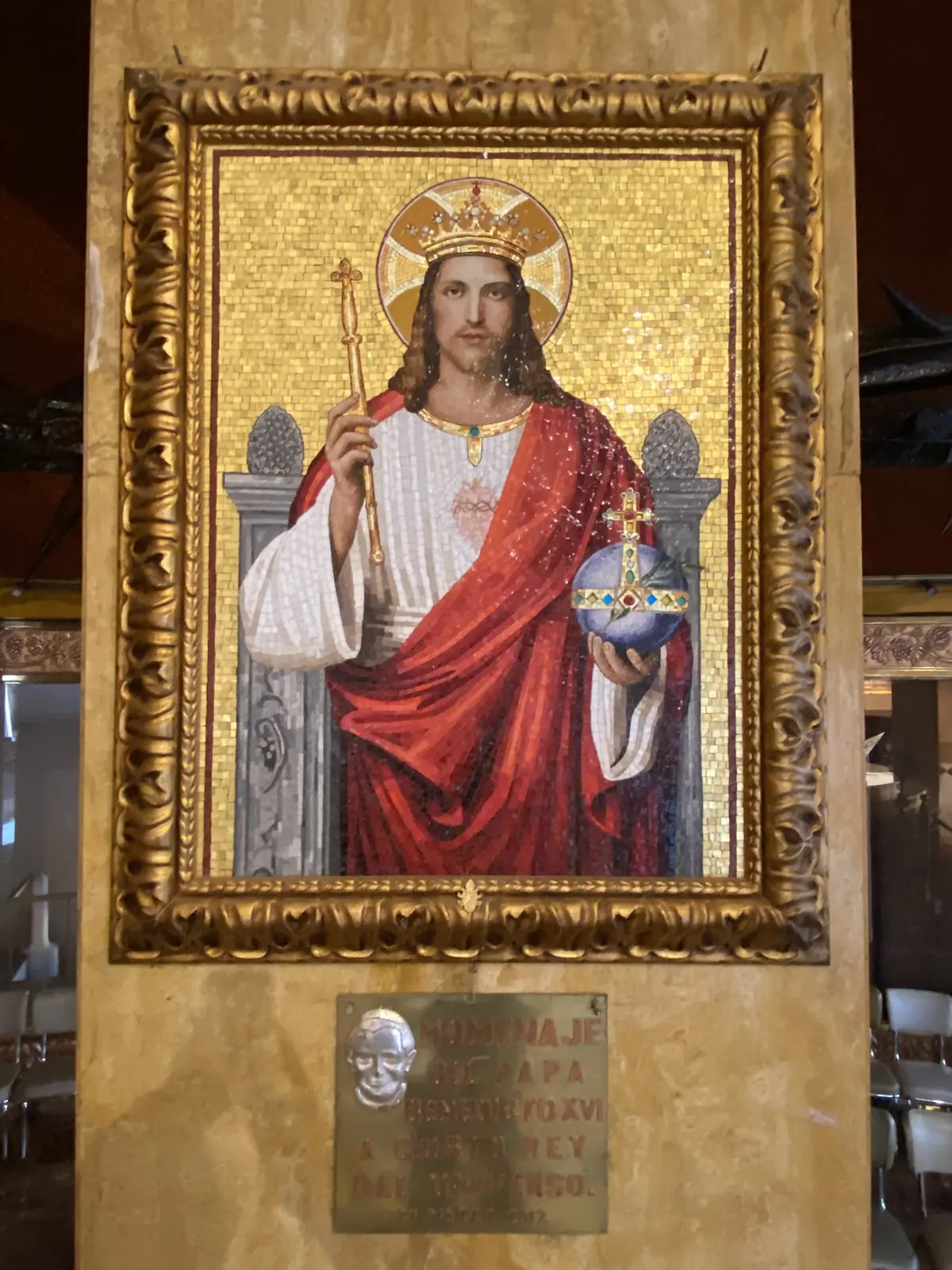
Yes. Pope Benedict XVI explained that Christ’s kingship remained hidden during His thirty years of ordinary life in Nazareth; during His public life Jesus inaugurated the new Kingdom, which “is not of this world” (Jn 18:36), and with His death and resurrection He established it fully.
Photographs
Christ the King of Cubilete
Gallery
Discover the place
Plan your visit
Check opening hours, directions and services before climbing Cubilete Hill.