History of the monument
Timeline
85 moments that shaped the Shrine of Christ the King, from 1909 to 2026.
1909 – 19191920 – 19291930 – 19491950 – 19992000 – today
1909 – 1919
The origins
October 17, 1909
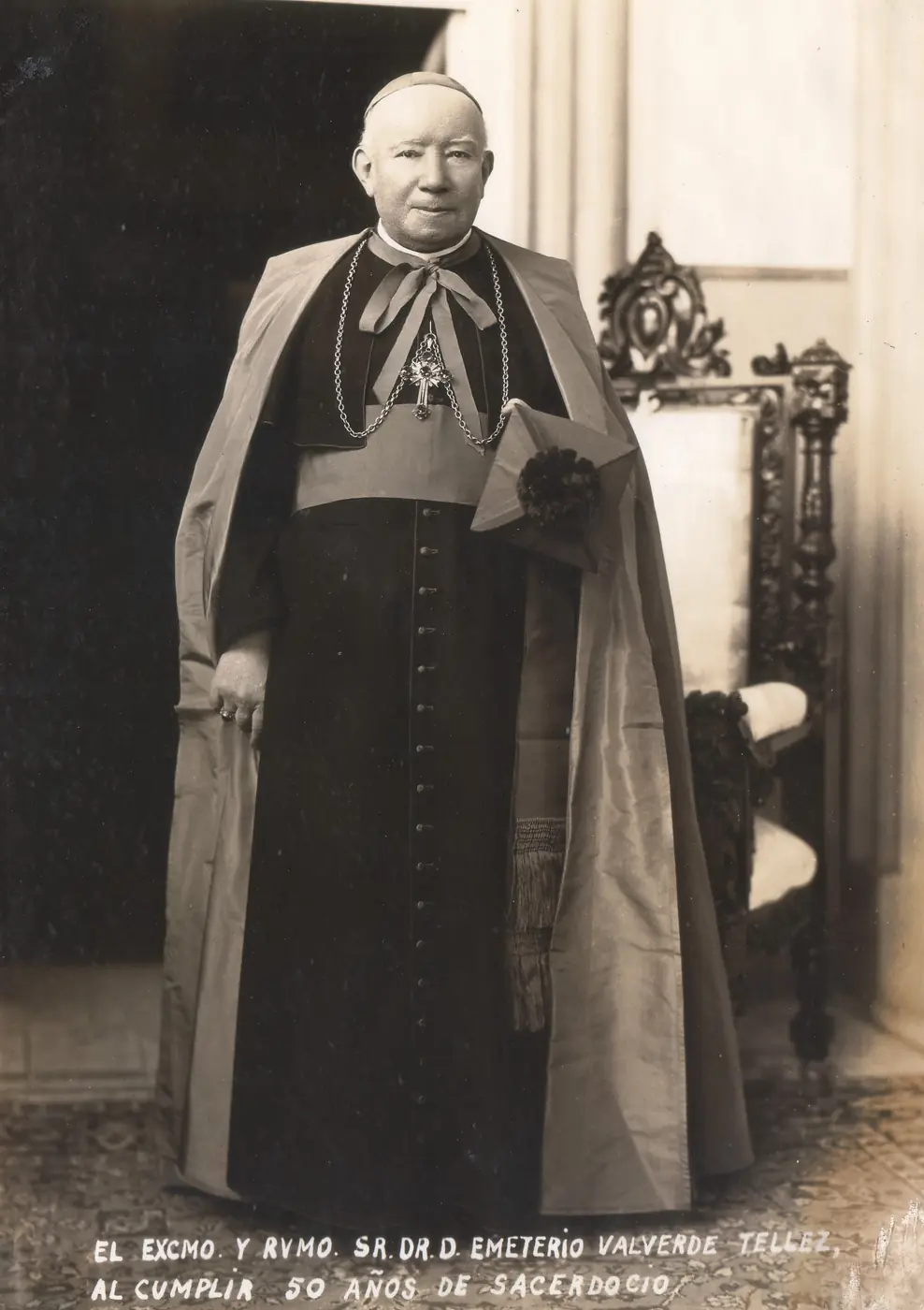
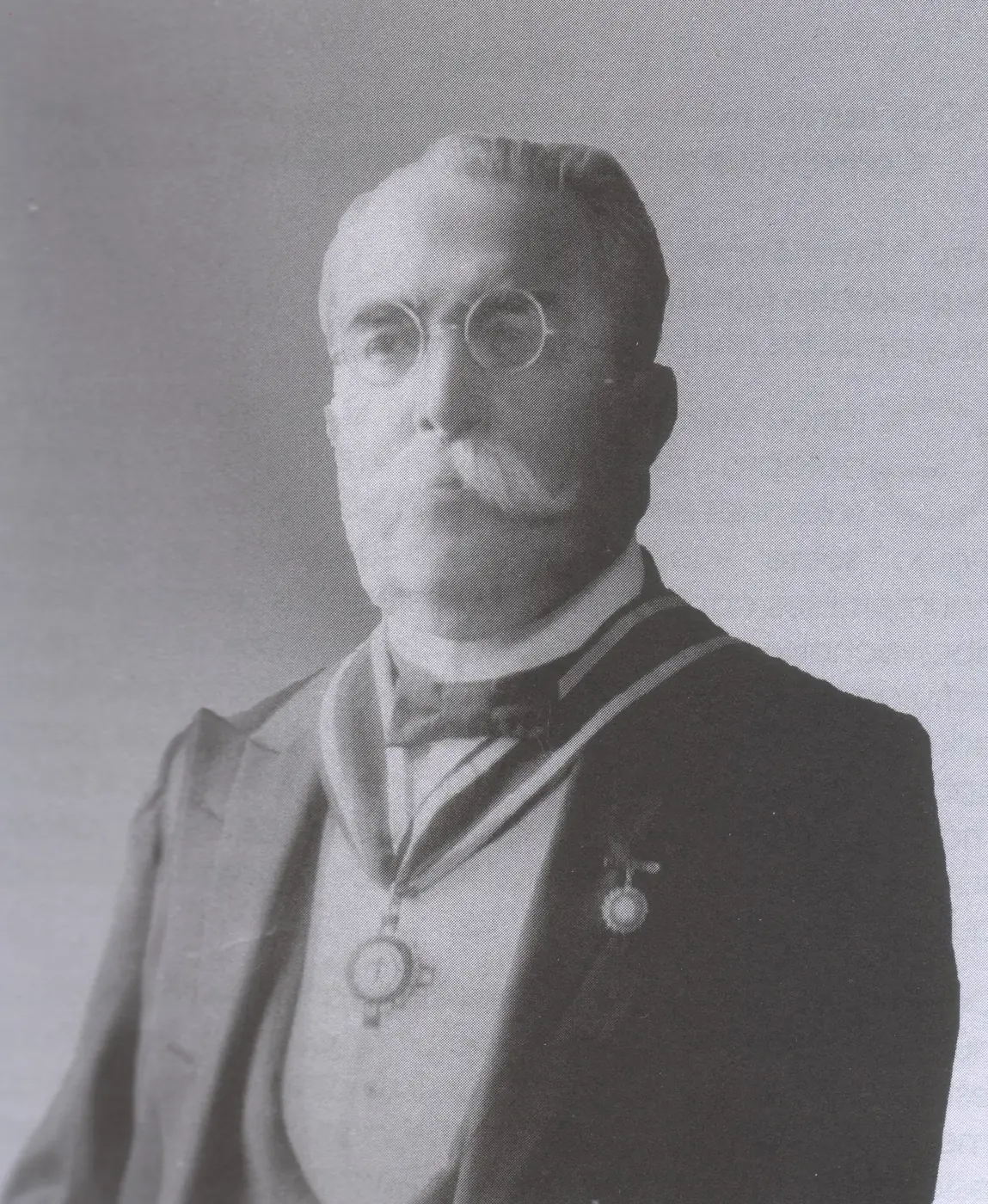
Emeterio Valverde y Téllez takes office as sixth Bishop of León; he would become the promoter of the Monument to Christ the King.
1910
The Mexican Revolution begins.
June 11, 1914
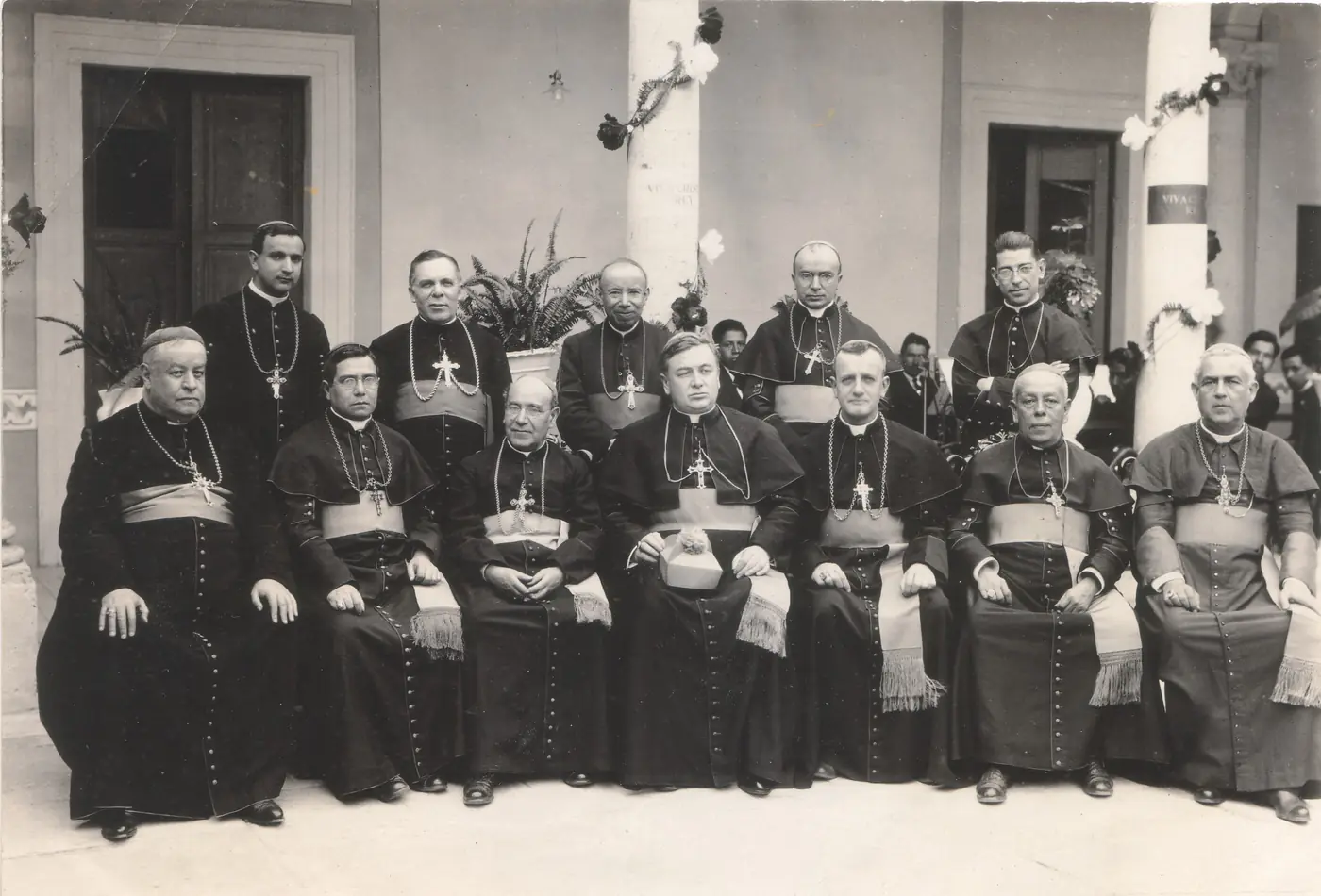
The Mexican Bishops vow to build a national temple to enthrone the Sacred Heart of Jesus and preserve peace and faith in the nation.
February 5, 1917
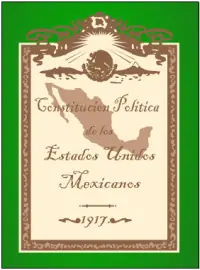
The Political Constitution of the United Mexican States is enacted. It strips the Church of legal personality, denies clergy the right to vote, forbids public expressions of faith and transfers Church property to the State.
1919
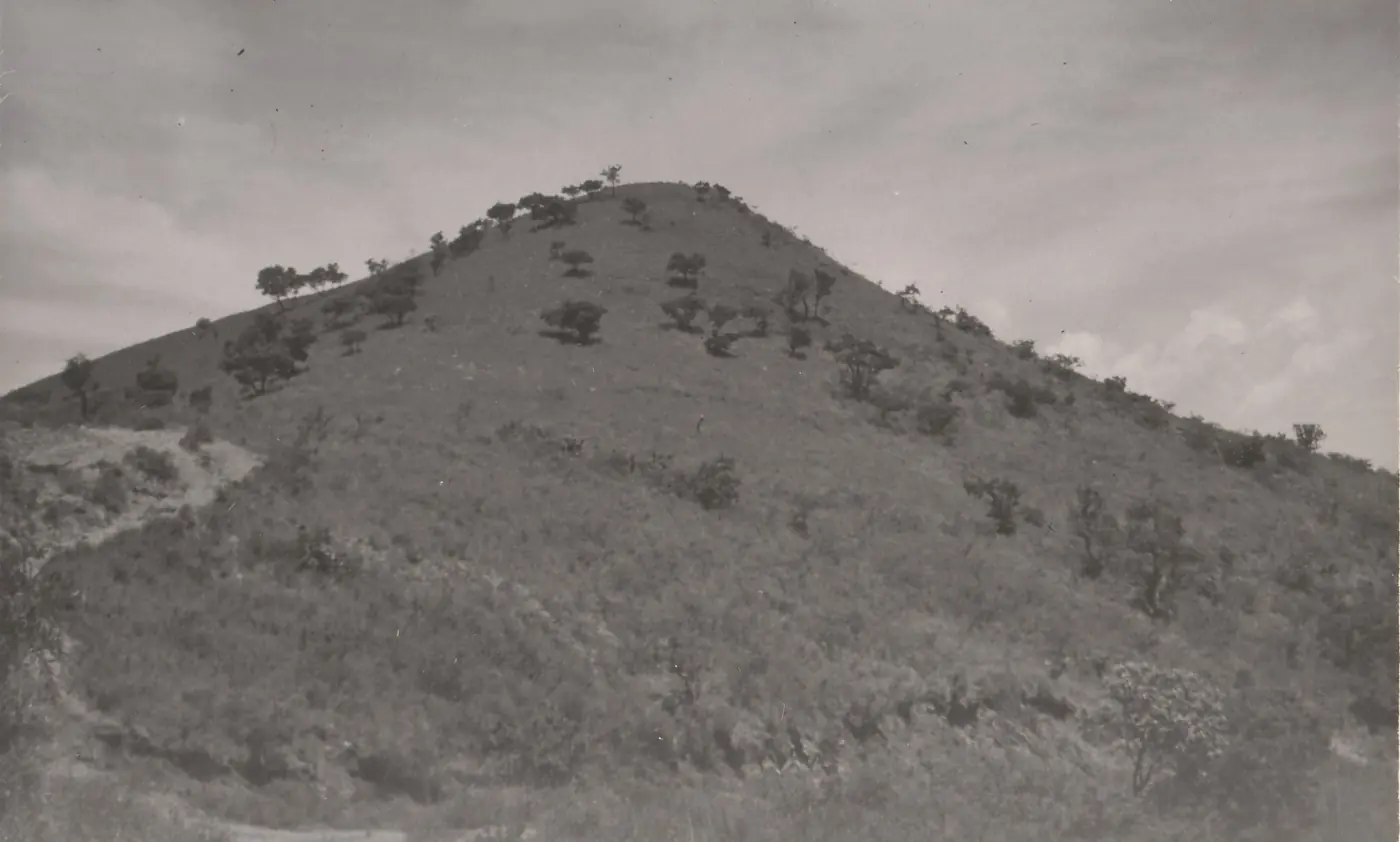
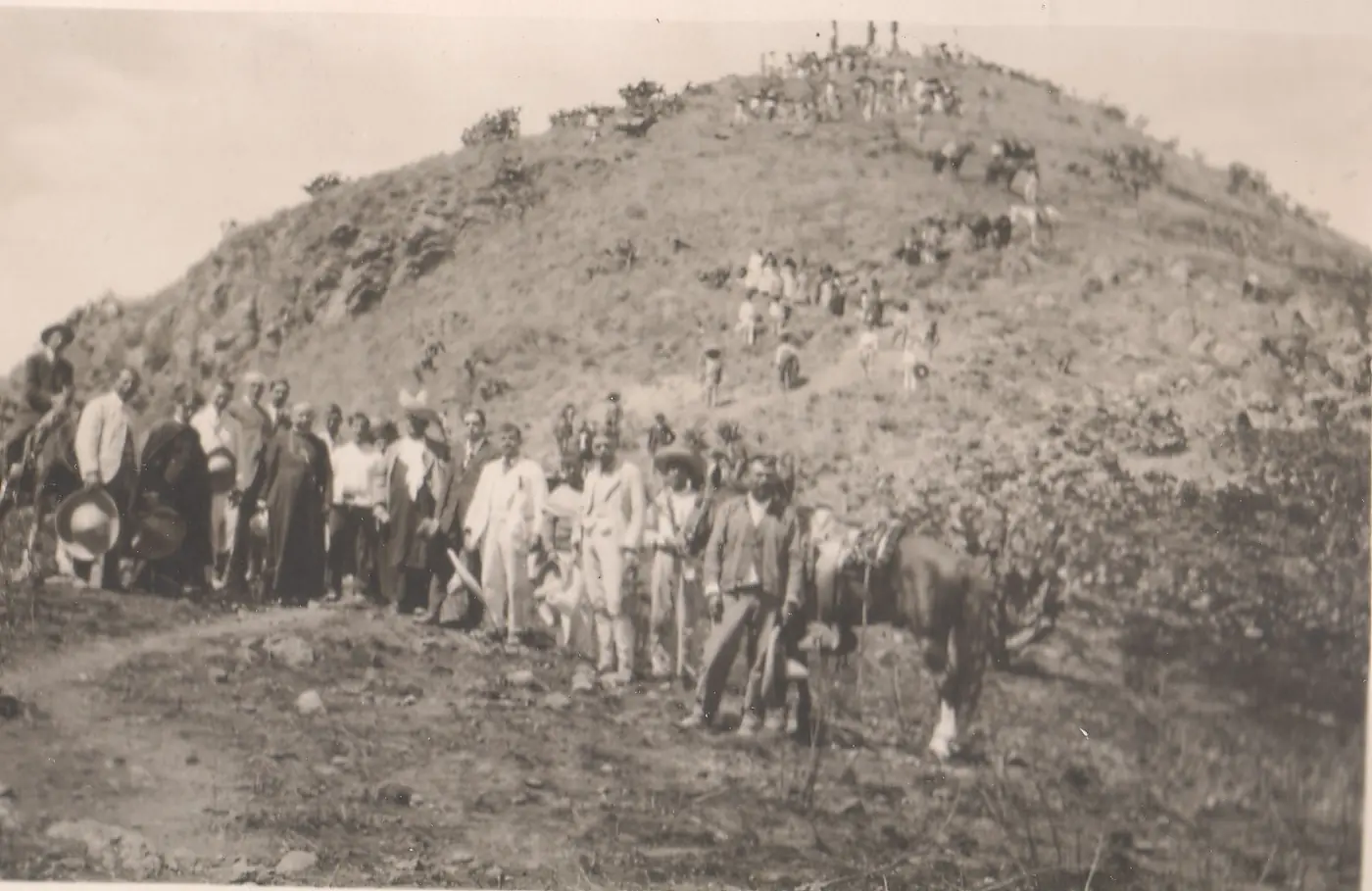
Bishop Emeterio Valverde visits the Church of Forgiveness in Silao, Gto., where the idea of a Mass and a monument on the summit of Cubilete Hill is born.
1920 – 1929
The first monument and the persecution
March 12, 1920
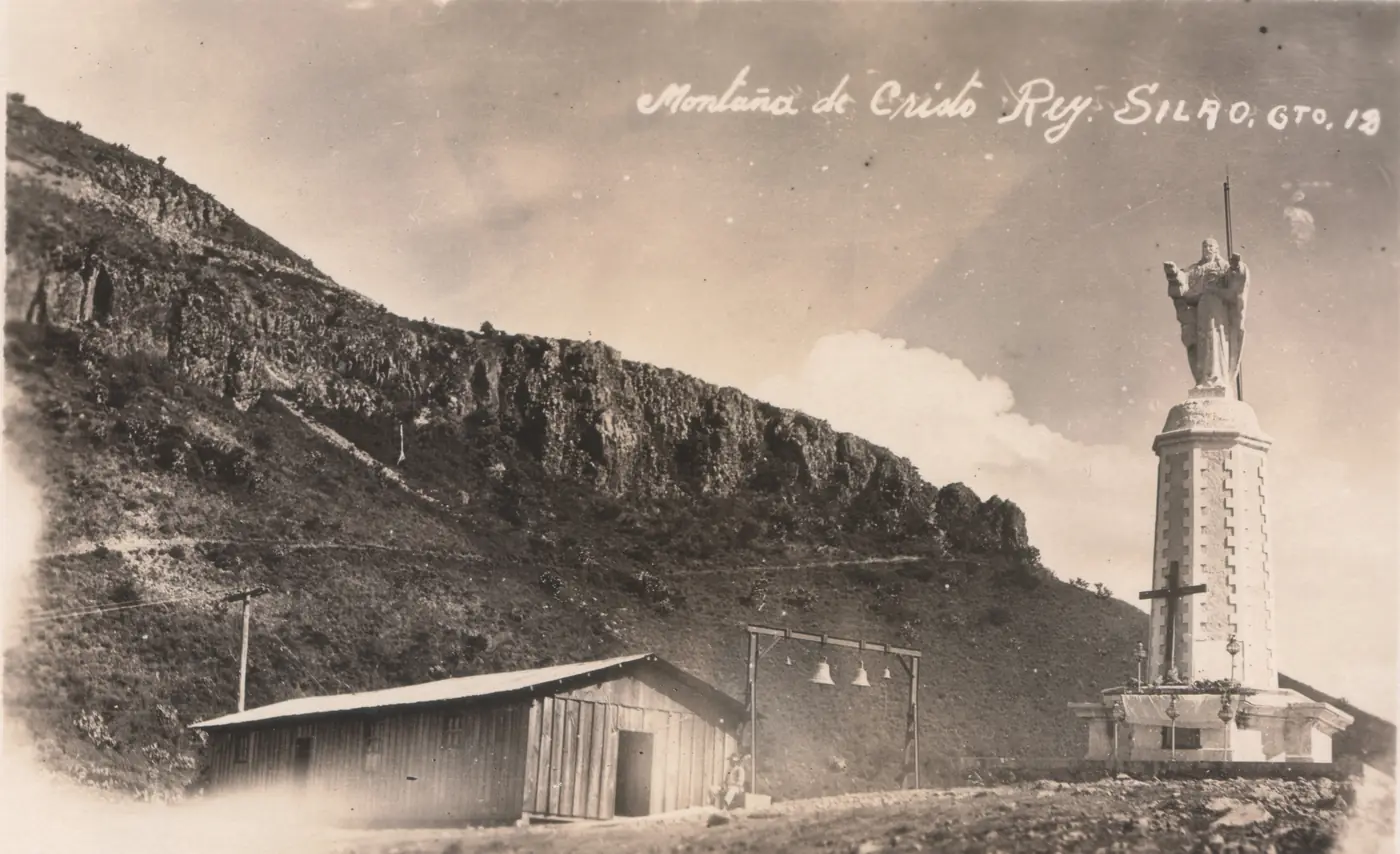
The first stone of the First Monument to Christ the King is laid.
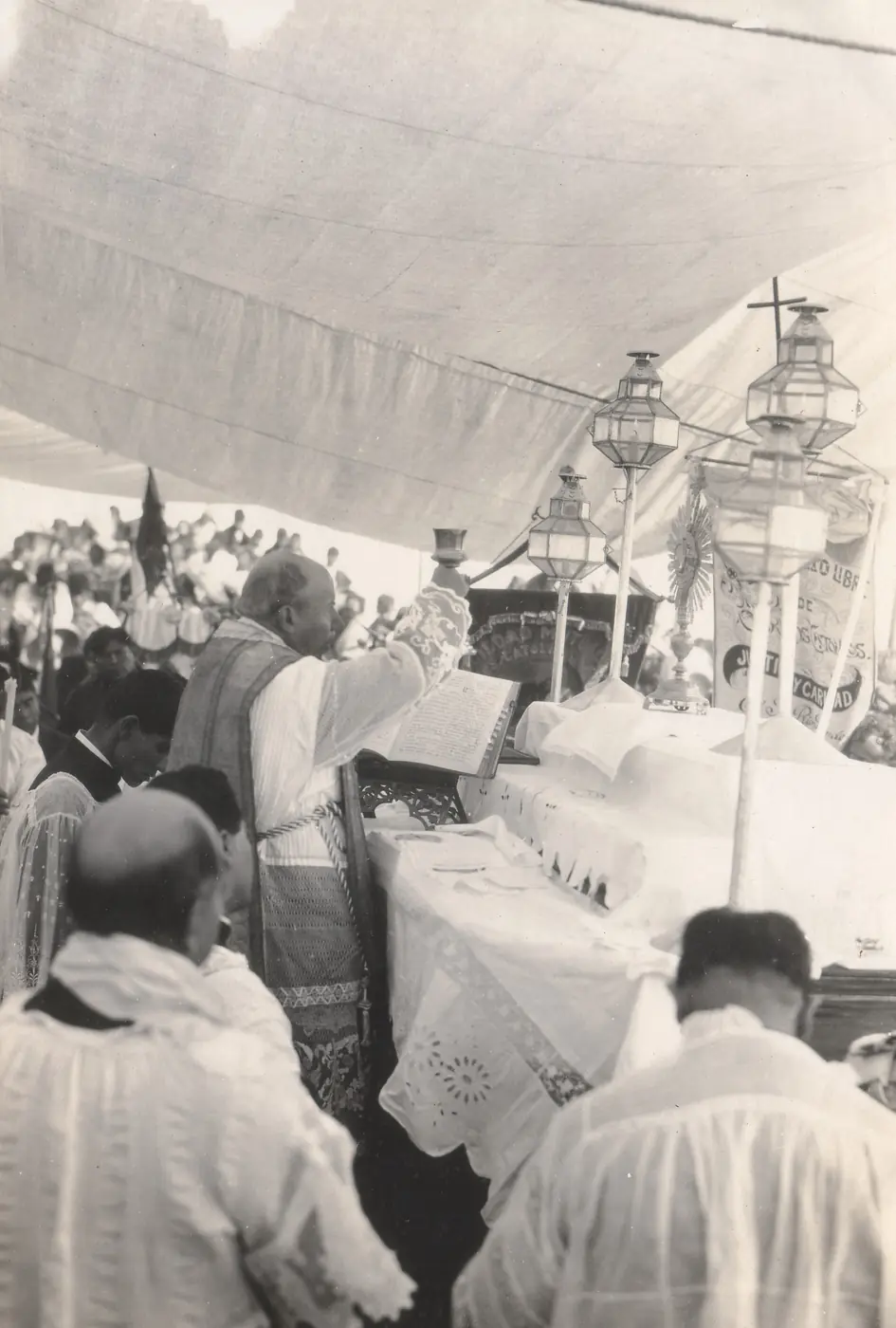
April 11, 1920
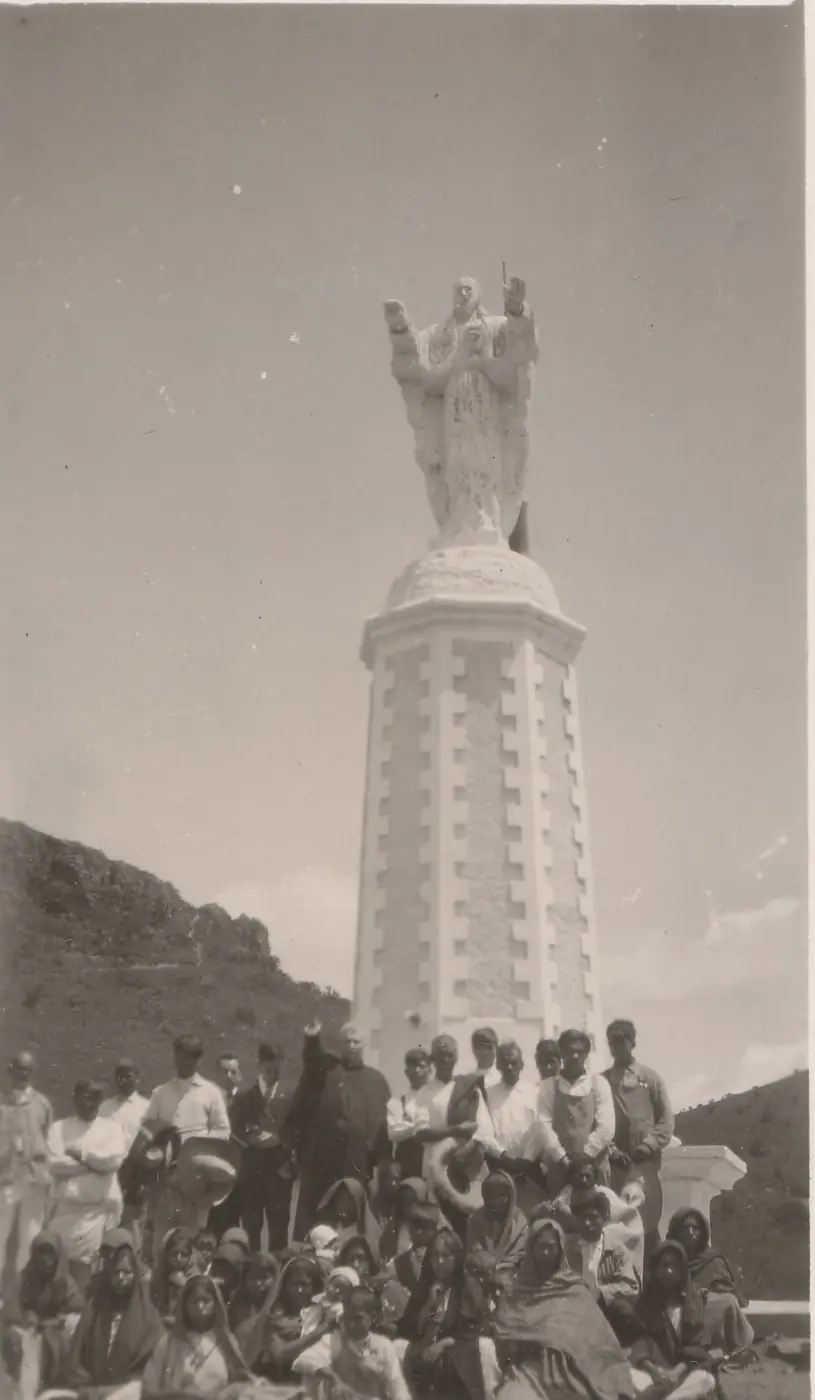
The completed First Monument is blessed: an image of the Sacred Heart of Jesus almost three meters tall on a column and altar. Some 20,000 people attend.
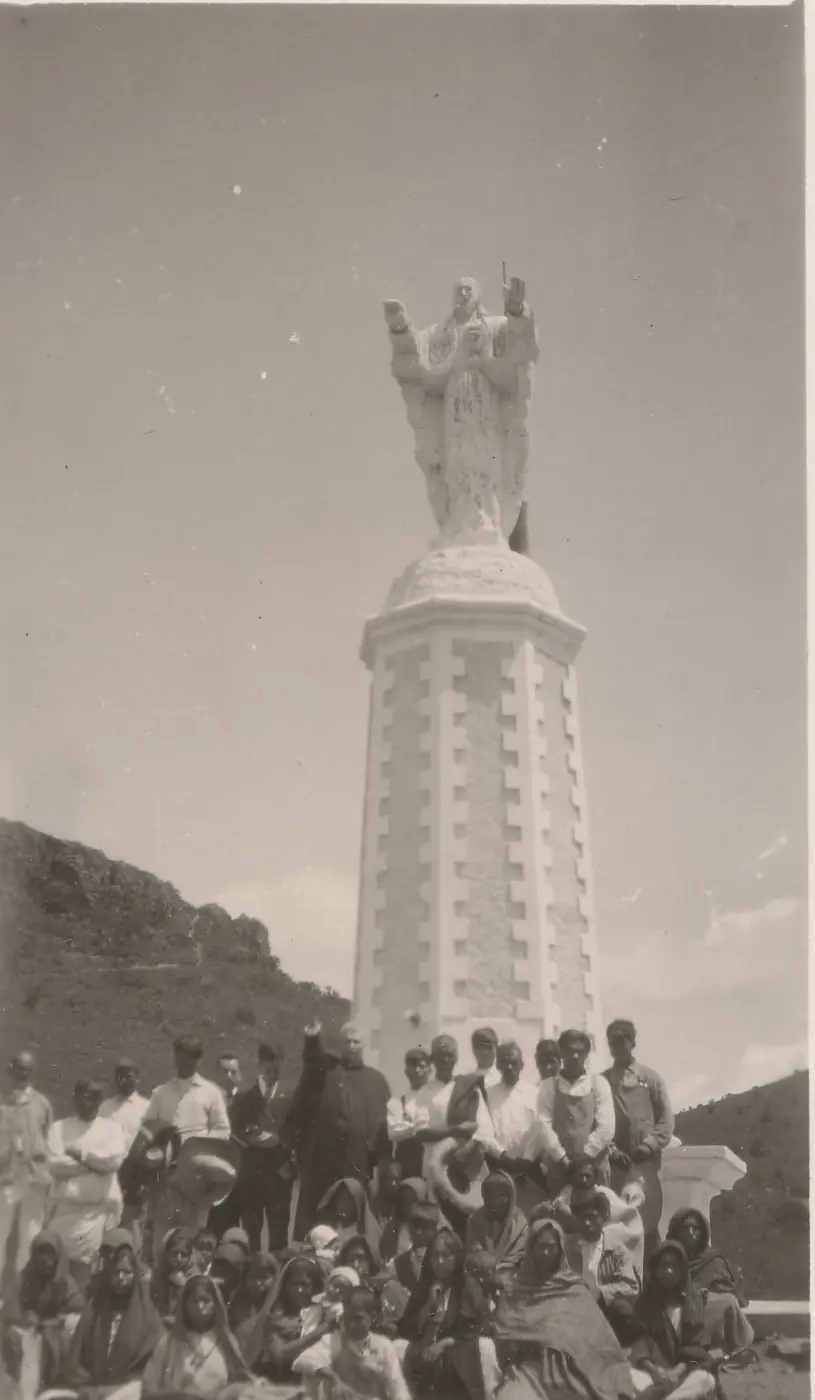
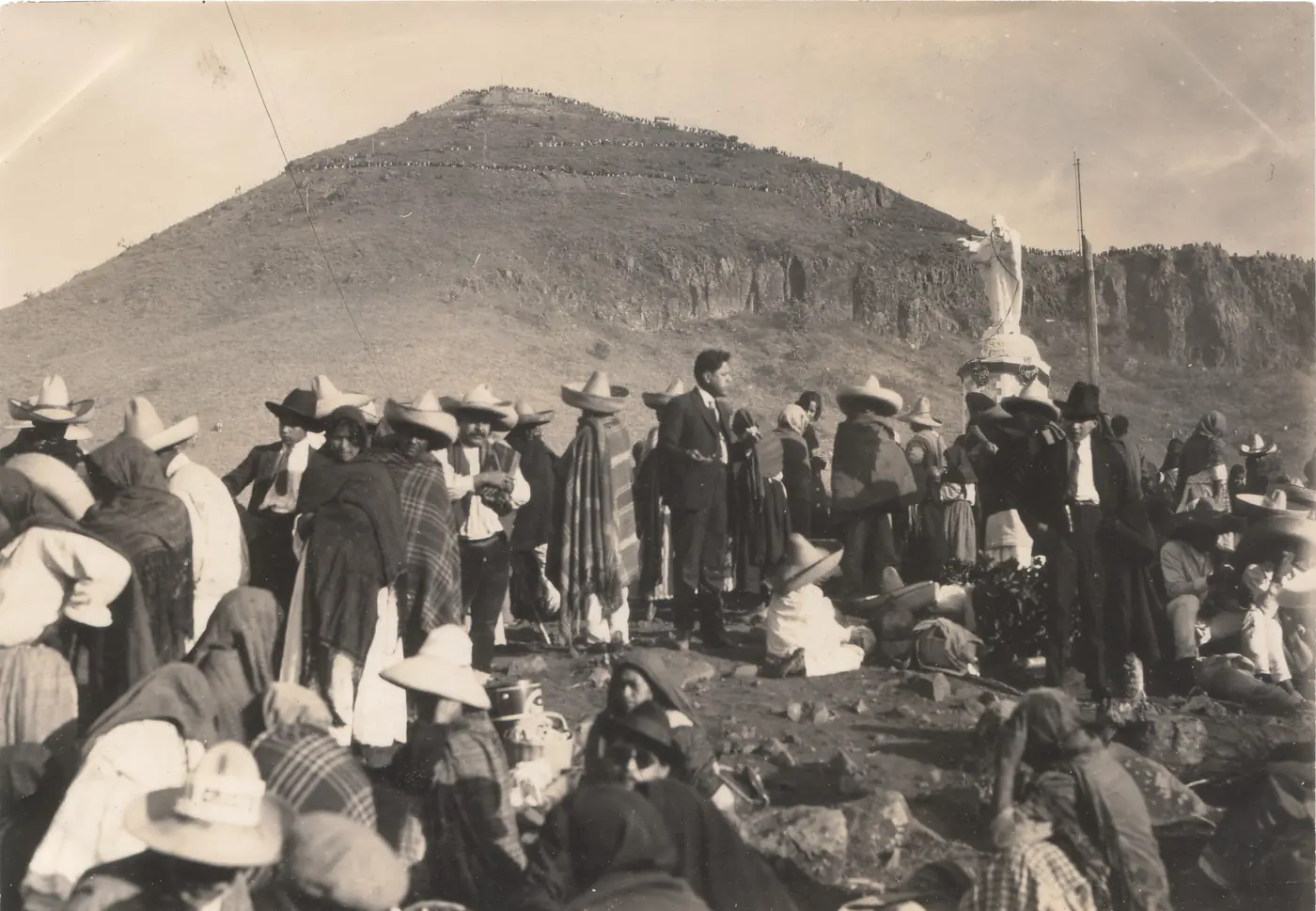
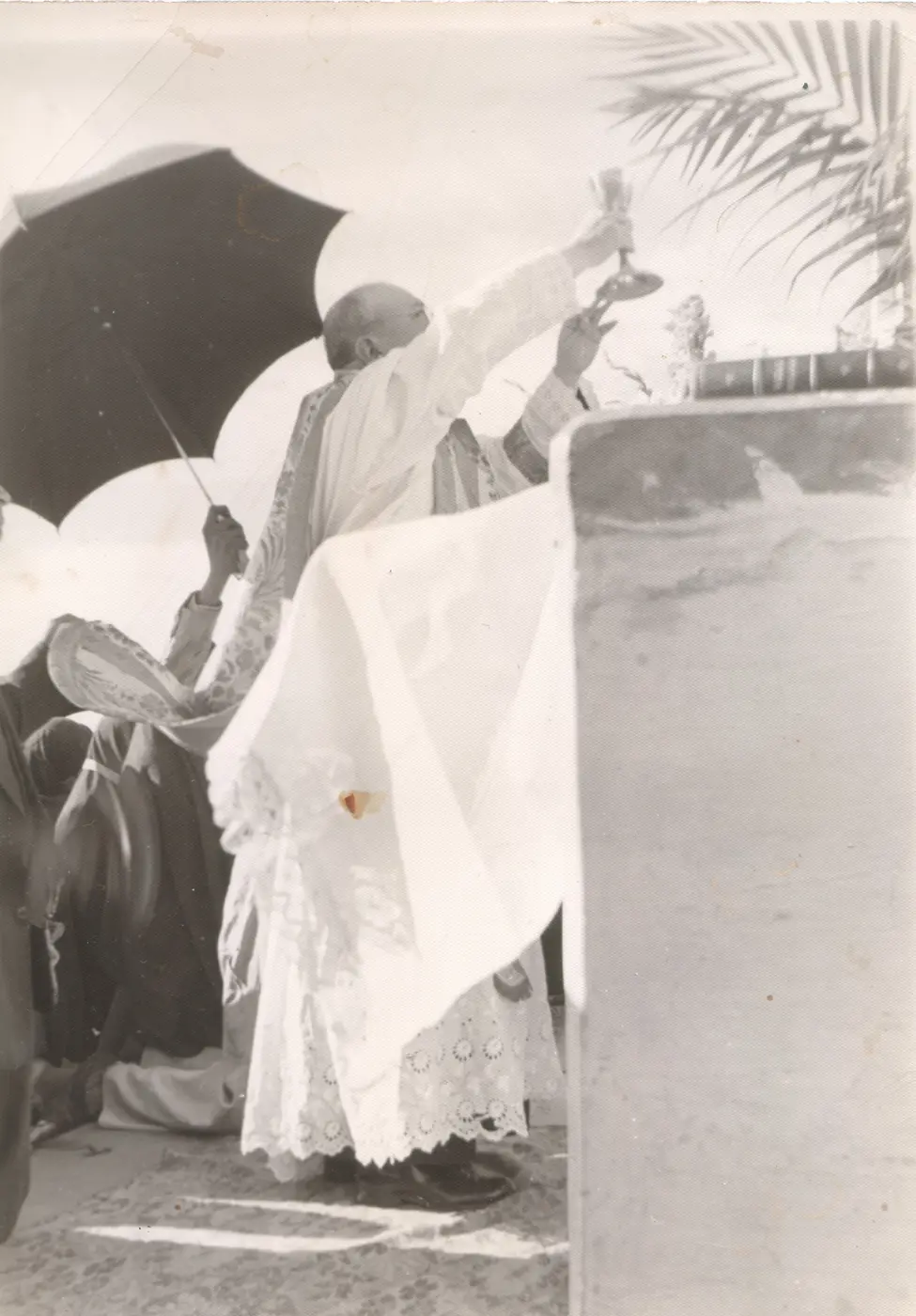
April 20, 1920
A meeting requests that the First Monument be declared a National Monument.
October 10, 1920
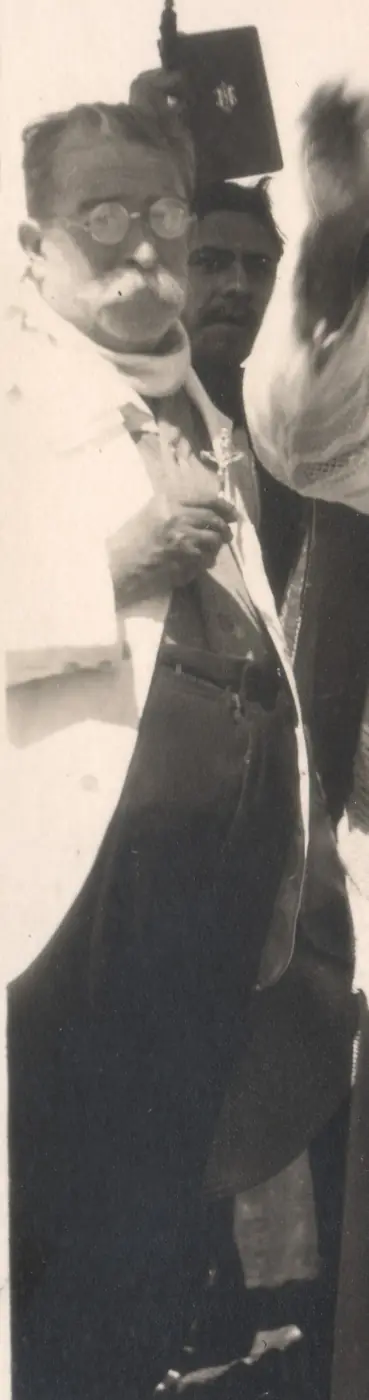
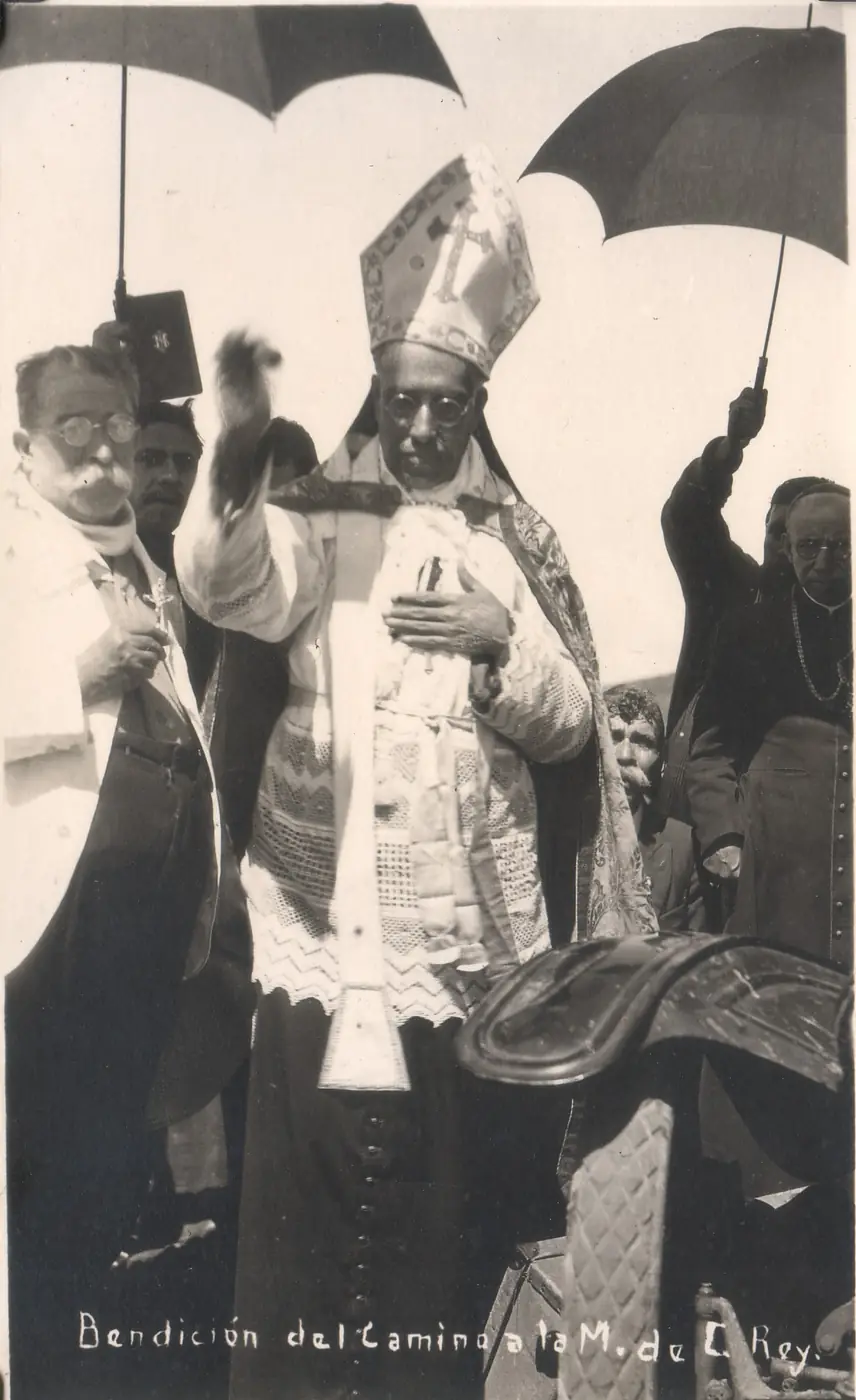
Mr. Reinaldo Manero presents to the Mexican Bishops the request to declare the Monument to Christ the King on Cubilete Hill a national monument.
December 1, 1920
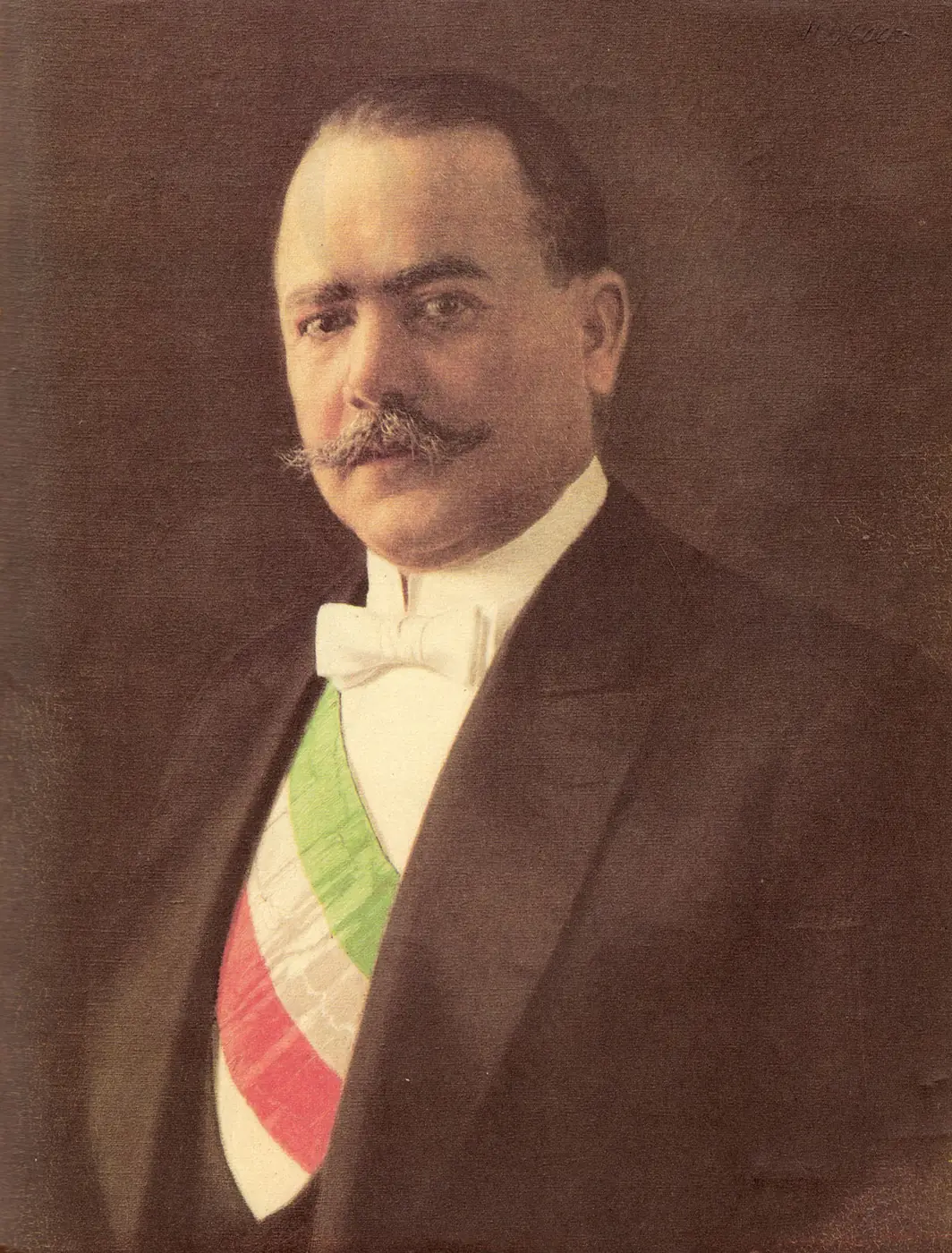
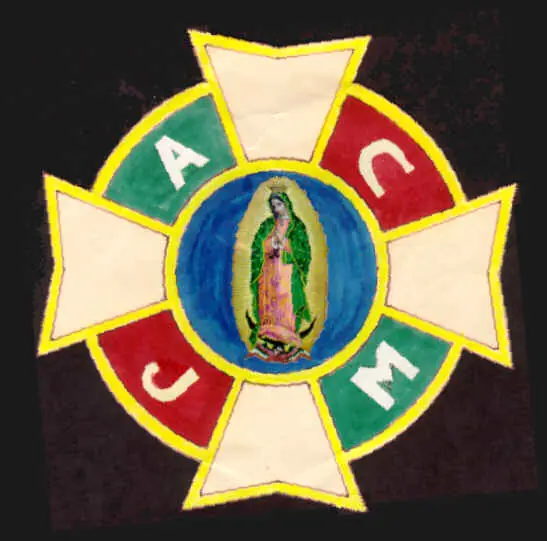
General Álvaro Obregón’s presidency begins; the separation of Church and State becomes more radical, with clashes between the CROM labor union and the Catholic Youth Association (ACJM).
January 11, 1923
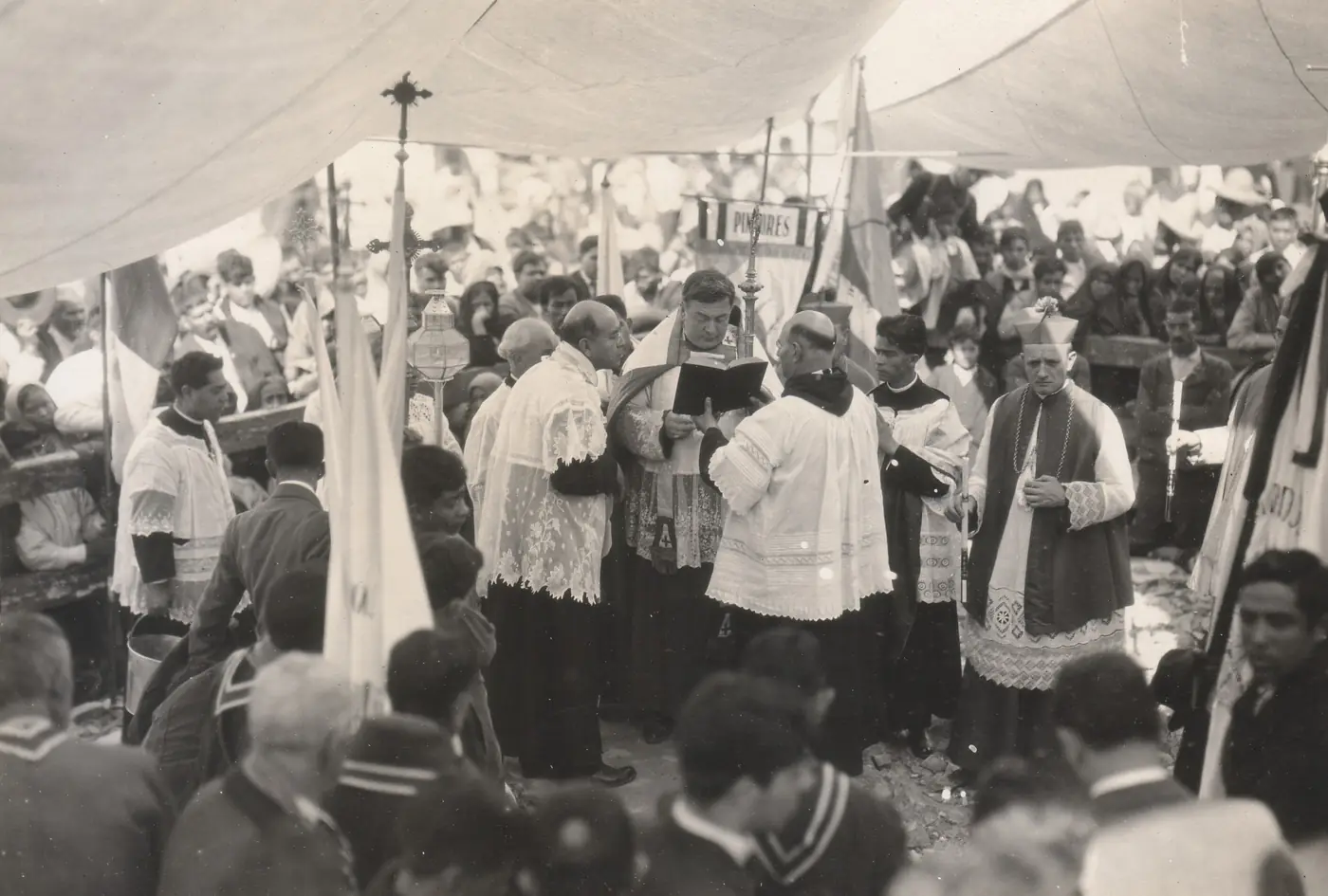
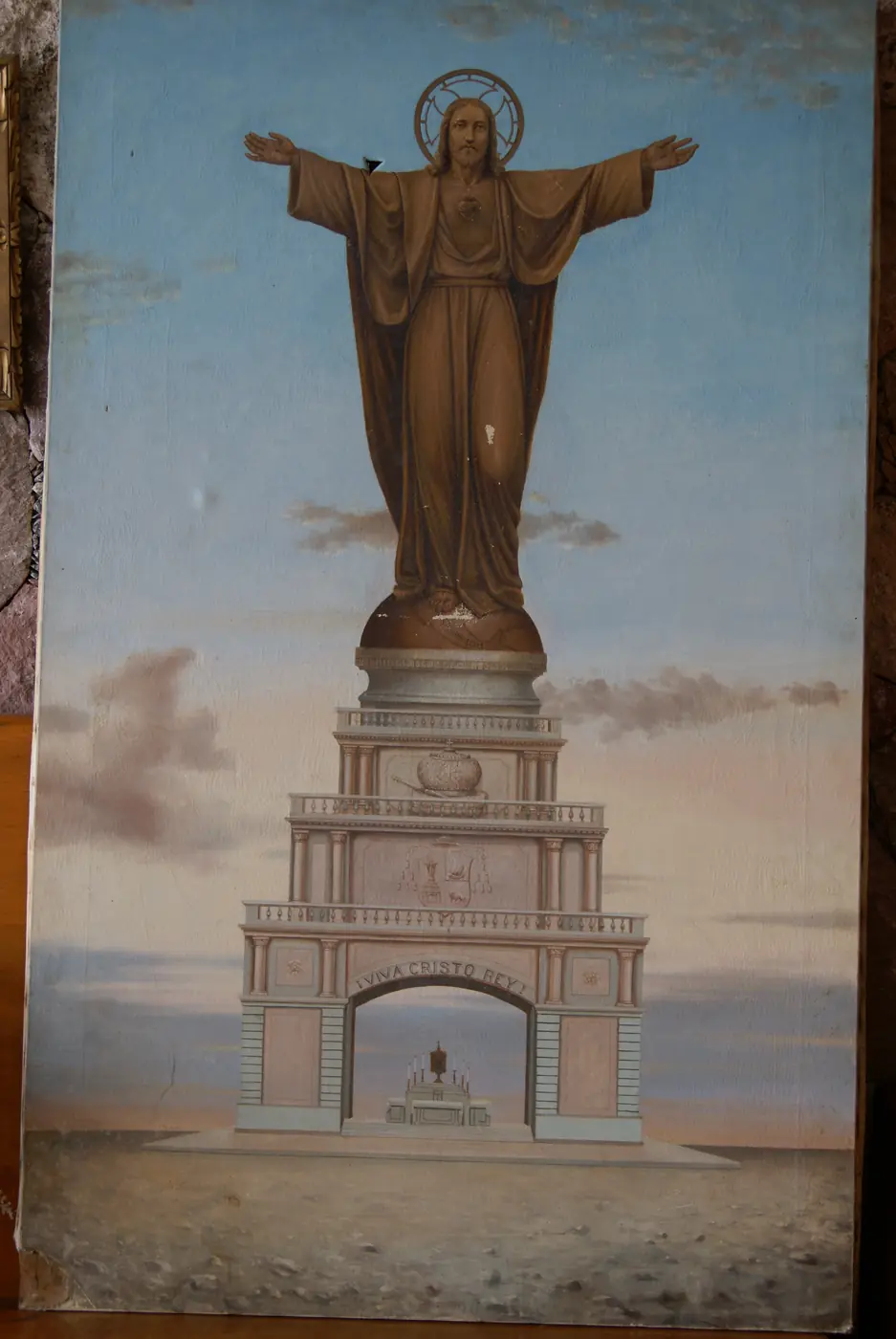
The Apostolic Delegate to Mexico, Ernesto Eugenio Filippi (1921-1923), lays the first stone of the Second Monument, which was never built for lack of government permission. Some 80,000 people attend.
January 13, 1923
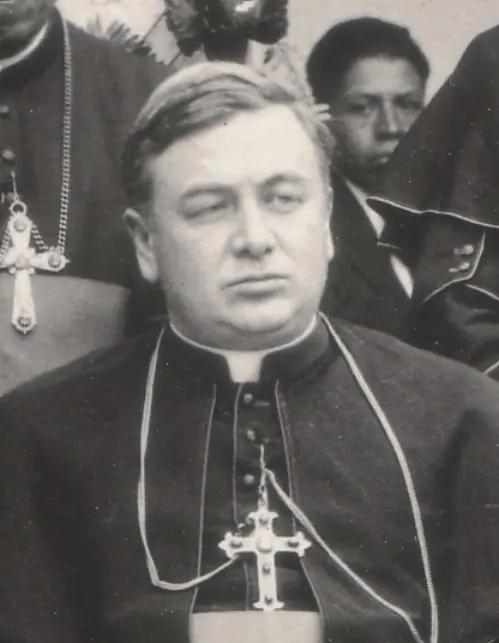
The Apostolic Delegate Ernesto Eugenio Filippi is forced to leave Mexico because the Federal Government considers the Mass for the first stone of the Second Monument a constitutional offense.
December 1, 1924
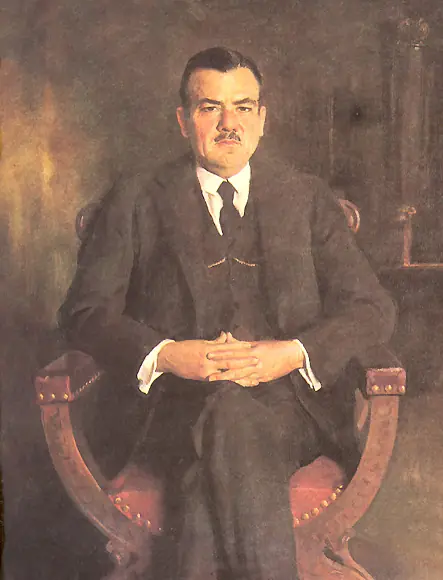
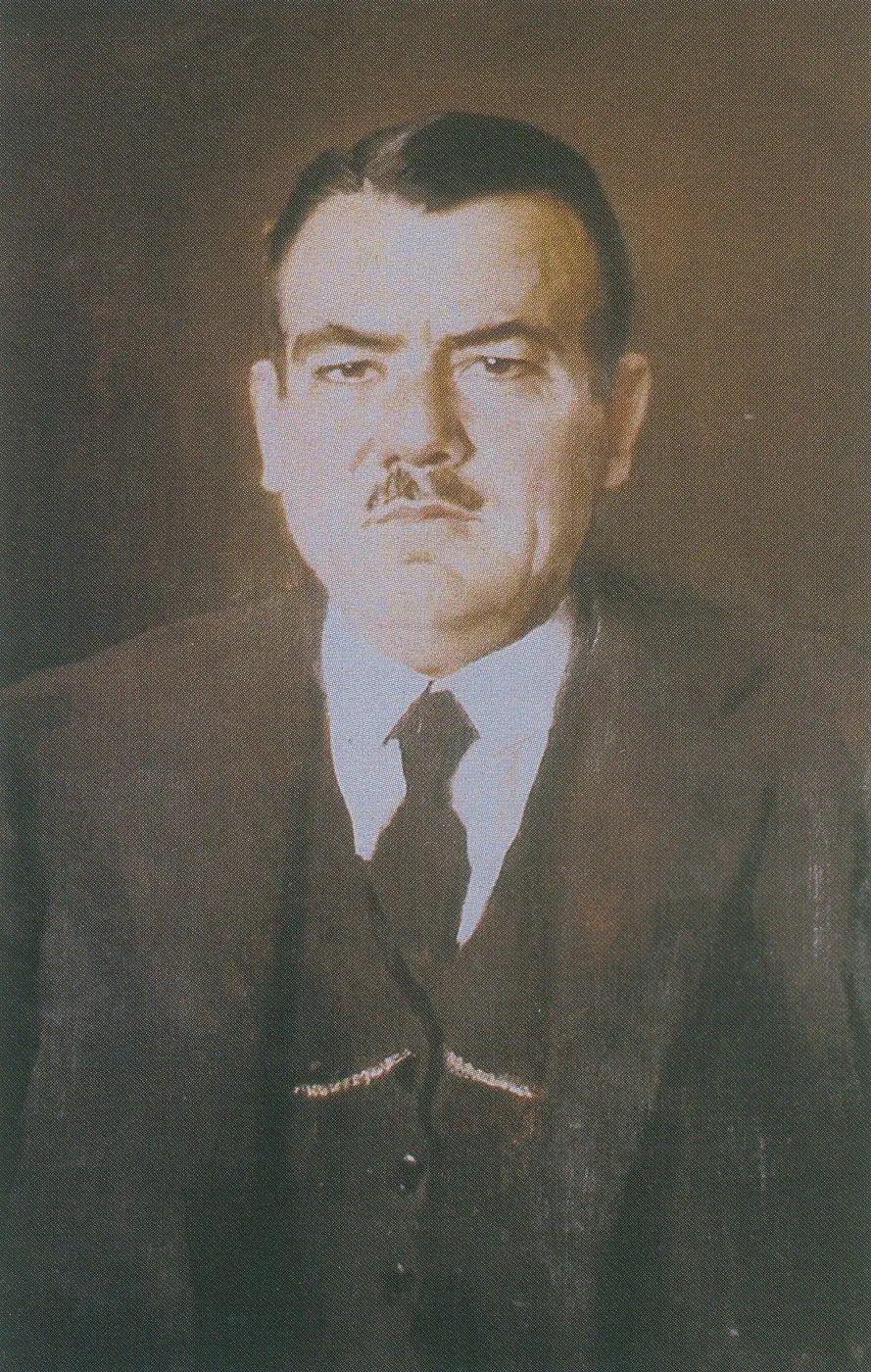
Plutarco Elías Calles becomes President, and persecution of the Church intensifies.
February 21, 1925
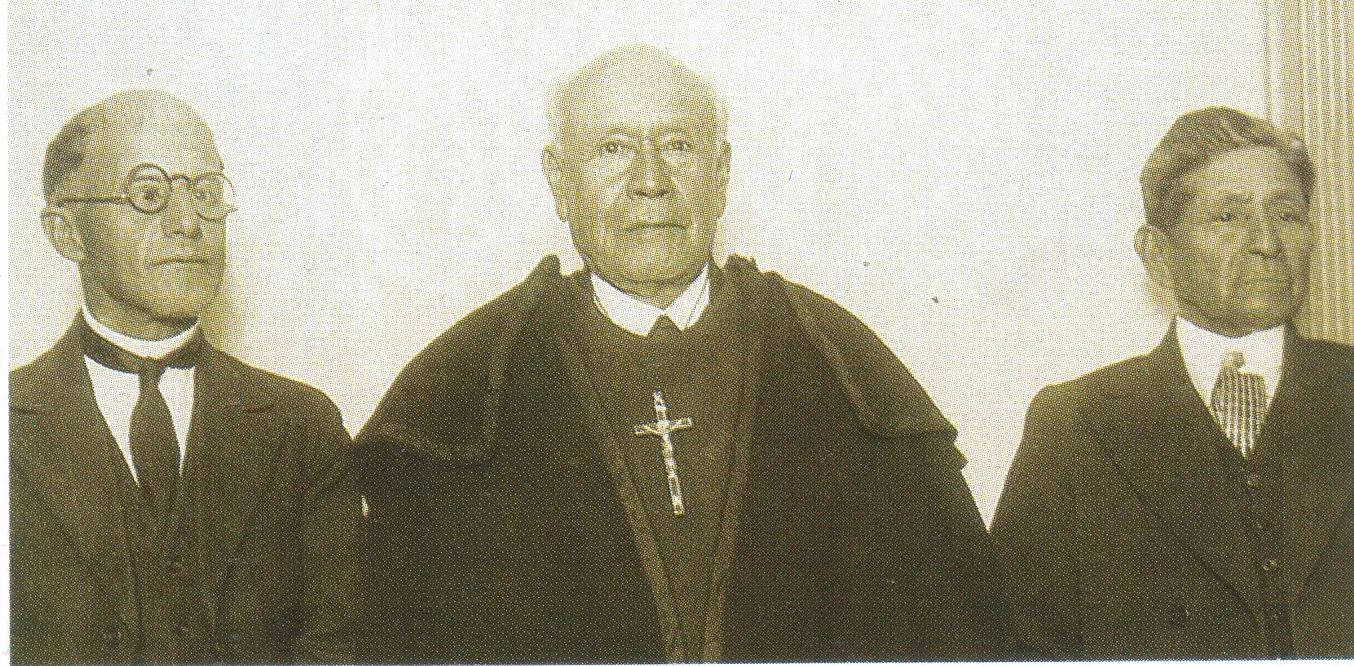
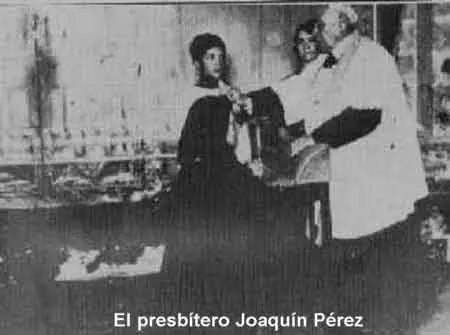
With the support of the CROM labor union, Calles promotes the so-called Mexican Catholic Apostolic Church, led by the schismatic priest Joaquín Pérez, which takes over the church of La Soledad.
February 23, 1925
The faithful recover the church of La Soledad, which had been seized by Joaquín Pérez.
March 9-14, 1925
In Mexico City, Miguel Palomar, René Capistrán, Rafael Ceniceros and Luis G. Bustos found the National League for the Defense of Religious Freedom, in response to restrictions on freedom of worship and the so-called Calles Law, which led to the conflict known as the Cristiada (1926-1929).
December 11, 1925
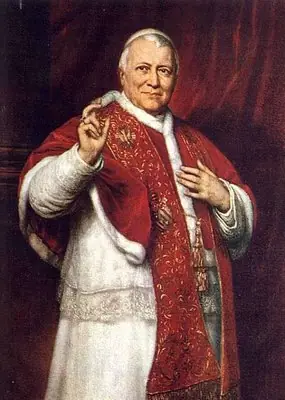
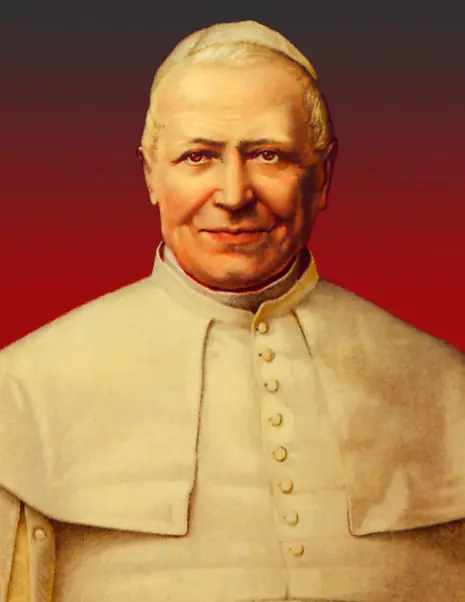
In the encyclical Quas Primas, Pope Pius XI establishes the annual feast of Christ the King, teaching that Jesus Christ has real, spiritual and universal authority over all people, nations and states, not only over private life.
1925
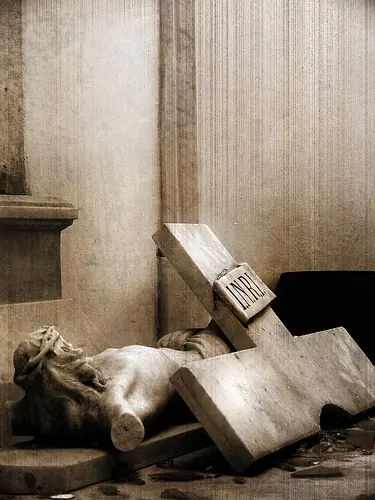
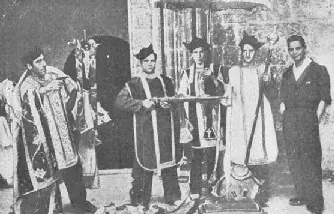
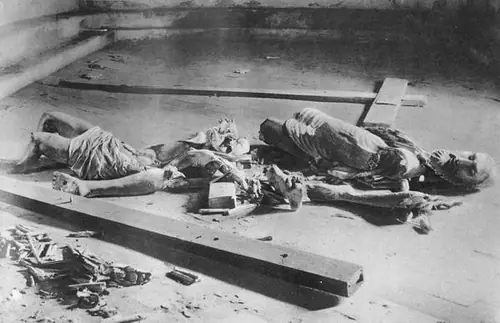
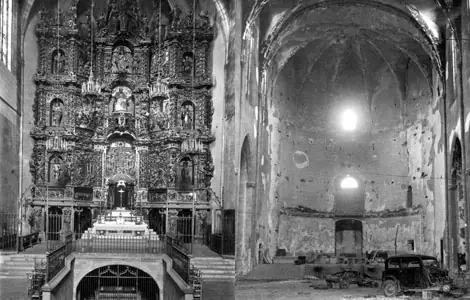
The Calles Law turns administrative offenses into criminal ones: Article 5 orders convents closed, Article 27 (section II) forbids religious associations from owning property, which passes to the Nation, and Article 130 removes the legal personality of clergy and expels foreign priests.
1925 – 1926
Public worship is banned in the states of Chiapas, Hidalgo, Jalisco and Colima.
February 4, 1926
In an interview published by El Universal, Archbishop José Mora y del Río of Mexico states that the Church’s doctrine does not change and that the bishops, clergy and Catholics will not recognize Articles 3, 5, 27 and 130 of the 1917 Constitution, as they oppose religious freedom. The Archbishop is prosecuted and the conflict escalates.
July 31, 1926
The Calles Law, promoted by President Plutarco Elías Calles, takes effect. It is a Saturday, and churches are full of people seeking the sacraments.
August 1, 1926
The Mexican Bishops suspend public worship because the conditions to exercise it do not exist. The Federal Government responds by seizing and closing churches, beginning a persecution that leads to armed conflict. Churches remain closed for three years.
January 1927
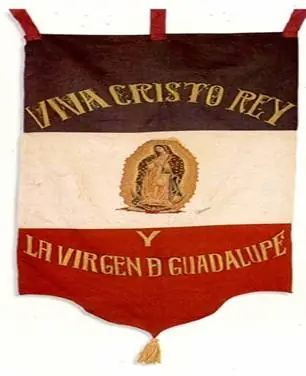
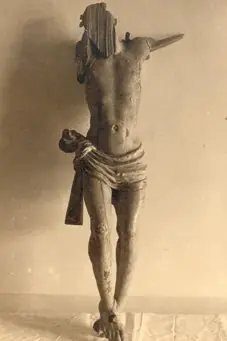
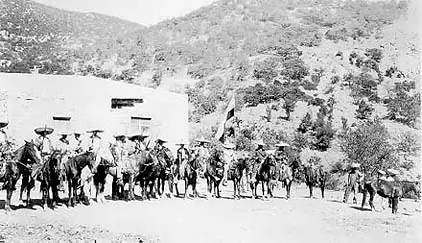
The first peasant guerrilla groups take up arms with the Cristero motto: “Long live Christ the King and Holy Mary of Guadalupe.”
April 25, 1927
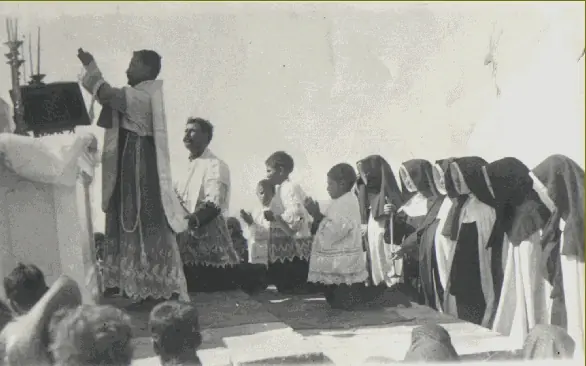
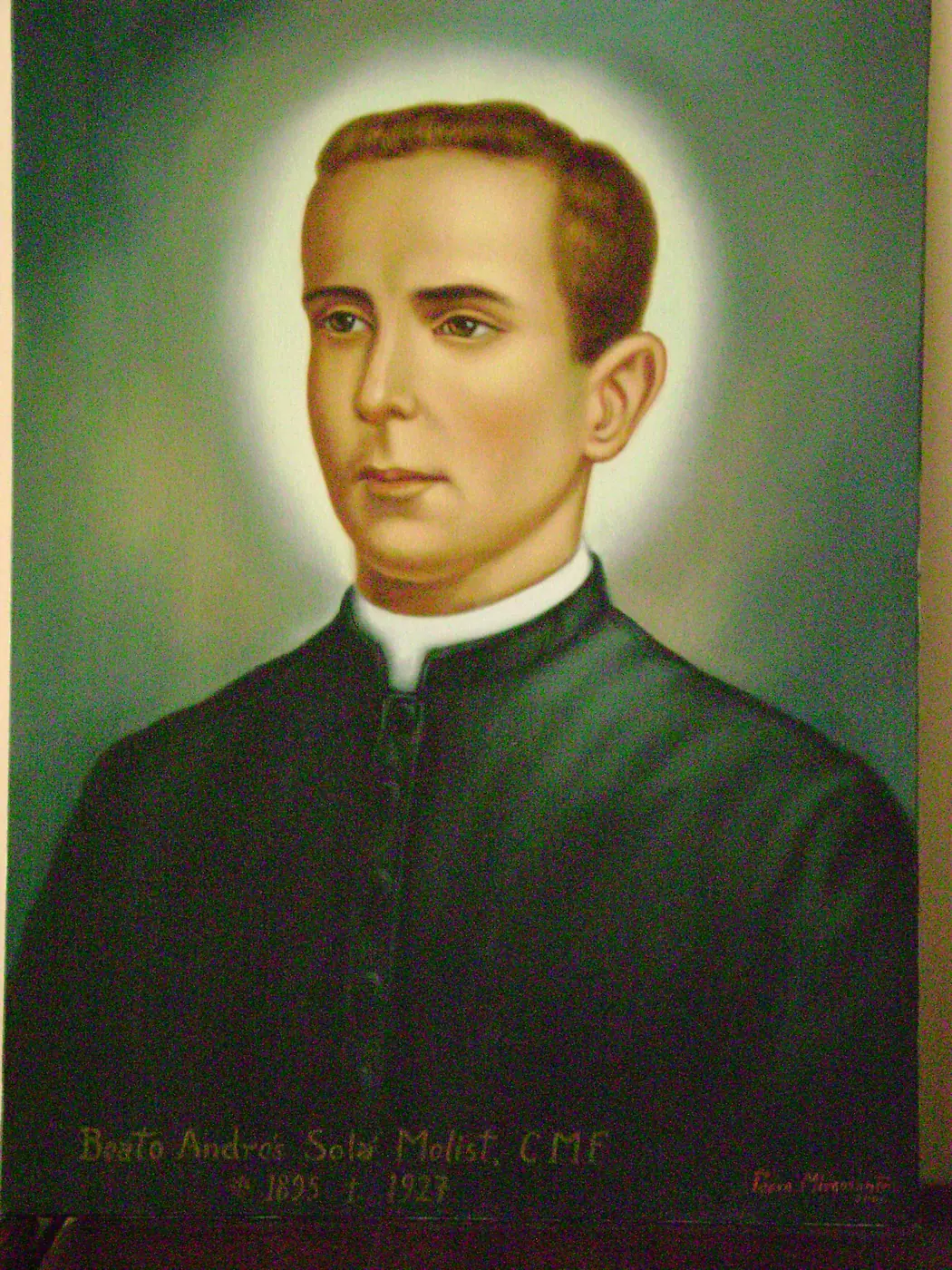
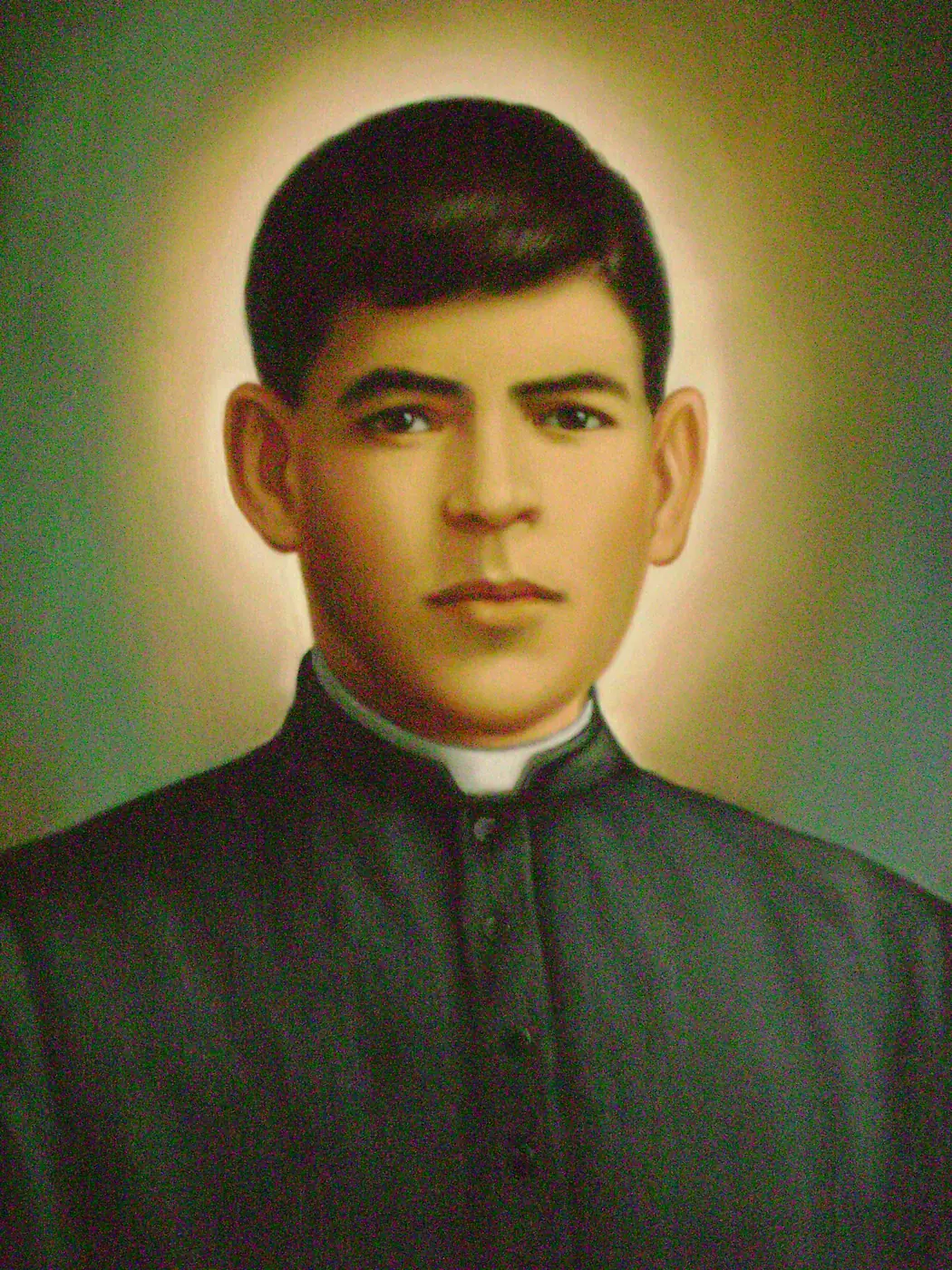
At the San Joaquín ranch in Lagos de Moreno, Jalisco, Fr. José Trinidad Rangel, born in Dolores Hidalgo, Gto., the layman Leonardo Pérez from Jalisco and the Claretian Fr. Andrés Solá y Molist are killed. They are declared the Blessed Martyrs of San Joaquín.
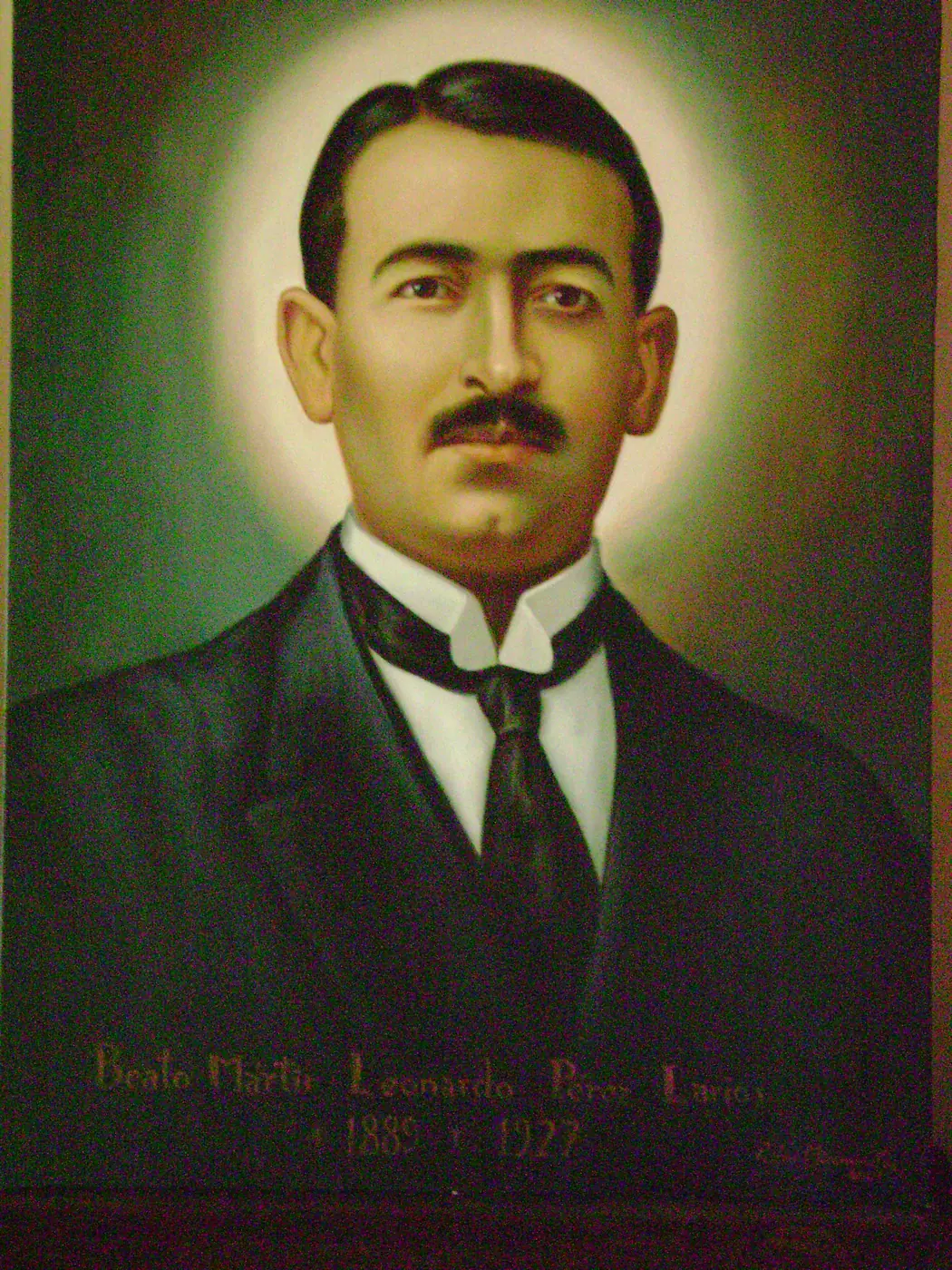
January 30, 1928
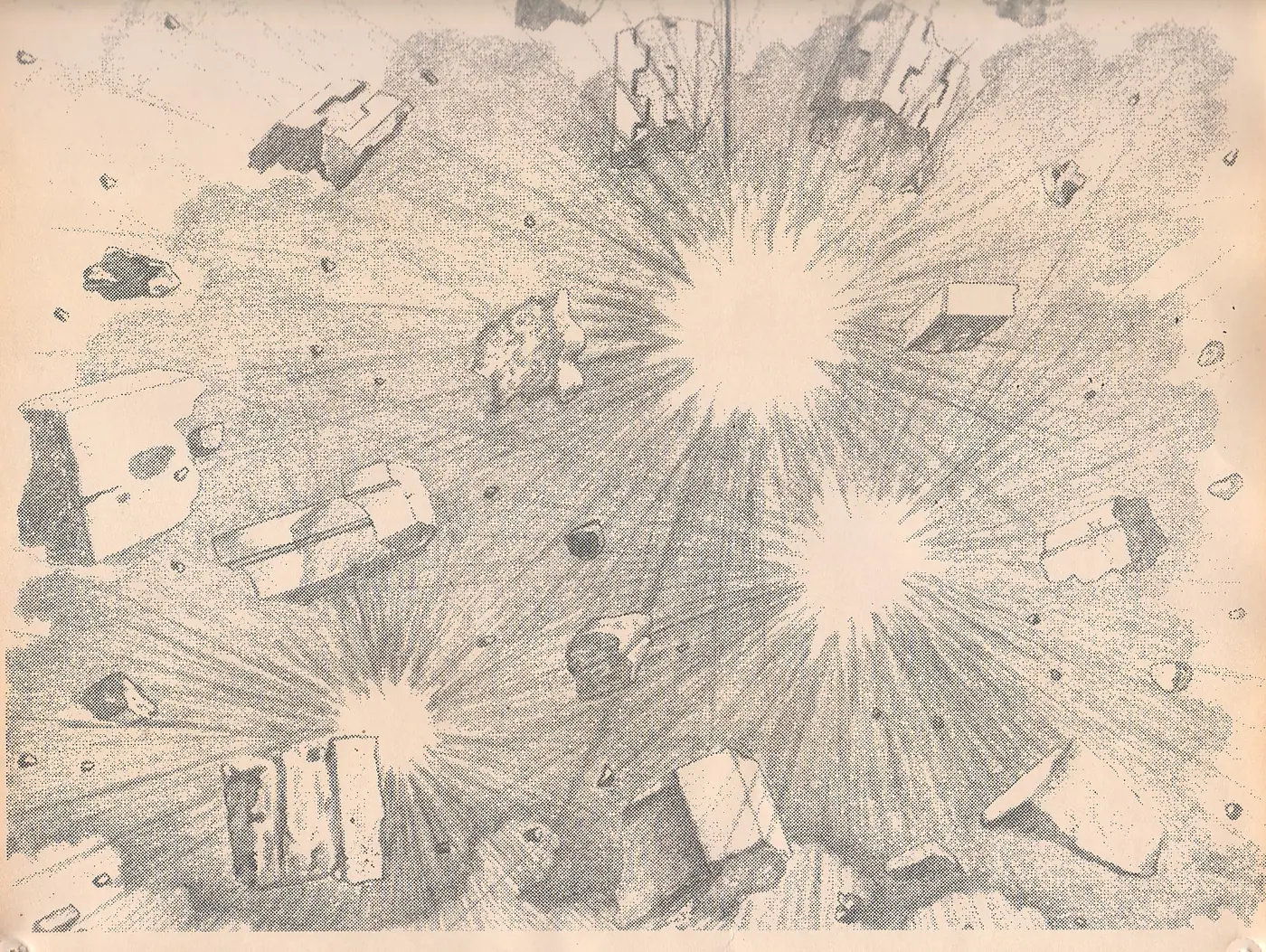
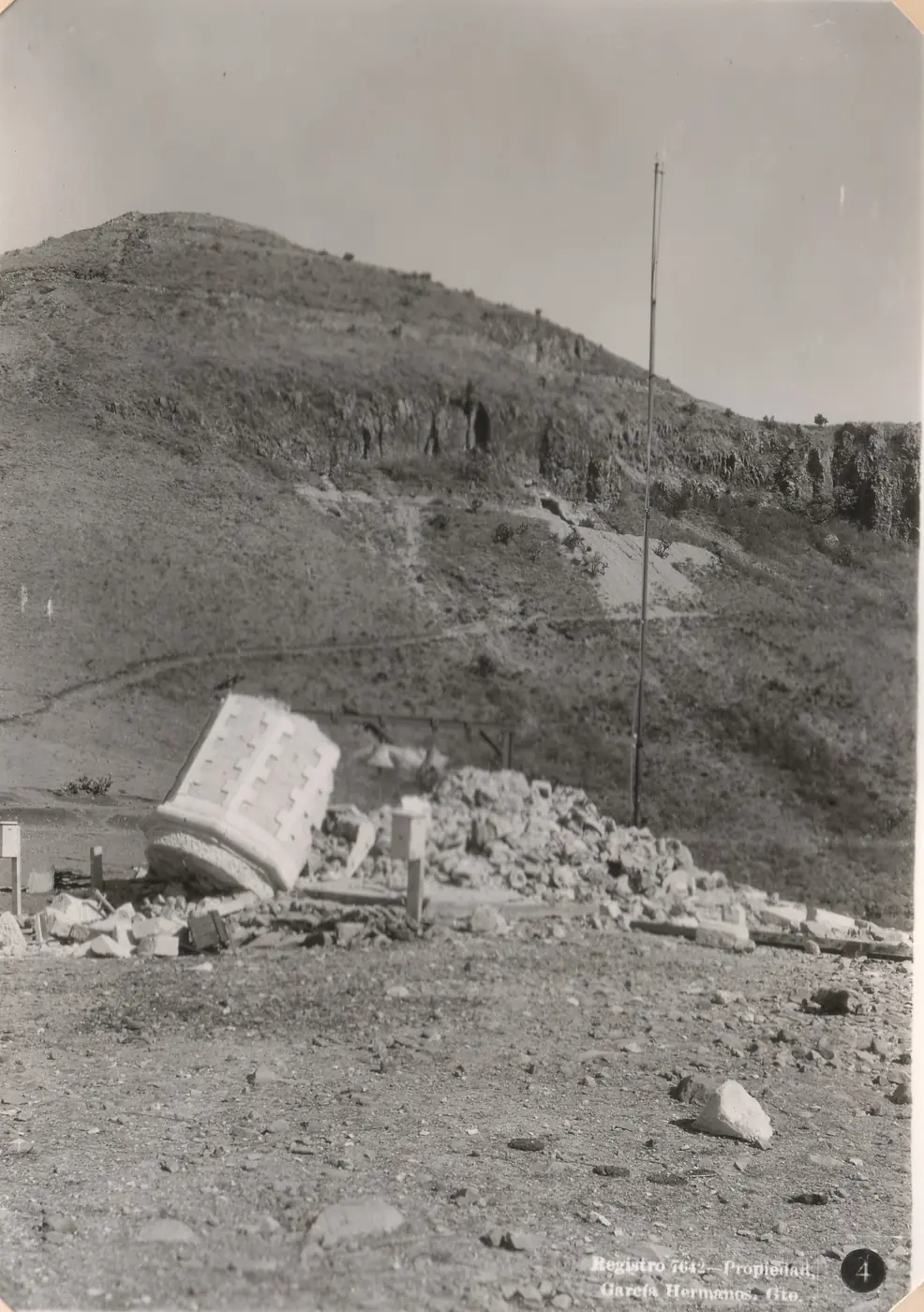
During the religious persecution, the First Monument to Christ the King on Cubilete Hill is dynamited.
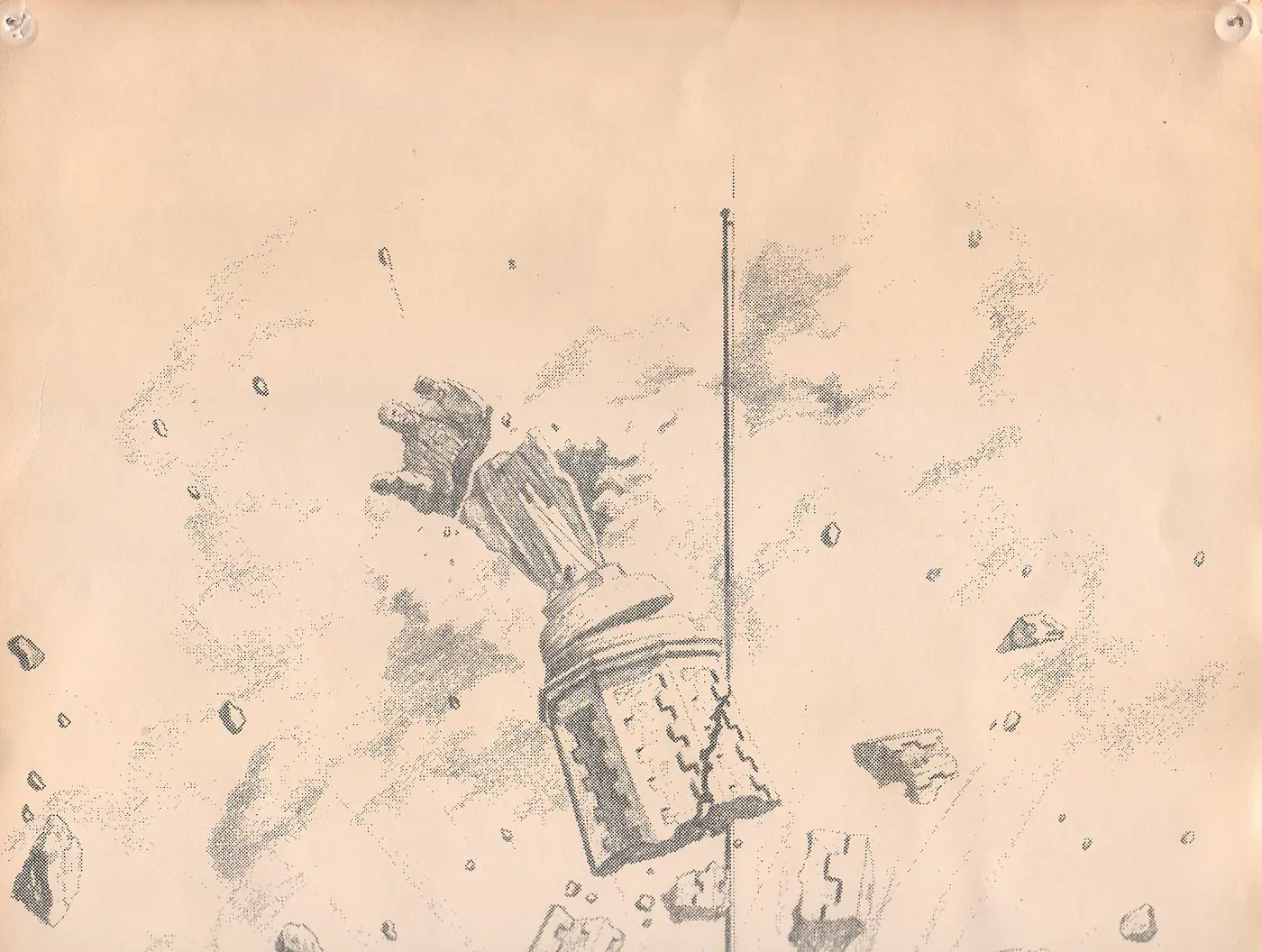
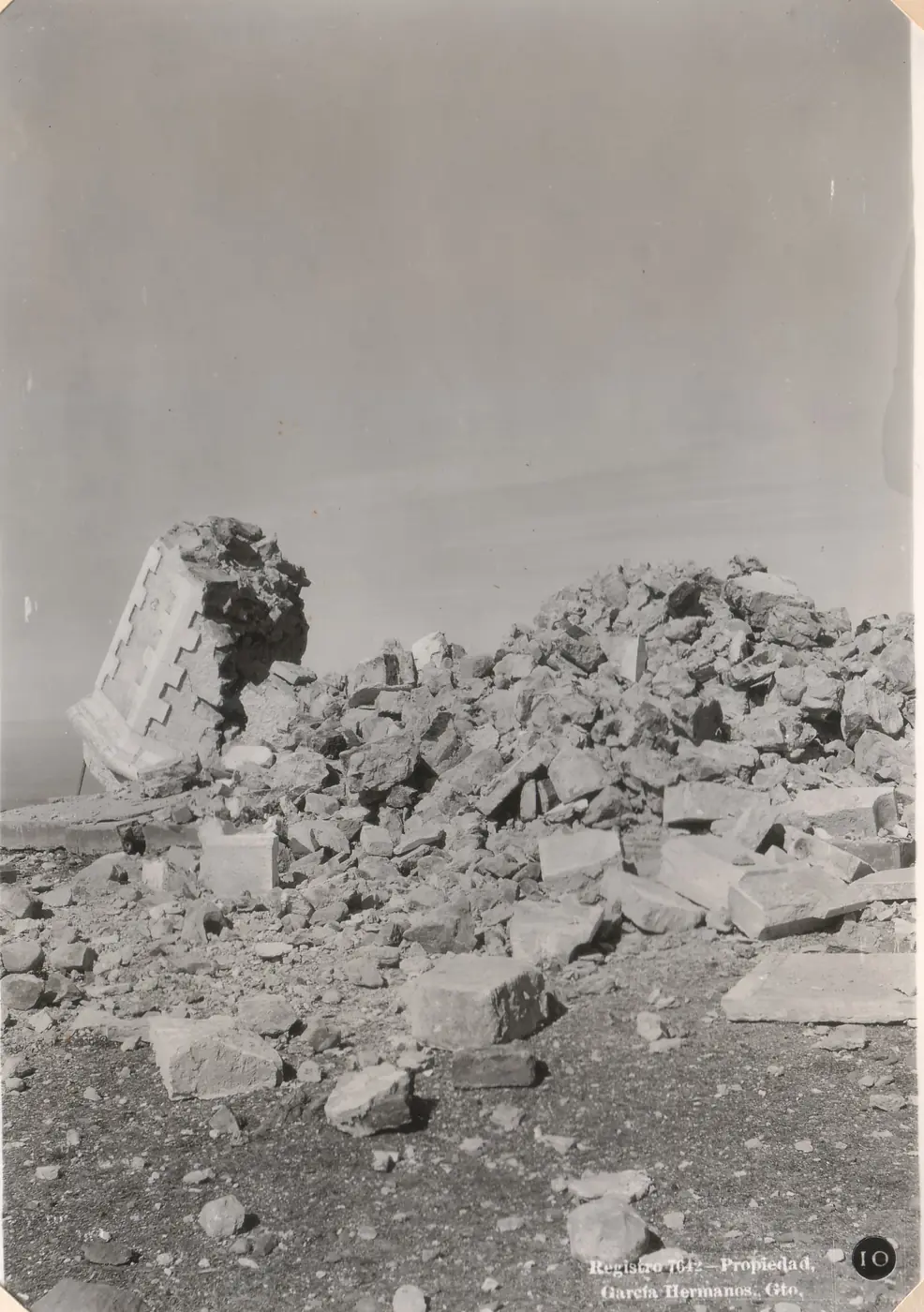
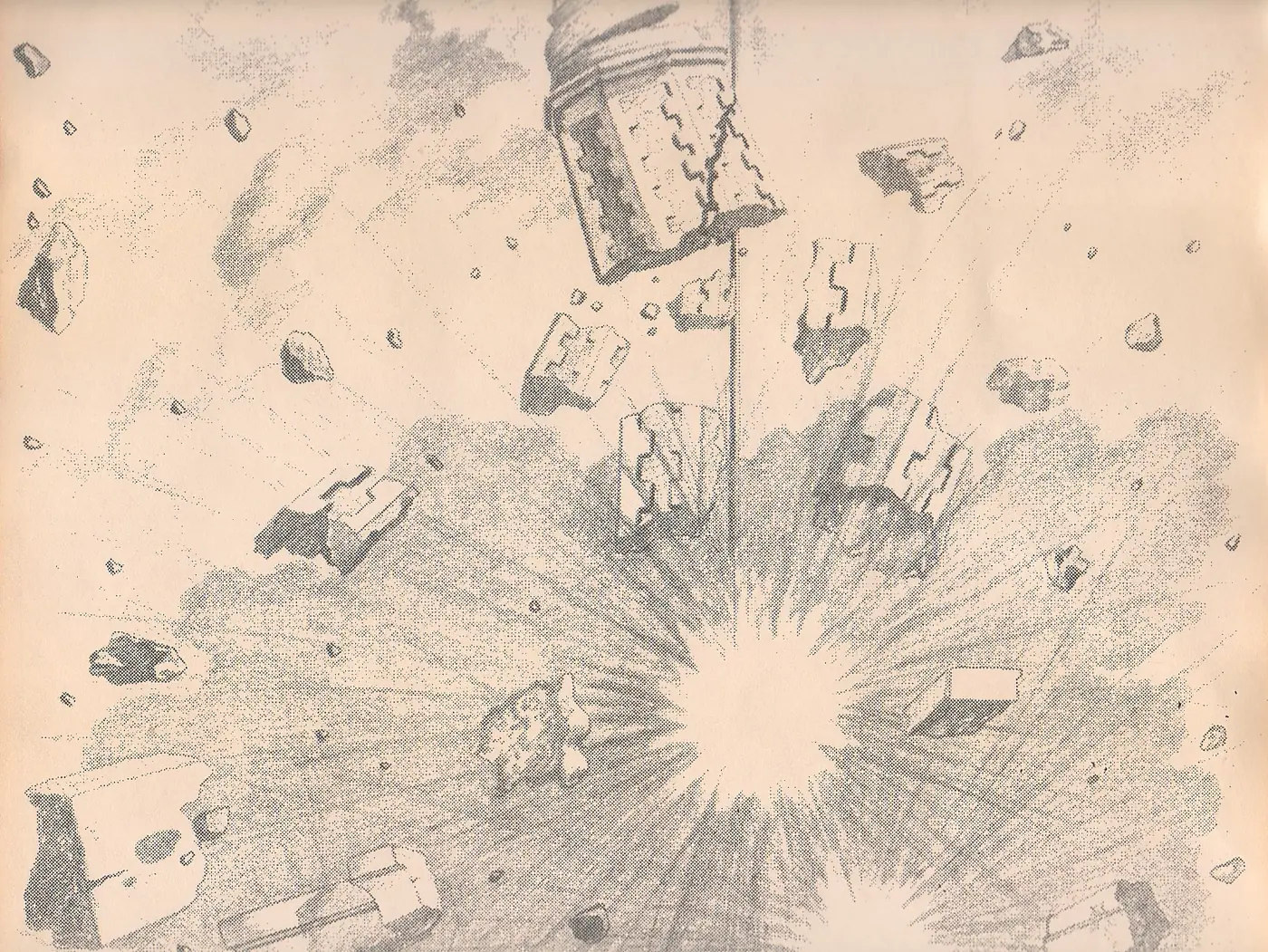
1928
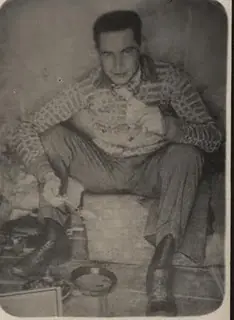
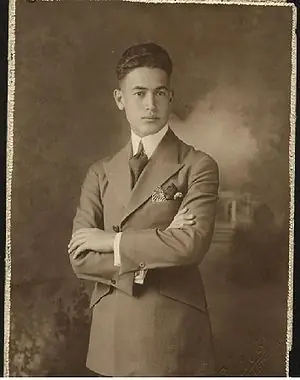
General Álvaro Obregón is re-elected President of the Republic and is assassinated by José de León Toral.
1930 – 1949
A new beginning
January 11, 1938
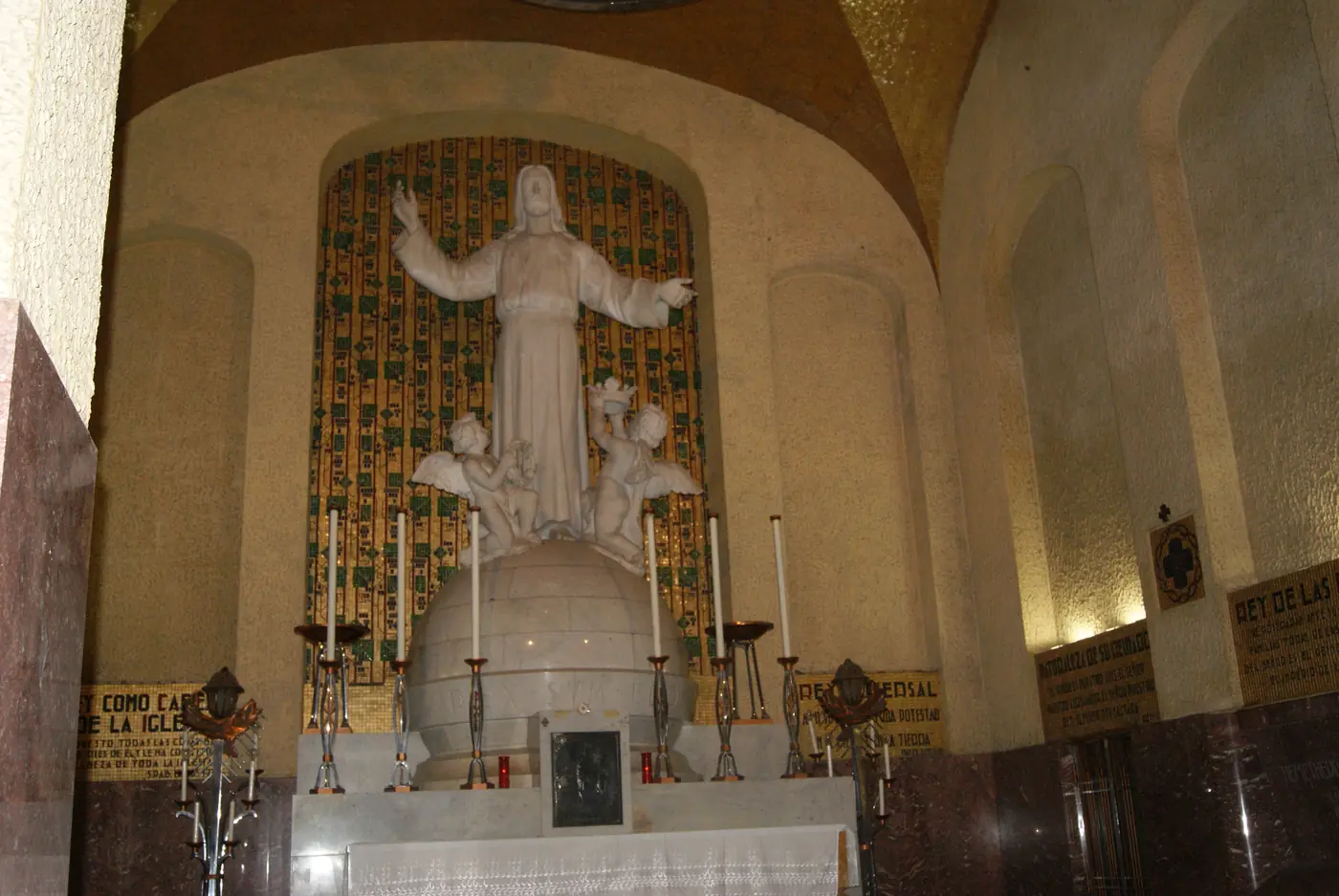
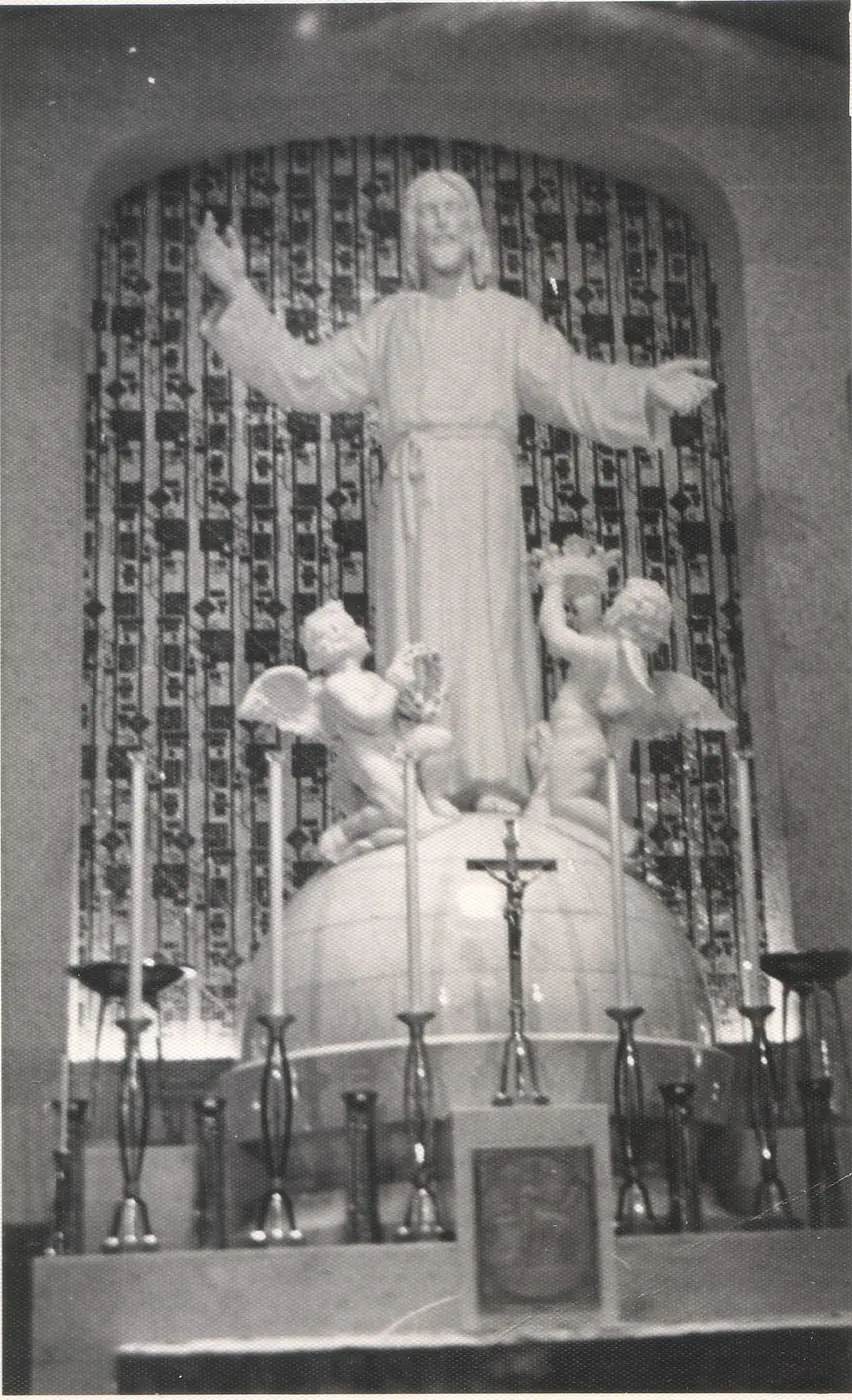
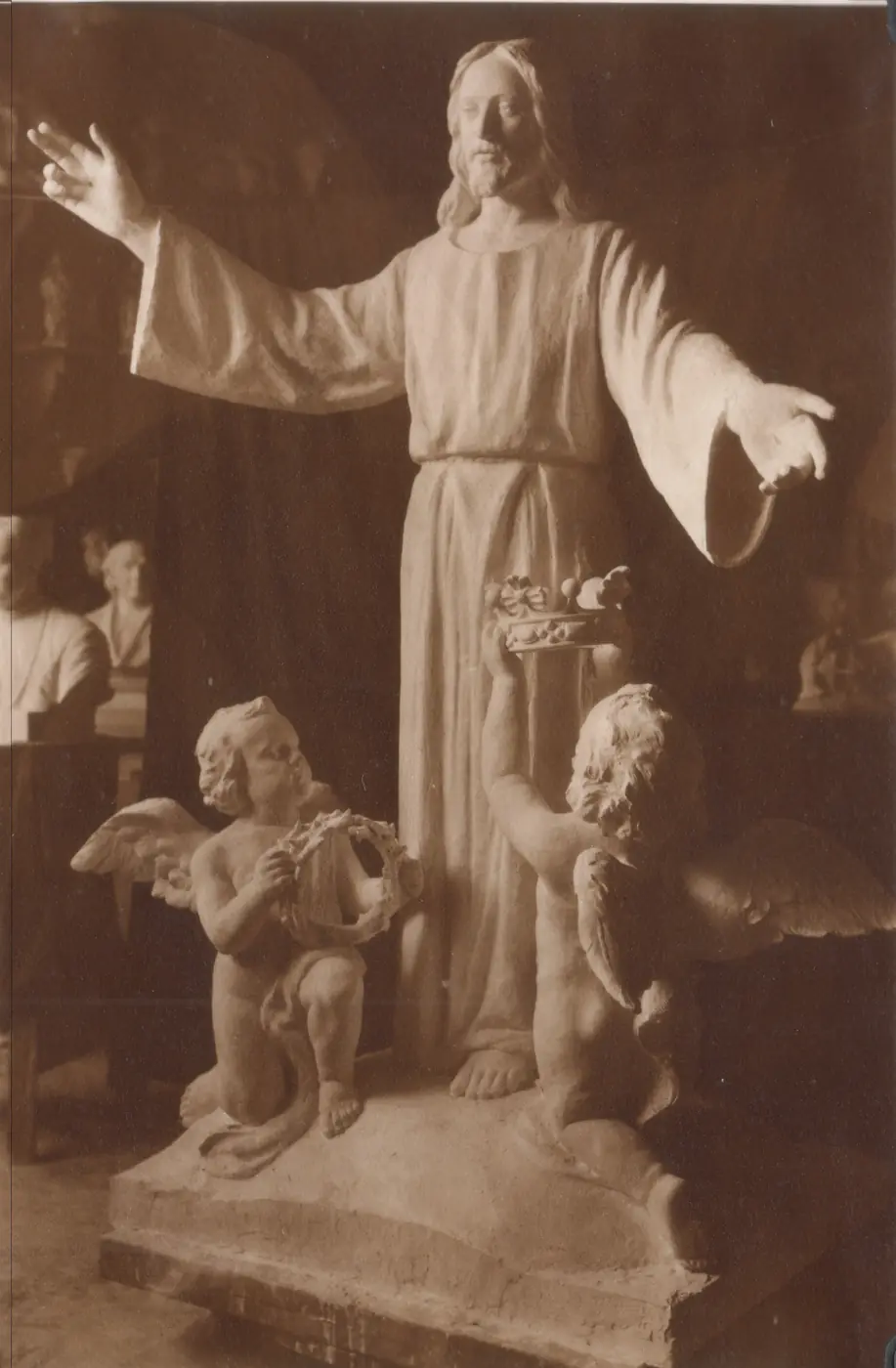
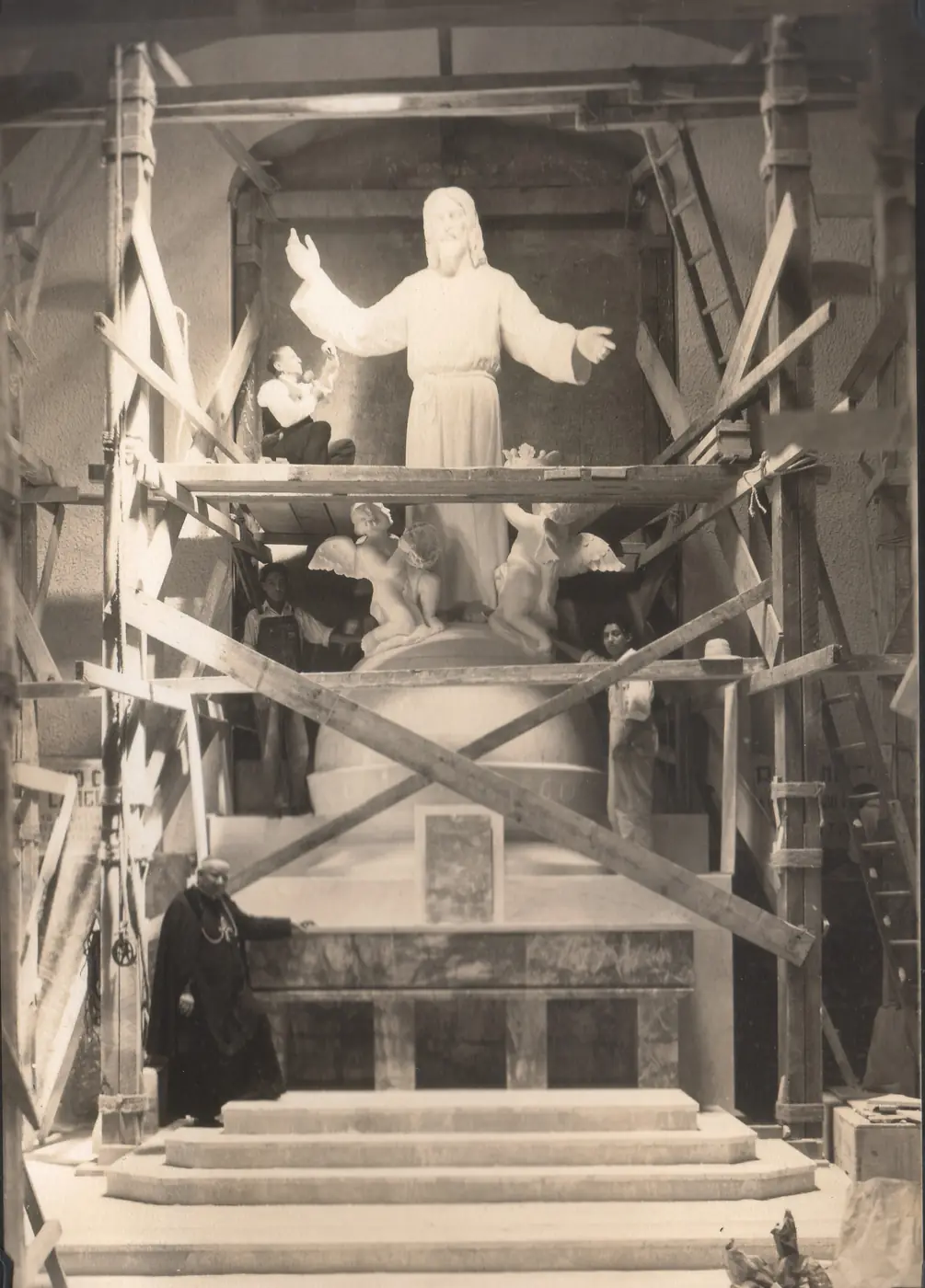
Consecration of the Third Monument to Christ the King, carved in marble by Adolfo Ponzanelli and commissioned by Bishop Valverde y Téllez for the Metropolitan Cathedral of León. Years later, the Bishop’s mortal remains were laid to rest there.
April 11, 1942
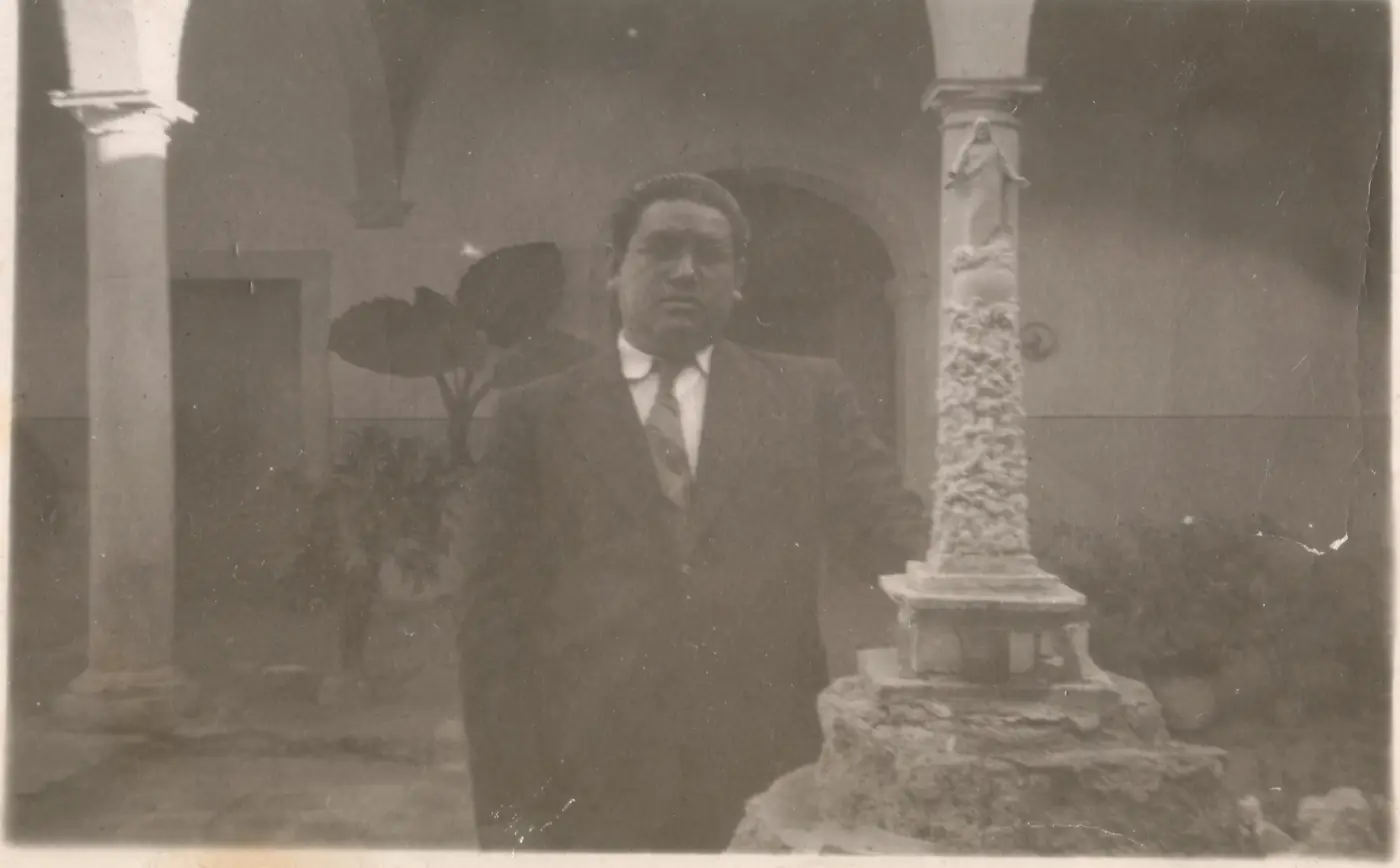
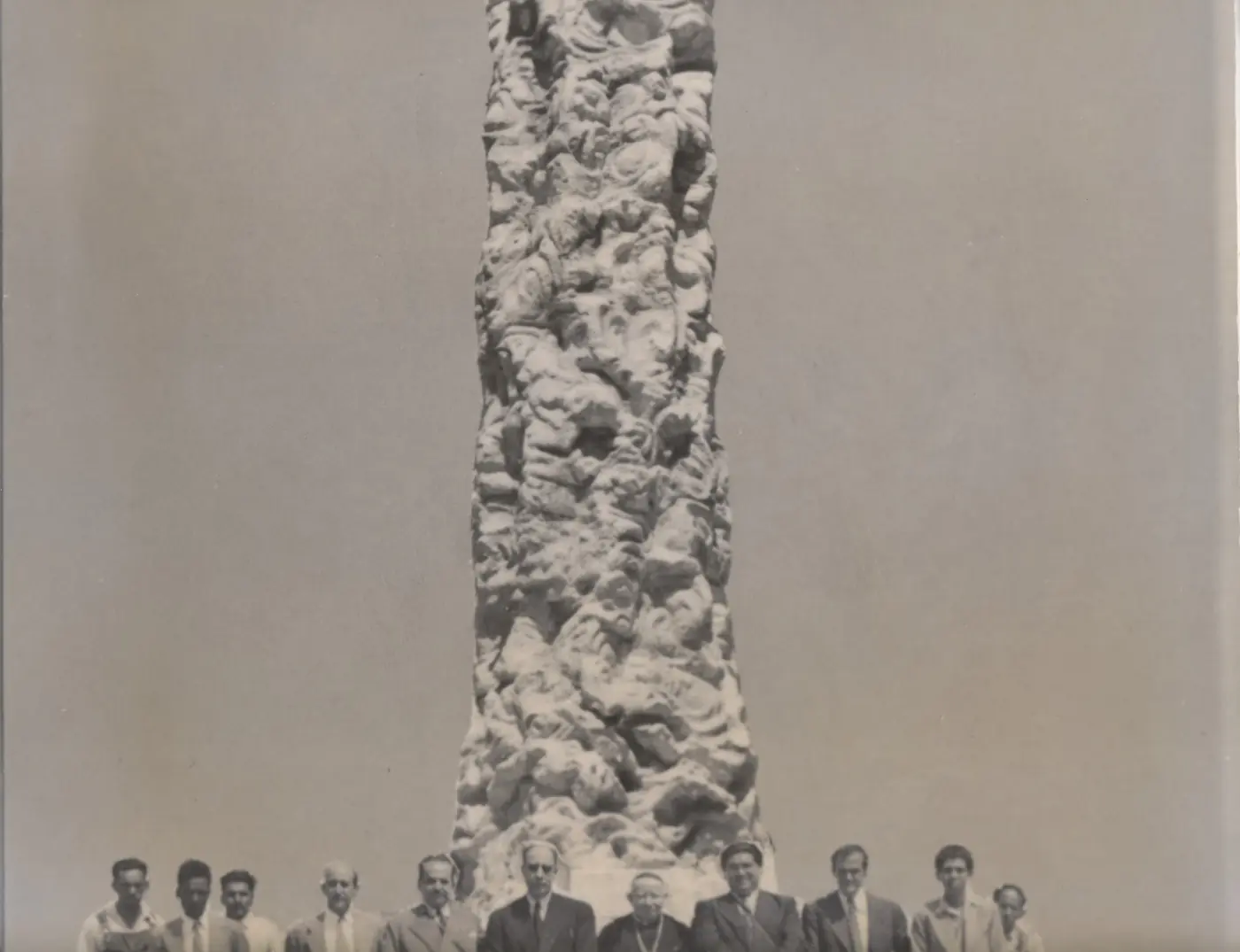
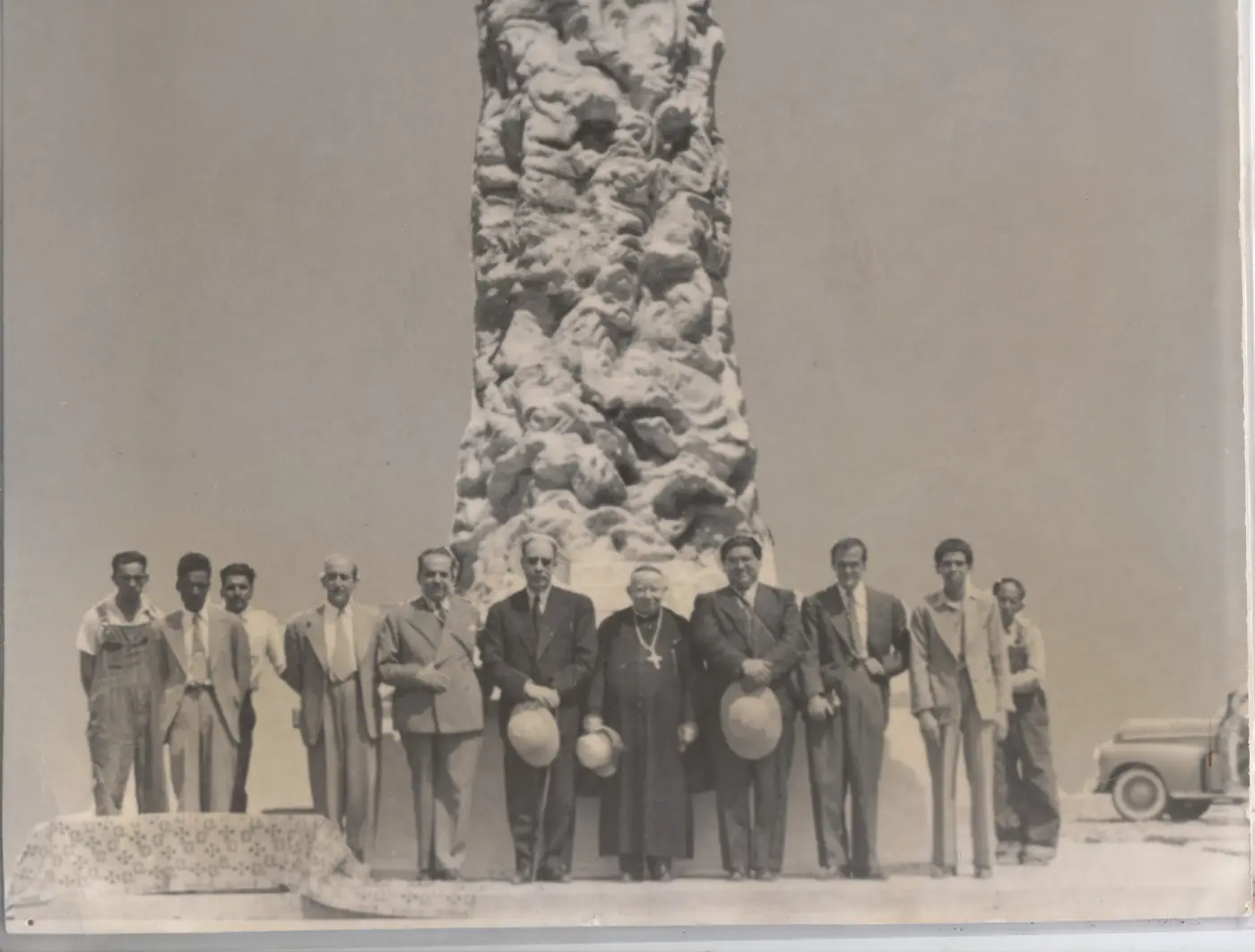
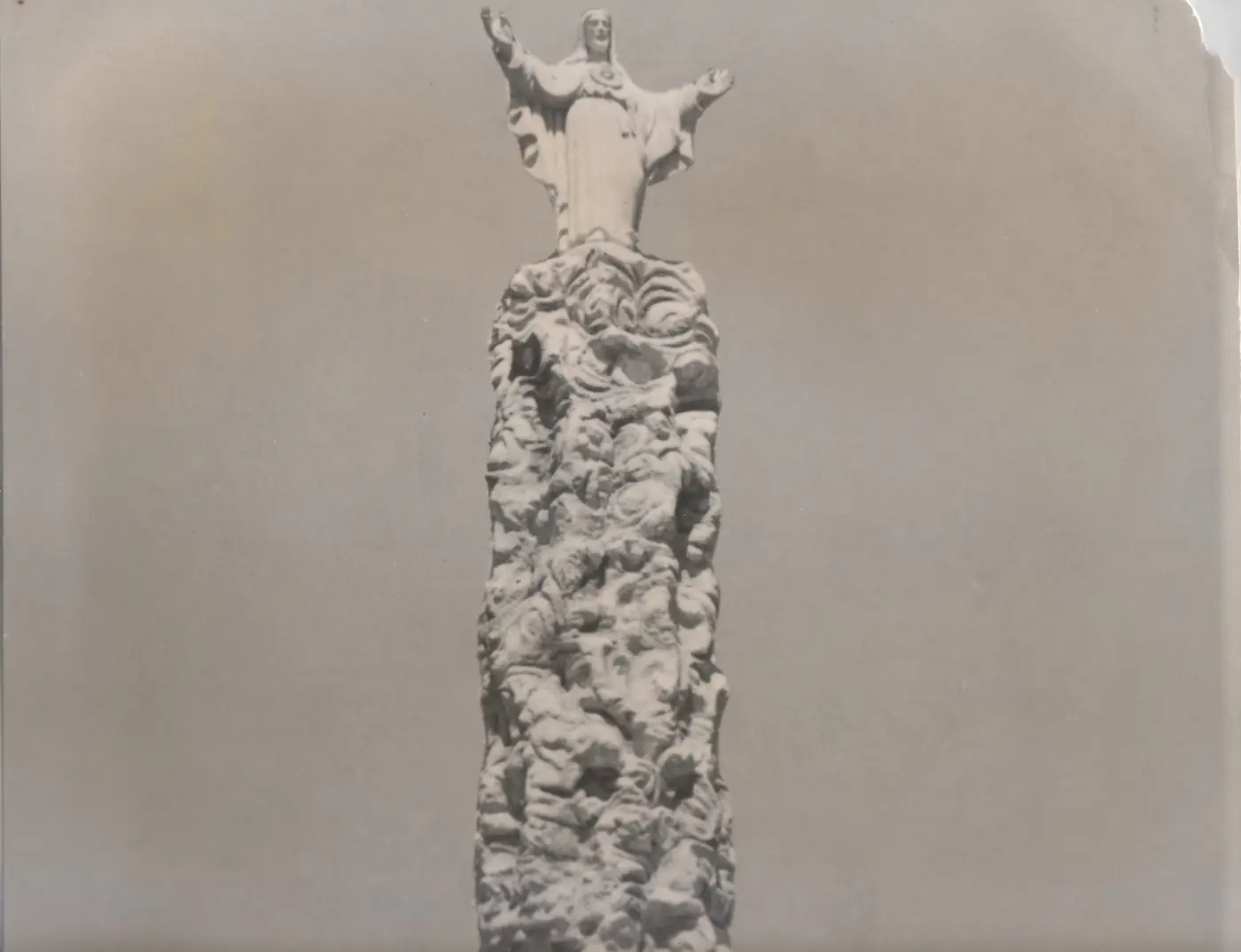
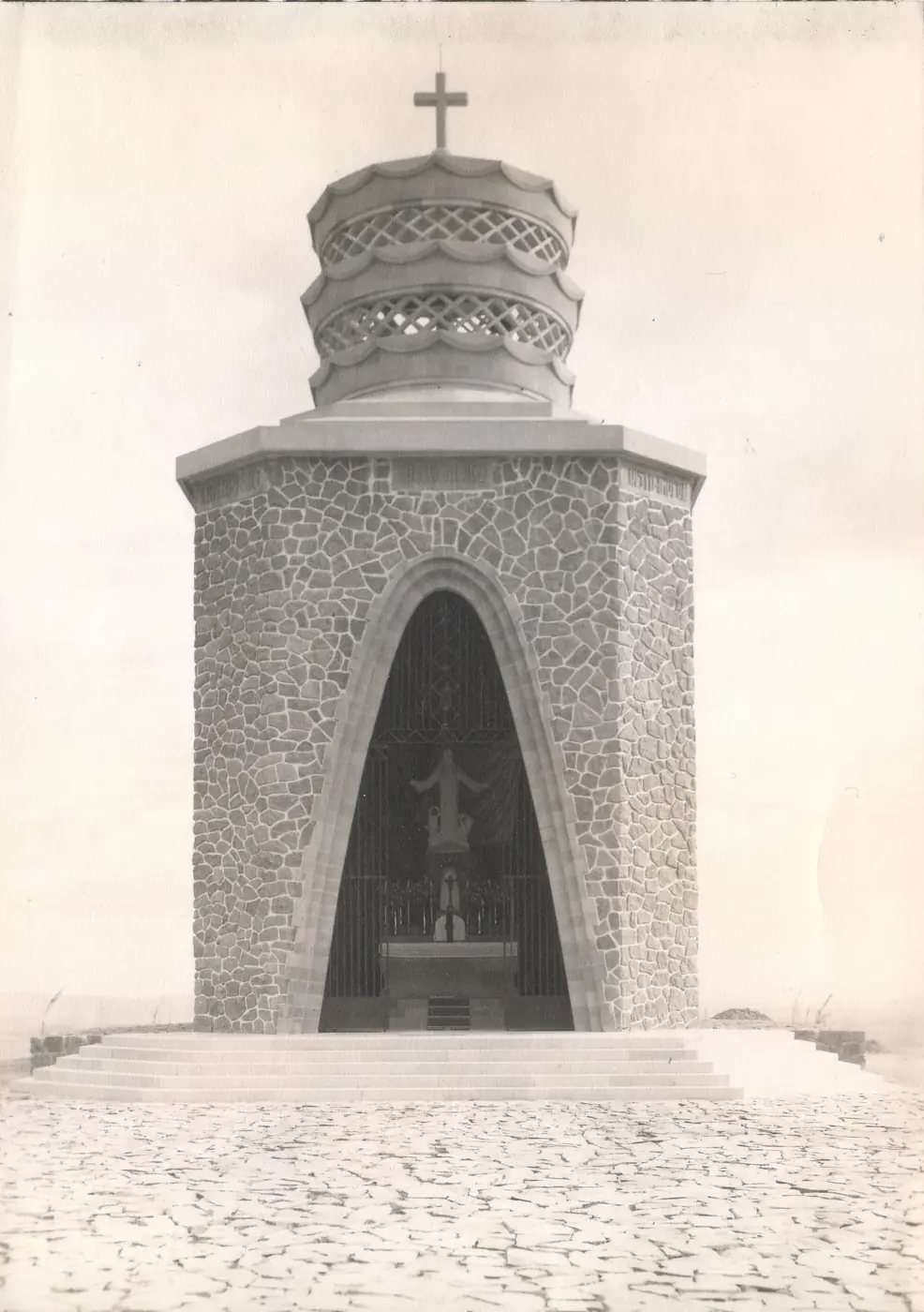
The Fourth Monument to Christ the King is built, also called the “Christ of the Clouds” for the cloud-shaped column on which it stands. It was funded by Fr. José Ascensión Betancourt, later the Shrine’s first chaplain, and blessed by Bishop Valverde.
February 27, 1943
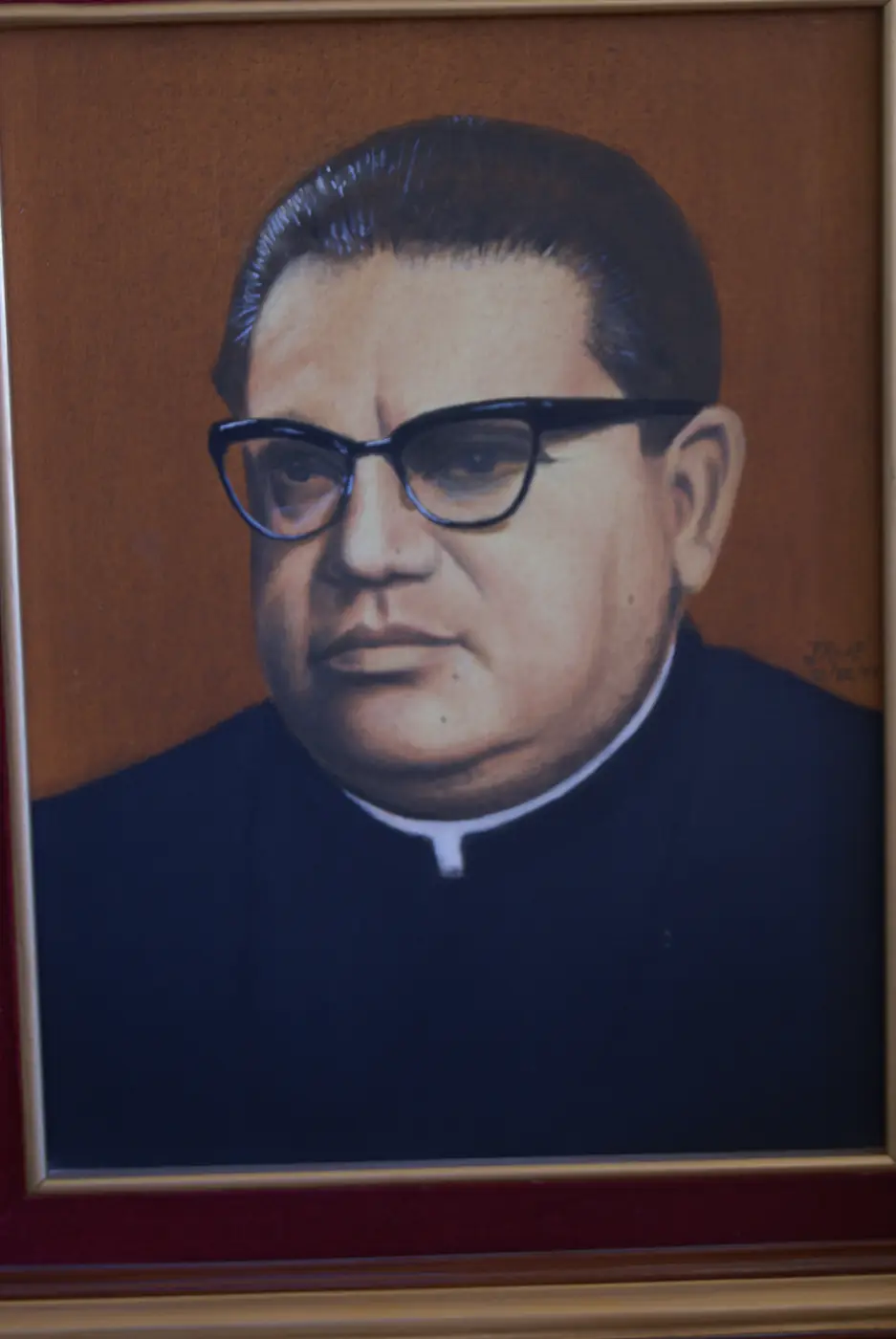
Fr. José Ascensión Betancourt, a priest from Mineral de San Nicolás, Guanajuato, is appointed first Chaplain of the Shrine of Christ the King.
May 31, 1943
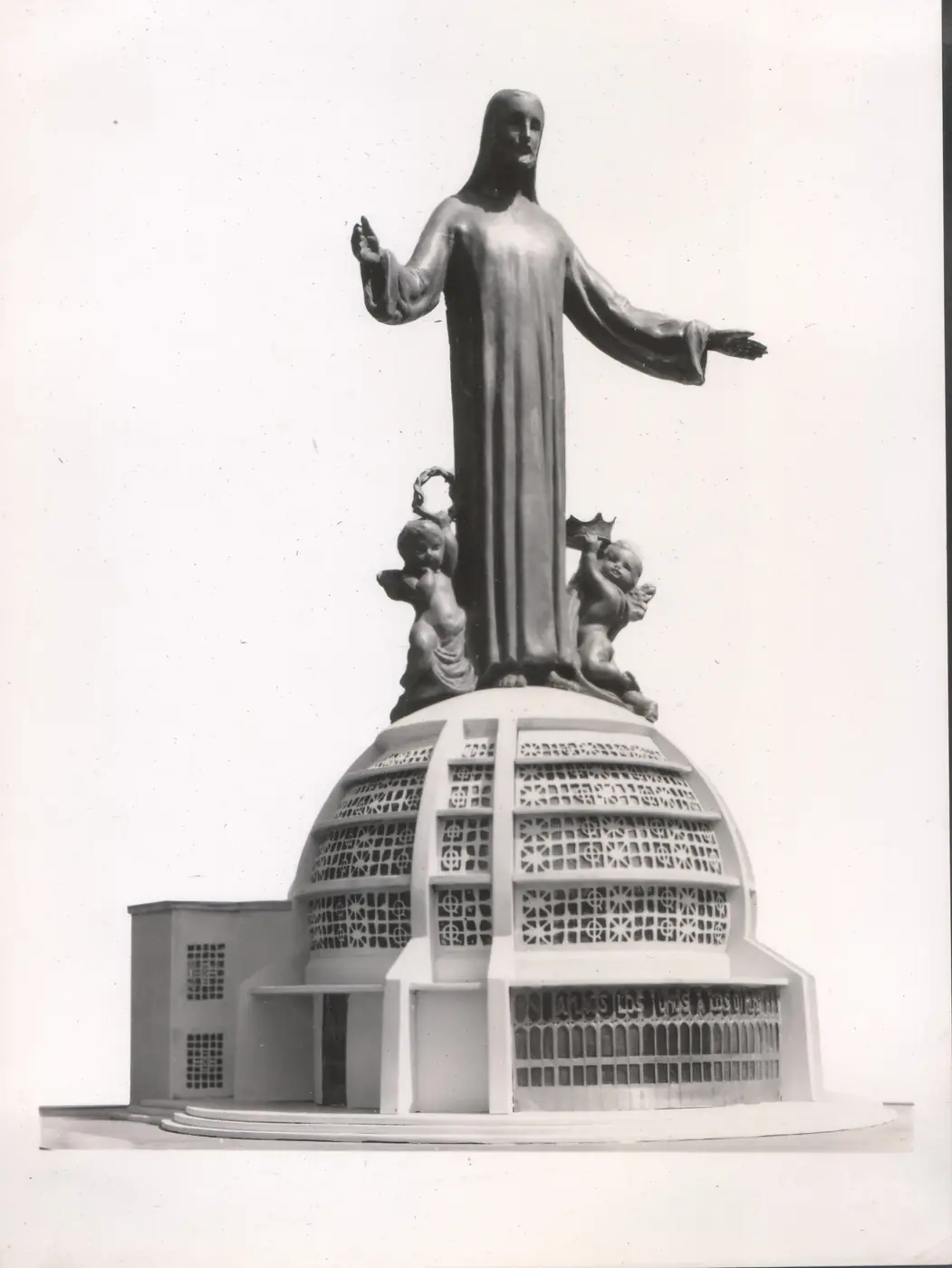
A document signed by the first Chaplain, Fr. J. Ascensión Betancourt, the architects Nicolás Mariscal and Carlos Ituarte, engineer Carlos Olvera and Msgr. Amado Villanueva sets in motion the preparatory work for the Fifth and current Monument to Christ the King.
June 26, 1943
After hearing the request of Archbishop José Garibi Rivera and Msgr. Amado Villanueva, President Manuel Ávila Camacho agrees to the construction of a National Votive Temple to Christ the King, granting permission for a work that, in his words, should have been carried out years earlier but was not because of the country’s unfortunate discord.
November 1, 1943
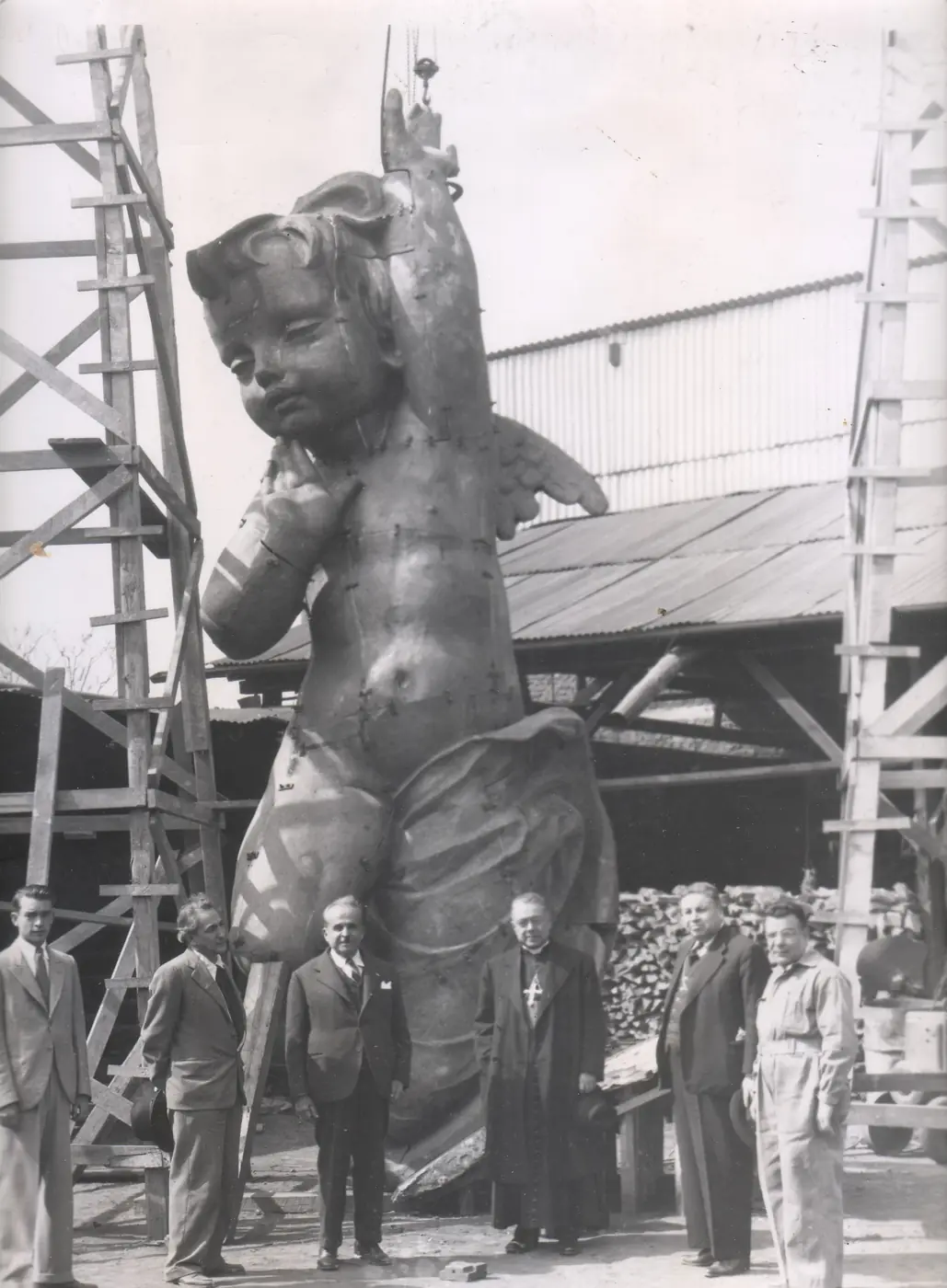
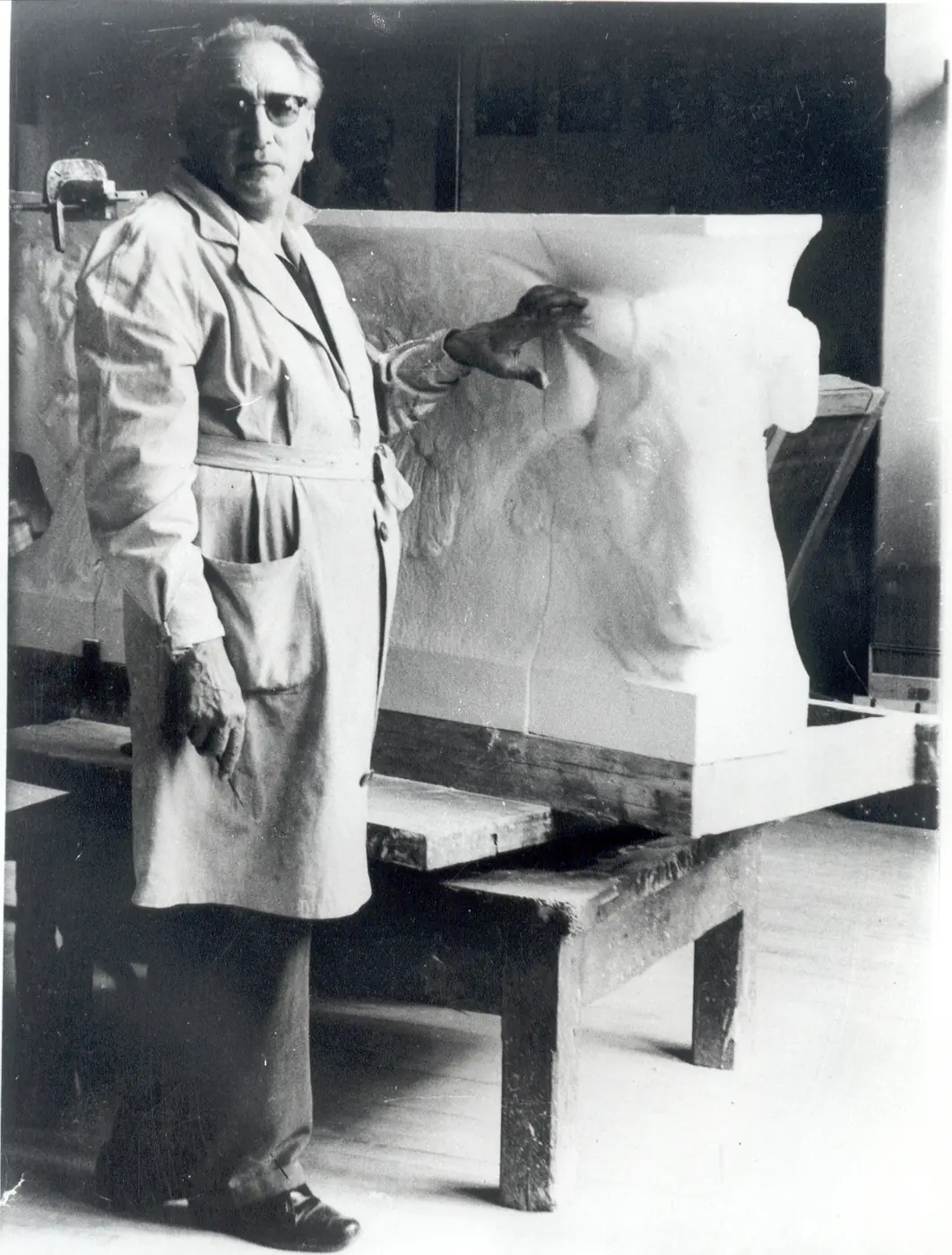
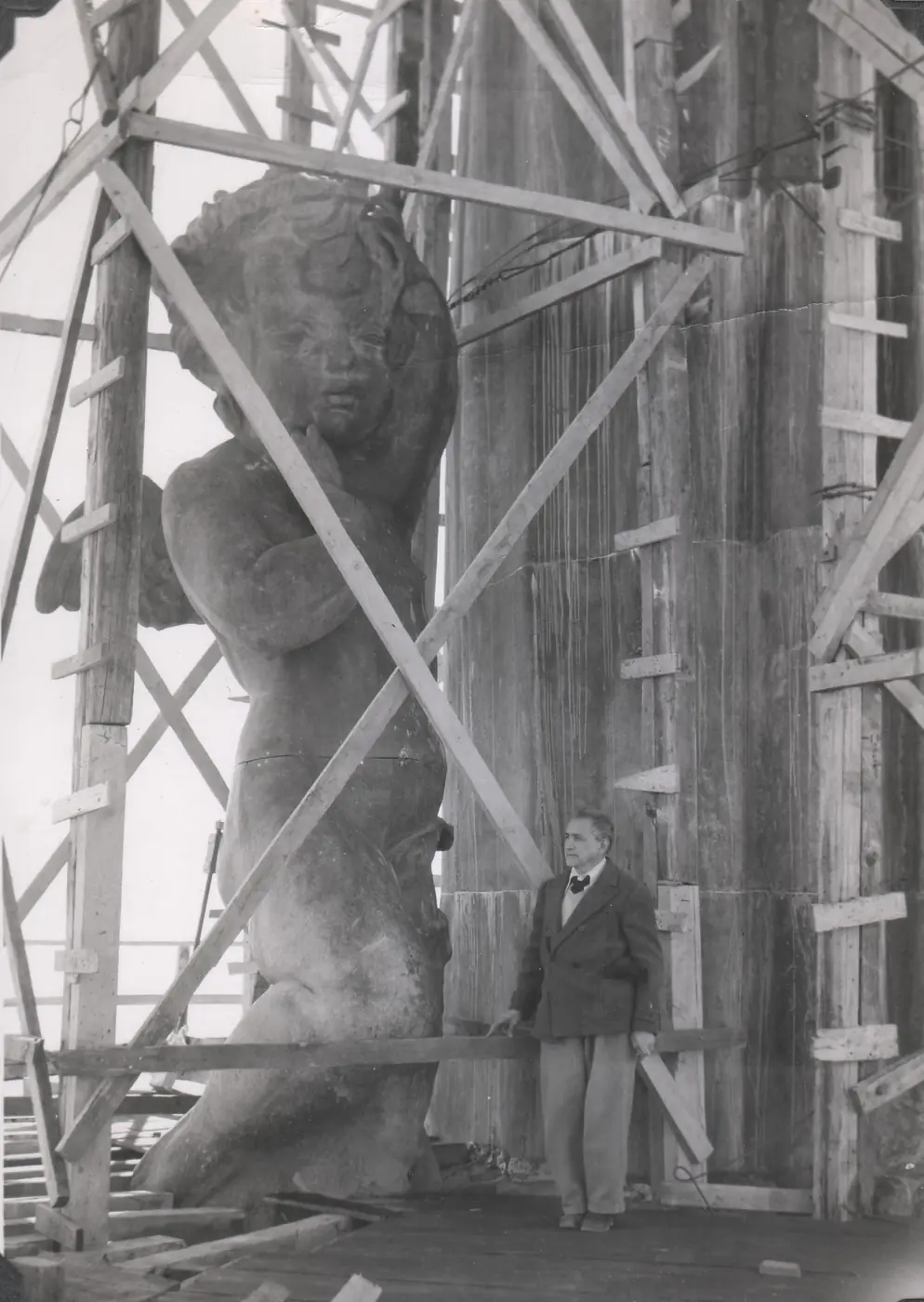
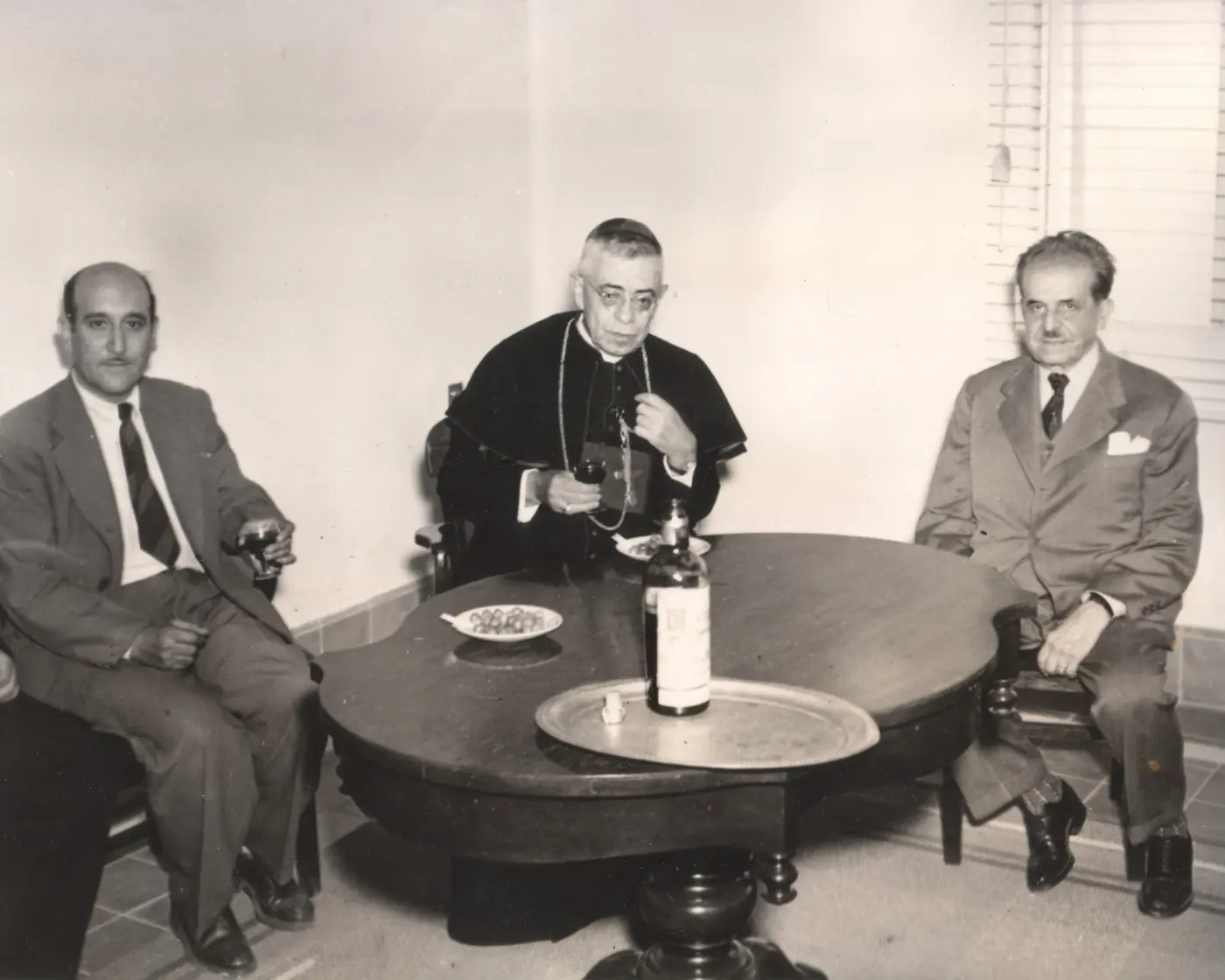
The Mexican Bishops’ Conference, presided over by Archbishop Luis María Martínez of Mexico, approves Bishop Valverde’s request to build the Fifth Monument and appoints the Mexican sculptor Fidias Elizondo to create the statue of Christ the King. The shrine is entrusted to the architects Nicolás Mariscal and Carlos Ituarte.
December 11, 1944
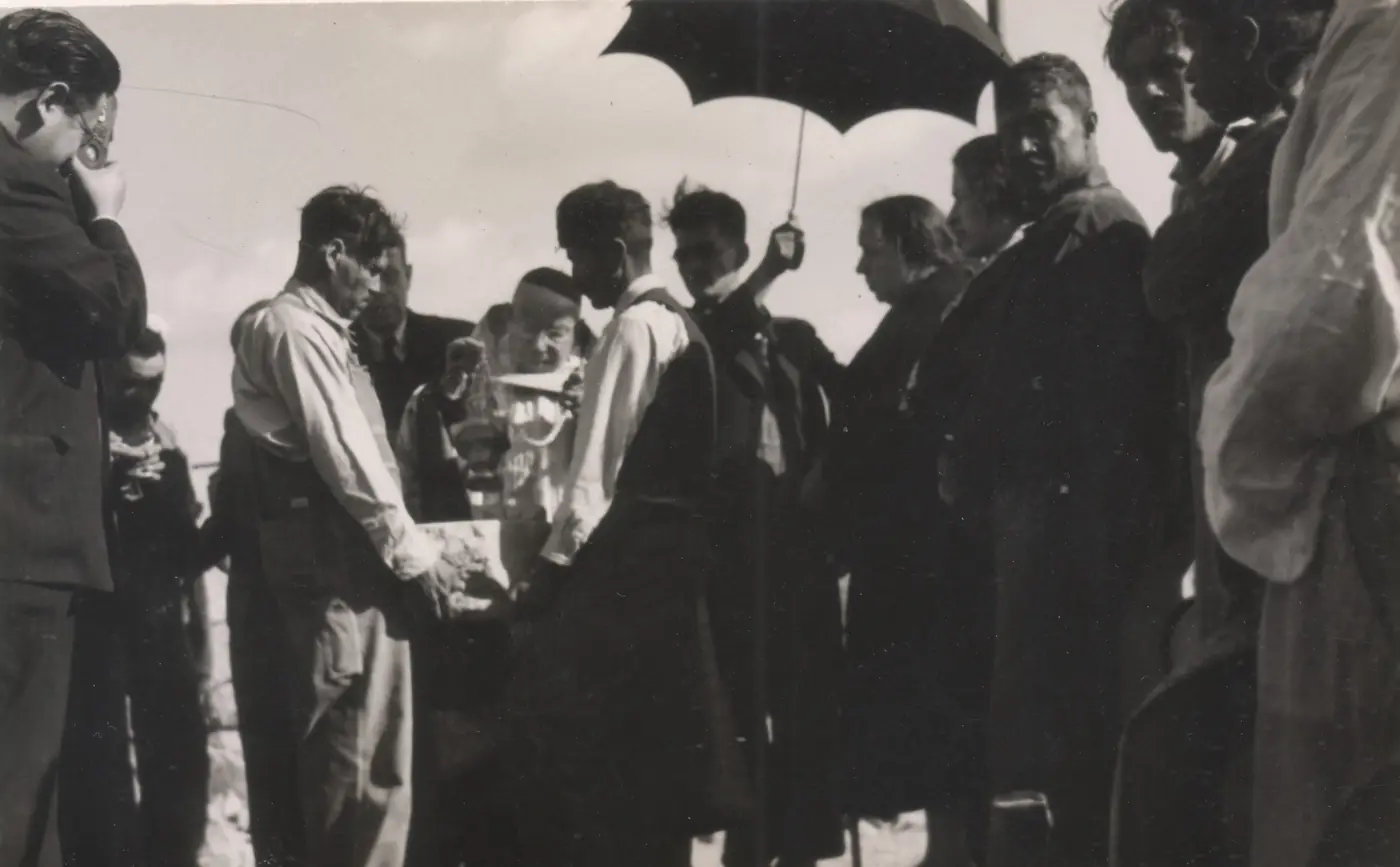
After obtaining the necessary permits, the first stone of the current Monument to Christ the King is laid. The Expiatory Hermitage is blessed the same day as a memorial on the spot where the first monument was dynamited.
February 27, 1948
Pope Pius XII blesses and approves the Fifth and current Monument, expressing his praise for a work he was sure would please the Divine Redeemer and bear excellent fruit for the Mexican nation.
December 26, 1948
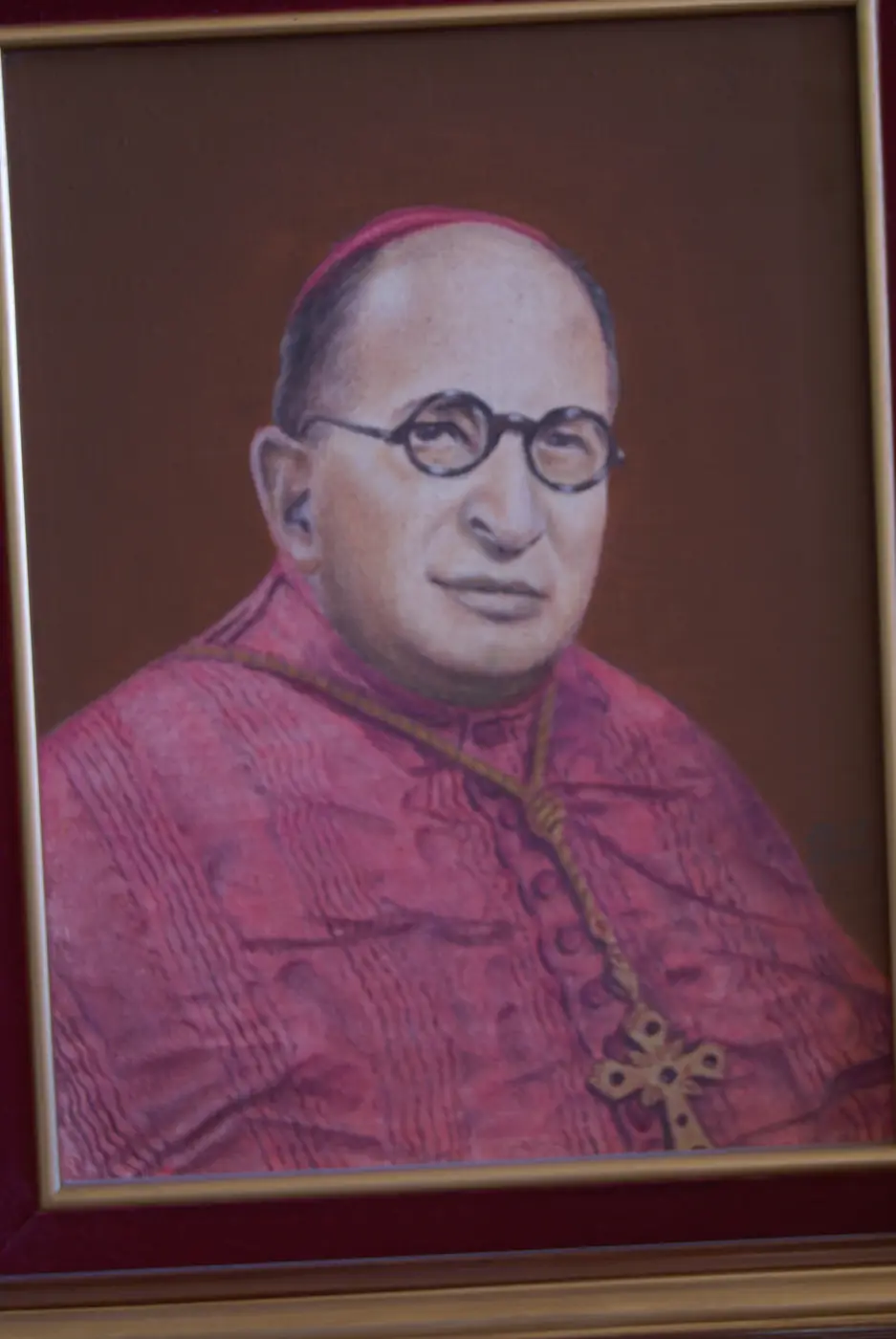
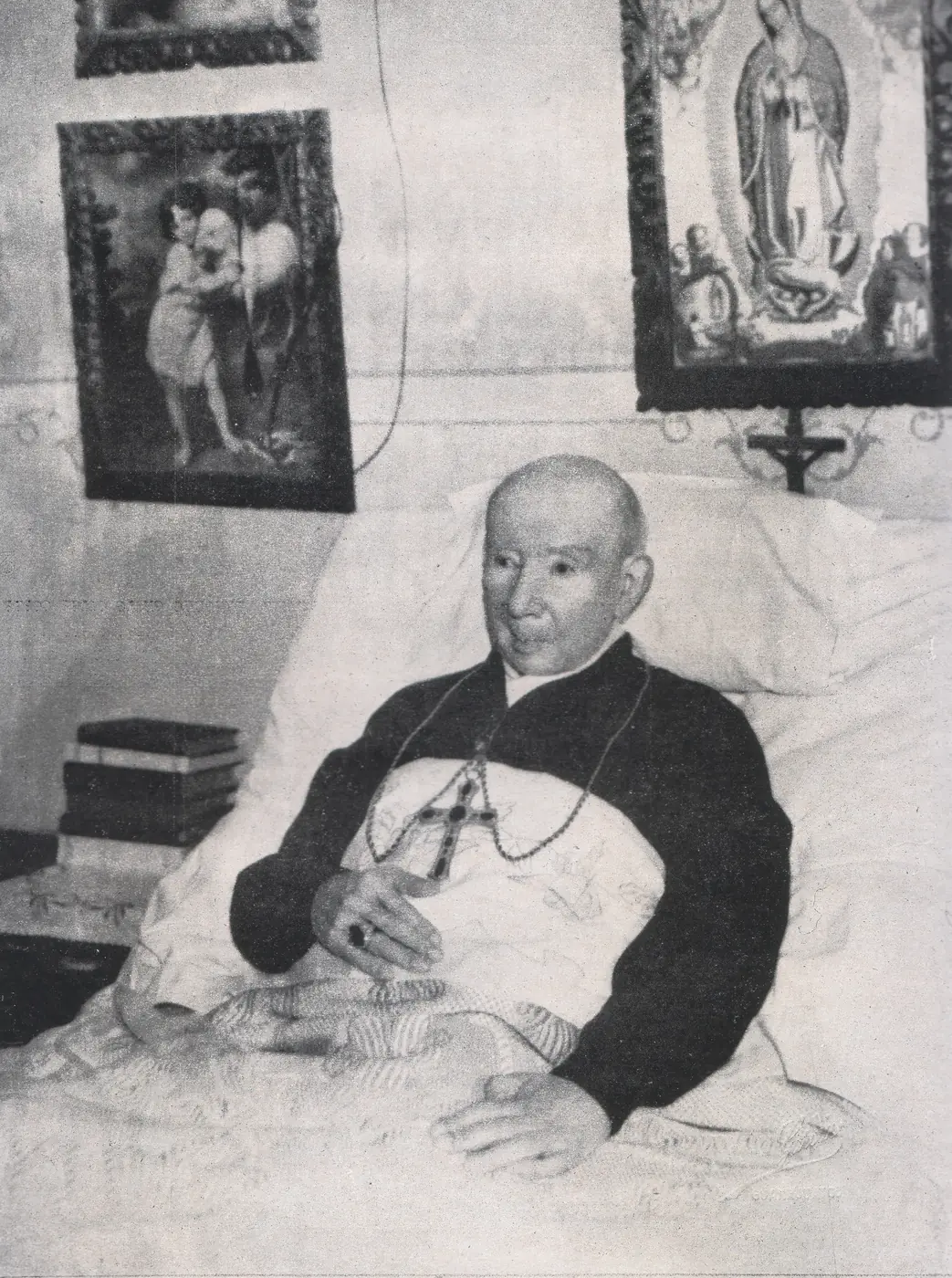
Death of the sixth Bishop of León, Emeterio Valverde y Téllez, who called himself the “Beggar of Christ the King”. His remains rest in the Cathedral of León beside the Third Monument. He saw the work advanced but not finished. Bishop Manuel Martín del Campo y Padilla, seventh Bishop of León, would continue the National Votive Shrine.
December 26, 1948
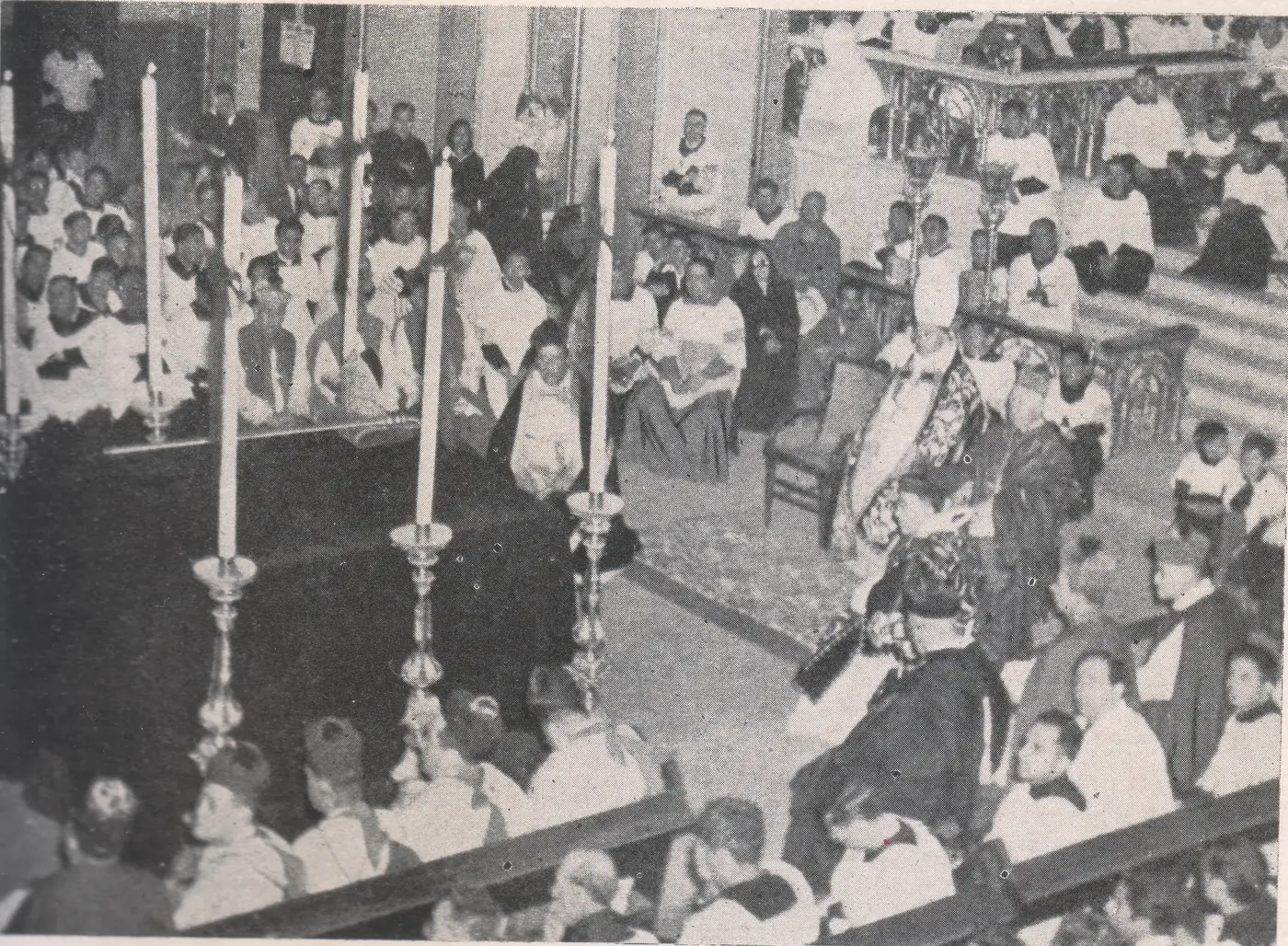
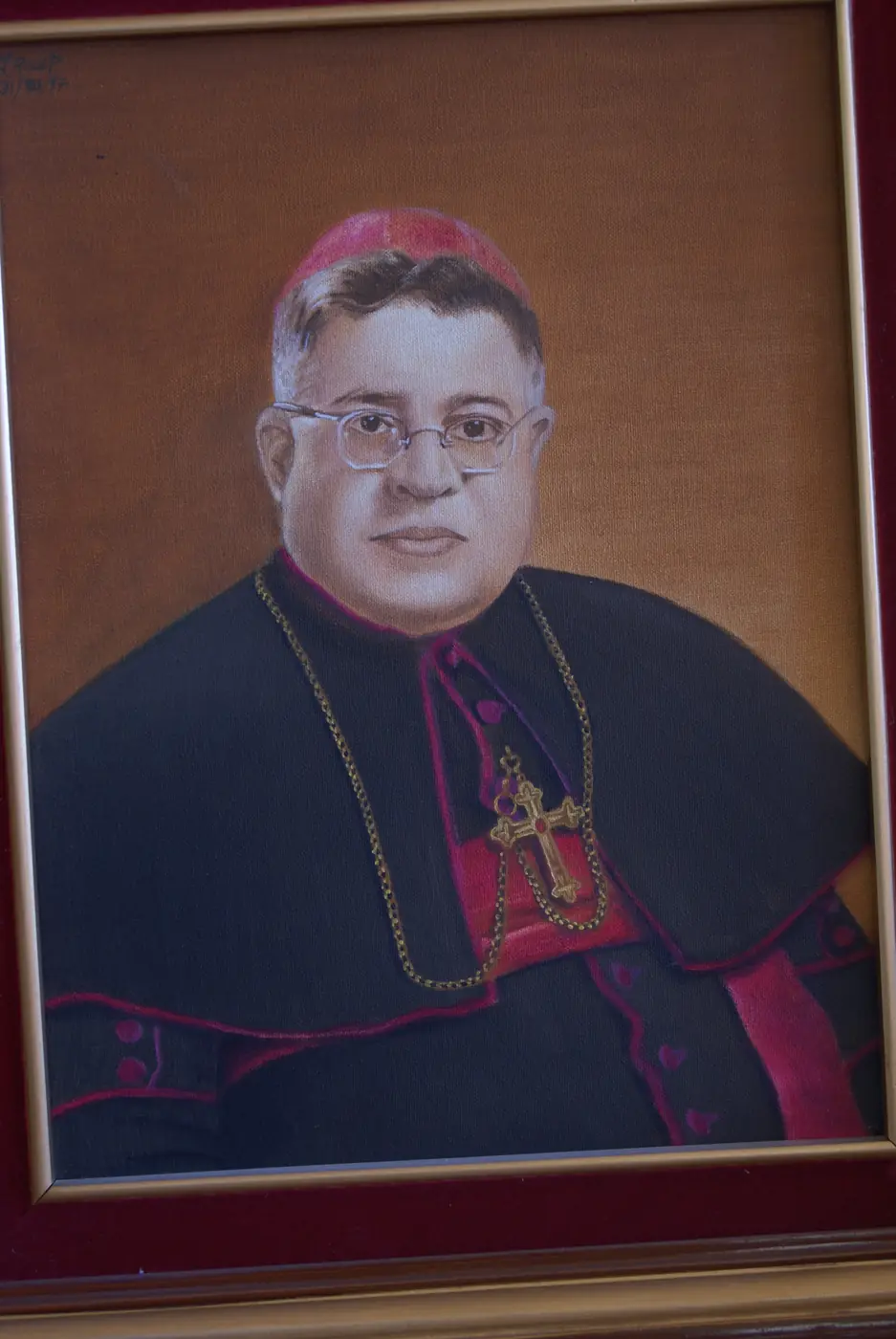
Bishop Manuel Martín del Campo y Padilla takes office as seventh Bishop of León.
August 17, 1949
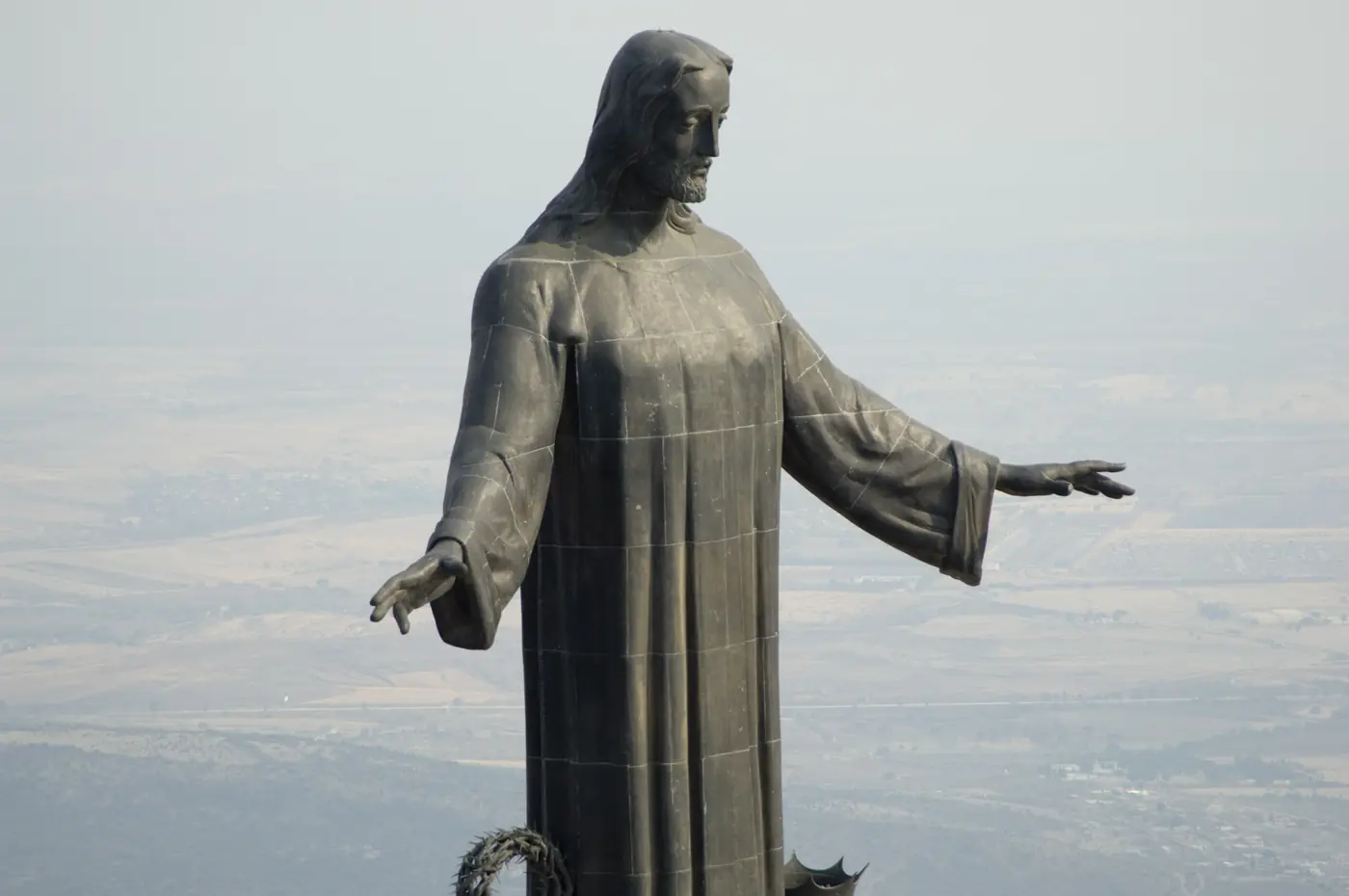
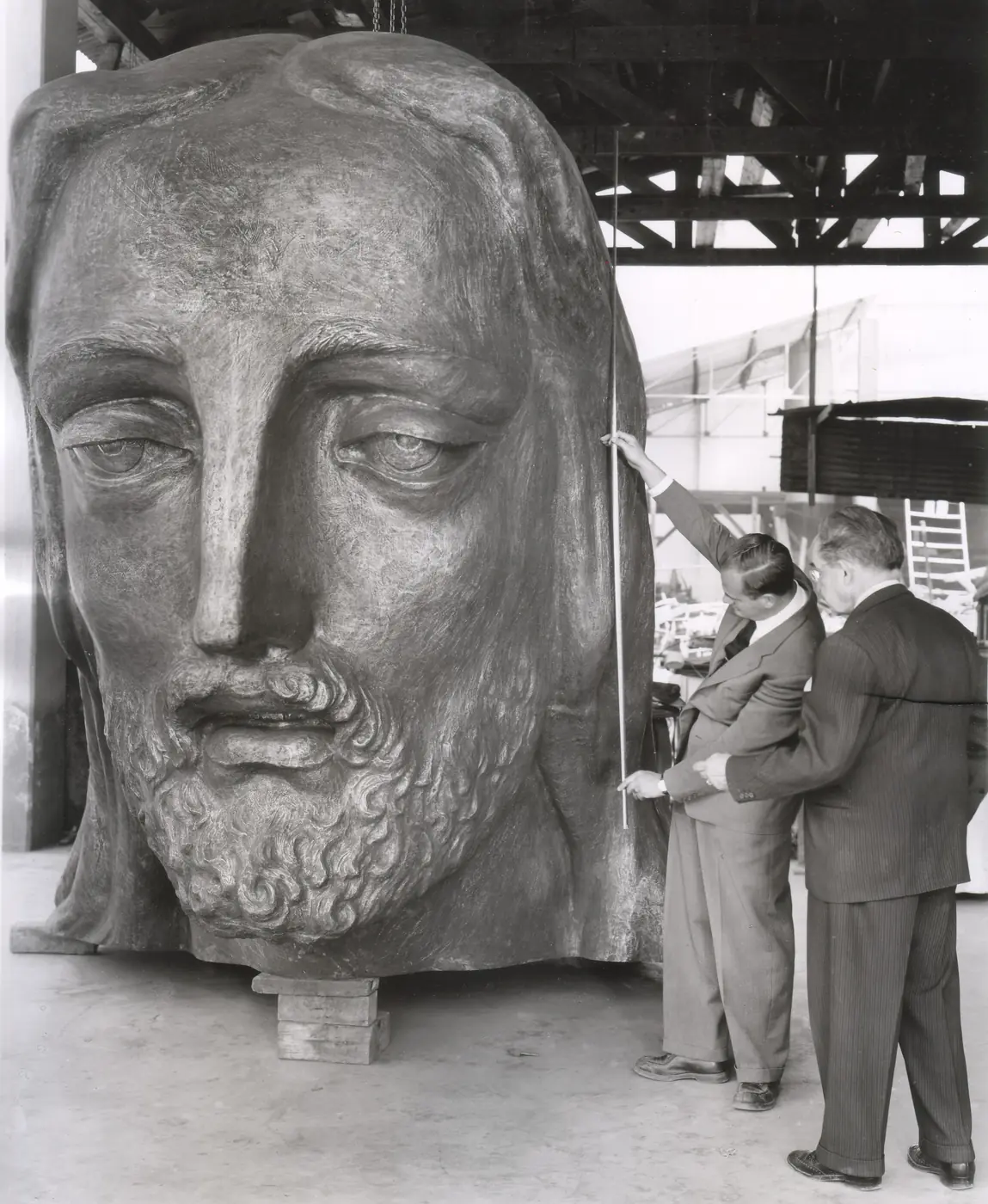
The sculptor Fidias Elizondo finishes casting the monumental head of Christ the King in Mexico City. From then until December 1950, the “Missionary Head” toured the states of Mexico.
1950 – 1999
The Shrine on the summit
December 11, 1950
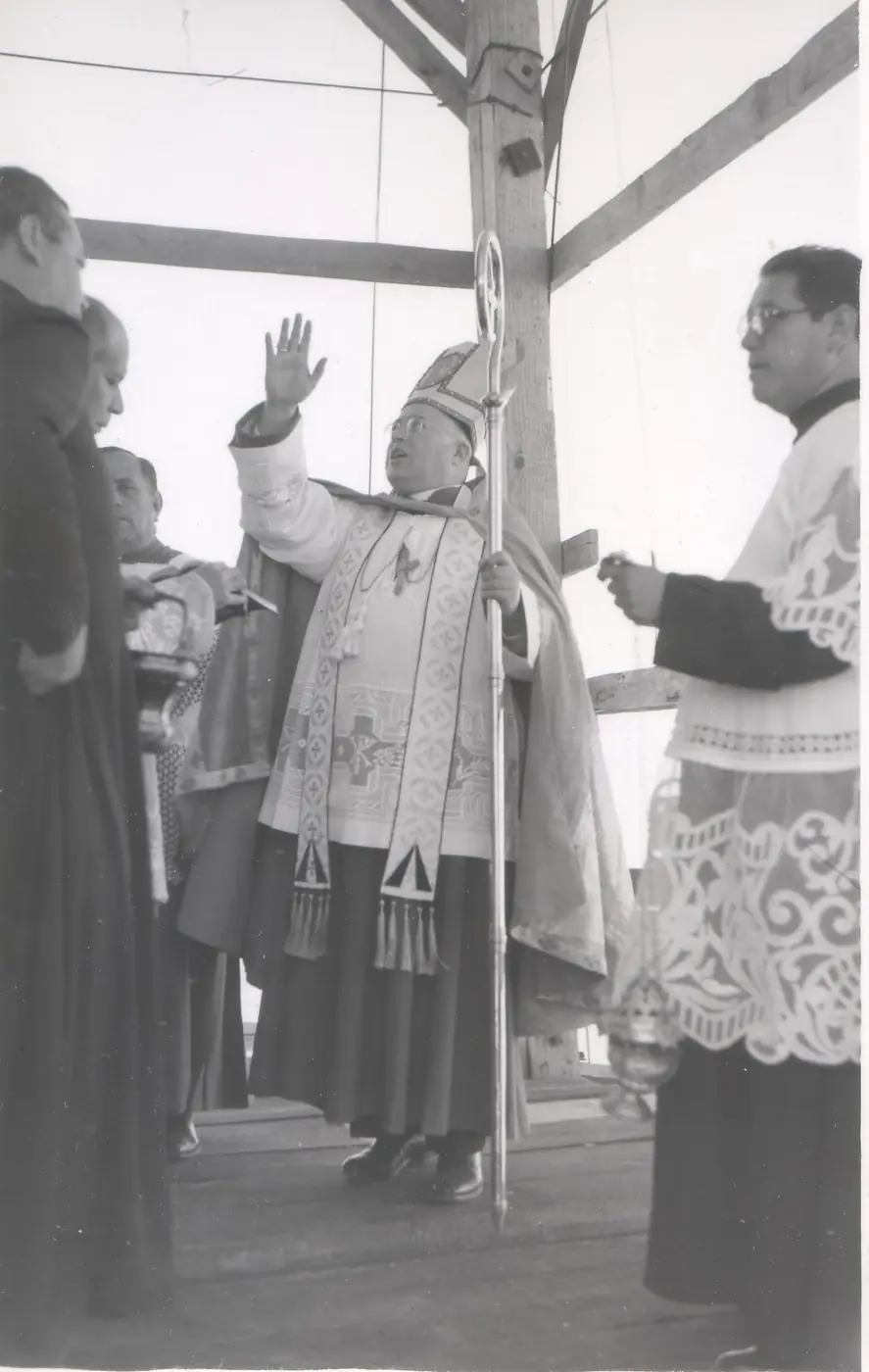
Bishop Manuel Martín del Campo y Padilla blesses the completed statue of Christ the King in the name of Pope Pius XII, on the 25th anniversary of Pius XI’s Quas Primas.
January 4, 1953
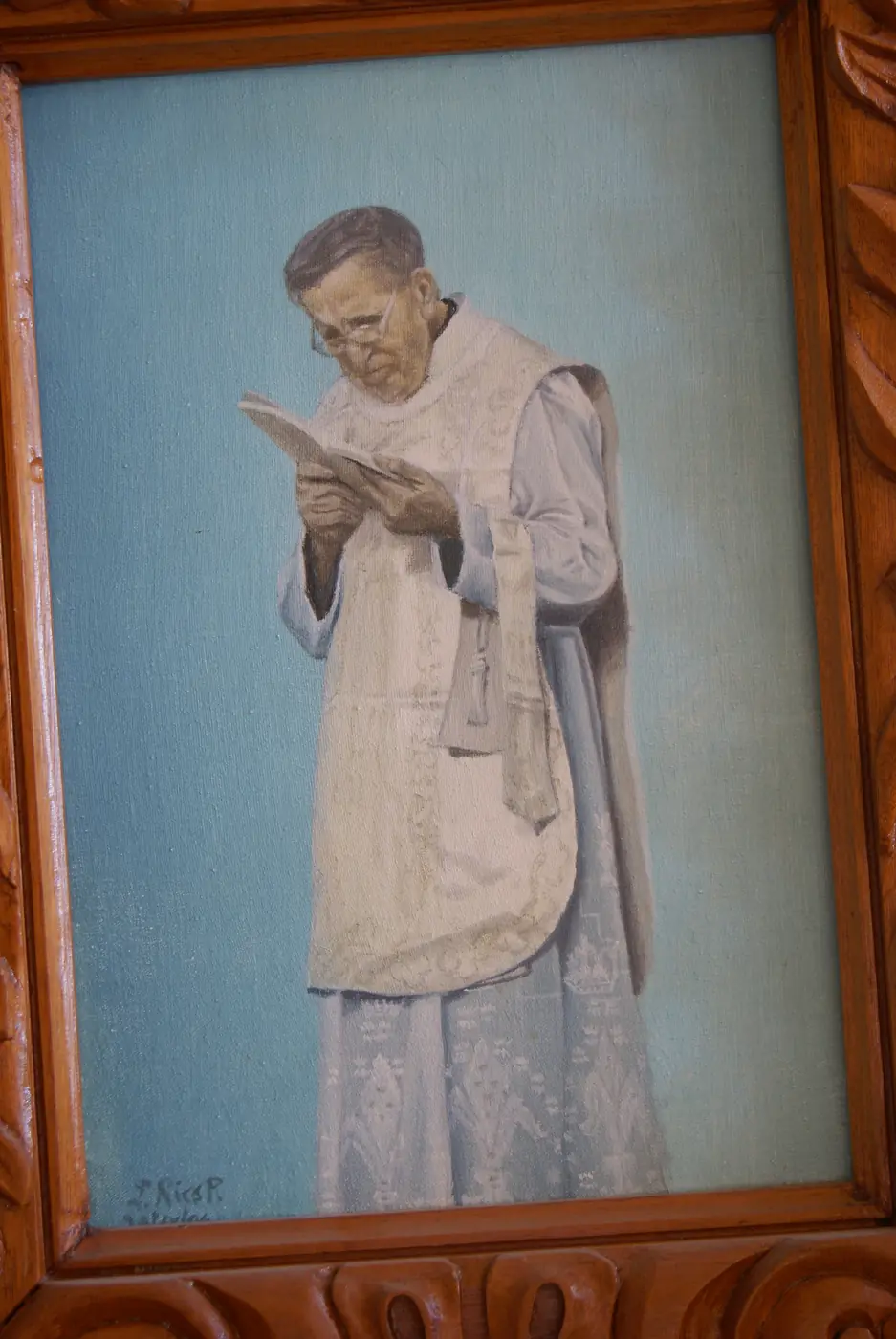
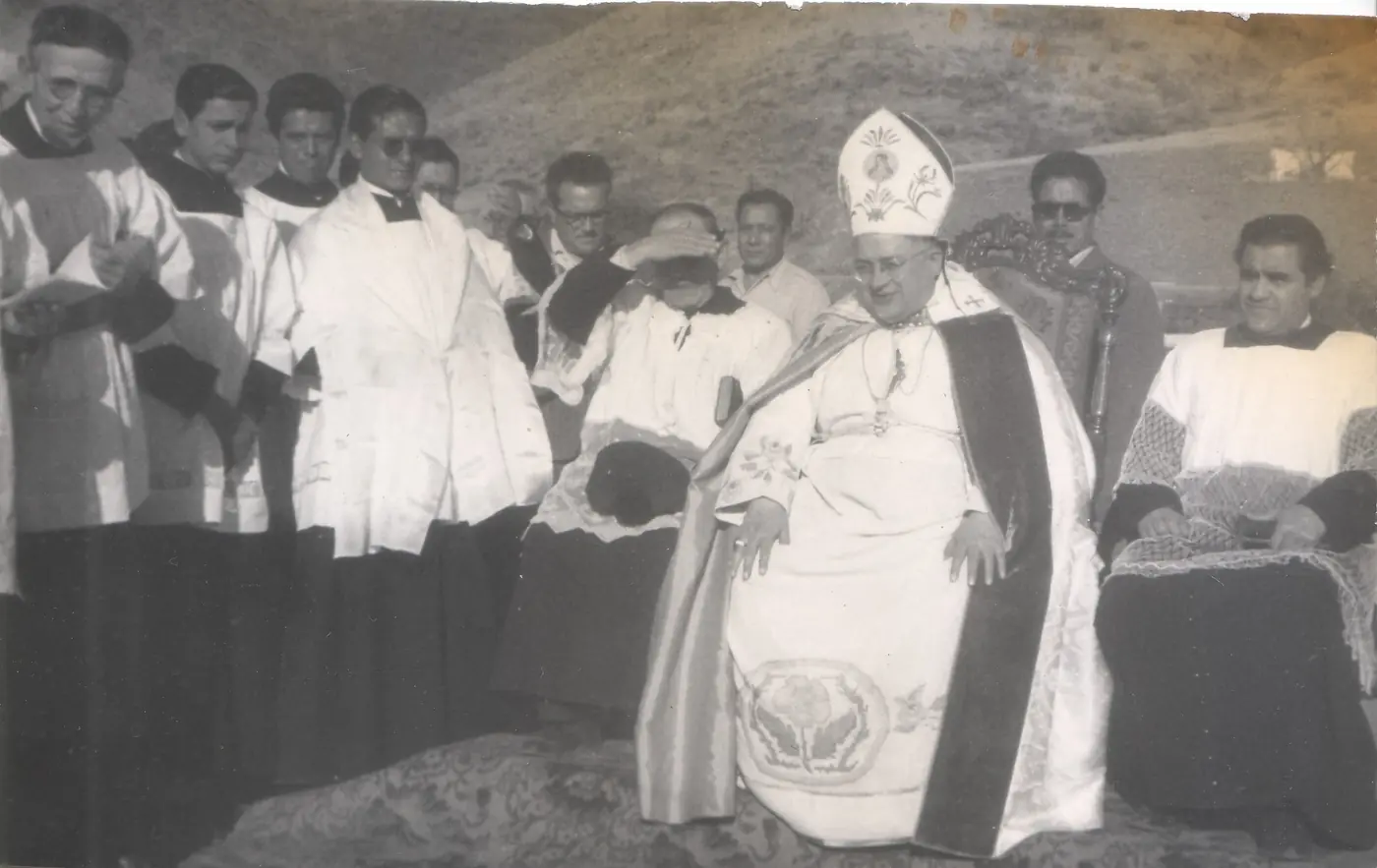
The first stone of the Church of Saint Mary Queen of Martyrs is laid in Baños de Aguas Buenas, at the foot of Cubilete Hill, in the presence of Bishop Manuel Martín del Campo and his procurator, Fr. Miguel de María Enríquez Villanueva, remembered for his kindness.
December 8, 1953
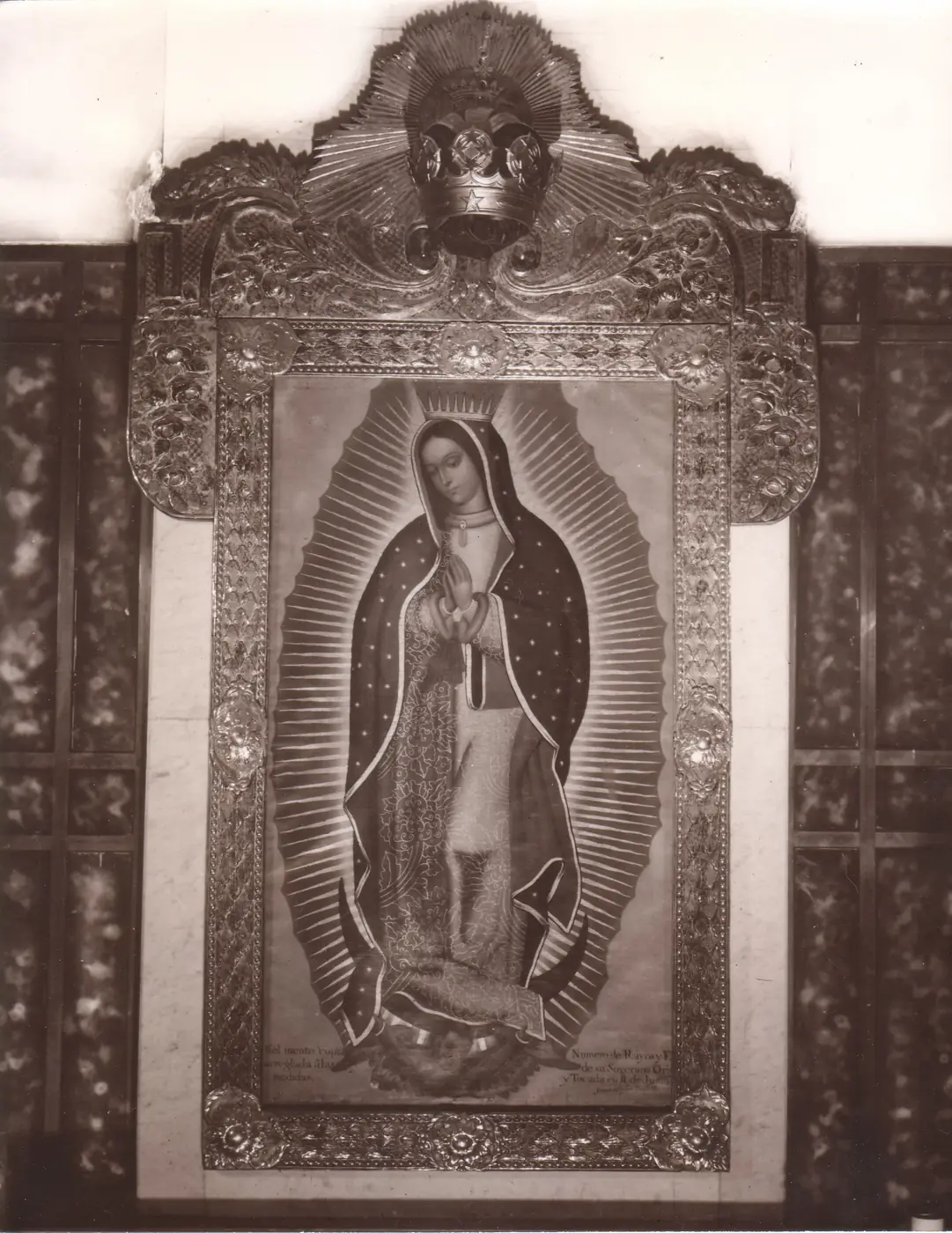
Bishop Manuel Martín del Campo y Padilla consecrates the Shrine of the Queen of the Mexicans; its image of Our Lady of Guadalupe is an oil painting from 1777 given by the Mercado Valverde family.
November 1, 1954
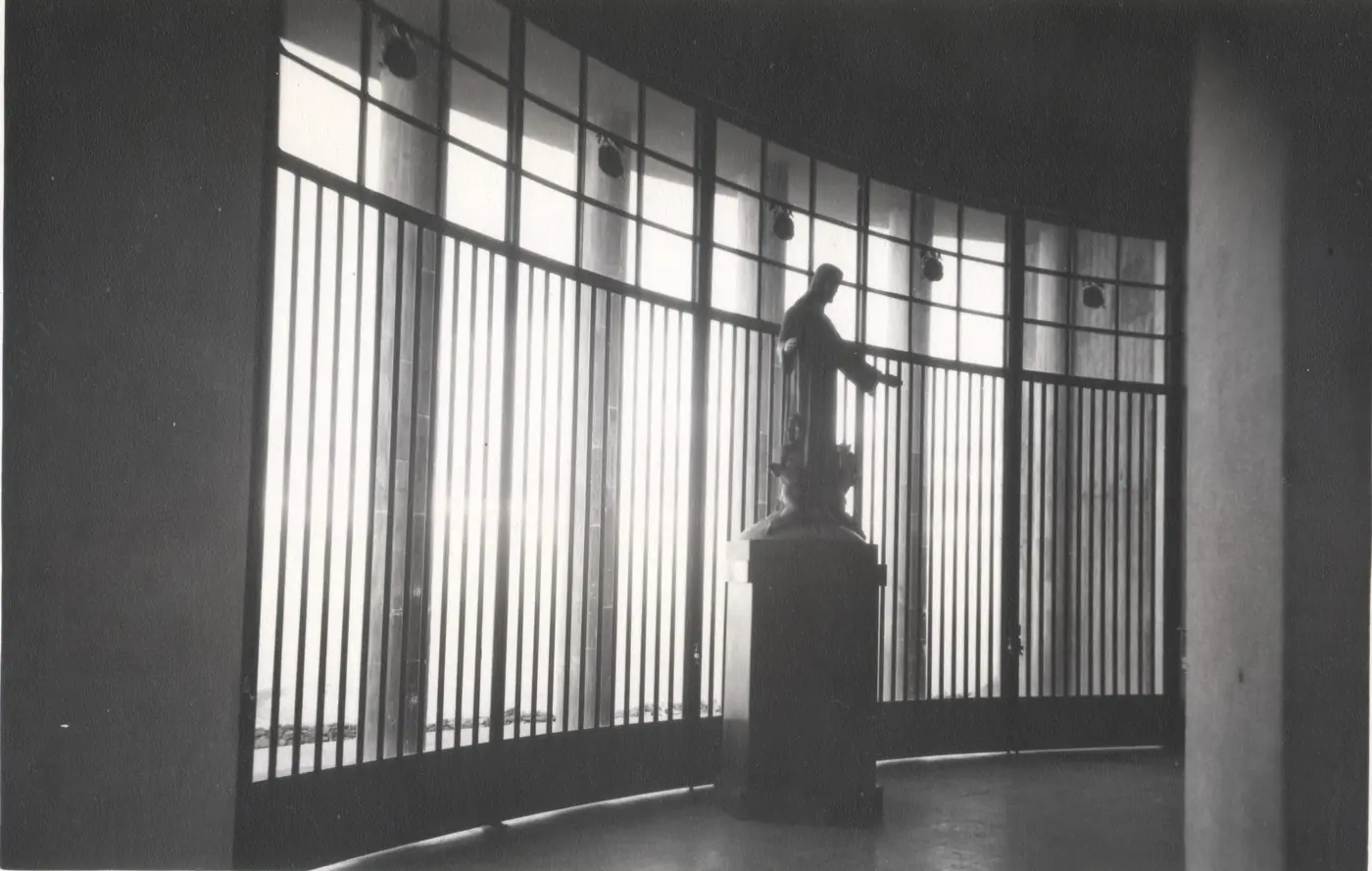
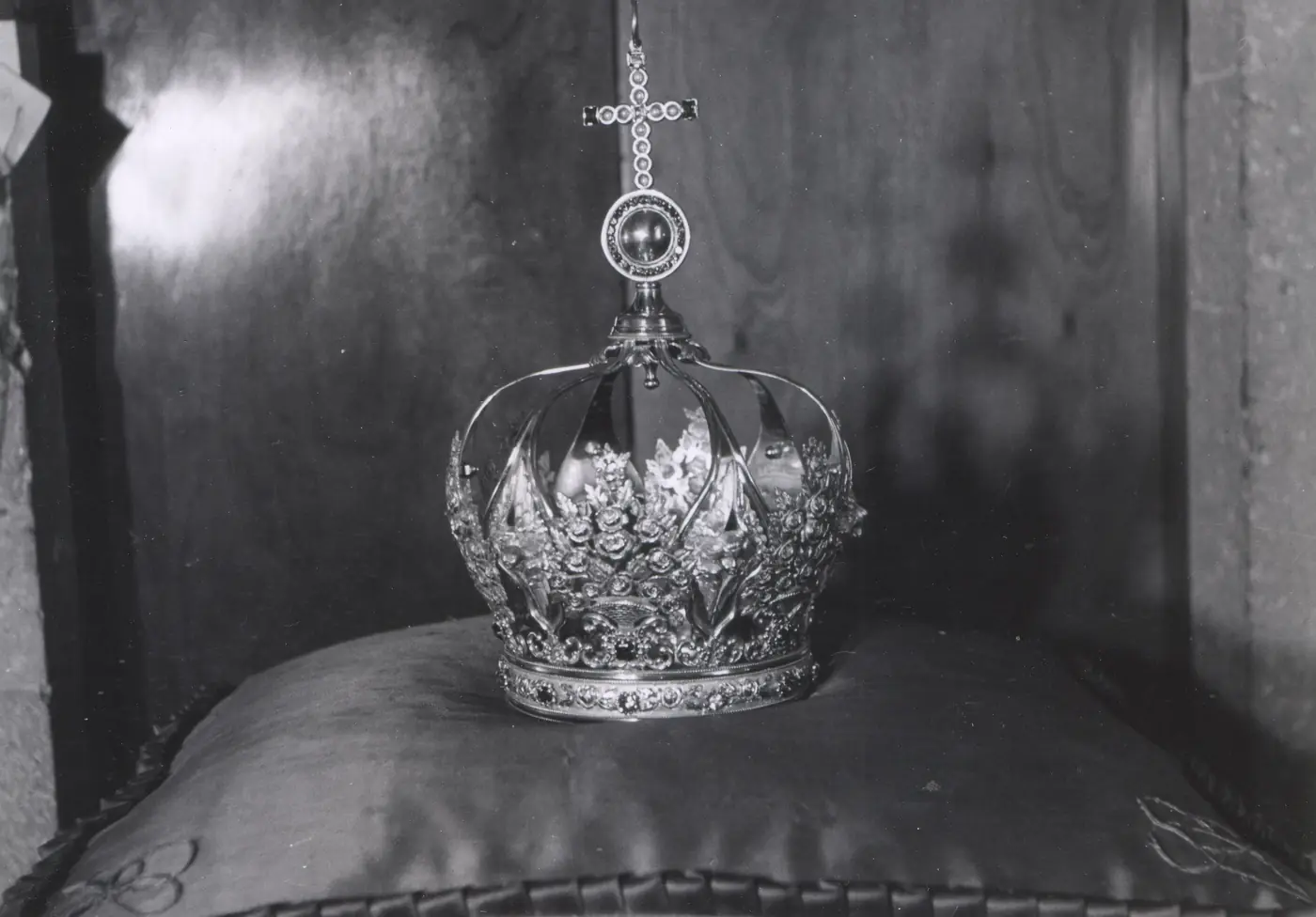
The image of Our Lady of Guadalupe at the Shrine of Christ the King is pontifically crowned by the seventh Bishop of León, Manuel Martín del Campo.
April 20, 1960
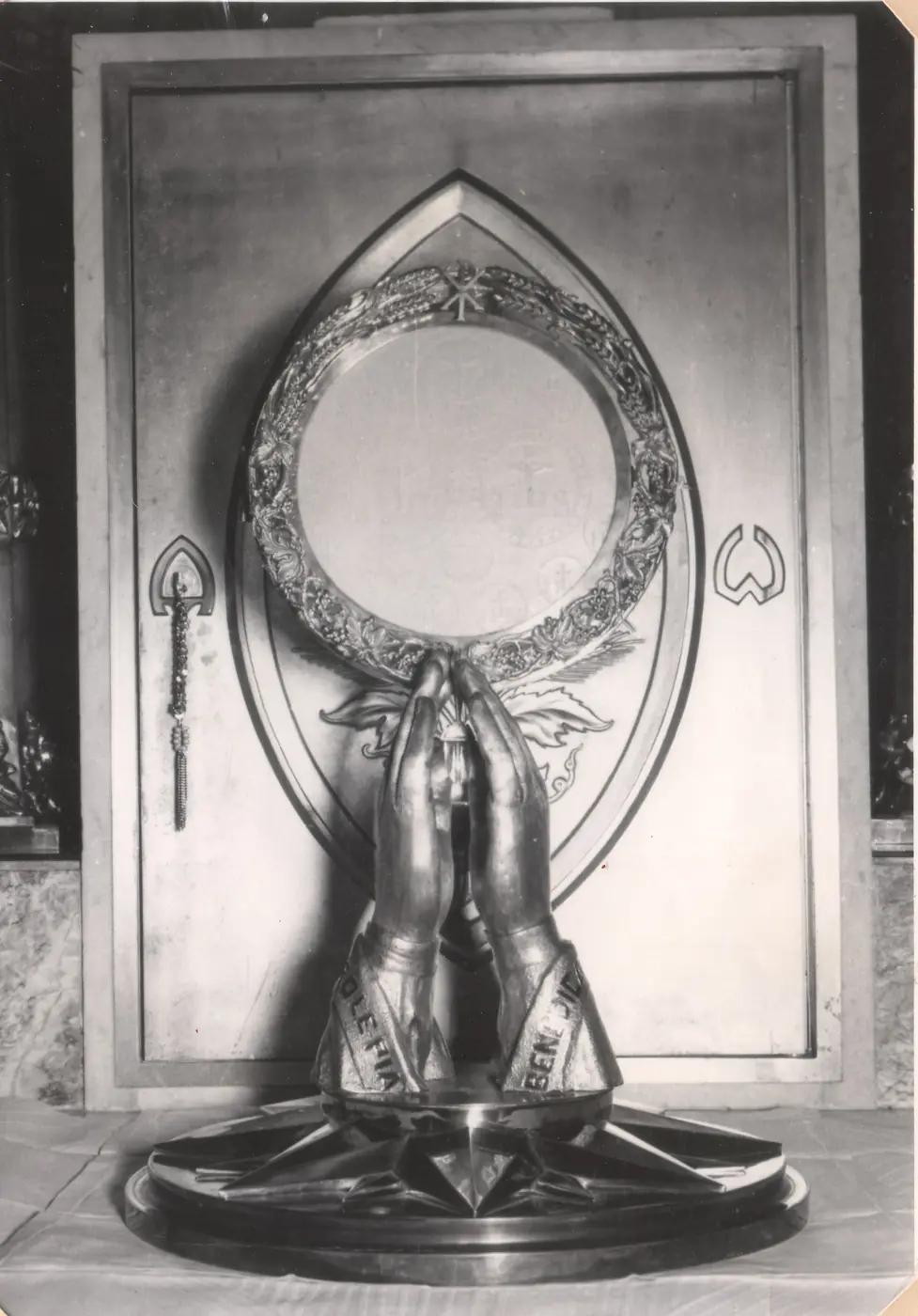
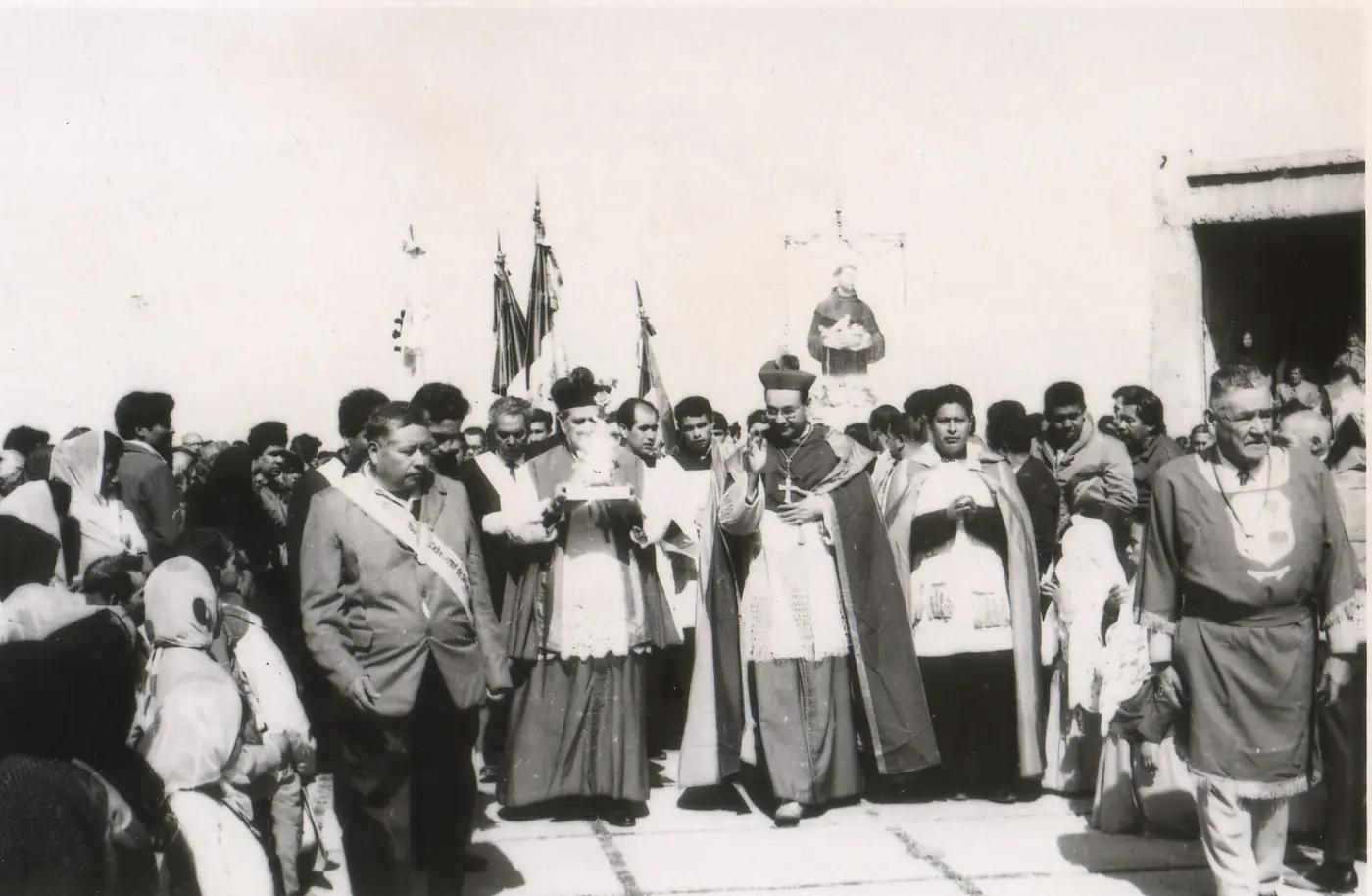
At the initiative of Fr. J. Ascensión Betancourt, supported by the seventh Bishop of León, a Monumental Monstrance is commissioned, designed by Nicolás Mariscal and crafted in precious materials by the goldsmith Francisco J. López. Before reaching the Shrine it was displayed at the Basilica of Guadalupe, and it was blessed in a great celebration attended by the Apostolic Delegate, Msgr. Luigi Raimondi, and Cardinal José Garibi Rivera of Guadalajara.
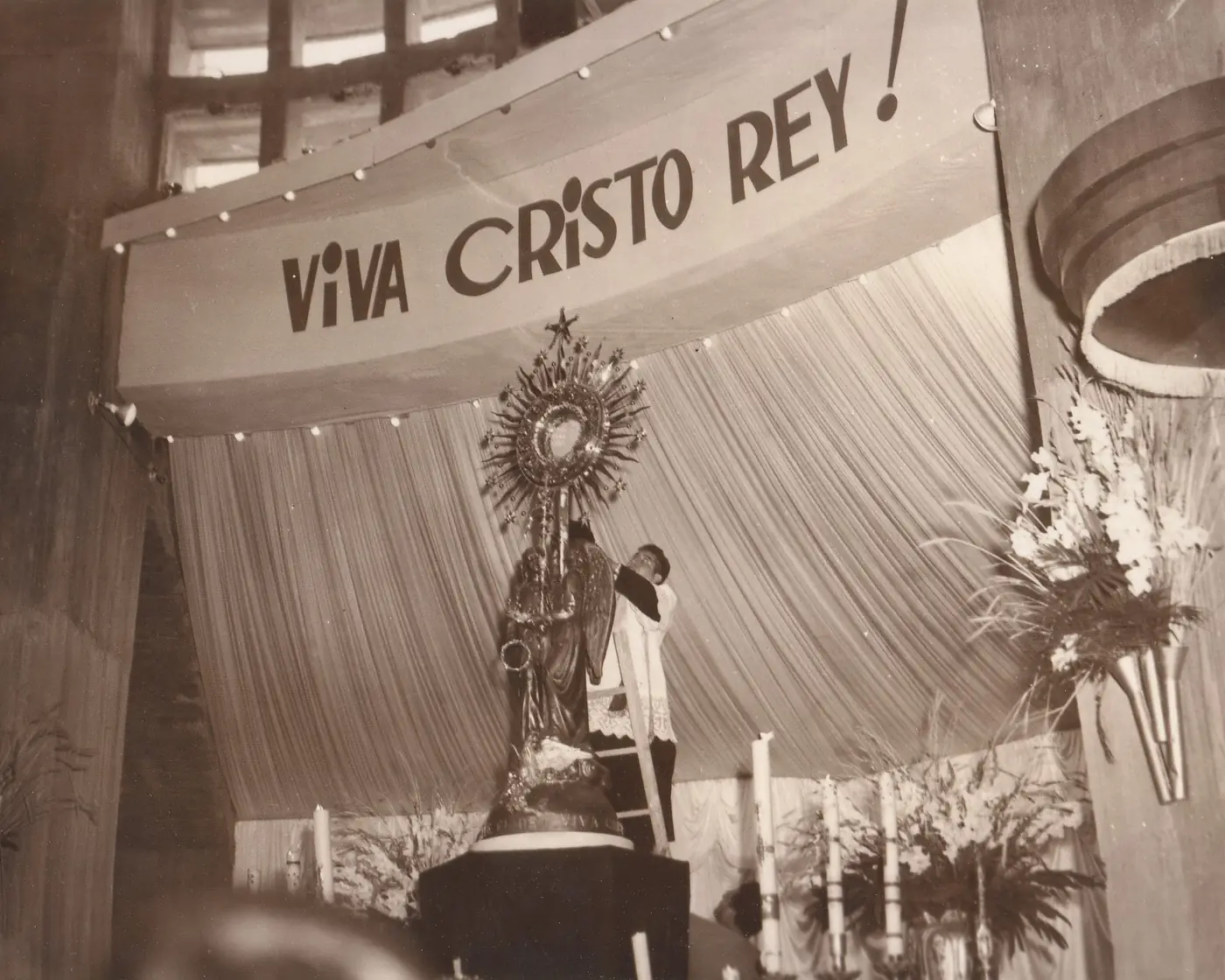
November 7, 1962
Fr. José Ascensión Betancourt, first Chaplain of the National Votive Shrine of Christ the King, dies in Mexico City.
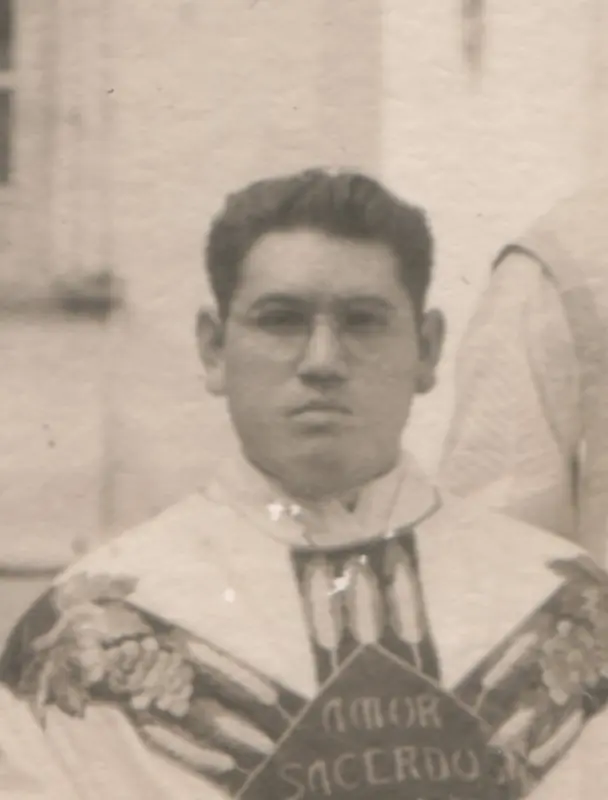
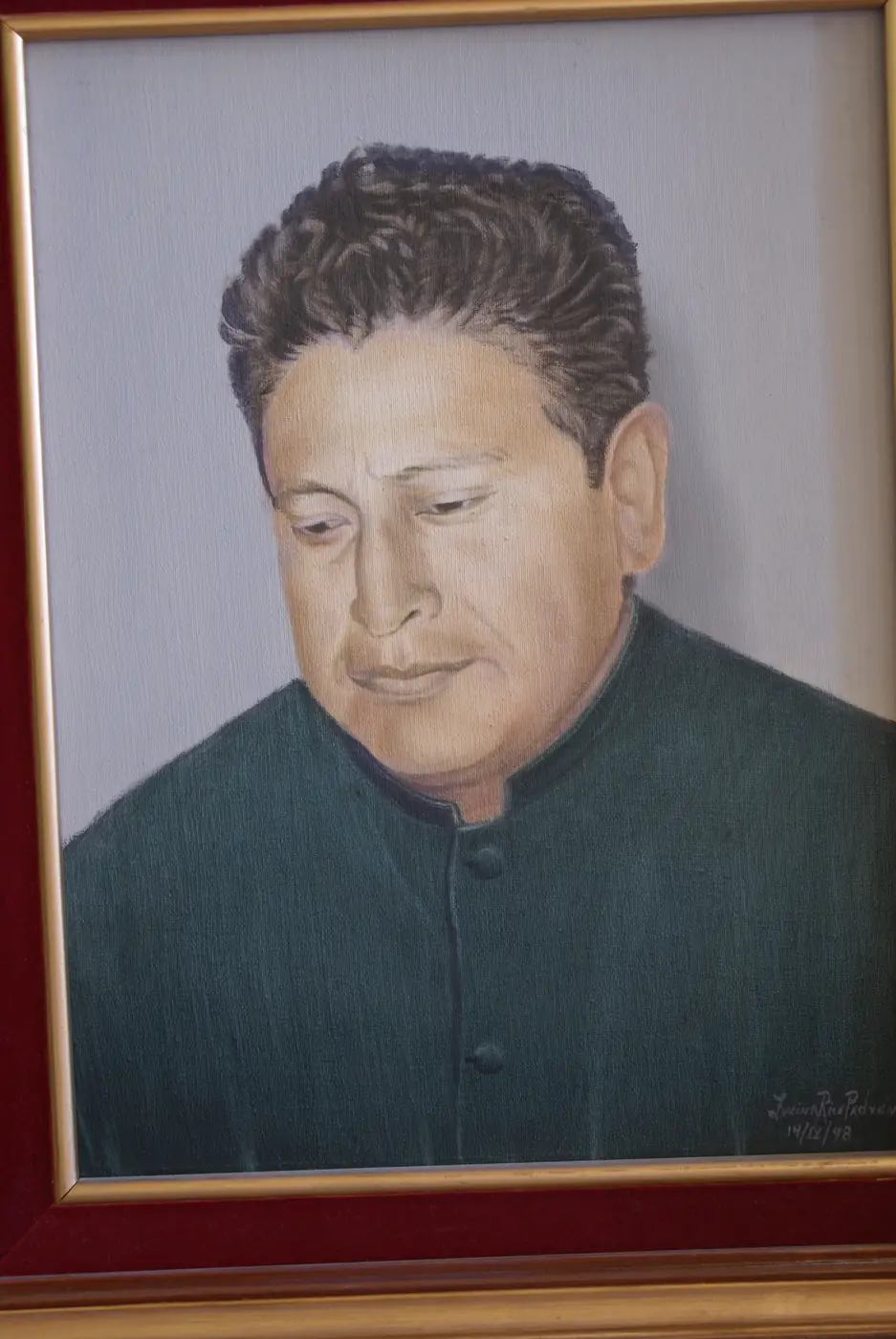
January 19, 1963
Fr. José Anaya Pasalagua MNM is appointed second Chaplain of the Shrine.
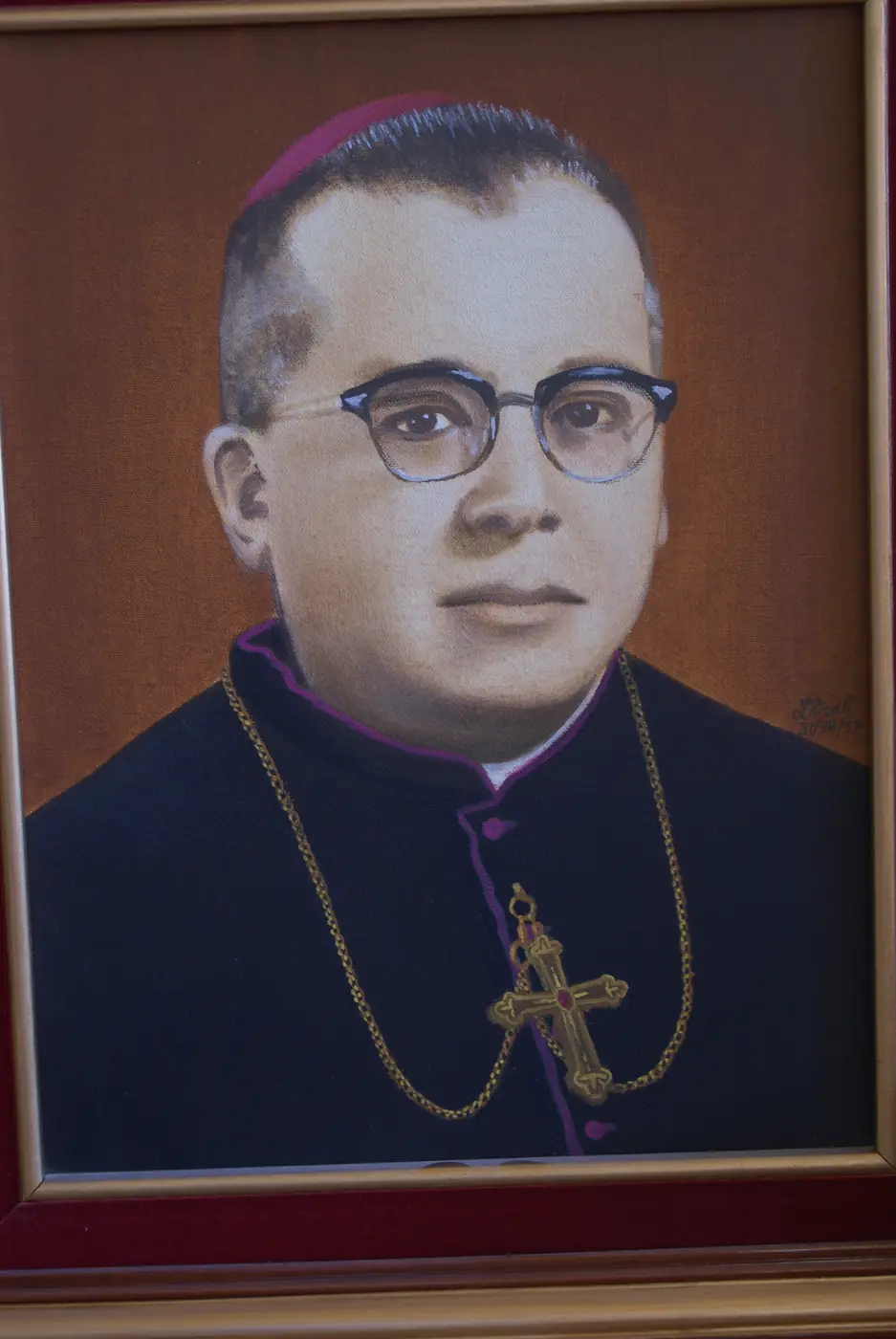
April 21, 1966
Bishop Anselmo Zarza y Bernal takes office as eighth Bishop of León.
September 16, 1966
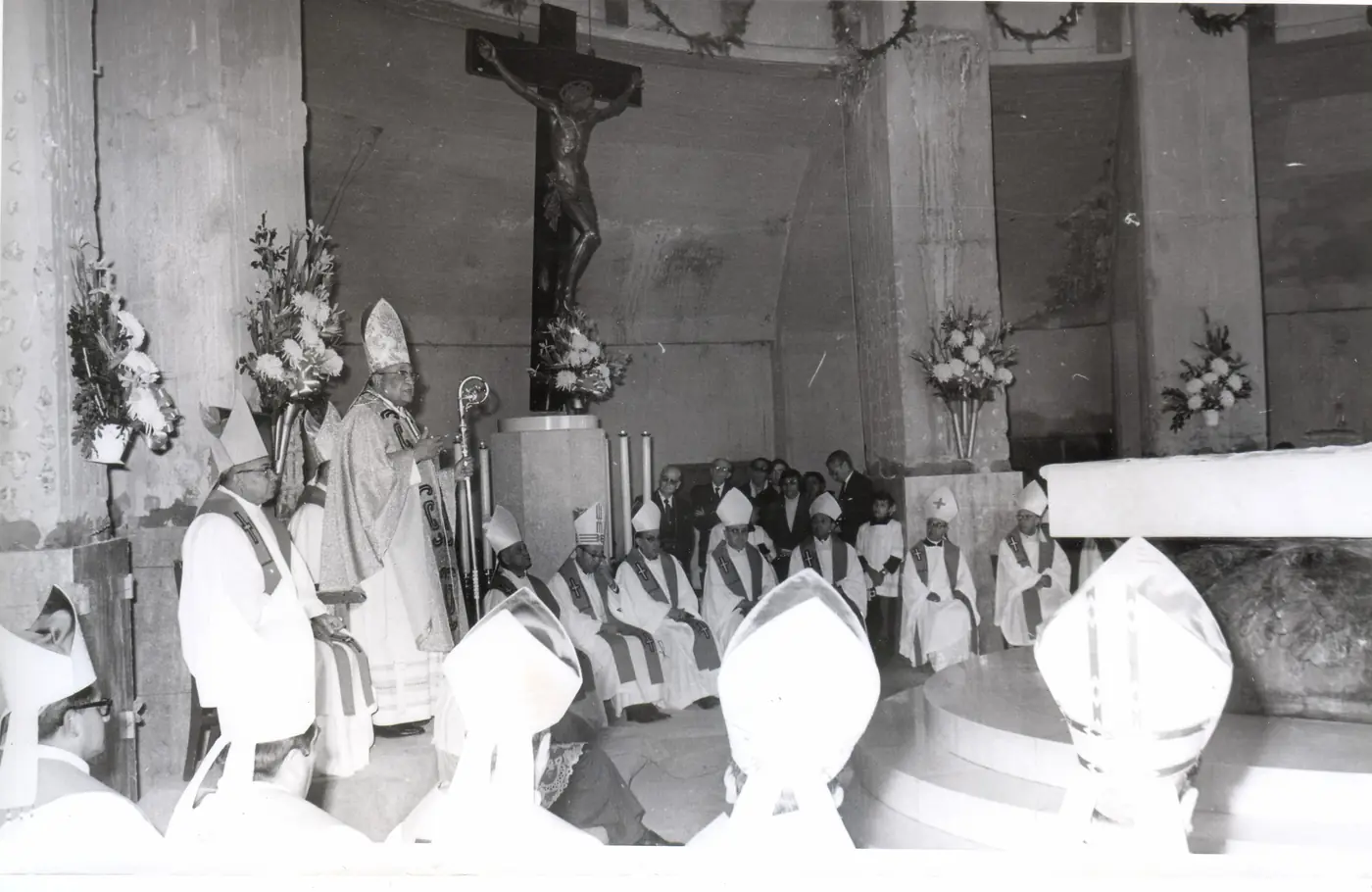
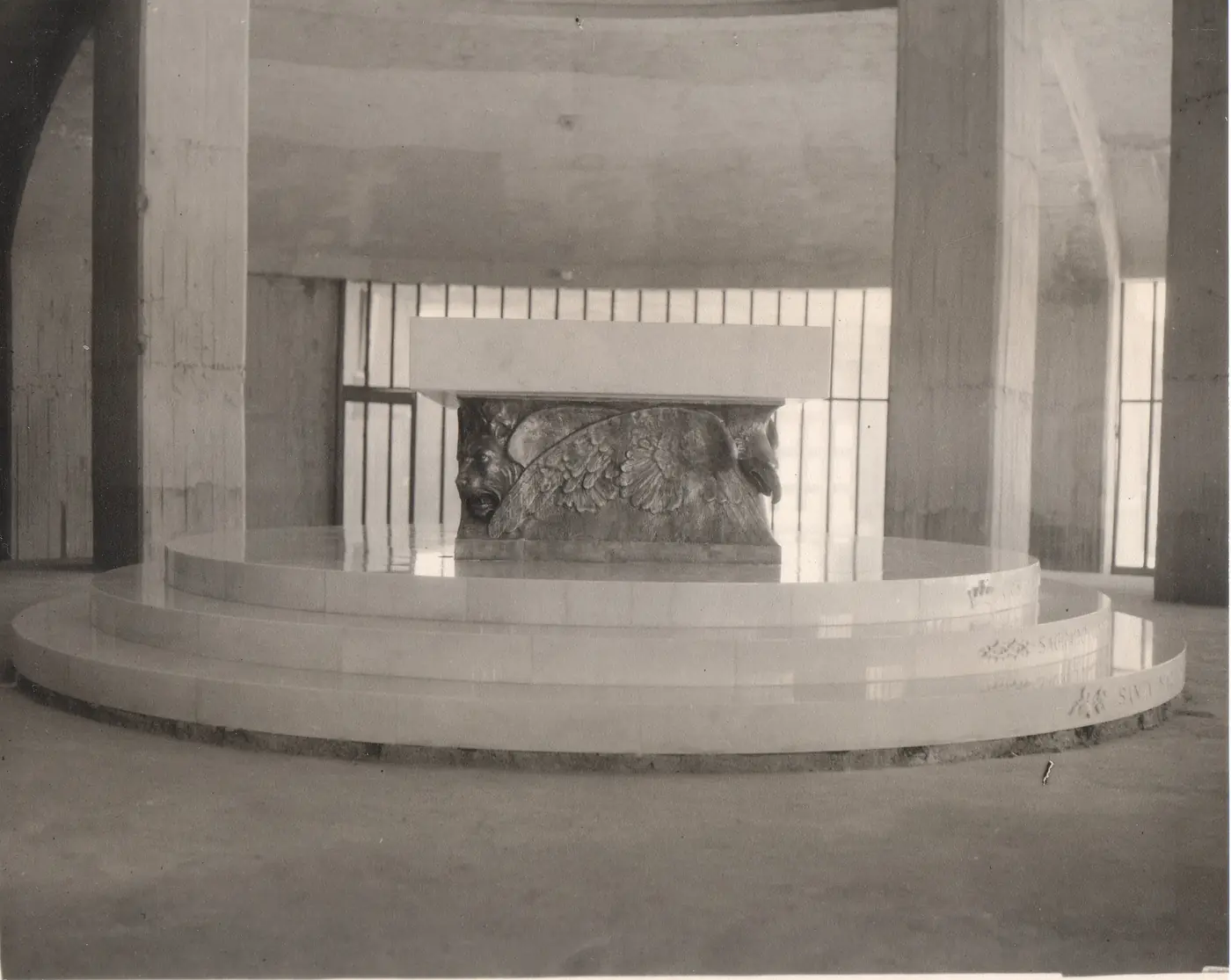
At 11:00 a.m. the High Altar of the Monument to Christ the King is blessed. Designed by Nicolás Mariscal and sculpted by Fidias Elizondo in bronze and hammered silver, it bears the symbols of the four Evangelists at its corners.
May 11, 1967
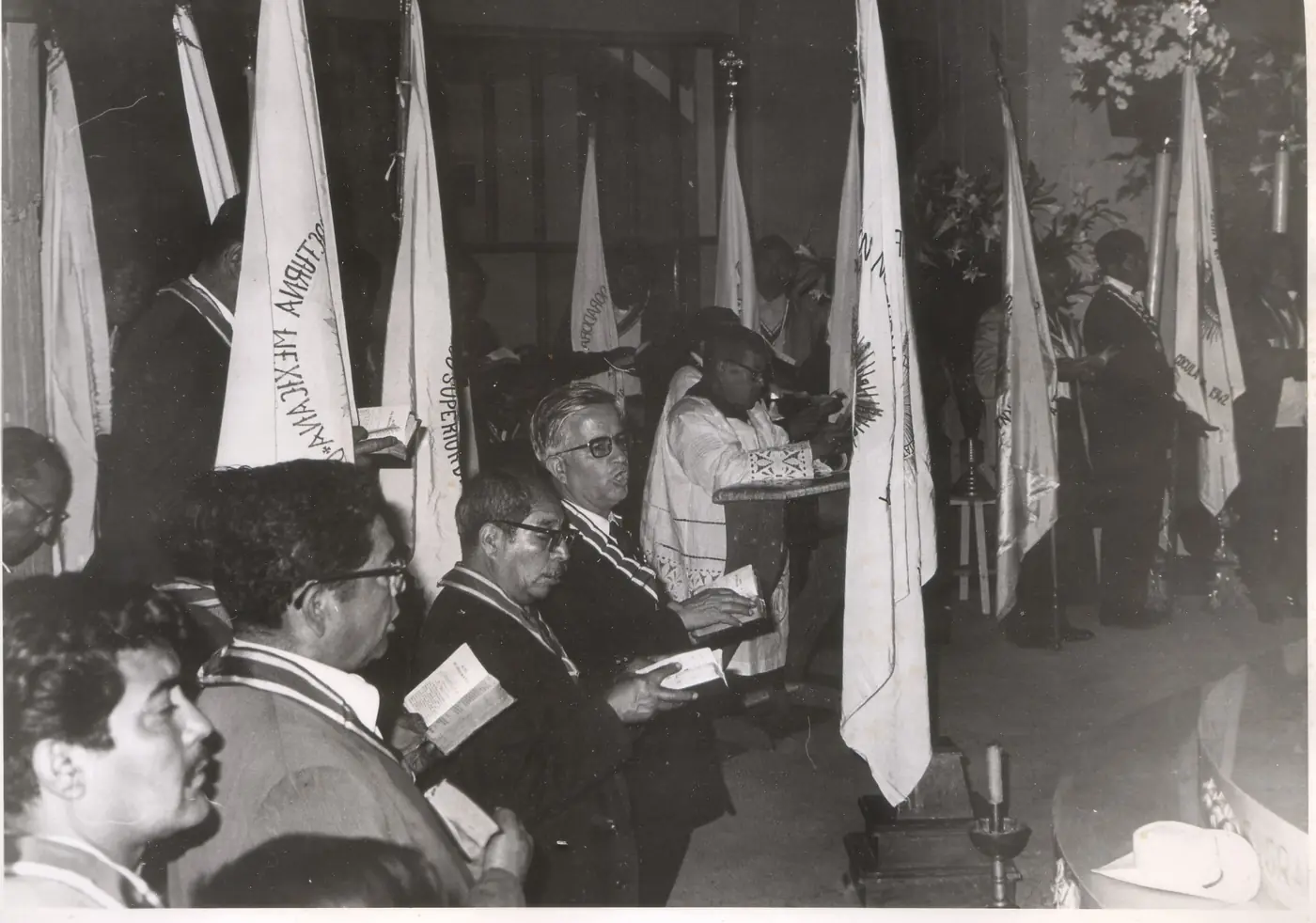
A Wheat Vigil is held to request perpetual adoration of the Blessed Sacrament at the Shrine; it is approved at the National Assembly of the Mexican Nocturnal Adoration on May 28, 1967.
October 30, 1967
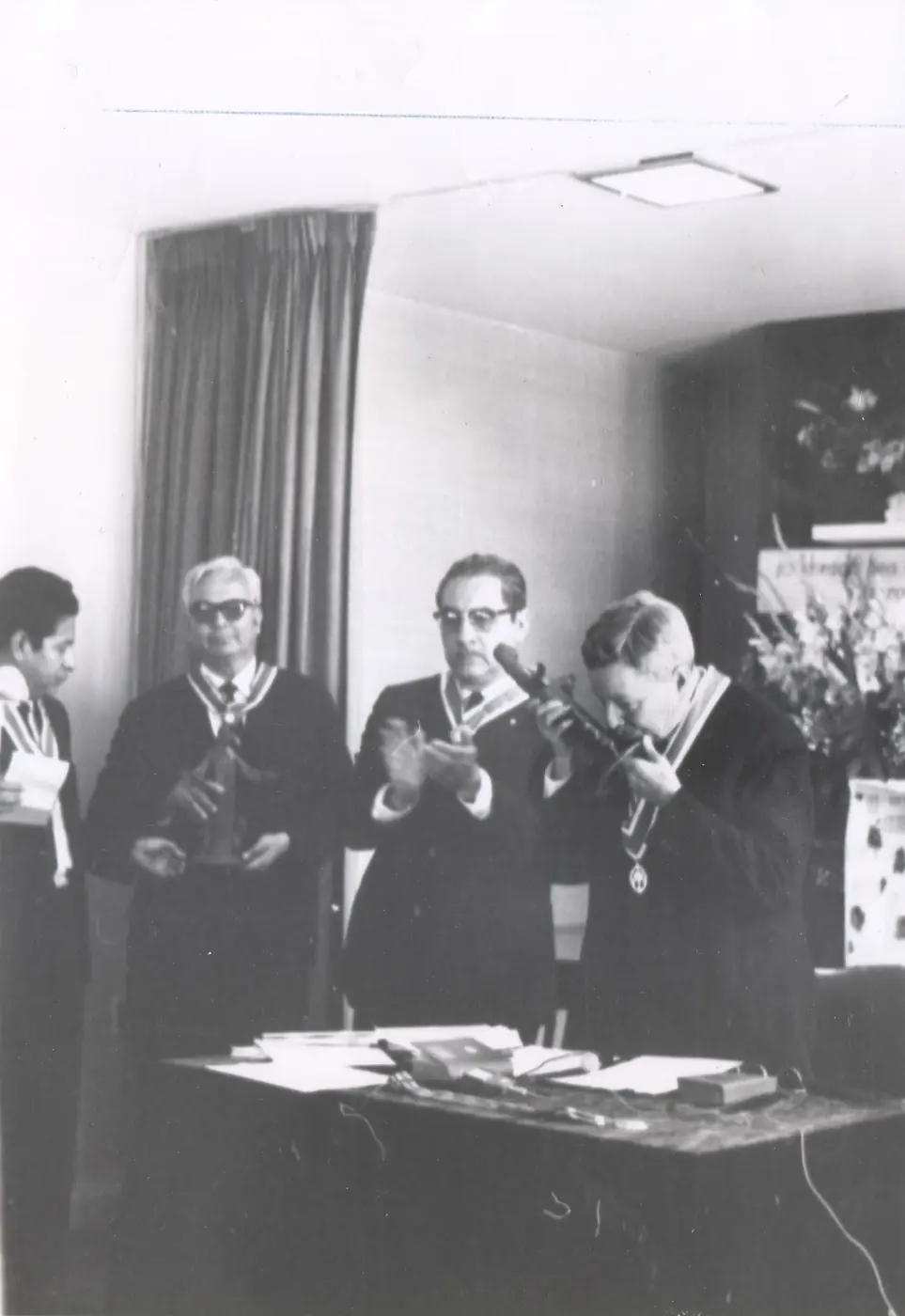
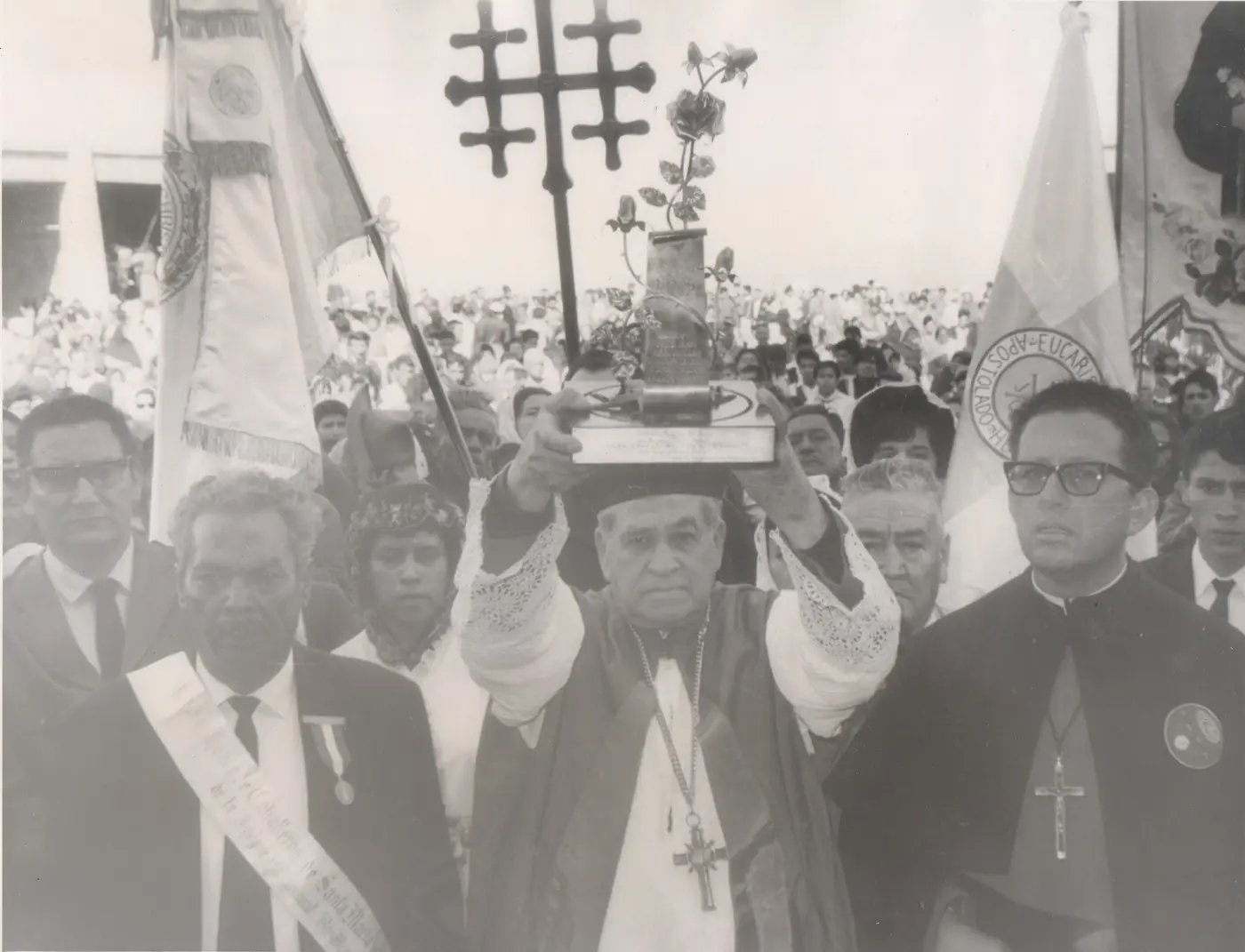
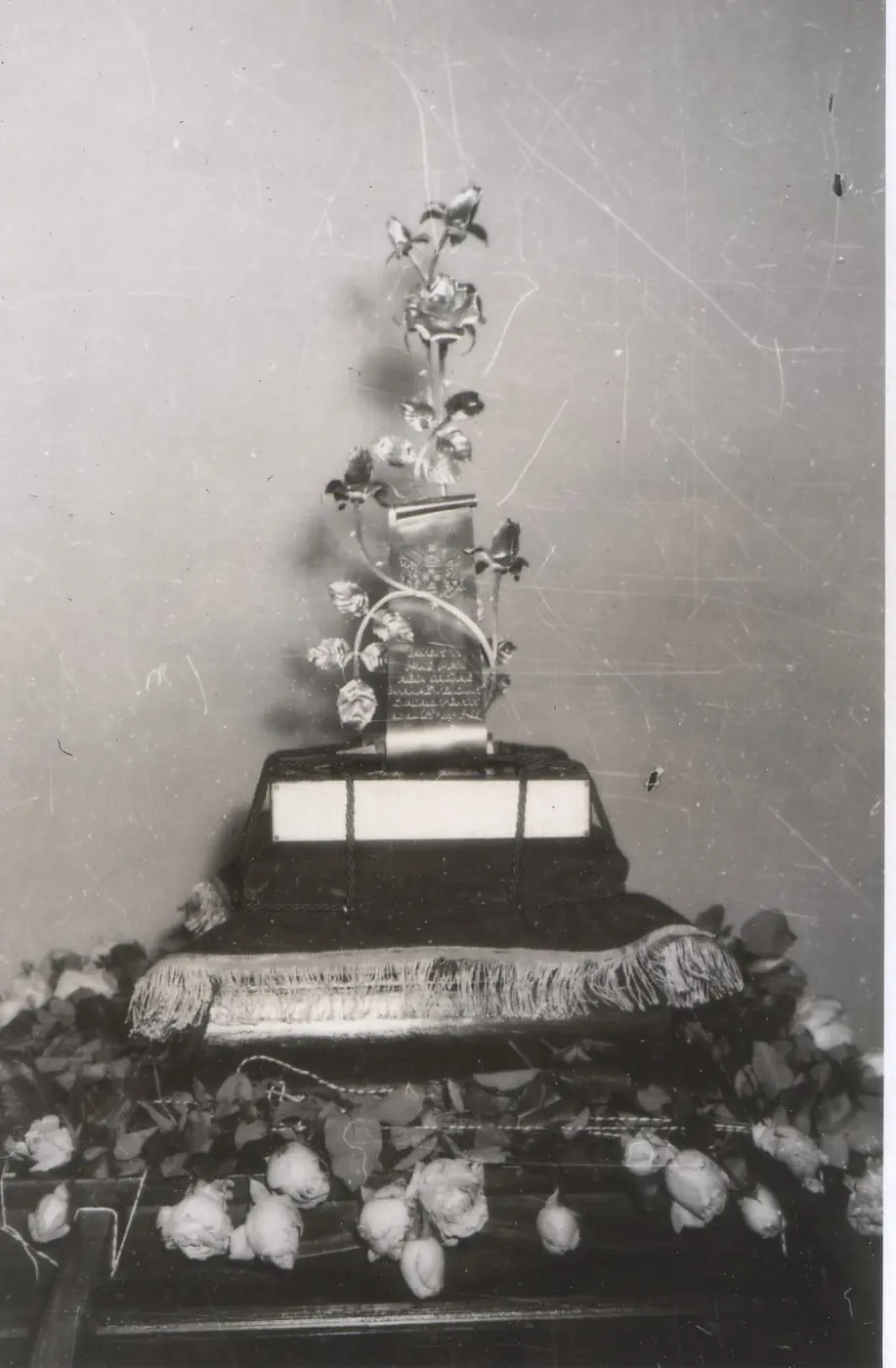
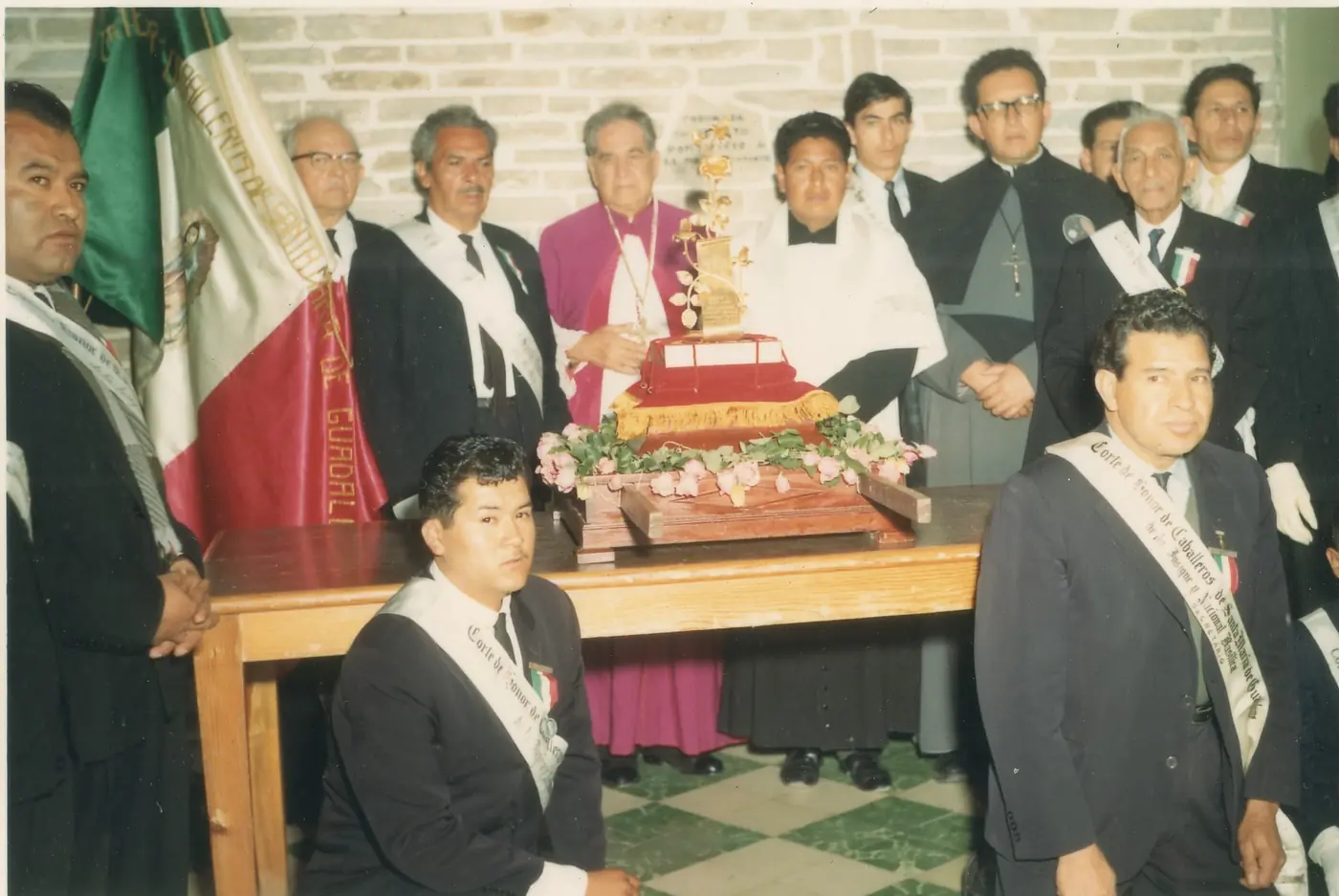
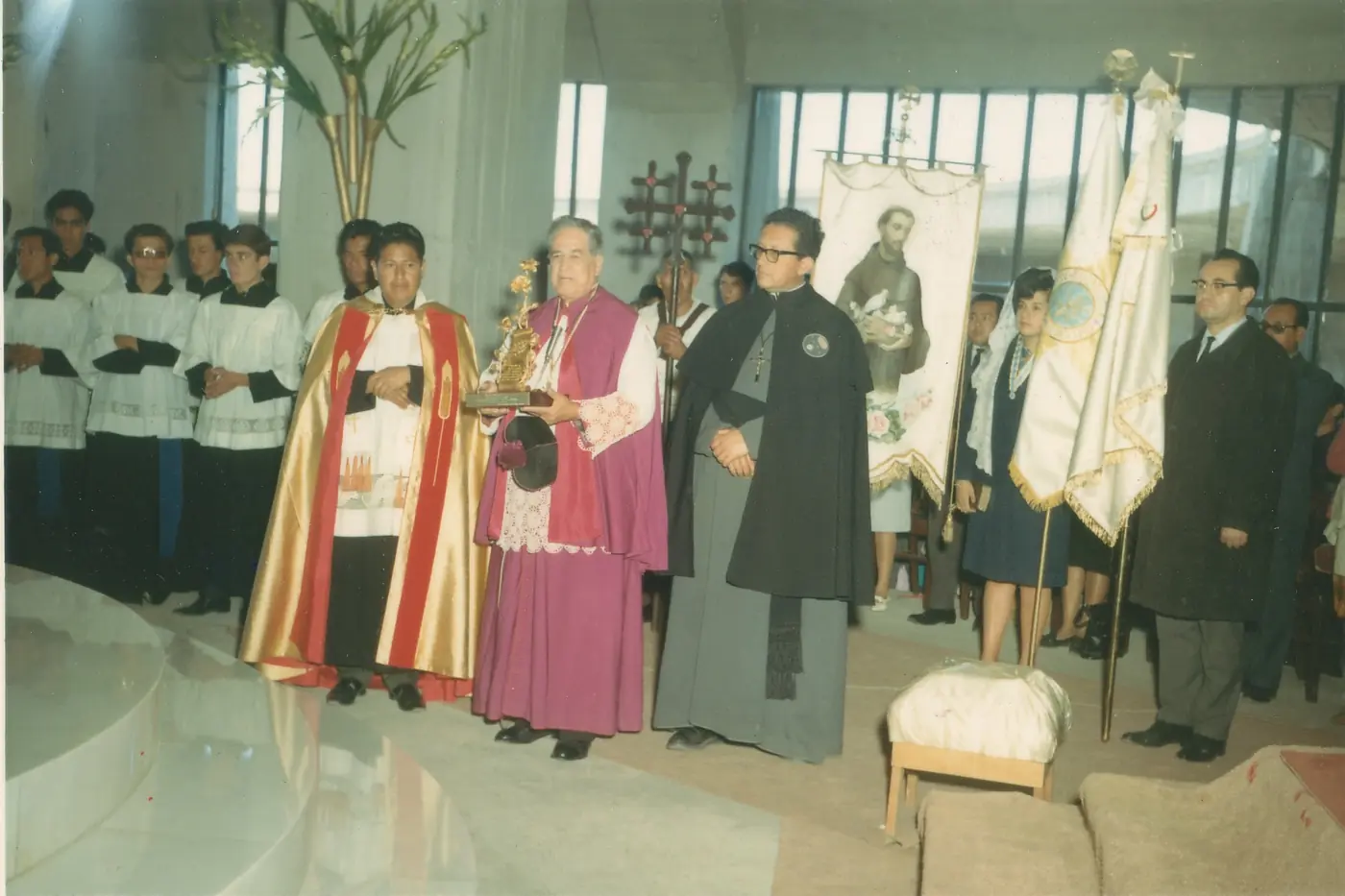
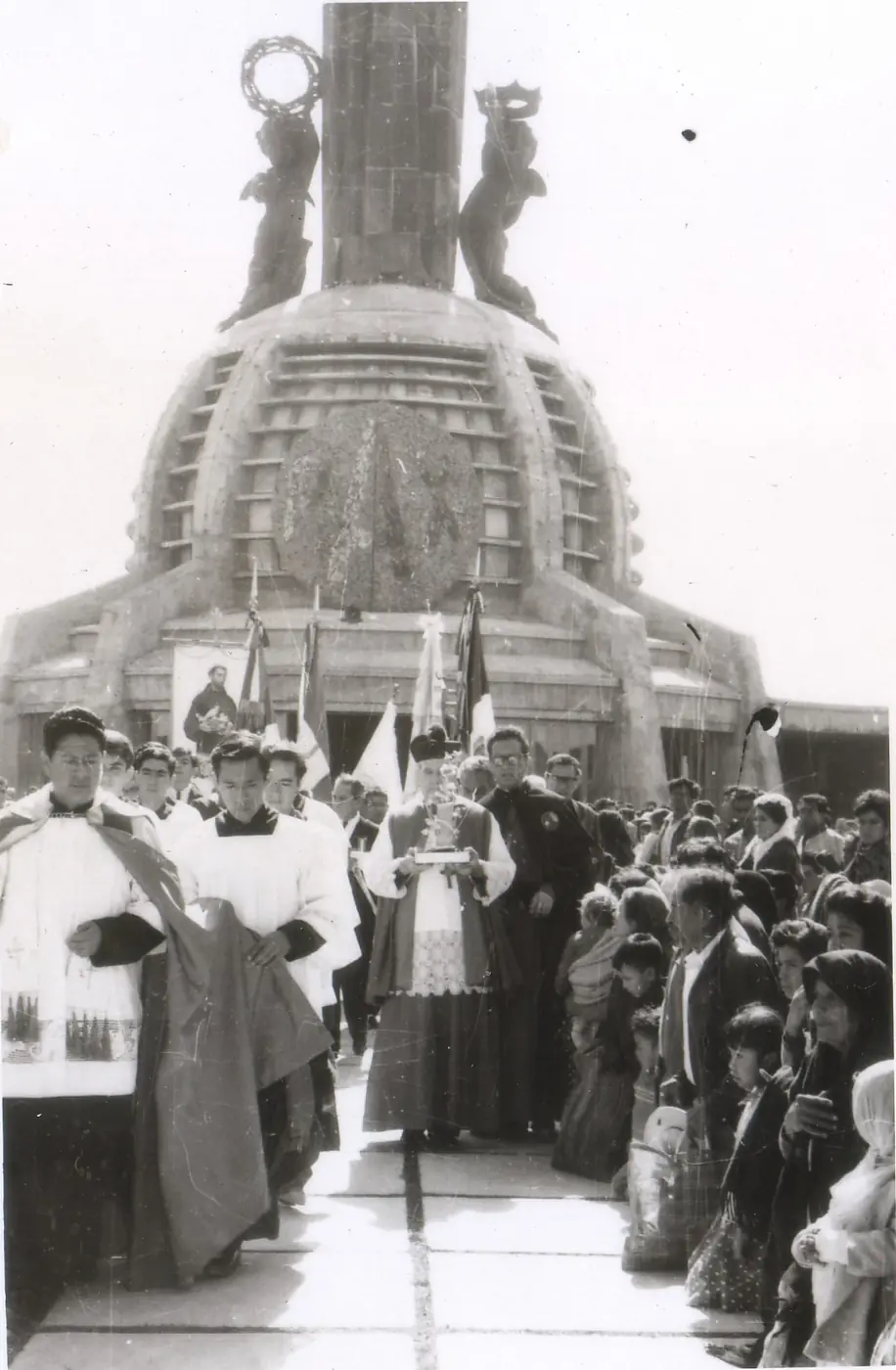
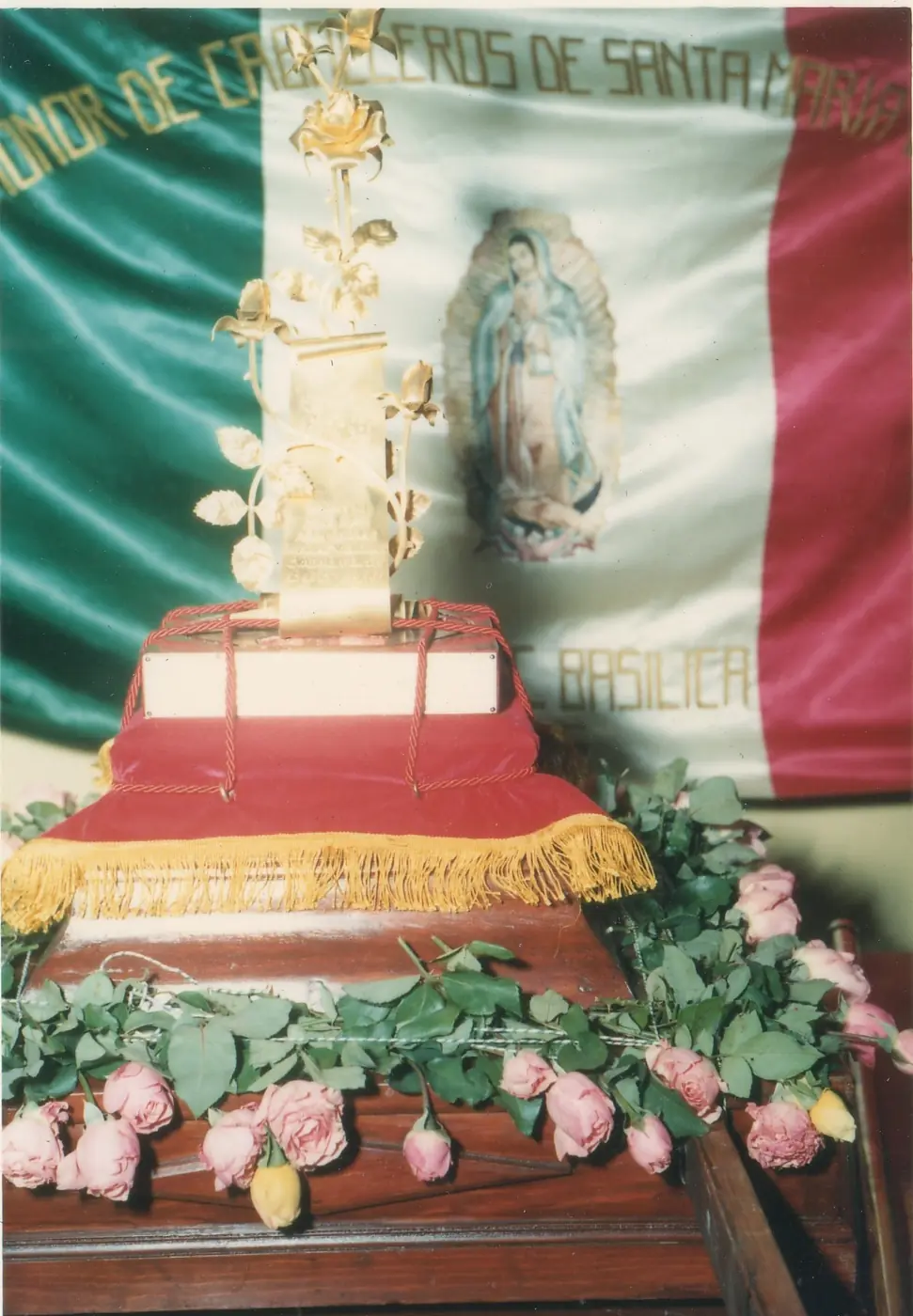
The Honor Court of the Knights of Guadalupe brings a faithful copy of the “Golden Rose” given by Pope Paul VI to Our Lady of Guadalupe at her Basilica on May 30, 1967. The copy, authorized by Cardinal Miguel Darío Miranda y Gómez, Archbishop of Mexico, is placed in the Shrine by Canon G. Carmona of León.
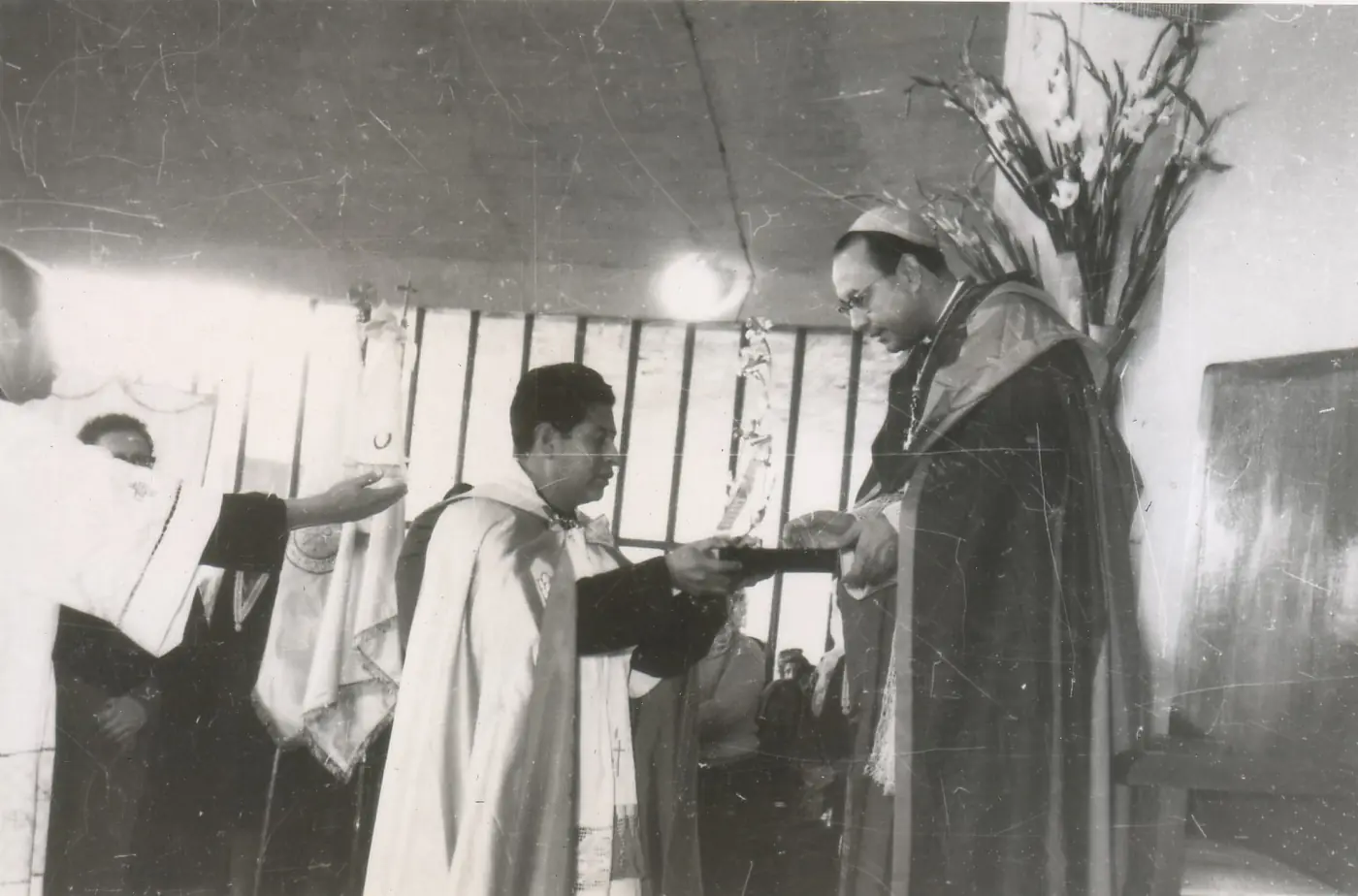
1968
Perpetual adoration begins at the Shrine of Christ the King; at night it is kept by the Mexican Nocturnal Adoration from across the country.
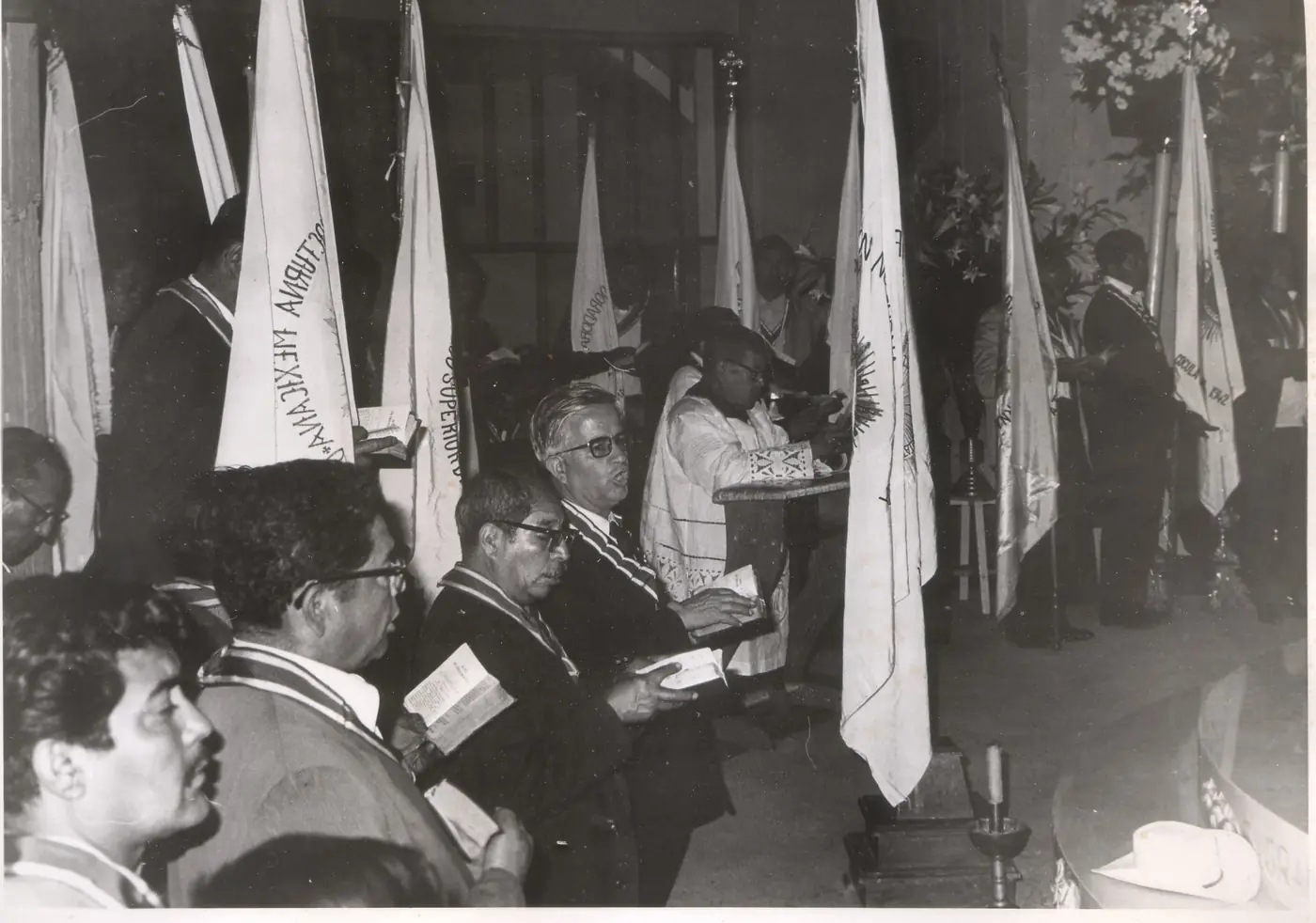
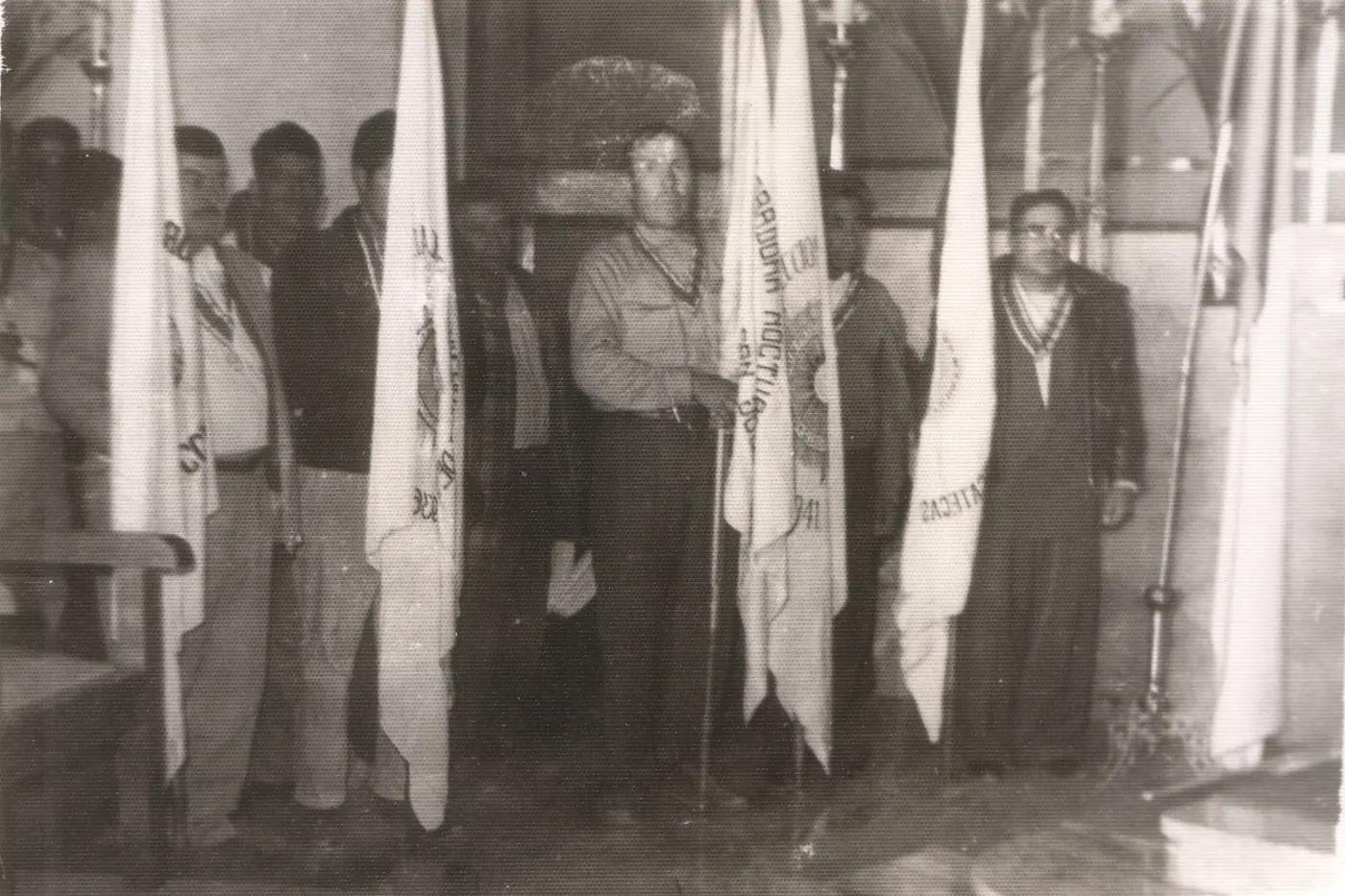
September 1970
The Shrine’s second Chaplain, Fr. José Anaya Pasalagua MNM, resigns due to illness.

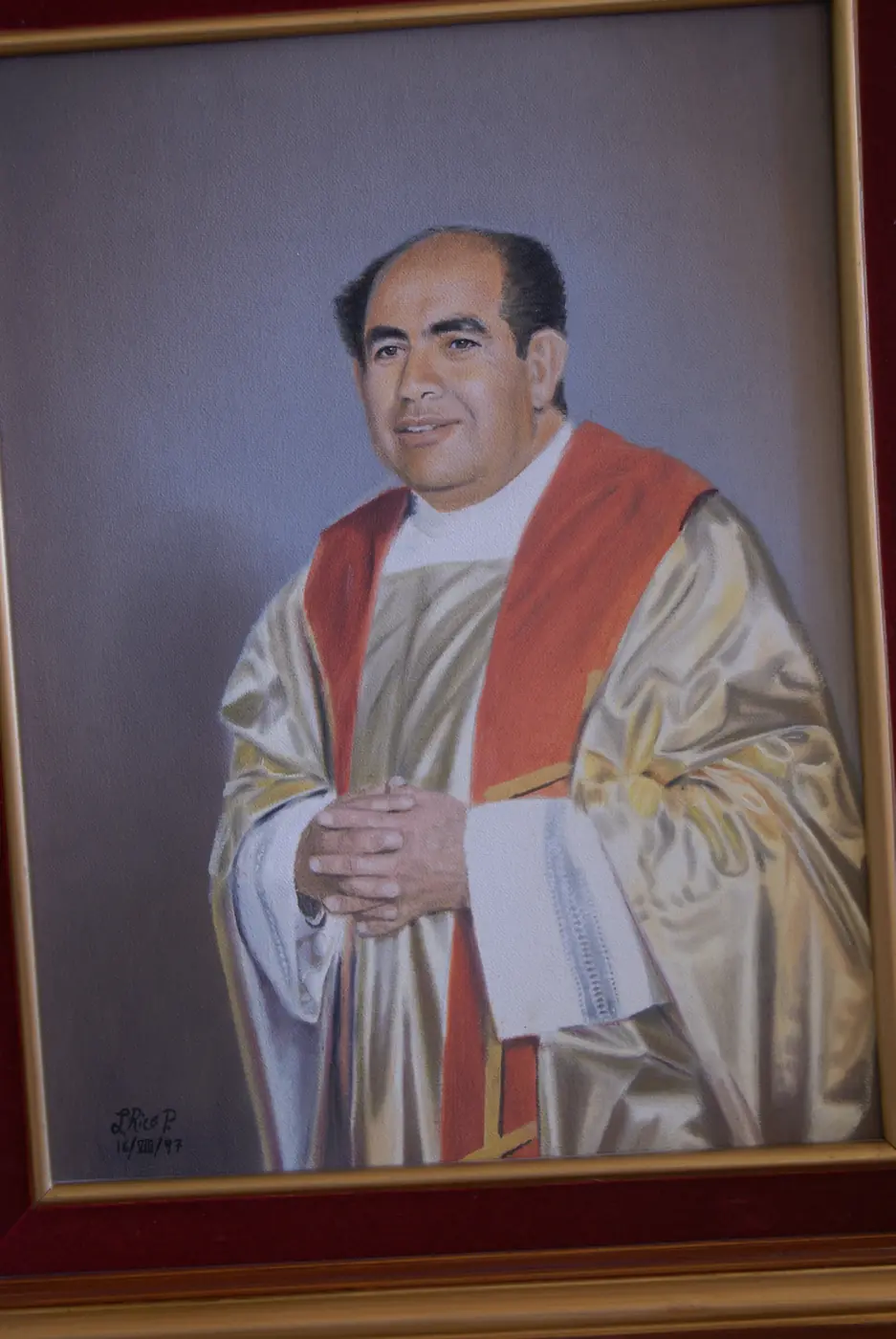
September 30, 1970
Fr. Eleuterio Gutiérrez Figueroa MNM is appointed third Chaplain of the Shrine.
1970 to 1975
Architect Carlos Ituarte renovates the interior of the Shrine to highlight its spiritual symbolism: floors and columns are clad in marble, the back wall and ceiling are covered with Venetian glass mosaics, and a bronze crown of thorns is placed around the entire diameter of the sanctuary.
April 6, 1972
Archbishop Manuel Martín del Campo y Padilla, seventh Bishop of León and then Archbishop of Morelia, dies in Mexico City.
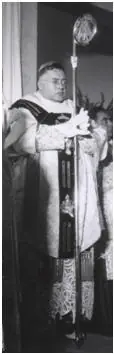
May 8, 1990
Pope John Paul II broadcasts a radio message while flying over León, Gto., calling for fidelity. Those traveling with him said he would have liked to visit León and the Shrine; years later, Pope Benedict XVI confirmed his predecessor’s wish.
February 4, 1992
Bishop Rafael García González takes office as ninth Bishop of León.
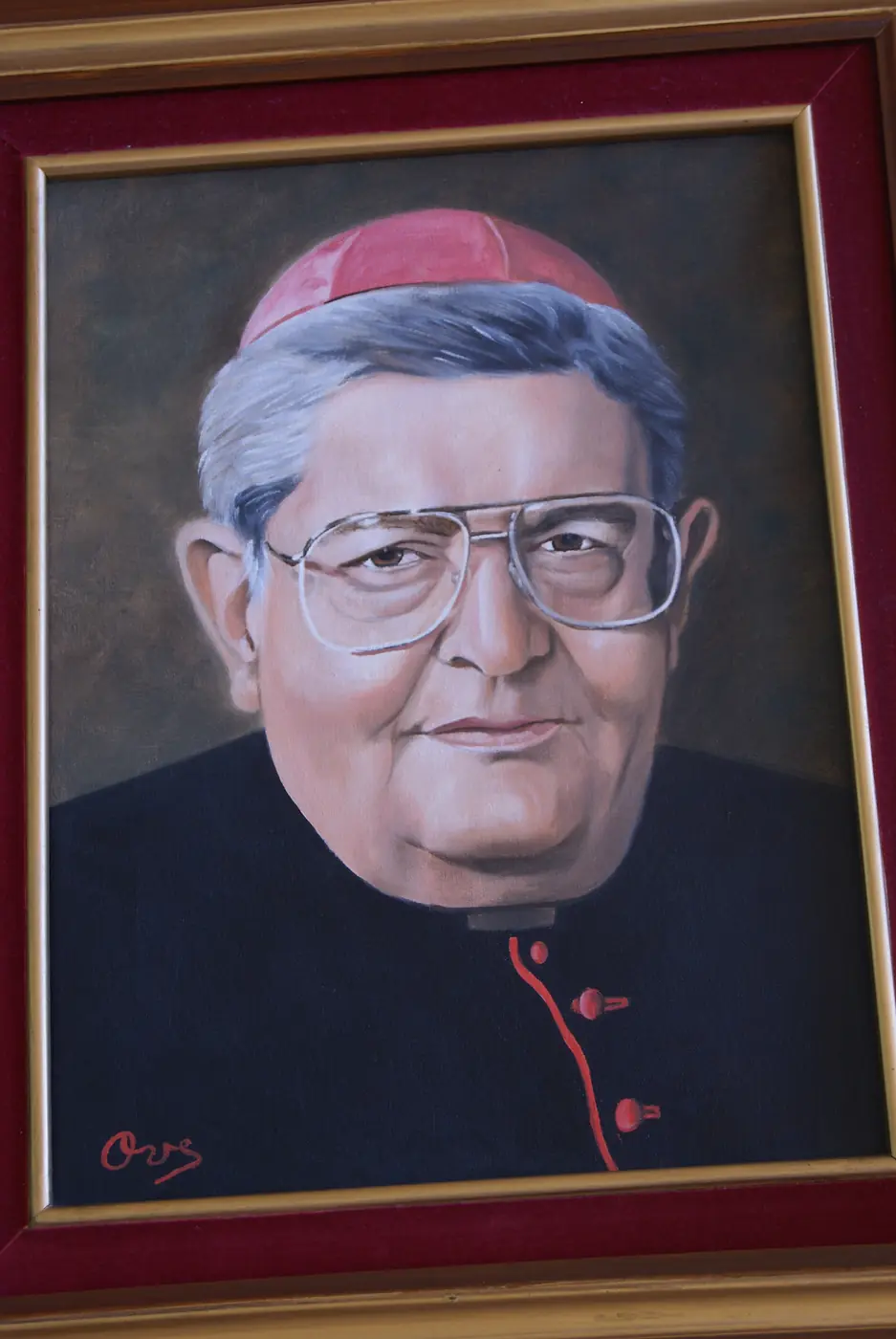
July 25, 1992
Fr. Raúl Muñoz Franco is appointed fourth Chaplain of the Shrine.
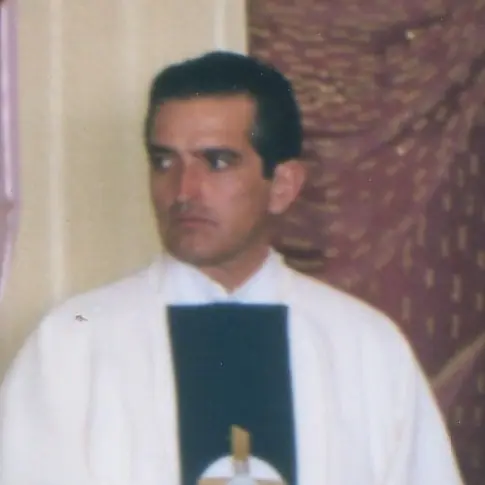
November 22, 1992
Pope John Paul II beatifies the 25 Mexican martyrs of the Cristero period, led by Saint Cristóbal Magallanes.
July 1993
Blessing of the Retreat House next to the Shrine of Christ the King on the summit of Cubilete Hill.
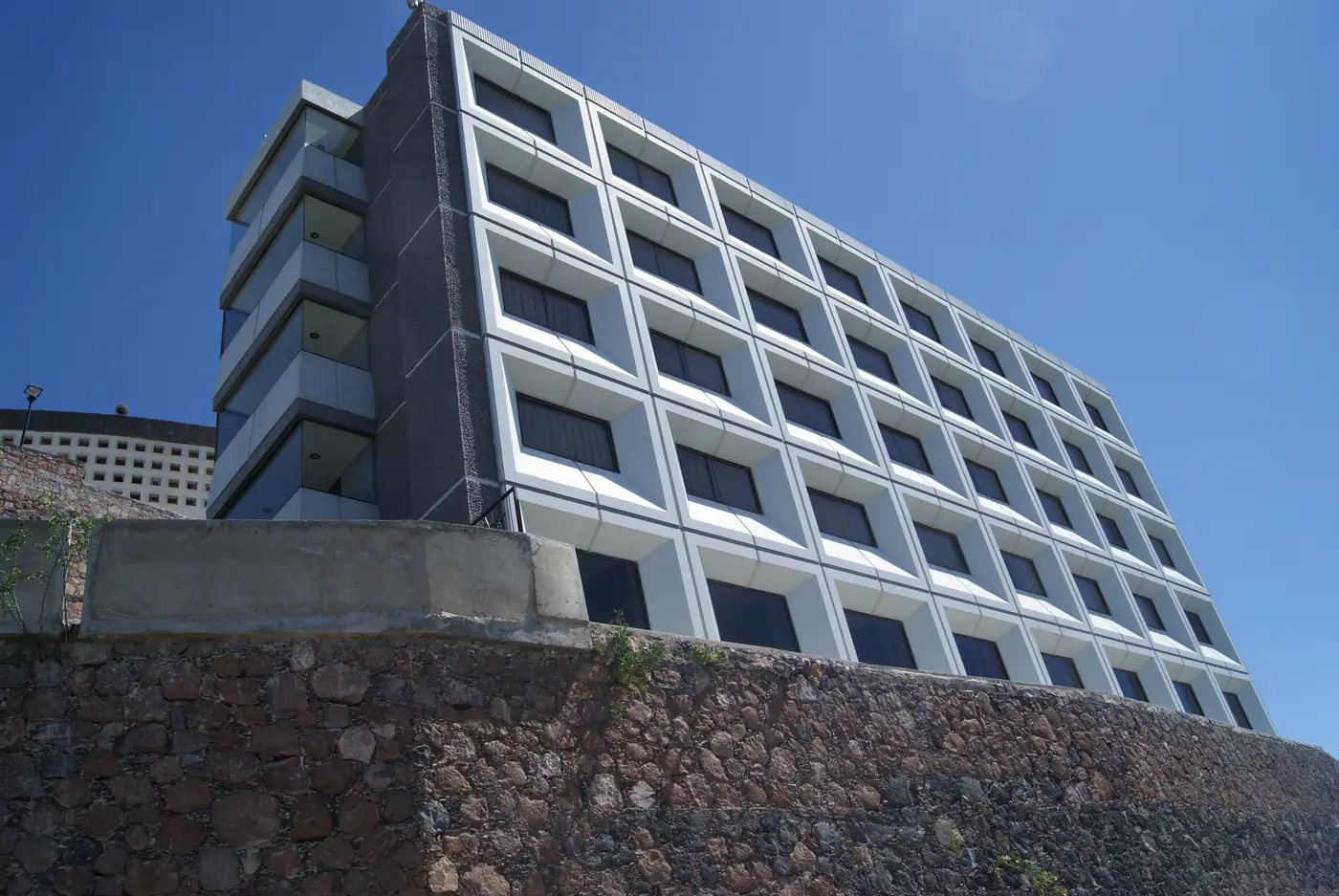
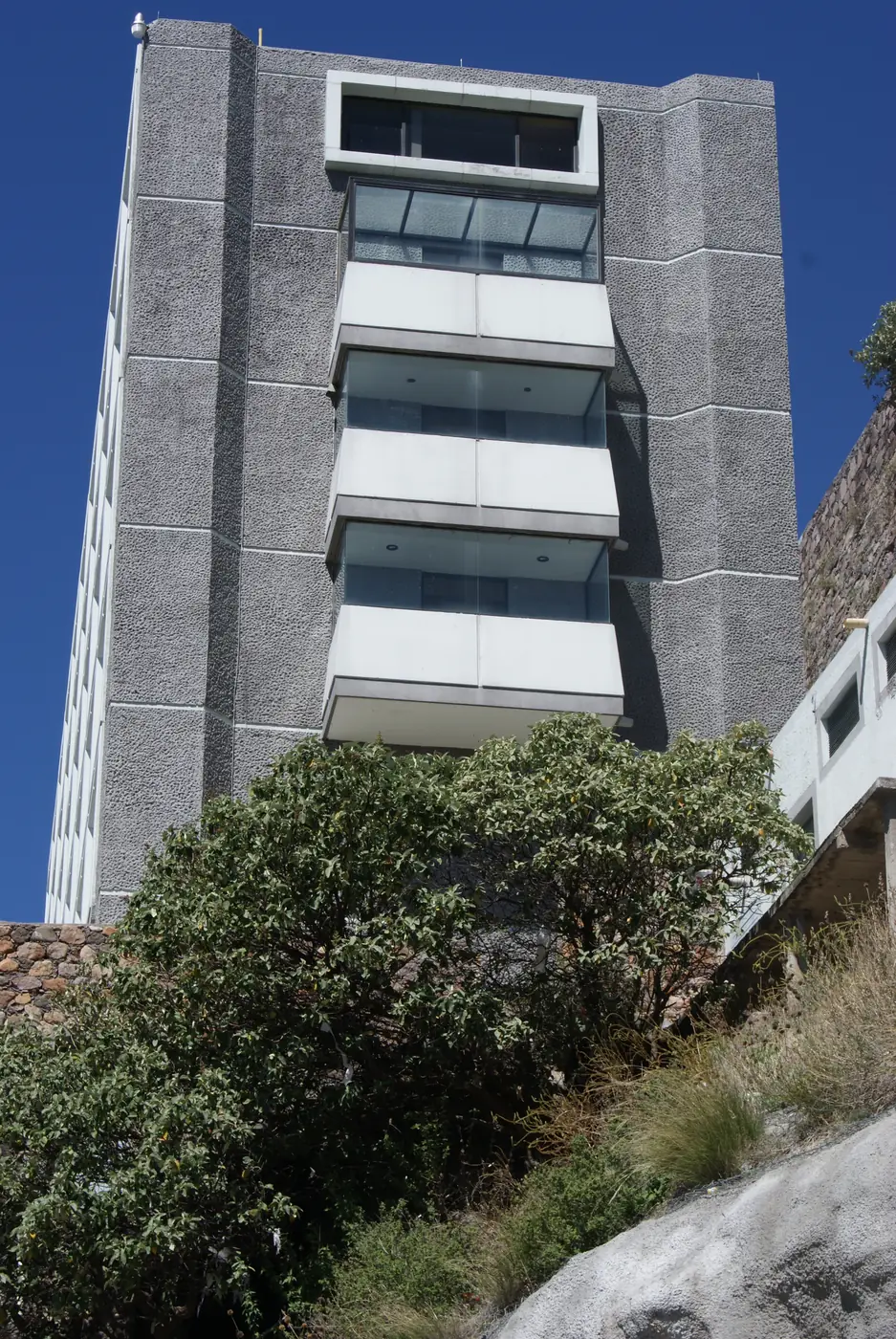
July 2, 1993
The first stone is laid for the Introductory Course House of the Diocesan Seminary of León, next to the Expiatory Hermitage.
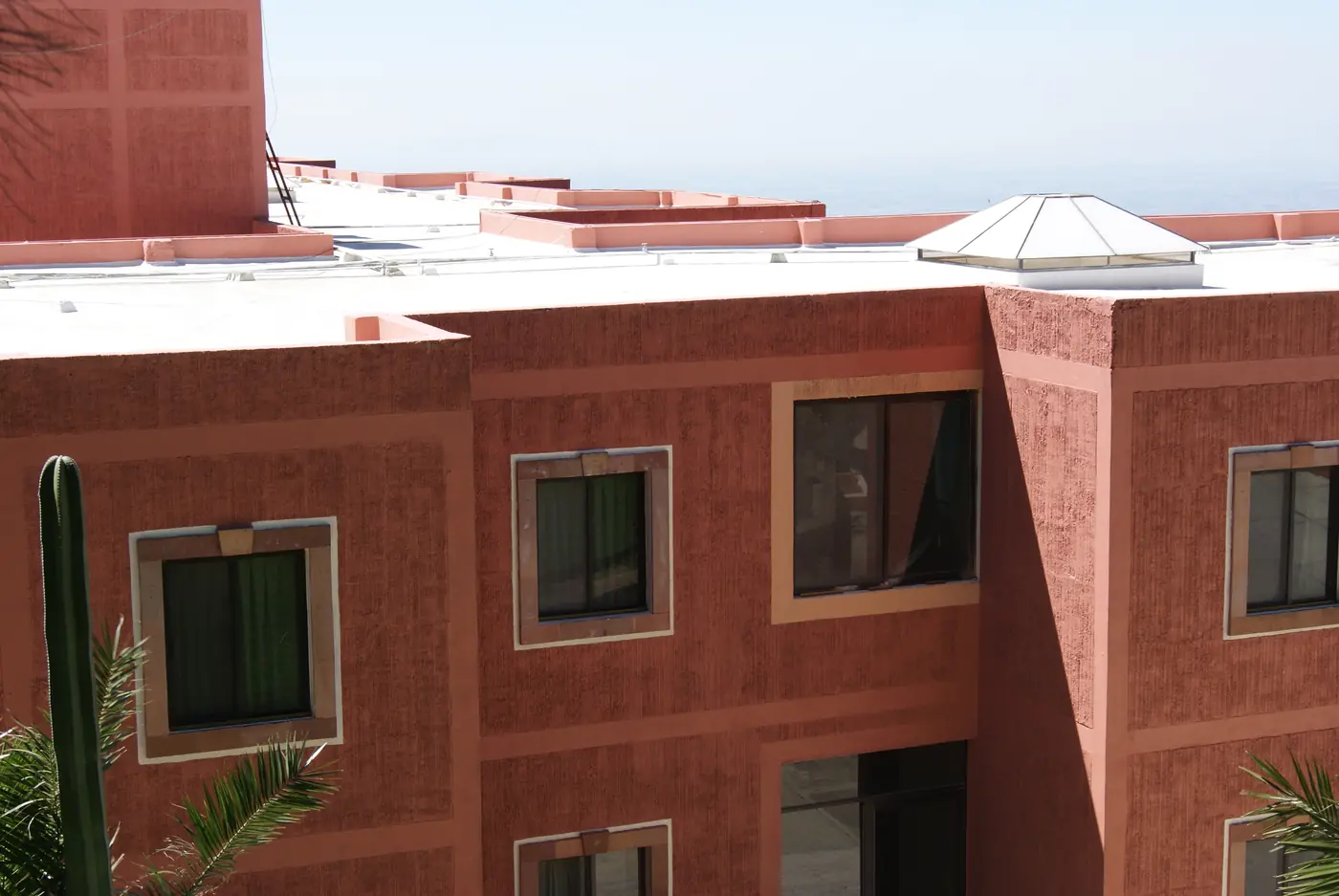
1993
Bishop Rafael García González proposes an open-air chapel, a project that was never carried out.
November 8, 1994
Bishop Rafael García González, ninth Bishop of León, dies.
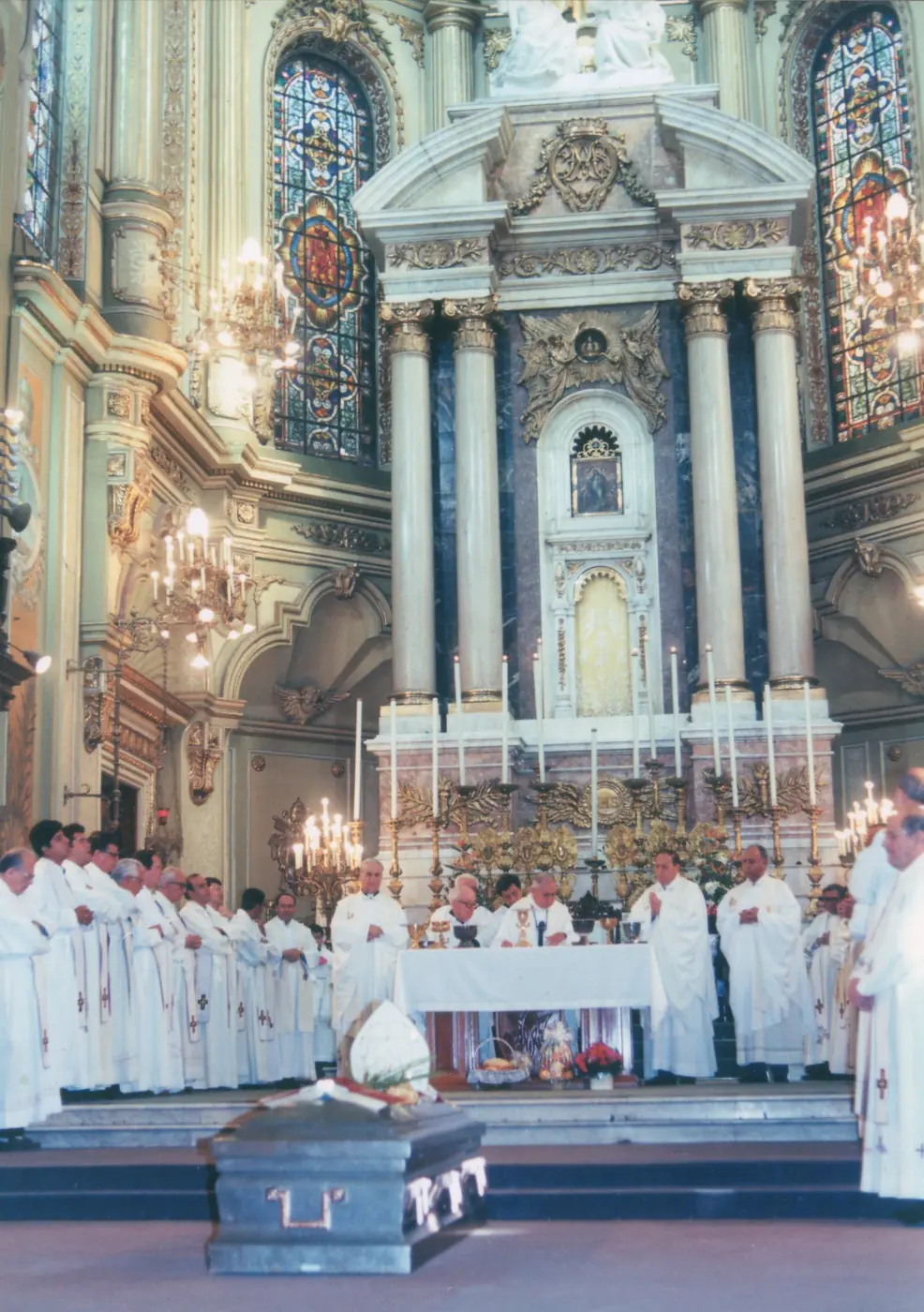
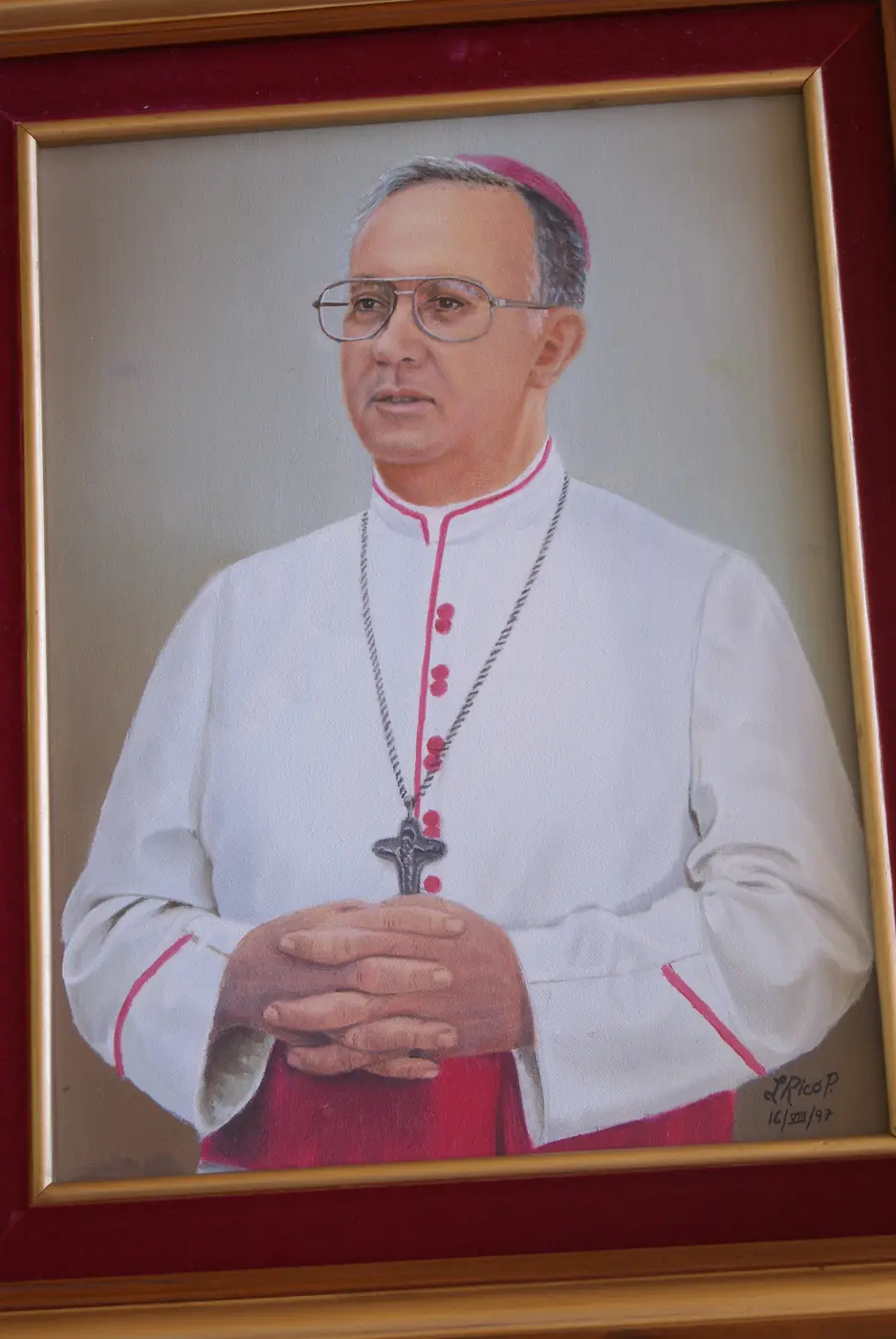
October 18, 1995
Bishop José Guadalupe Octavio Martín Rábago takes office as tenth Bishop of León.
June 12, 1999
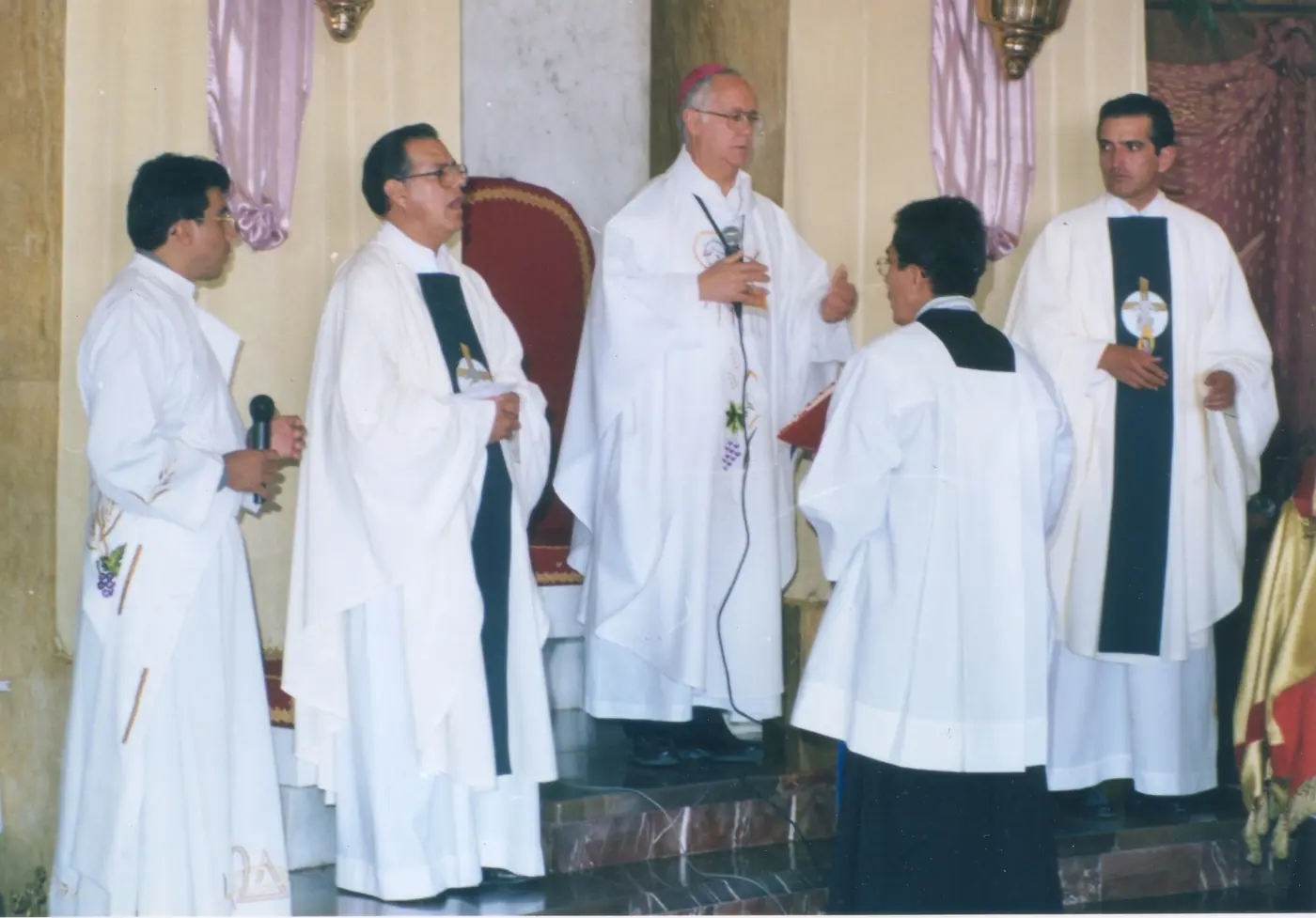
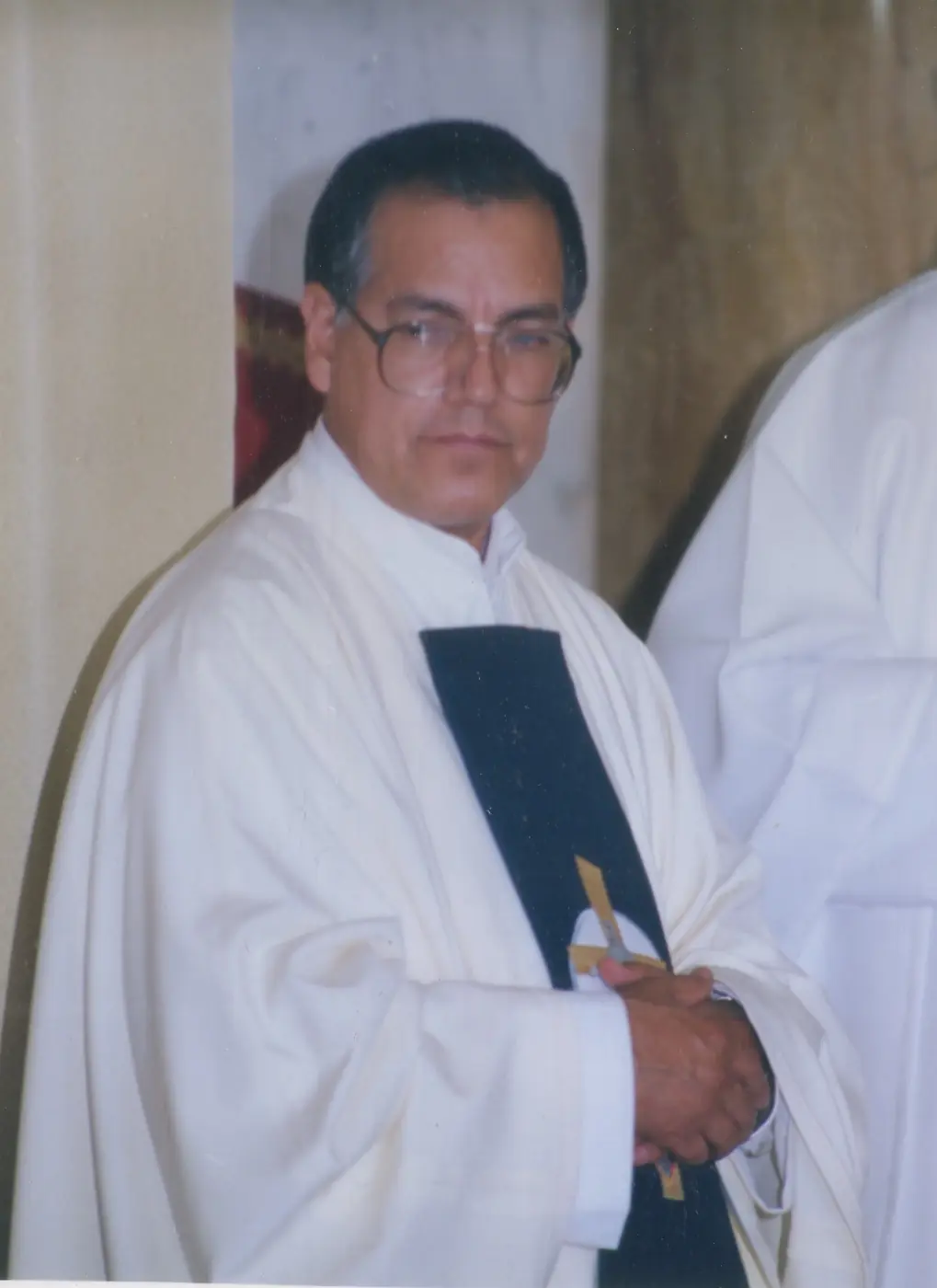
Bishop José Guadalupe Martín Rábago appoints Fr. Jesús Ortiz Ayala as fifth Chaplain of the Shrine.
2000 – today
The 21st century
May 21, 2000
The 25 martyrs of Christ the King are canonized in Saint Peter’s Basilica in Rome. The same celebration canonizes Saint José María de Yermo y Parres, who began his work in León with the religious Daughters of the Sacred Heart of Jesus and of the Poor, now present in several countries.
April 2002
Renovation of the camp and the Church of Mary Queen of Martyrs in Baños de Aguas Buenas, Silao. The camp is a place to rest and gather before climbing to the Shrine of Christ the King.
May 23, 2004
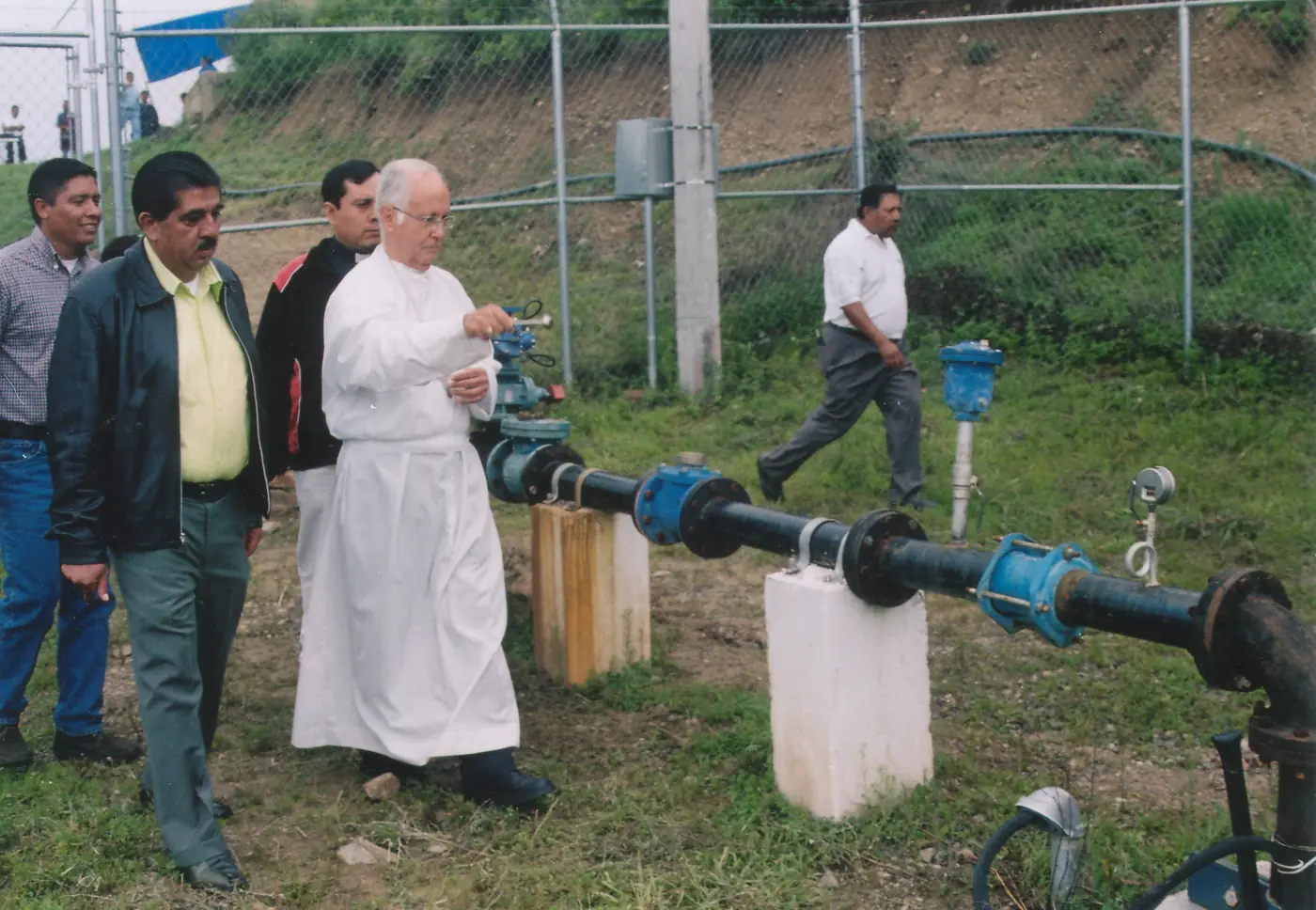
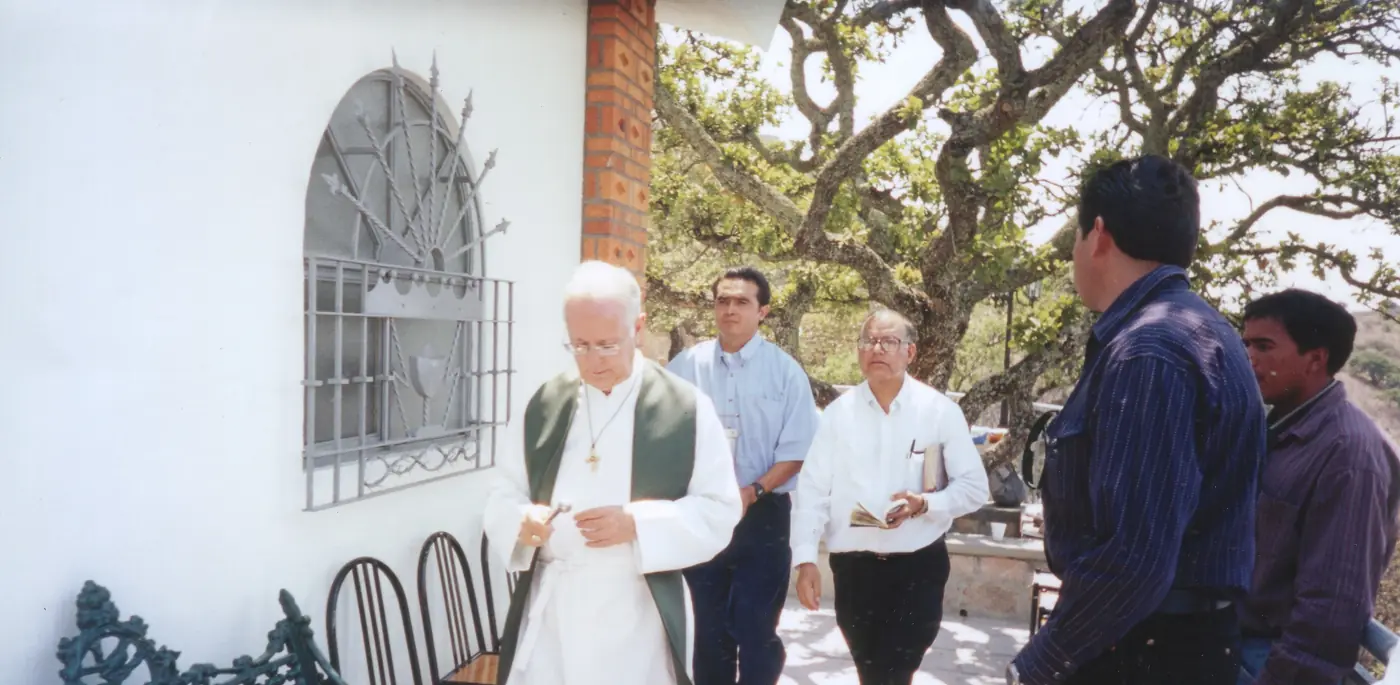
Bishop José Guadalupe Martín Rábago blesses the site where the Shrine’s water well will be dug.
2004
Construction of the Gethsemane House of Prayer, a place of prayer surrounded by nature, open to those who request it.
November 20, 2005
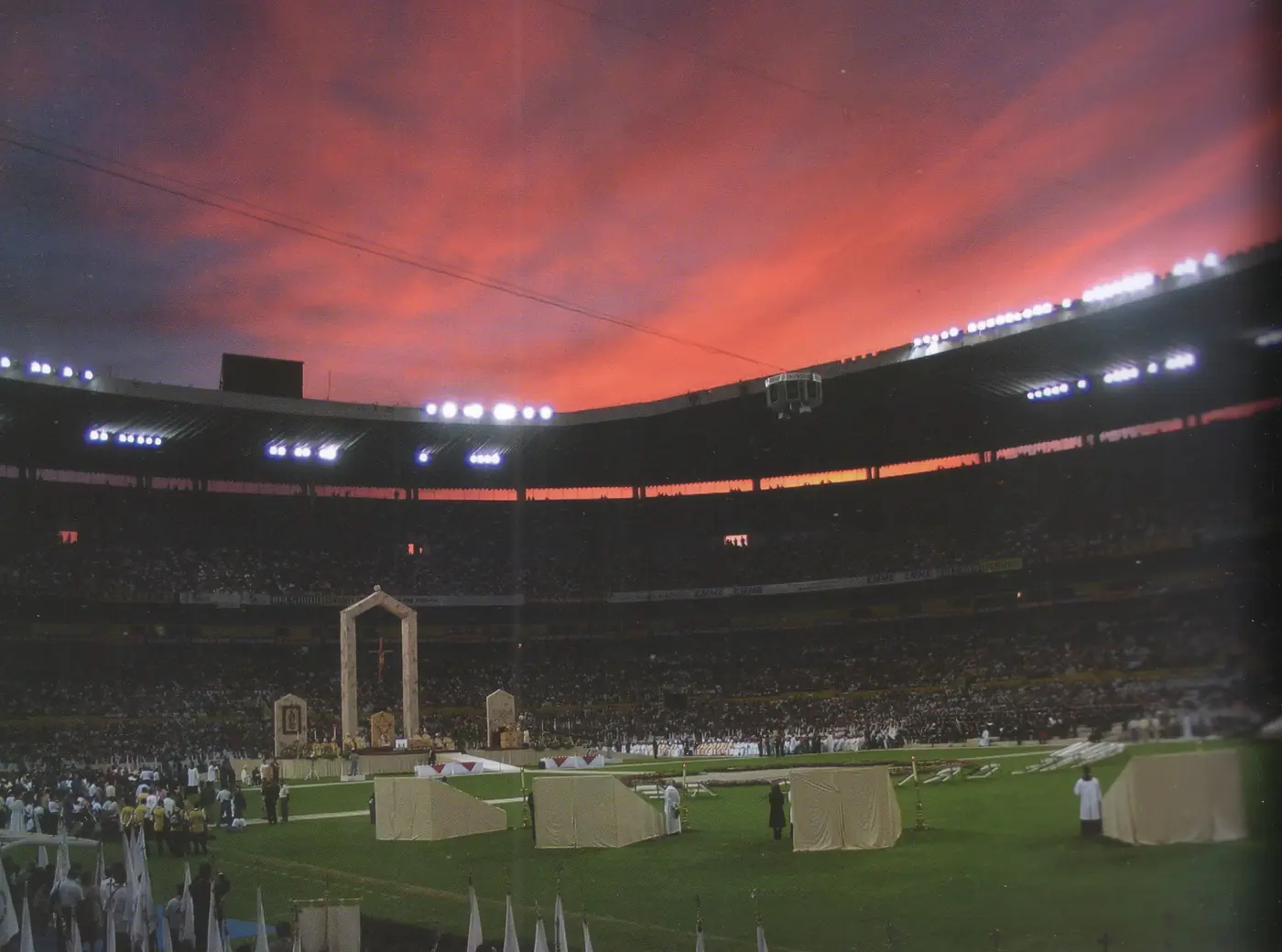
Beatification of the Martyrs of San Joaquín at Jalisco Stadium.
November 26, 2005
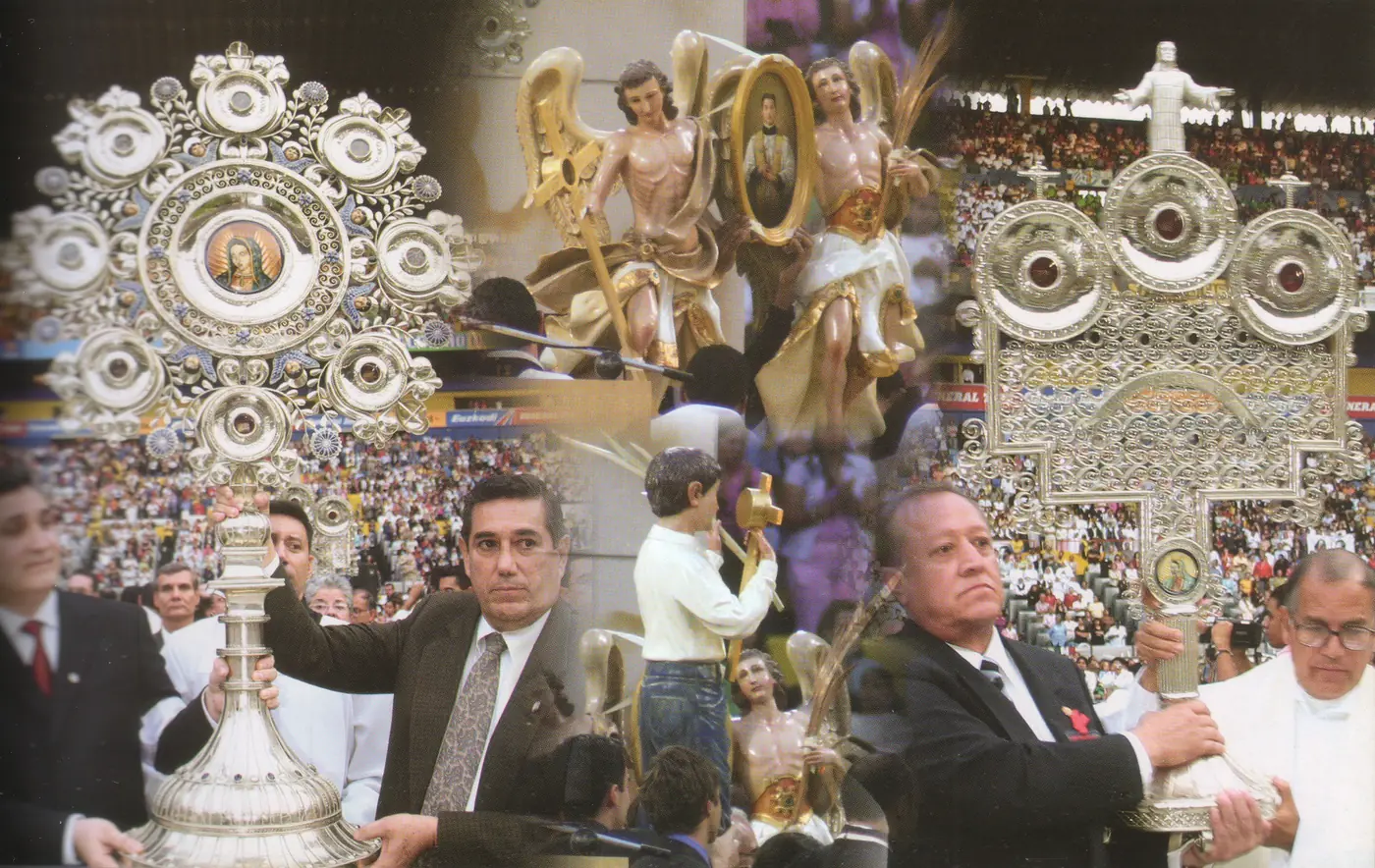
Amid great joy, the relics of the Blessed Martyrs of San Joaquín arrive at the Church of Mary Queen of Martyrs in Baños de Aguas Buenas.
November 25, 2006
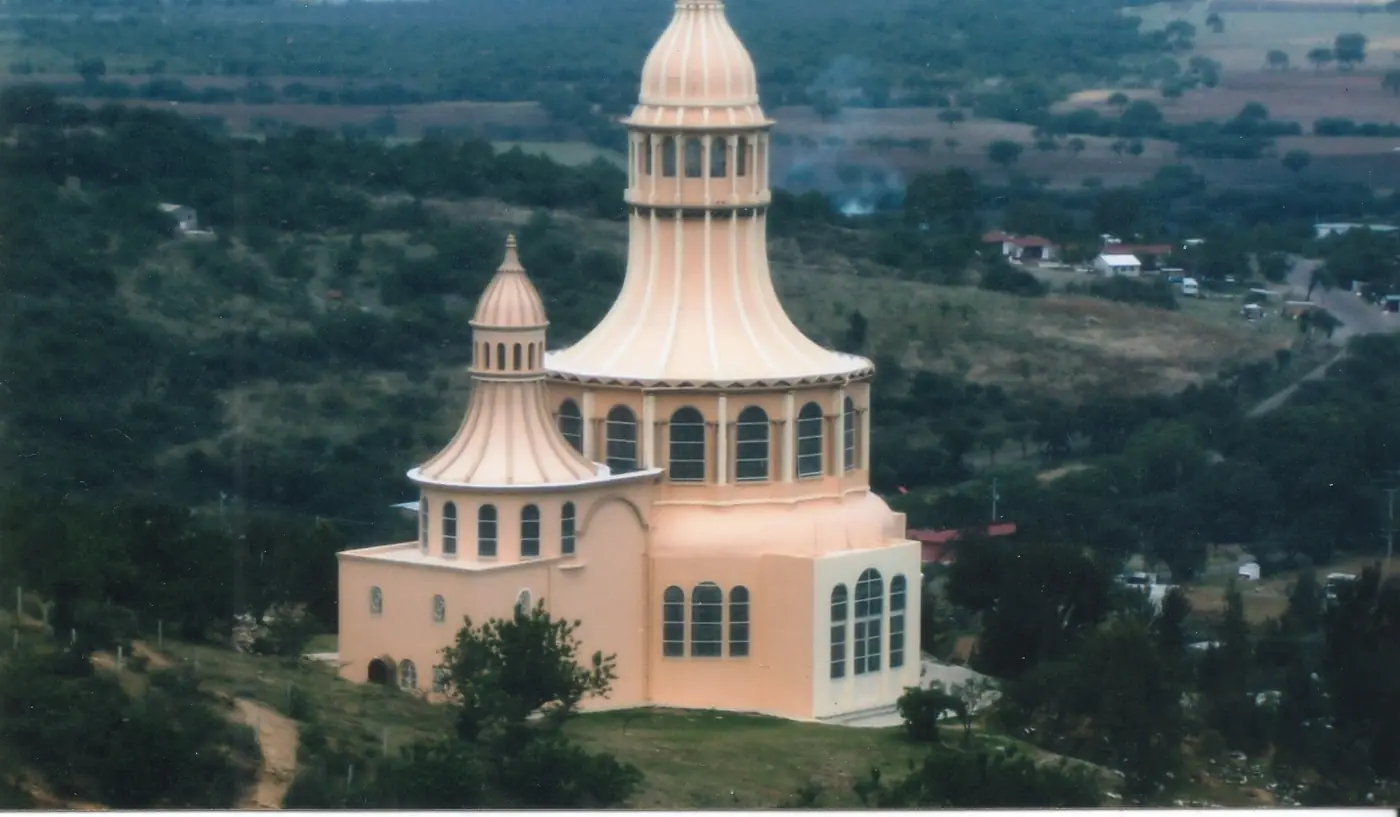
Pope Benedict XVI raises the Church of León to an Archdiocese, with the Dioceses of Querétaro, Celaya and Irapuato as suffragans. Bishop José Guadalupe Martín Rábago becomes the first Archbishop of León.
August 16, 2007
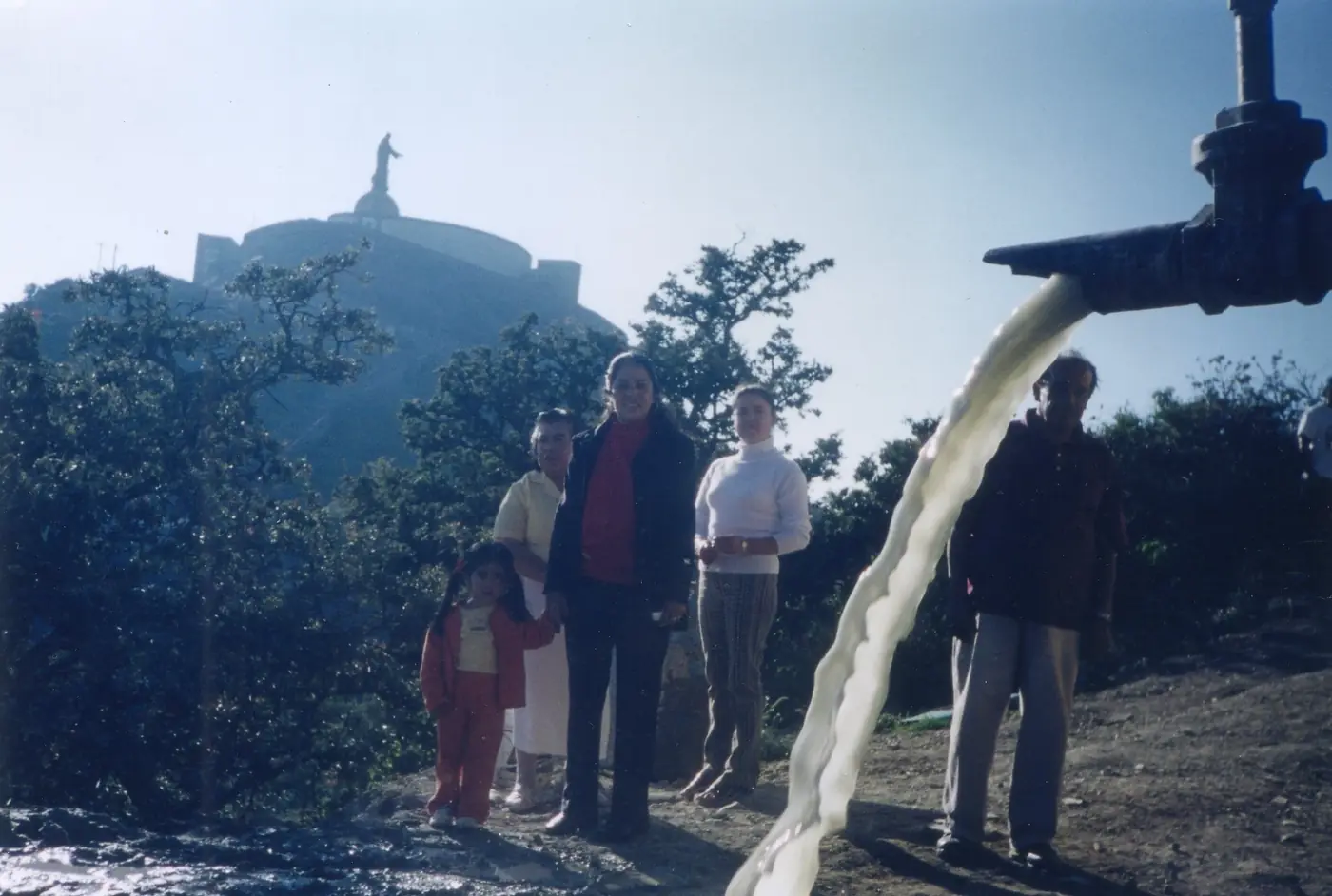
Drinking water supply to the Shrine begins: for the first time the Shrine’s main cistern and the community’s cistern are filled.
March 10, 2010
Fulfillment of the vow made to the Most Holy Mother of Light, in her Cathedral of León, for the blessing of water.
January 2012
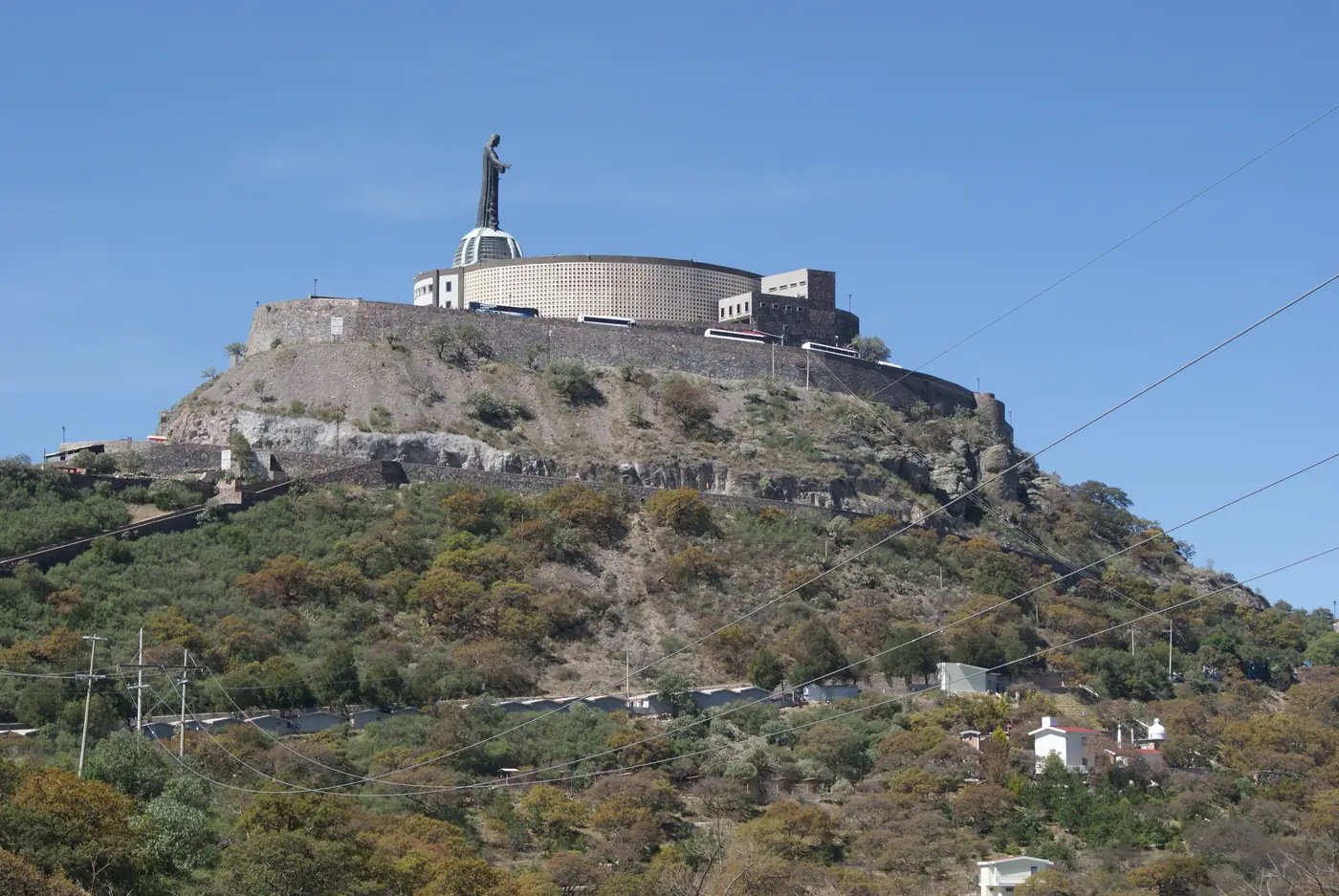
First maintenance of the 20-meter, 80-ton statue of Christ the King, supervised by the Shrine’s Chaplain, Fr. Jesús Ortiz Ayala. The statue was coated with a material that made it look black, which was later removed.
March 25, 2012
Pope Benedict XVI flies over Cubilete Hill by helicopter, contemplating the monument to Christ the King, before celebrating a great Mass at Guanajuato Bicentennial Park.
December 22, 2012
Pope Benedict XVI appoints Archbishop Alfonso Cortés Contreras as second Archbishop of León.
2014
Archbishop Alfonso Cortés Contreras changes the title of Chaplain to Rector and appoints Fr. Leonardo Lona Patlán as sixth Rector of the Shrine.
October 3, 2017
Archbishop Alfonso Cortés Contreras appoints Fr. Silverio Chávez Ayala as seventh Rector of the National Votive Shrine of Christ the King of Peace.
August 11, 2020
After being closed to the public during the COVID-19 health emergency, the Shrine reopens with due precautions and limited hours.
October 18, 2022
Fr. Rubén de la Cruz Martínez, now Auxiliary Bishop of León, is appointed eighth Rector of the National Votive Shrine of Christ the King of Peace.
September 4, 2023
Second maintenance of the statue of Christ the King: chemical engineering techniques remove corrosion, the metal is sealed and a cold green patina restores its original appearance. Forty-six specialists, restorers and masons took part.
July 4, 2024
Pope Francis appoints Archbishop Jaime Calderón Calderón, who takes possession of the Archdiocese on August 19, 2024. He later receives the archbishop’s pallium from Pope Leo XIV.
August 14, 2024
Inauguration of the scenic lighting system and the restored road to the Shrine, attended by the Governor of Guanajuato, Diego Sinhue Rodríguez Vallejo, and Archbishop Alfonso Cortés Contreras, second Archbishop of León.
January 31, 2026
The 43rd National March to Christ the King, the centennial march of the Cristero Resistance organized by Testimonio y Esperanza, gathers 75,000 young pilgrims. The celebration is presided over by Archbishop Joseph Spiteri, Apostolic Nuncio to Mexico.
August 29, 2026
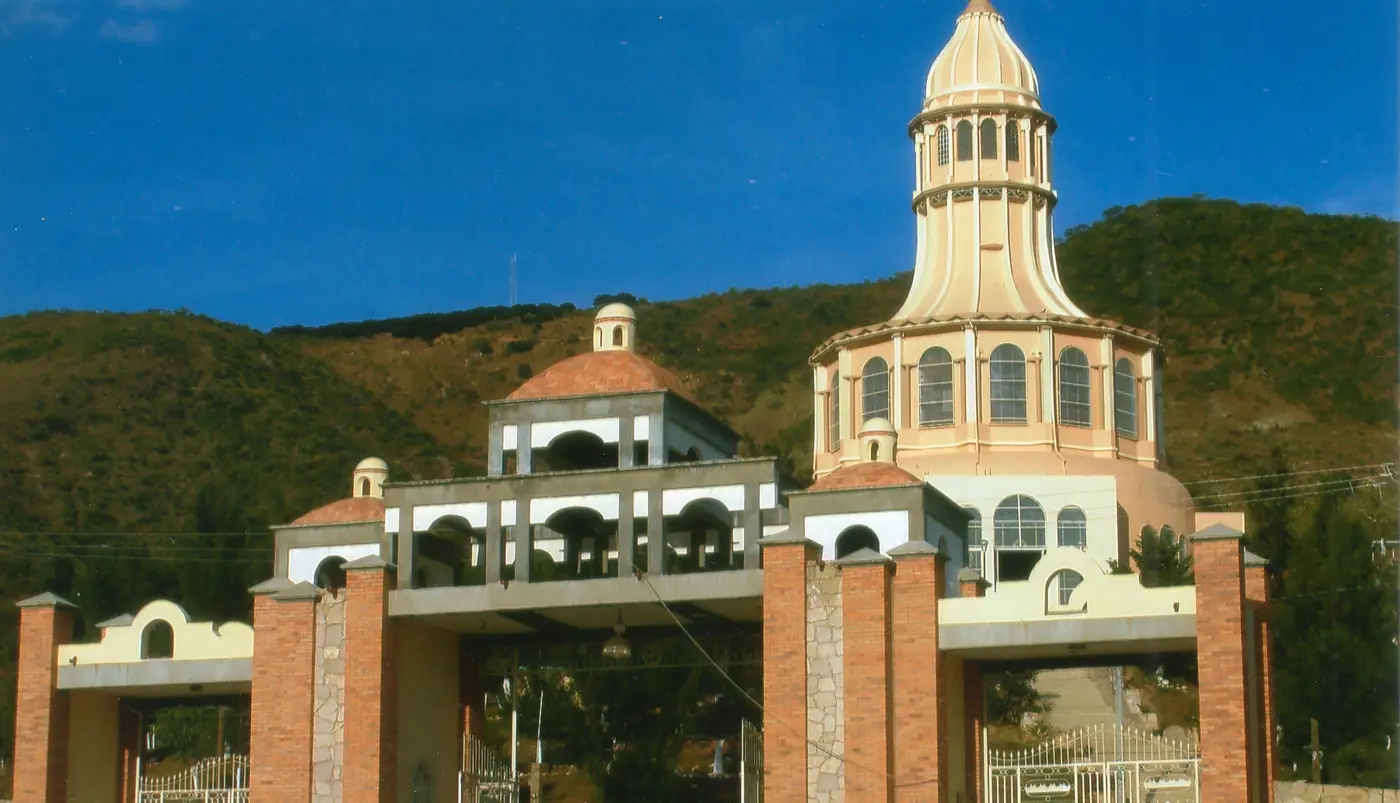
As part of the centennial of the Cristero Resistance, the Arch of the National Votive Shrine of Christ the King is inaugurated. The Eucharist is presided over by Archbishop Jaime Calderón Calderón, with the Governor of Guanajuato, Libia Denisse García Muñoz Ledo, and civil authorities present.
June 23, 2026 to the present
Archbishop Jaime Calderón Calderón of León appoints Fr. Manuel Sandoval Álvarez as ninth Rector of the National Votive Shrine of Christ the King of Peace.
Learn more
The painting that inspired the work and the meaning of every element of the Shrine.