History of the monument
Architecture and symbolism
The Shrine of Christ the King, center of our faith.
Christ at the center
Center of our faith
For some ancient cultures, human feelings dwell in the heart. Saint John tells us that “one of the soldiers pierced his side with a lance, and immediately blood and water flowed out” (Jn 19:34). In this passage we recognize the birth of the Church, gathered by Baptism and the Eucharist, symbolized by the water and the blood; the water also represents the Spirit whom Jesus Christ gives for the redemption of humanity and the building up of the Church.
Christ is the center of history: in Him the Old and New Testaments are fulfilled, and in Him the whole work of salvation is summed up. Our Lord also wants to be the center of our hearts and to dwell in us:
That Christ may dwell in your hearts through faith; that you, rooted and grounded in love, may have strength to comprehend with all the saints what is the breadth and length and height and depth, and to know the love of Christ that surpasses knowledge.
Eph 3:17-19
The Church is one body: “as in one body we have many members, and not all the members have the same function, so we, though many, are one body in Christ” (Rom 12:4-5). We are one body because we are united to Christ Jesus, our head.
Location
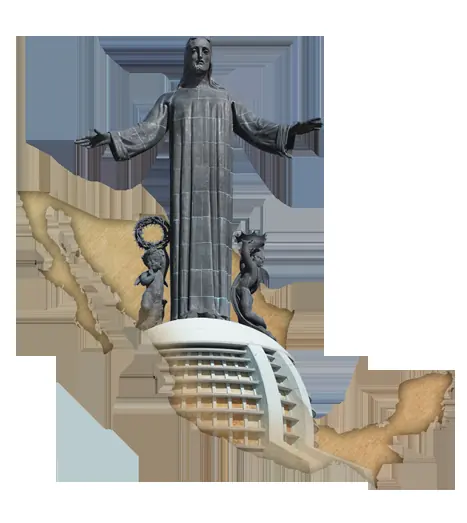
At the heart of Mexico
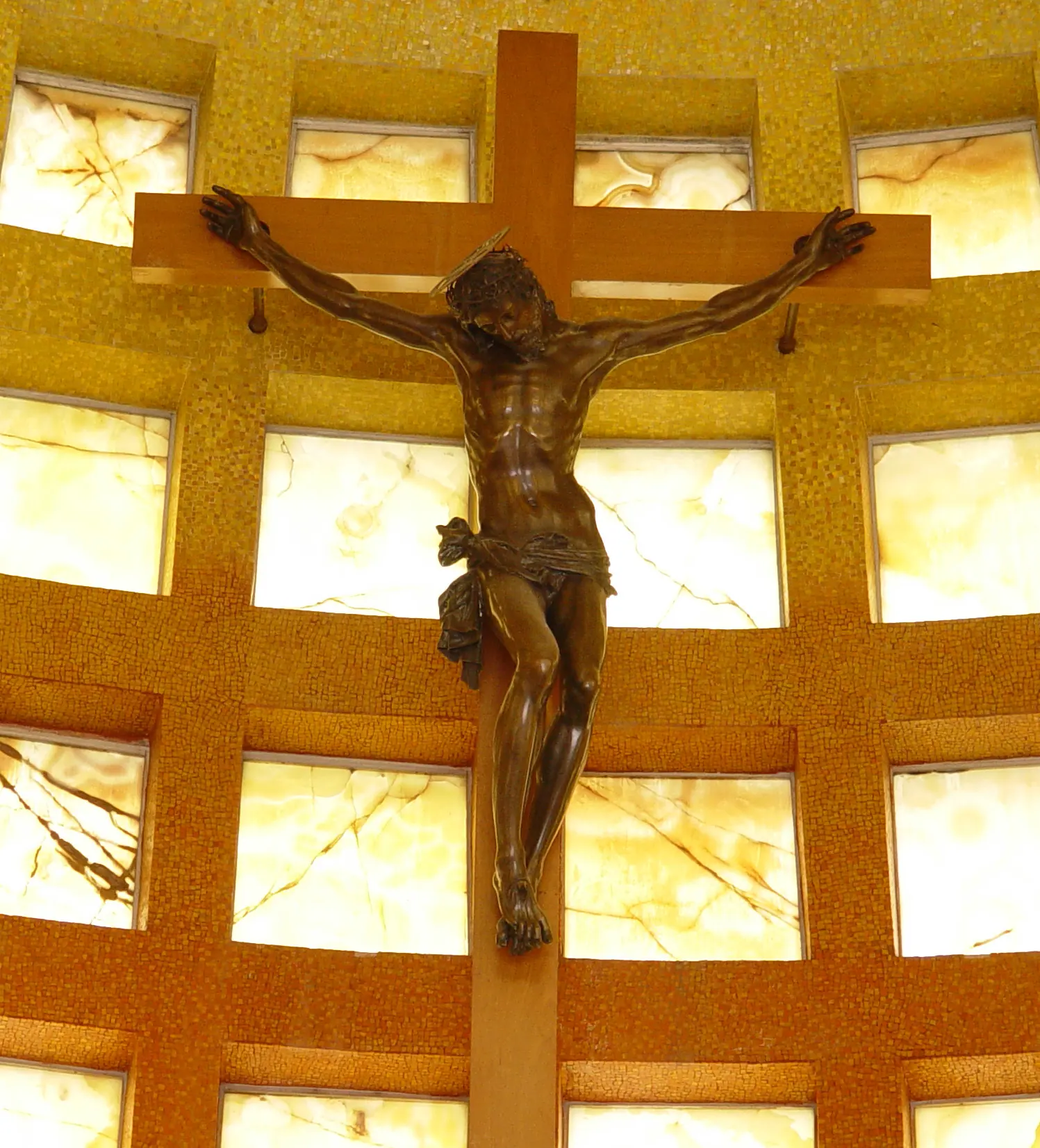
The Shrine stands at 21° 0′ 42.51″ N, 101° 22′ 8.47″ W, at 2,620 meters (8,596 ft) above sea level. Although it is not the exact geographic center of Mexico, it is considered as such. Nor is it the highest hill in the region —Cerro del Gigante is taller— but it is the spiritual heart of Mexico.
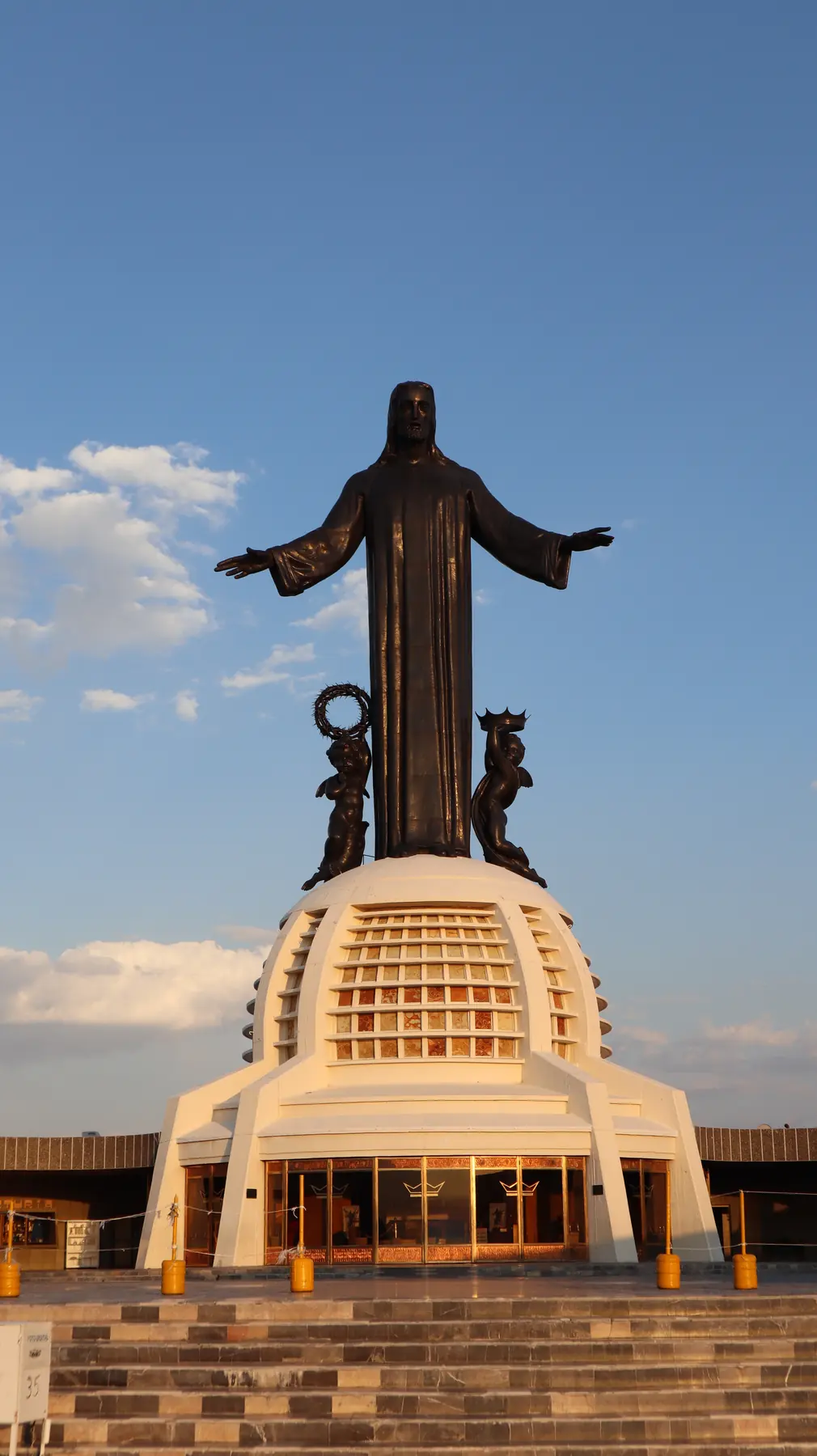
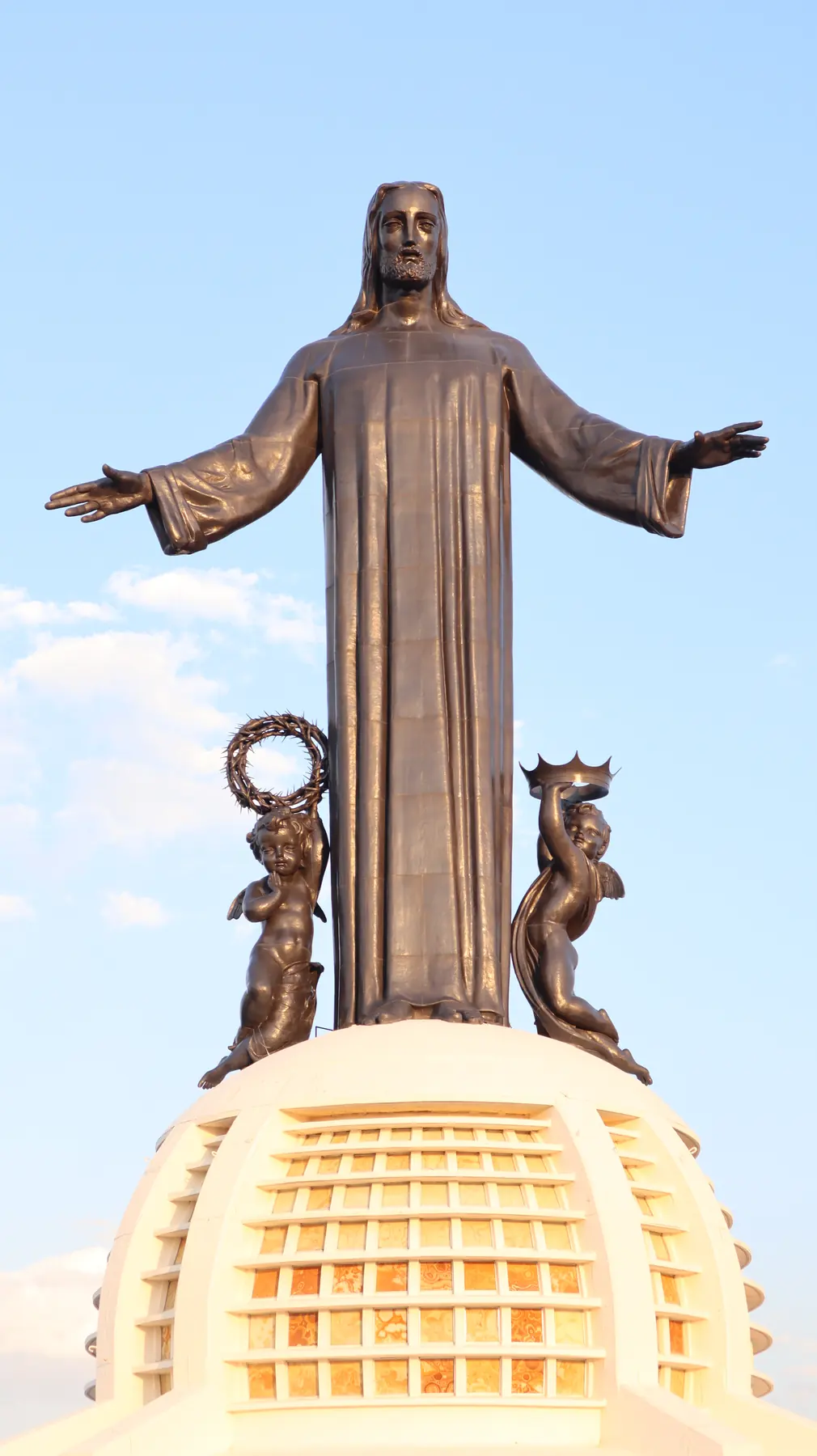
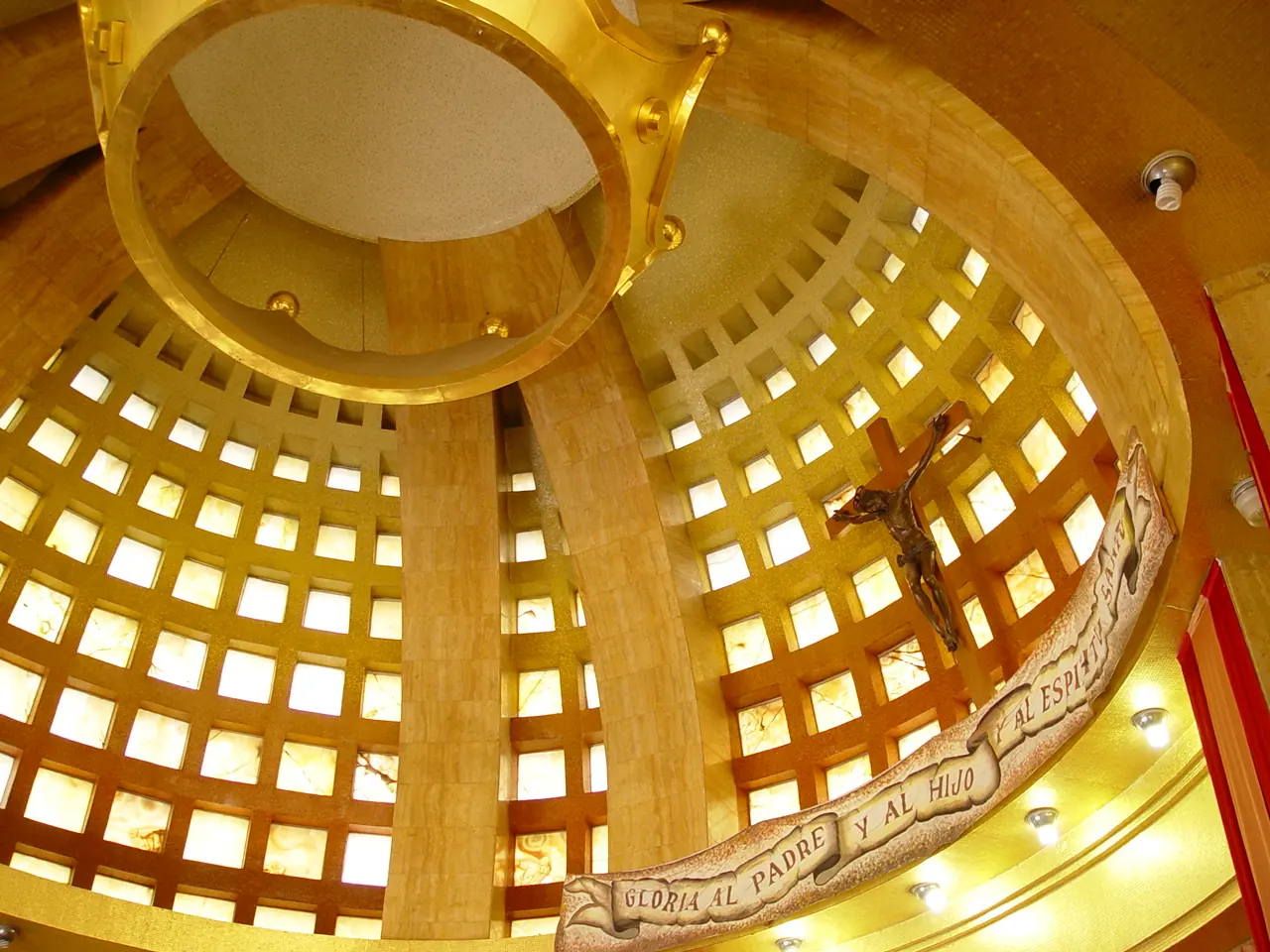
The Shrine is shaped like a heart, with a globe above it; on the globe, at the very top, stands Christ, King of the Universe.
Where the King is, the Queen cannot be absent
At the feet of Christ the King lies the Shrine of Our Lady of Guadalupe. It is a theological principle: to reach Jesus, we first go through Mary. As Bishop Valverde y Téllez, patriarch of the Shrine, said, “where the King is, the Queen cannot be absent.” The Lord gives us His Mother as our help on the way to Him.
The globe
The eight columns
The globe at the feet of Christ the King rests on eight columns representing the ecclesiastical provinces that, in 1950 —the year the finished monument was blessed— made up the Catholic Church in Mexico:
- México
- Michoacán
- Guadalajara
- Oaxaca
- Durango
- Monterrey
- Puebla
- Yucatán
An ecclesiastical province is a group of dioceses; today the Shrine belongs to the Archdiocese of León. The eight columns rise from the Shrine of the Queen and end at the sphere that represents the world.
The image
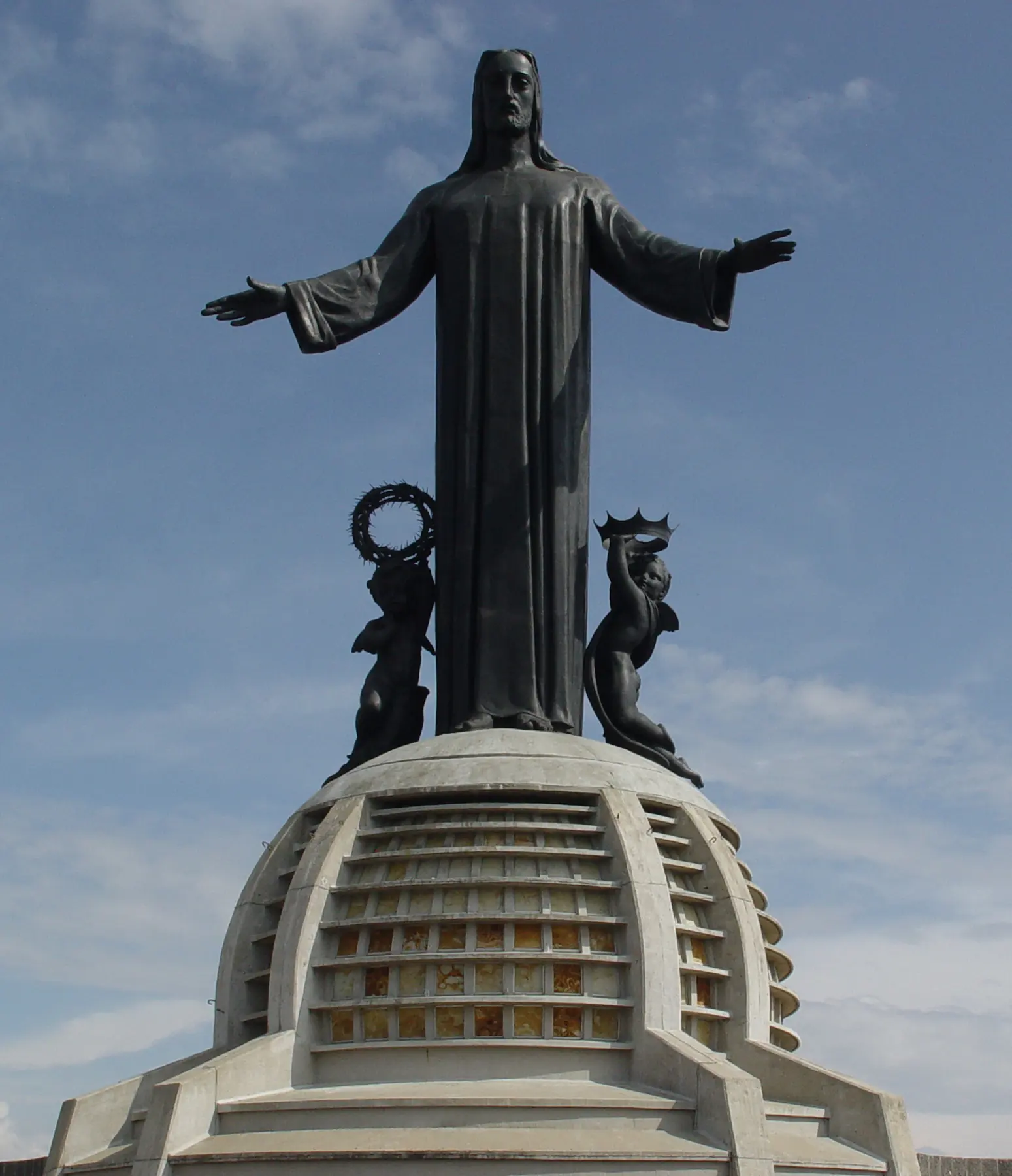
Christ the King with open arms
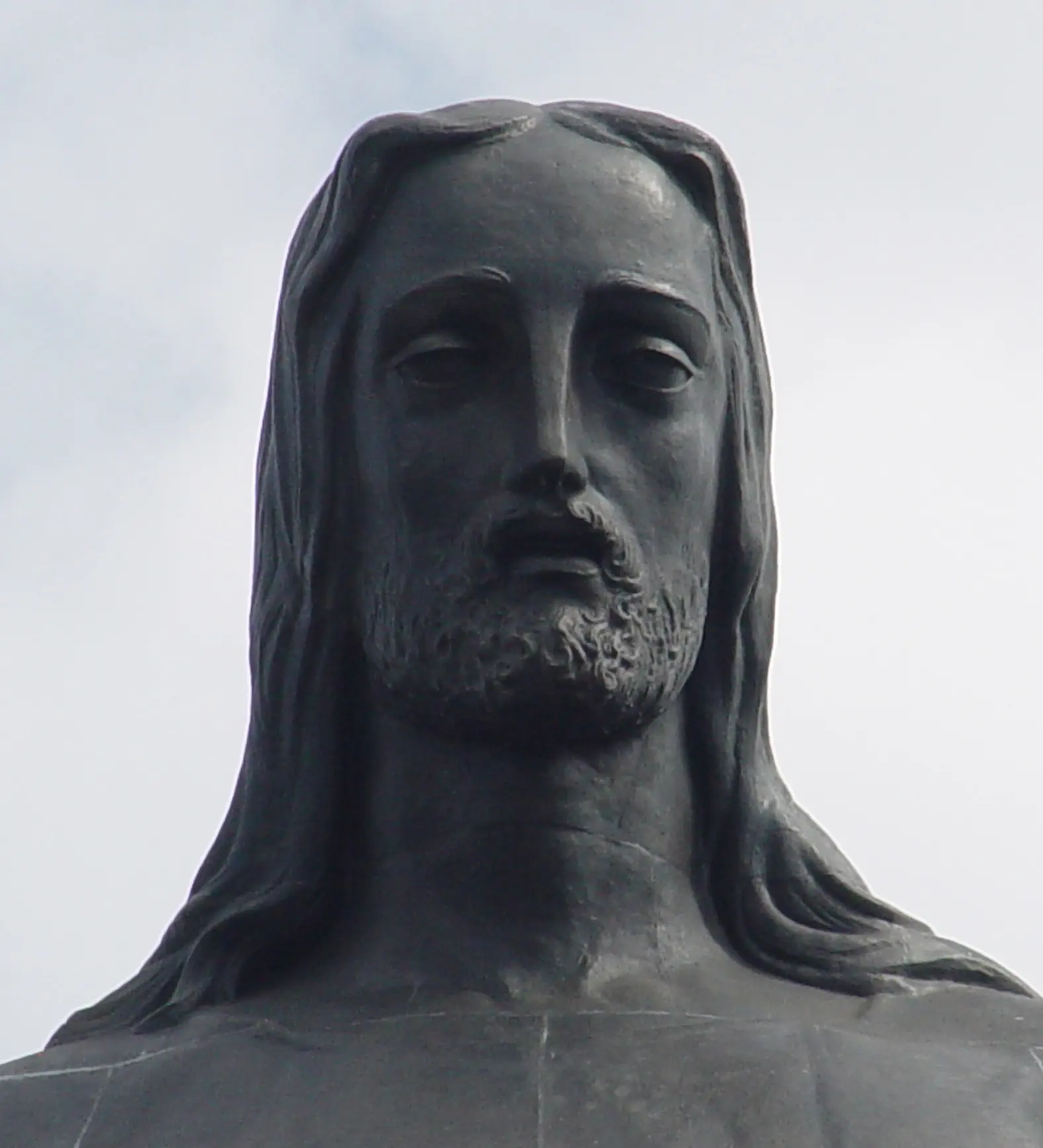
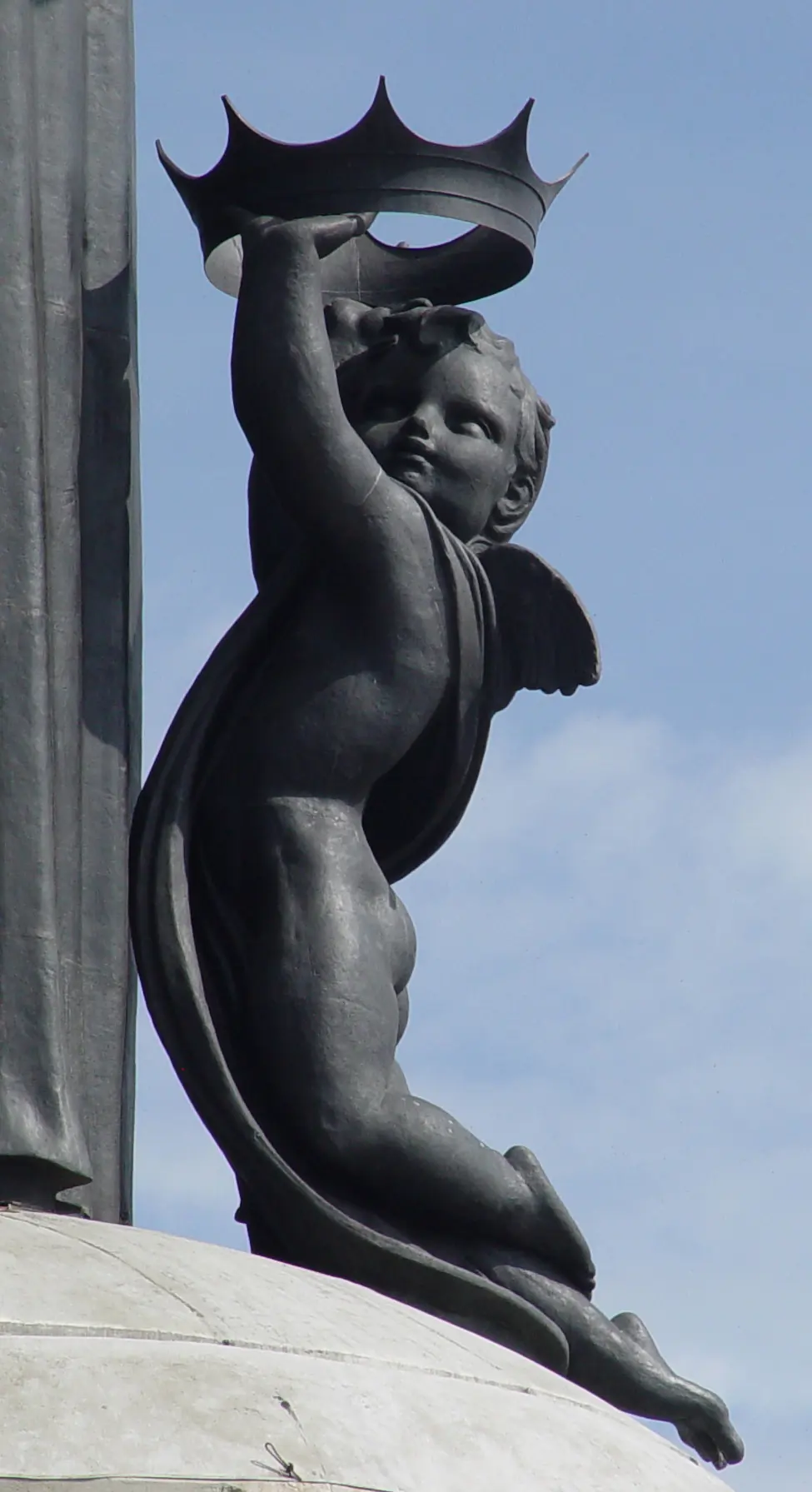
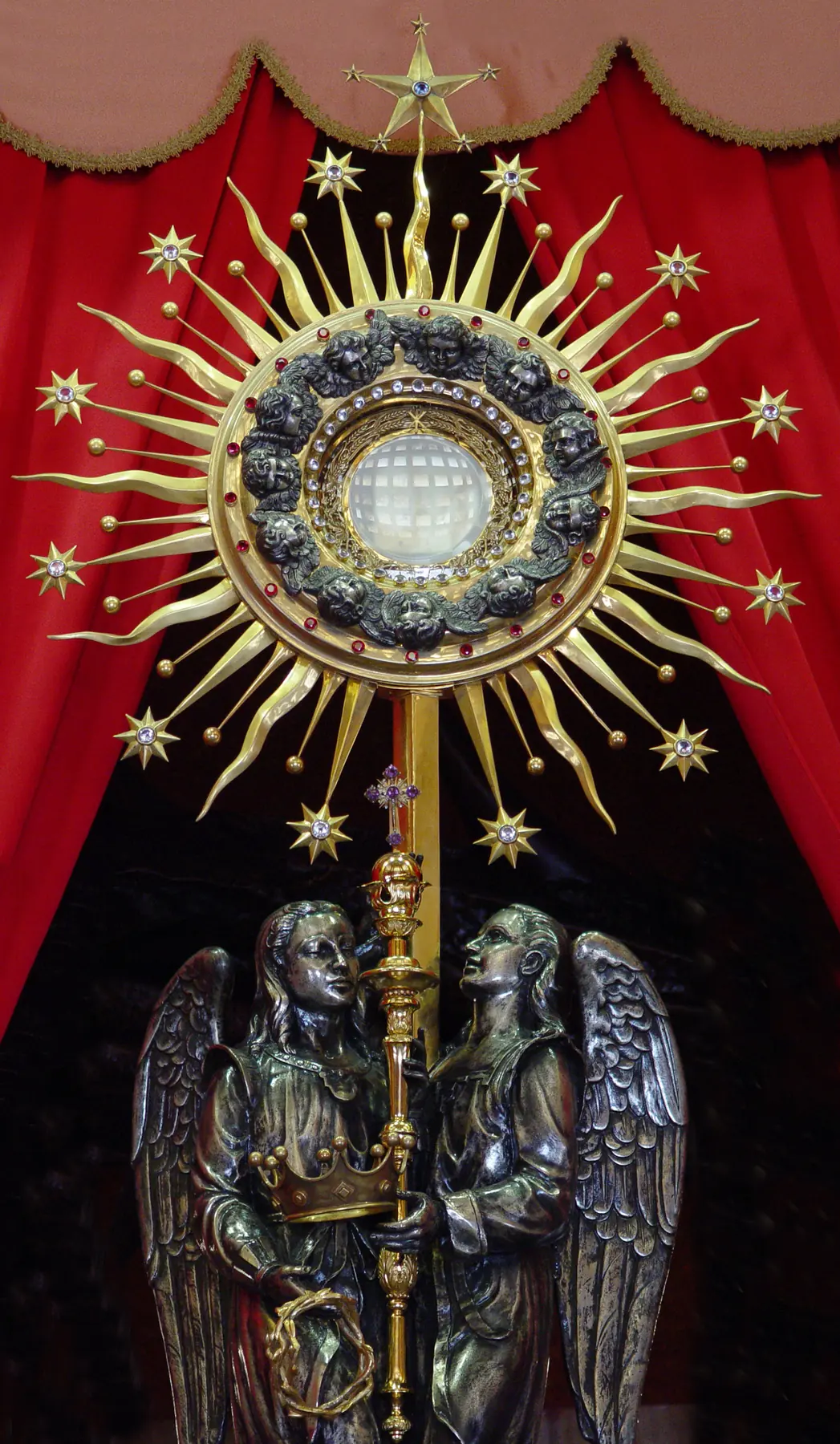
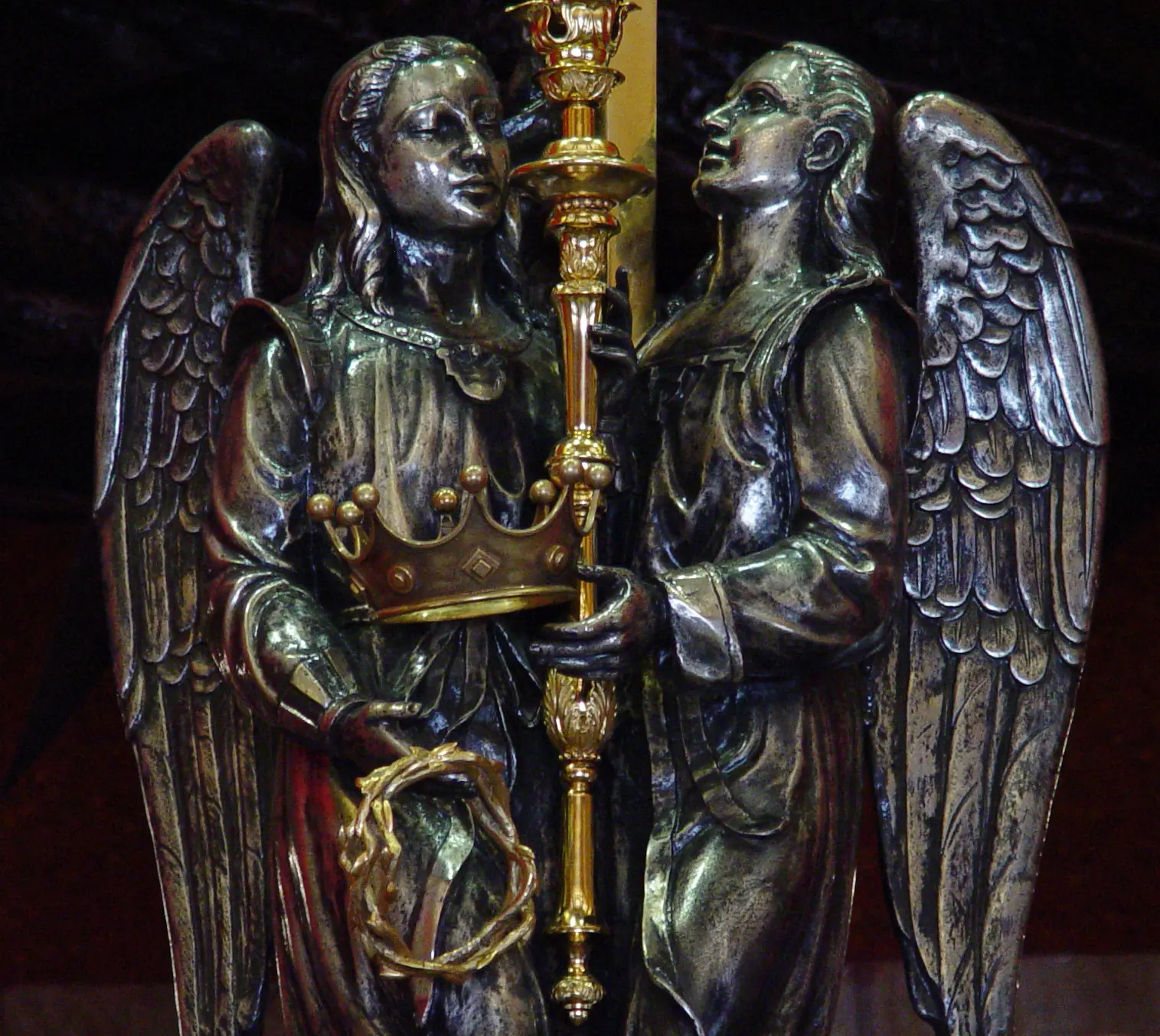
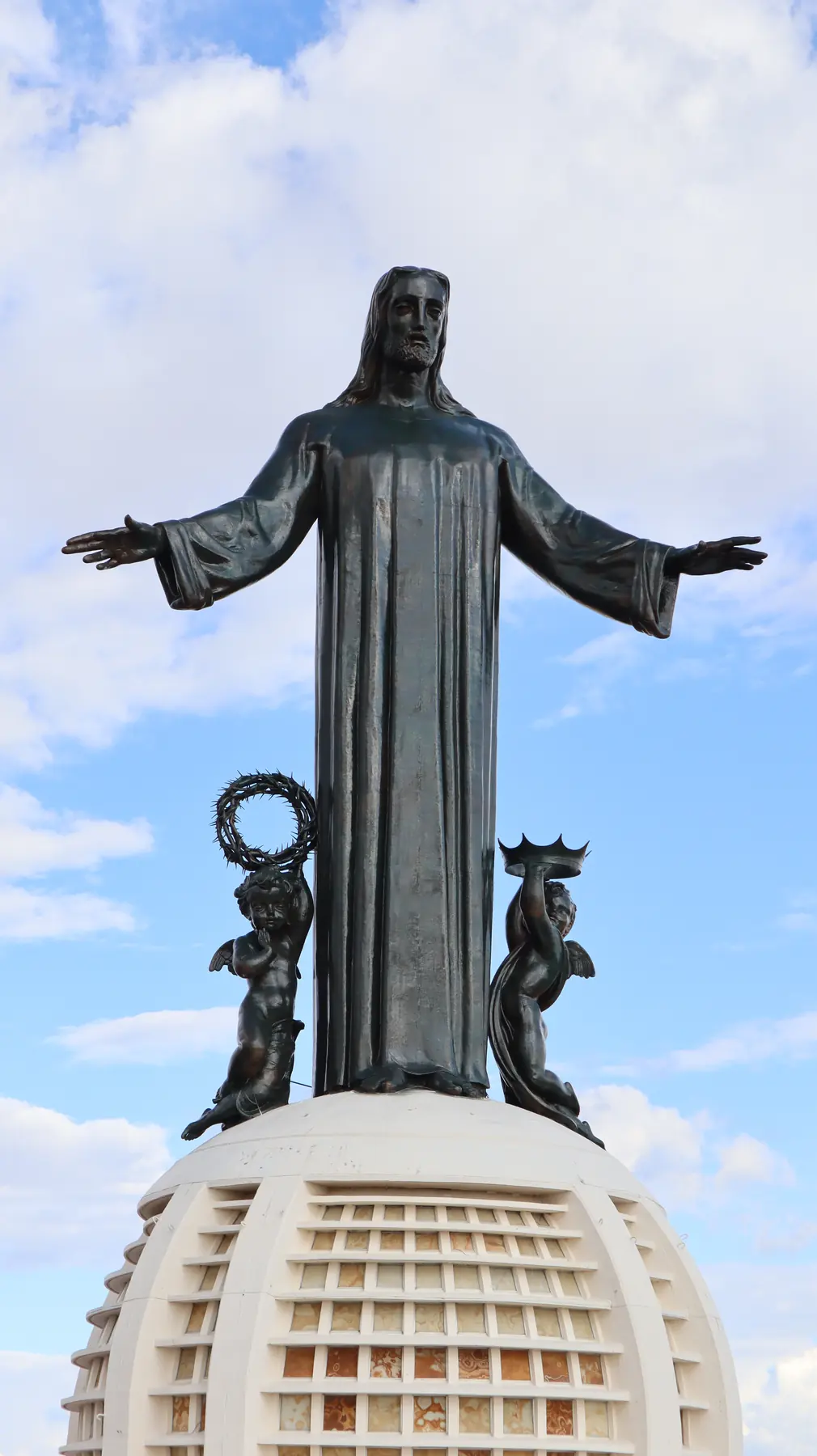
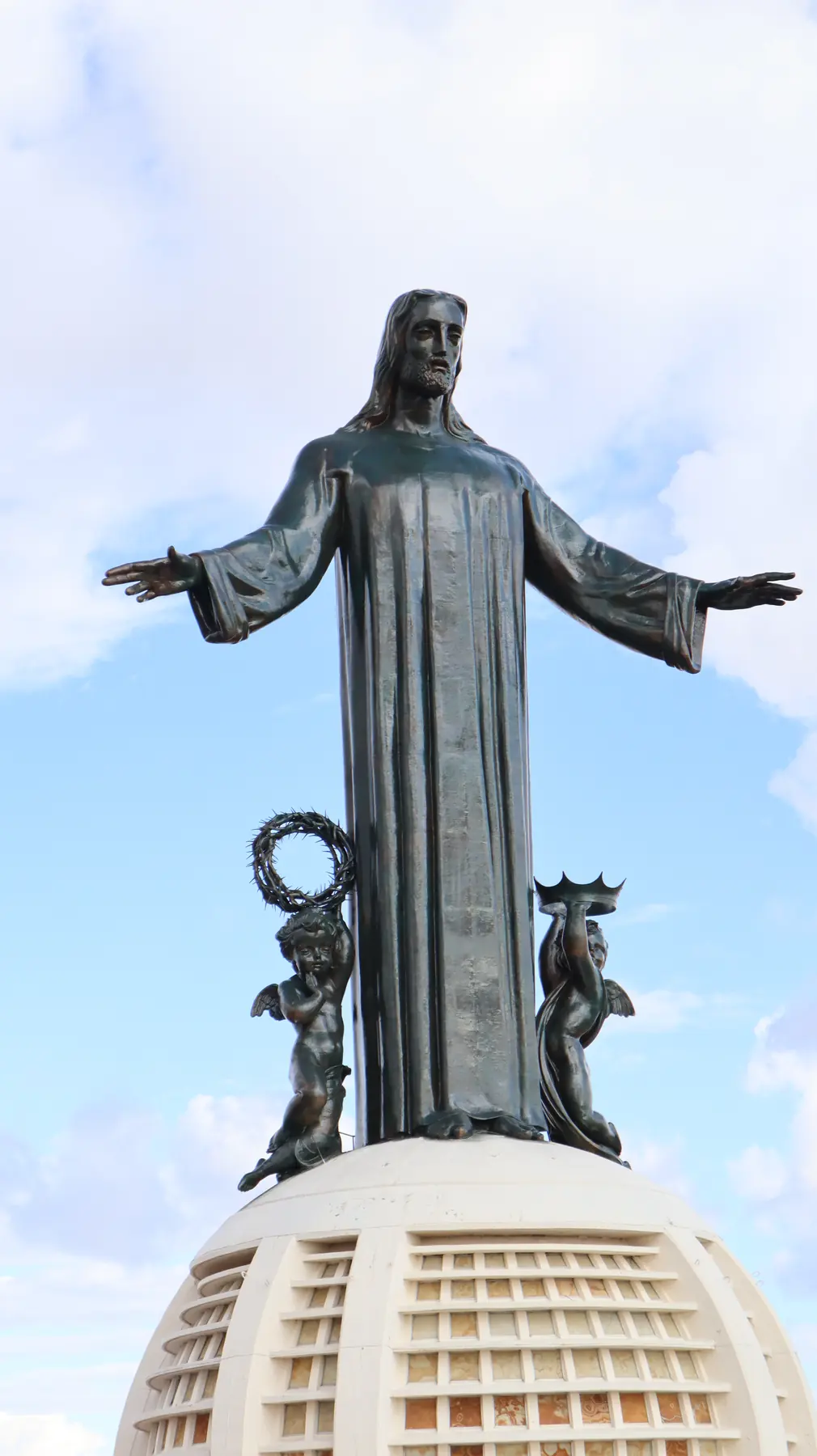
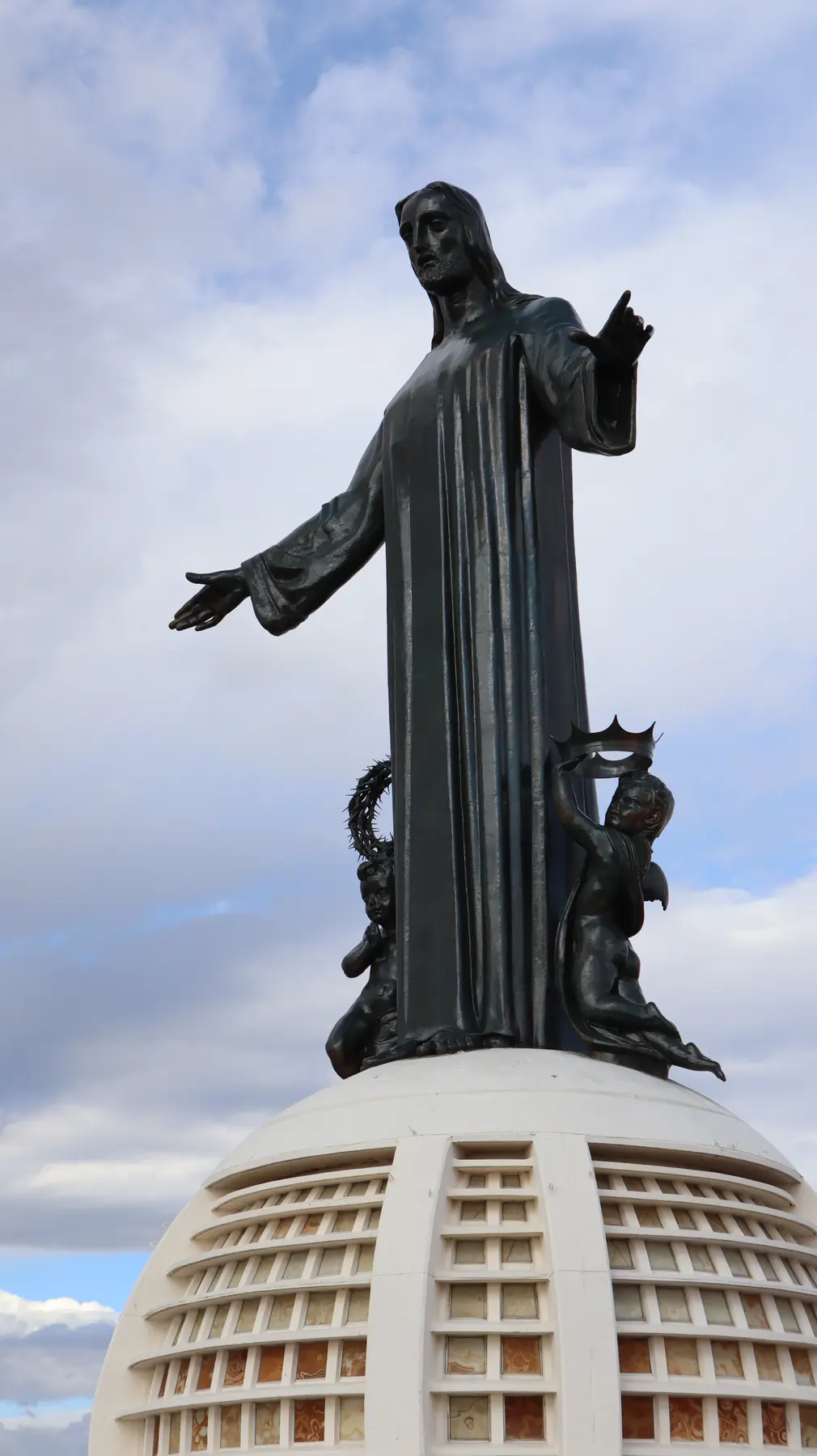
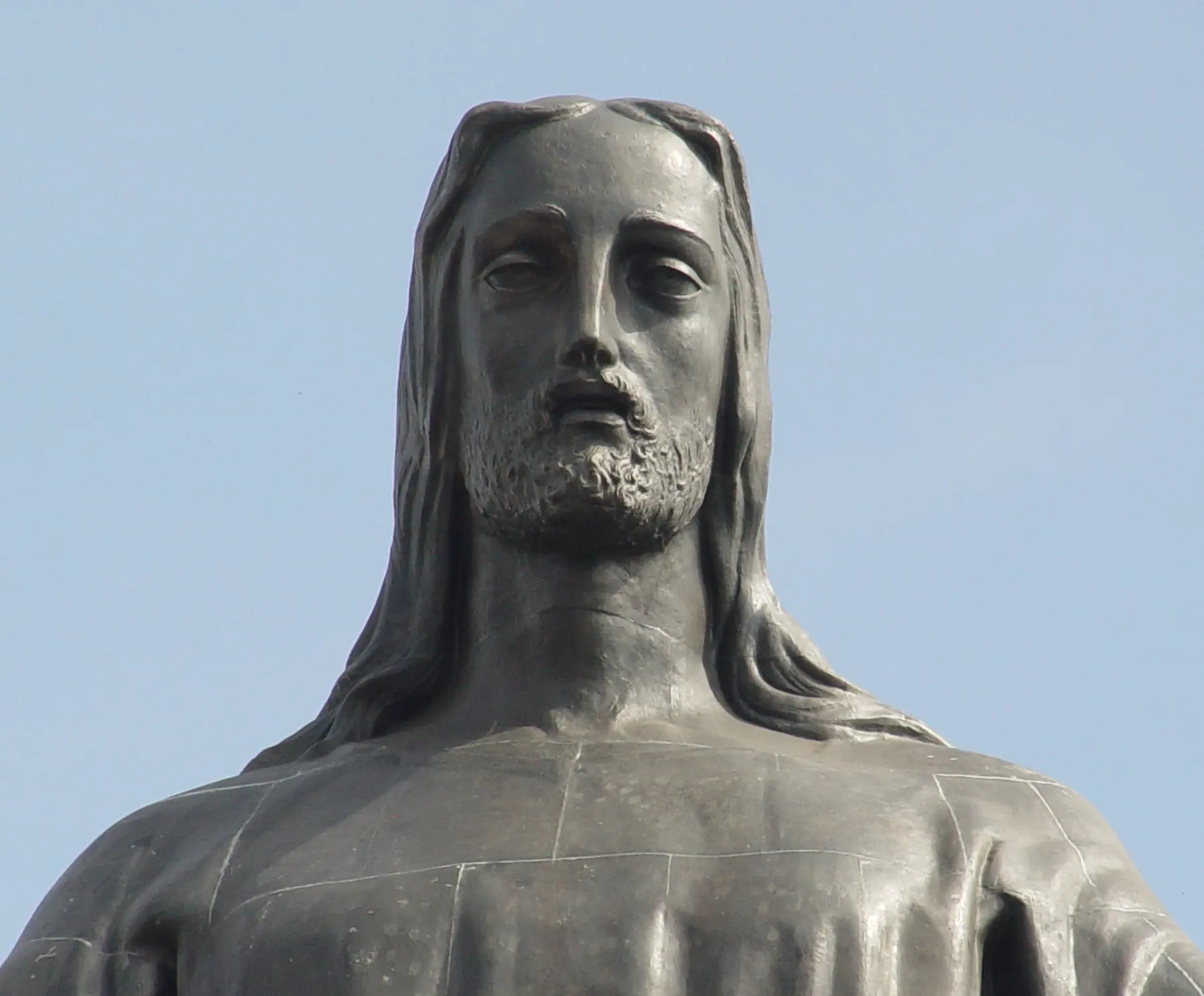
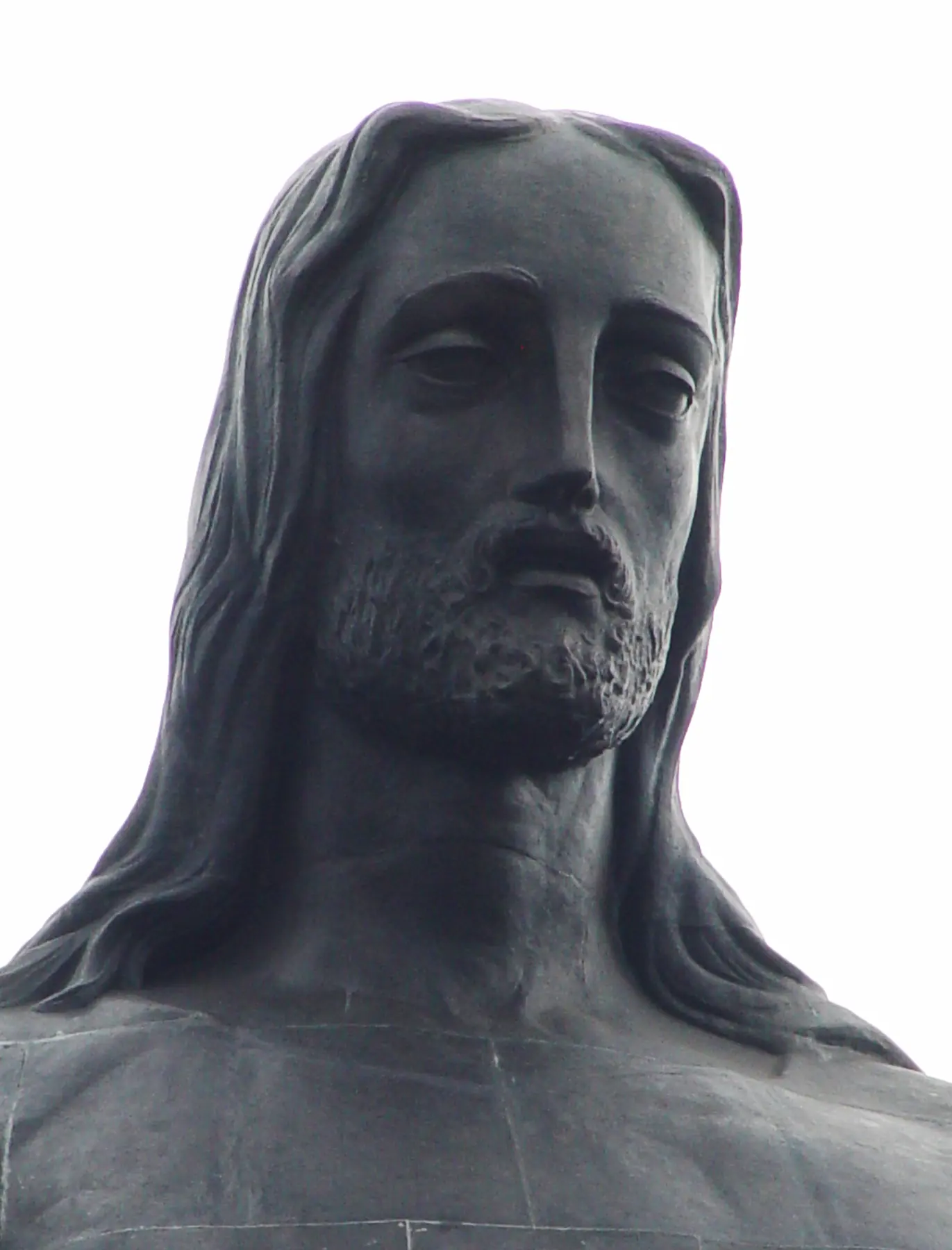
The image of Christ the King is in the Hellenic style, of singular beauty, with a face full of mercy and arms wide open. Beside Him, two angels present the crowns: one, the crown of martyrdom; the other, the crown of glory. The head measures 3 meters (10 ft) and the whole statue is 20 meters (66 ft) tall.
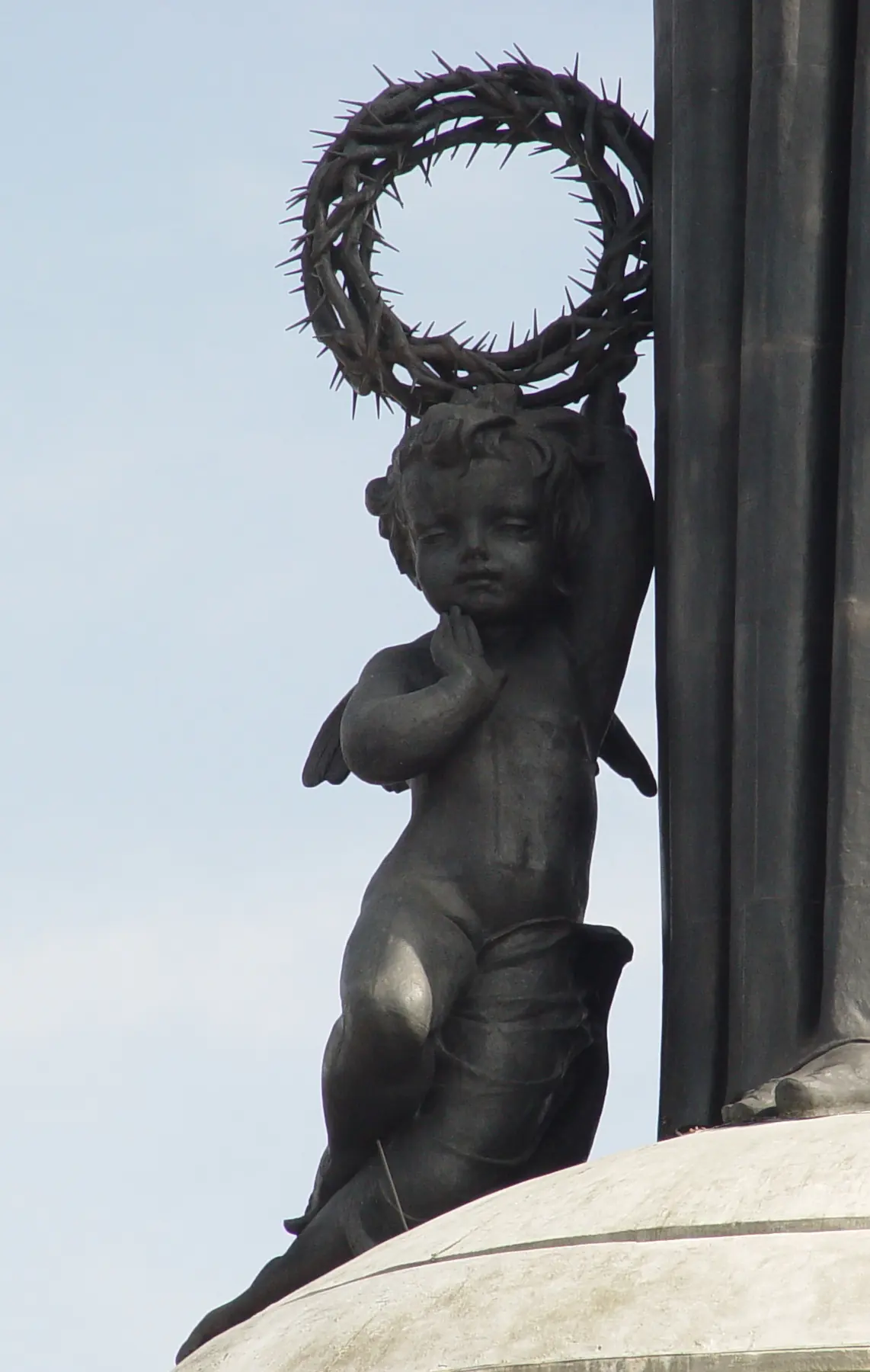
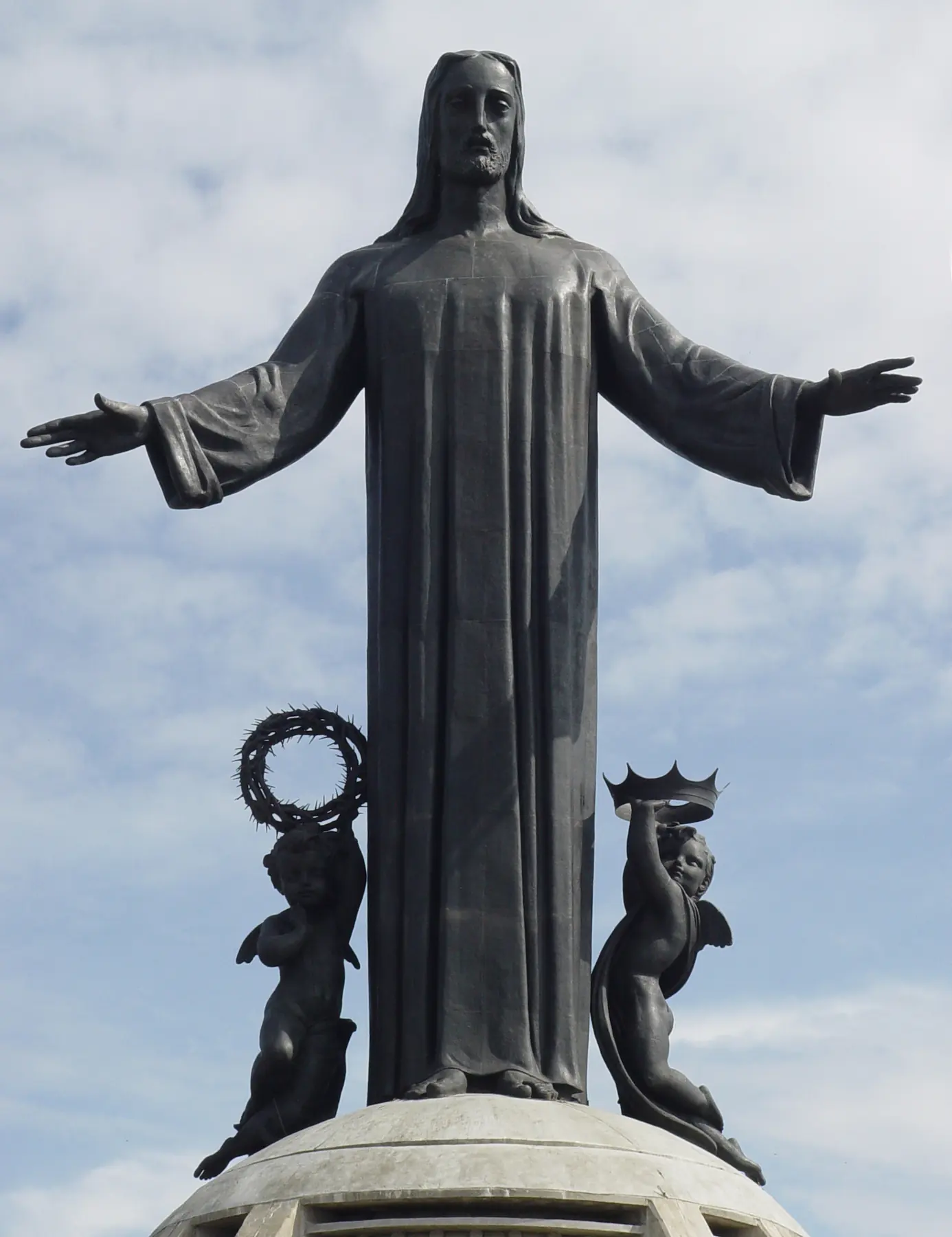
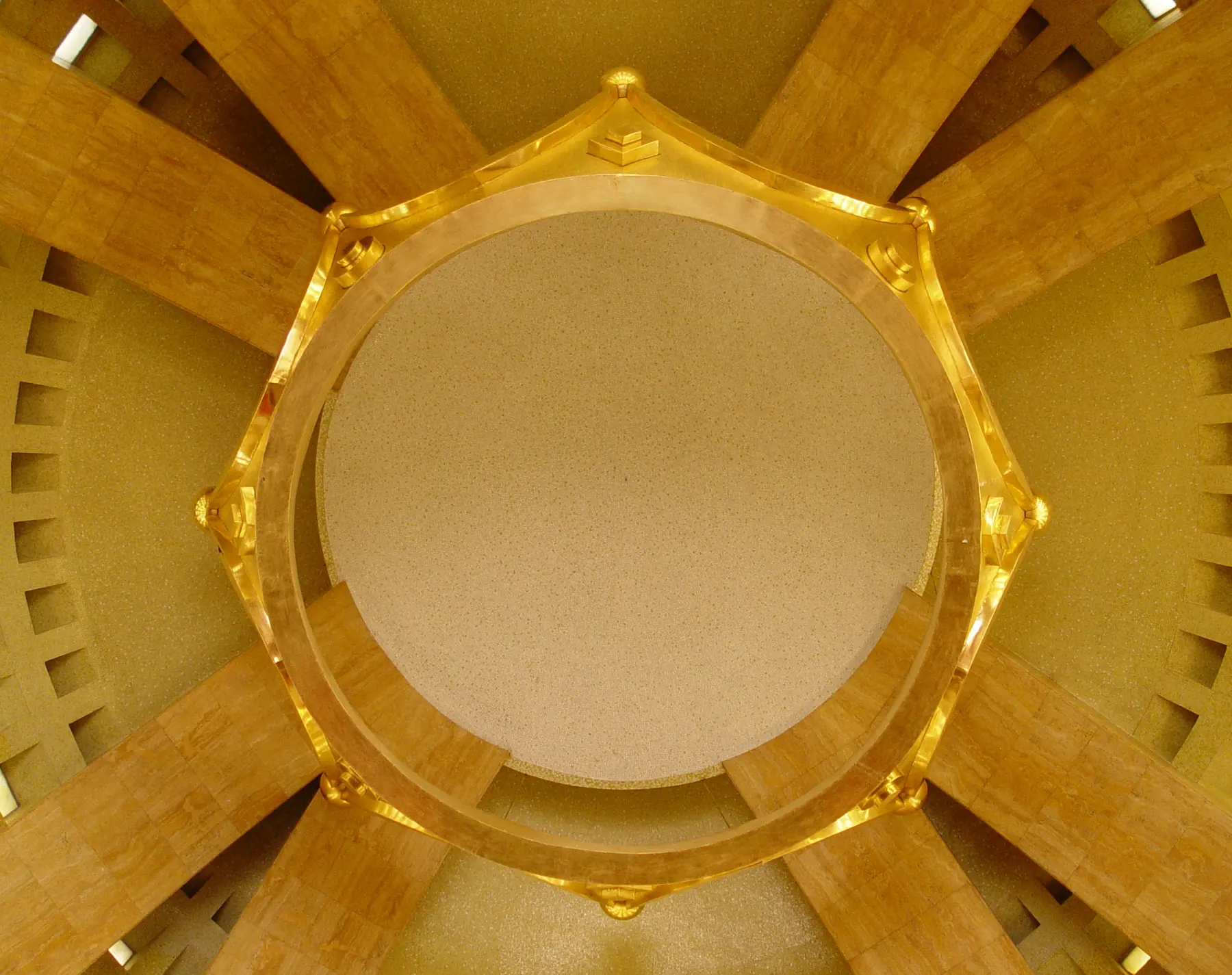
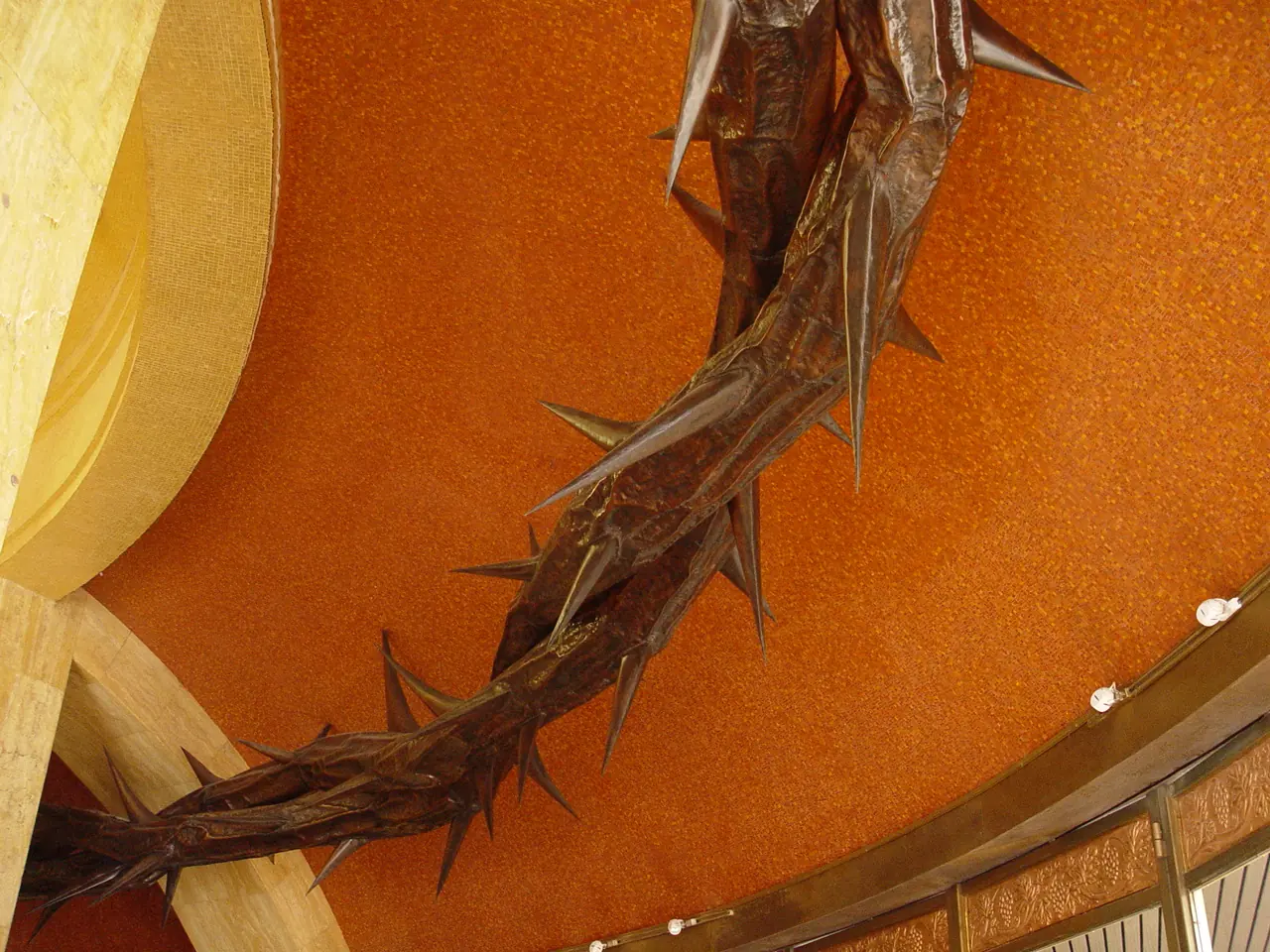
The two crowns
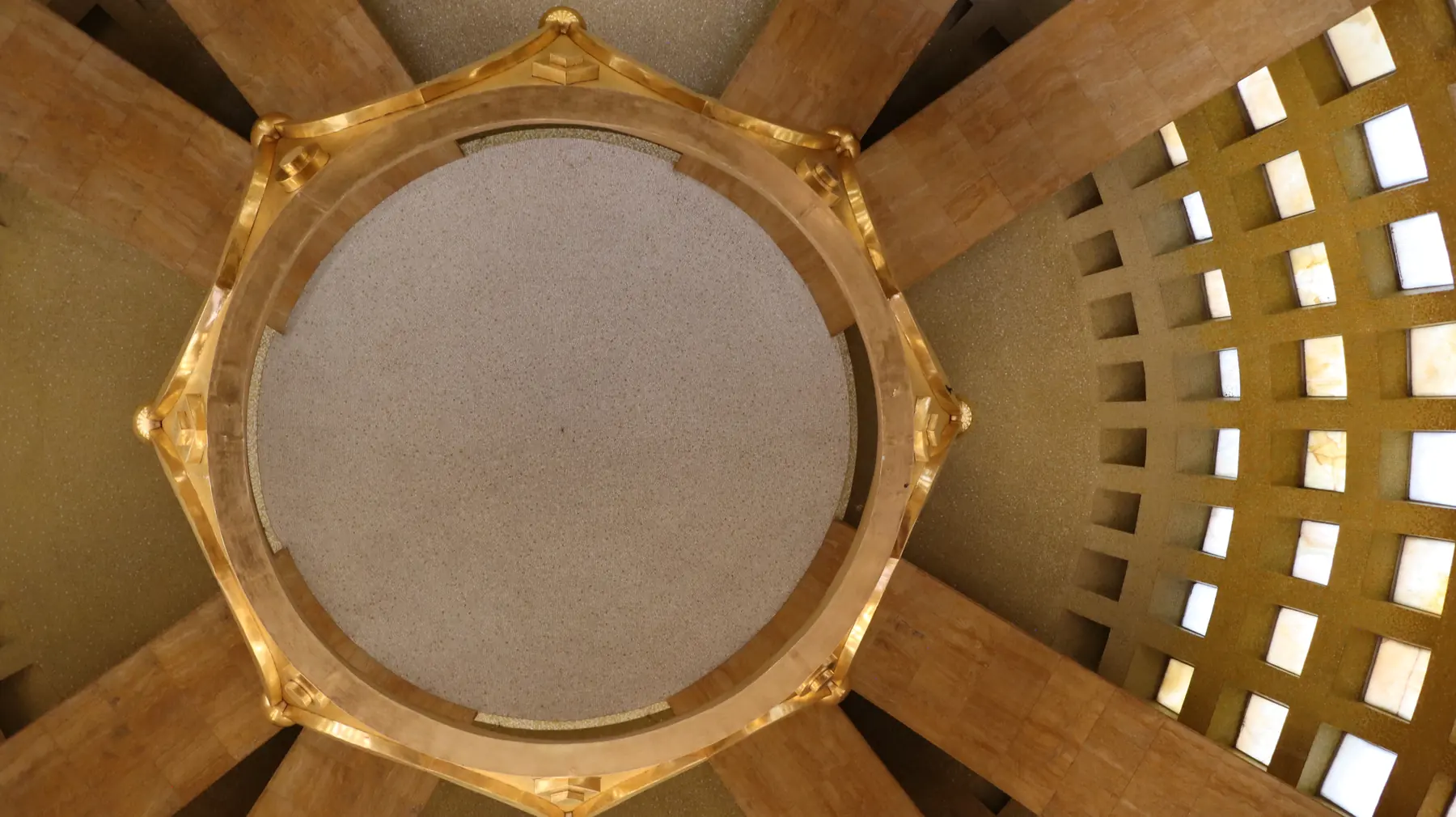
Inside the Shrine are the same crowns the angels carry. Above the sanctuary, suspended at the highest point, hangs the royal crown or crown of glory, made of wood and covered with a precious material. Around the Shrine runs the bronze crown of thorns, representing the Passion; it has as many thorns as its diameter could hold.
The high altar
The altar is Christ
The white marble altar is one of the most important parts of any church, because it represents Christ; the Eucharist is celebrated upon it. That is why the priest kisses the altar at the beginning and end of Mass.
It rests on a marble base of three circular steps in the shape of a pyramid, inscribed with the prayers composed by Manuel M. Urquiza:
Sacred Heart of Jesus, forgive us and be our King! Holy Mary of Guadalupe, Queen of Mexico, pray for your Nation!
Prayers inscribed on the altar
The four living creatures
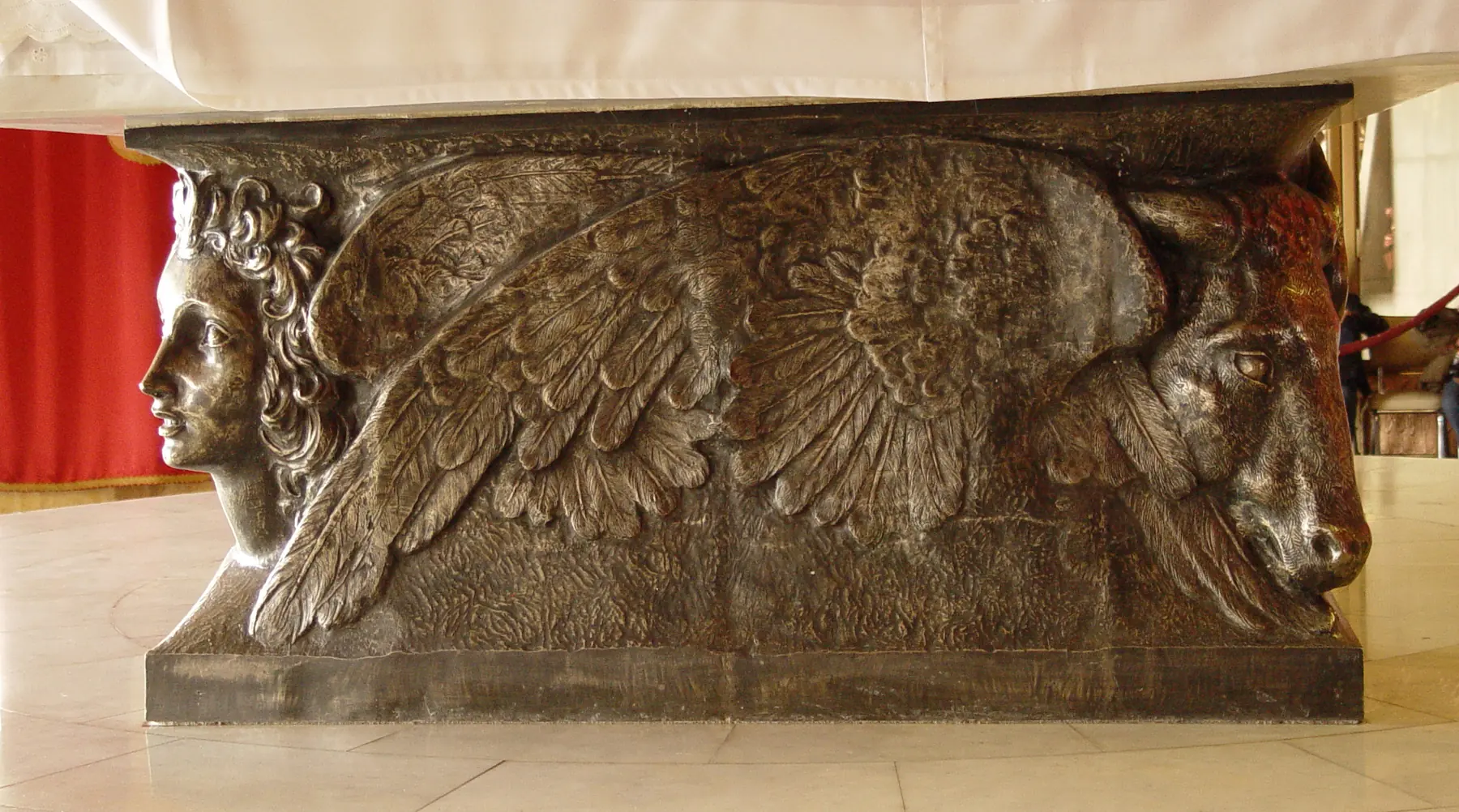
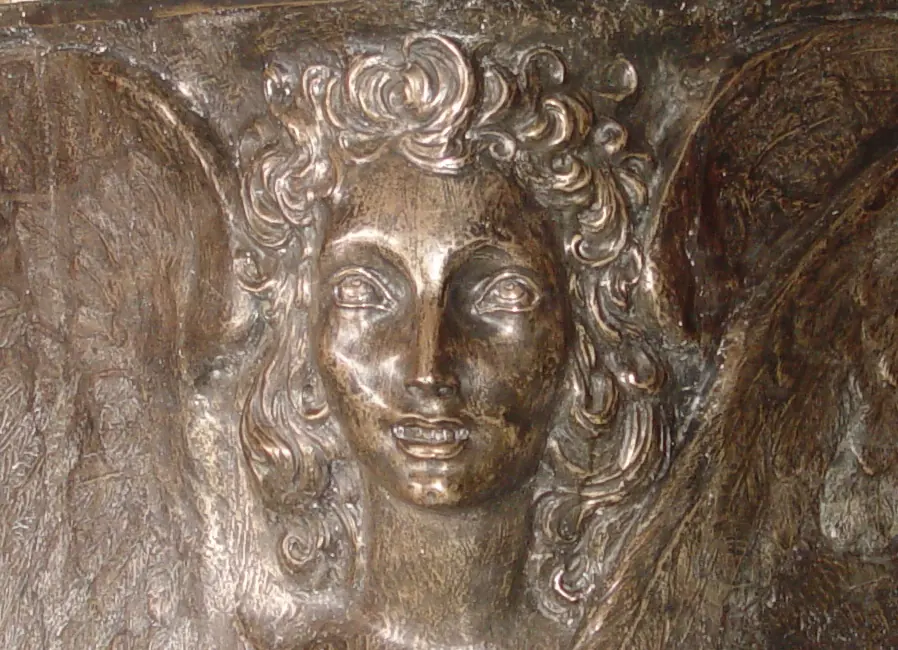
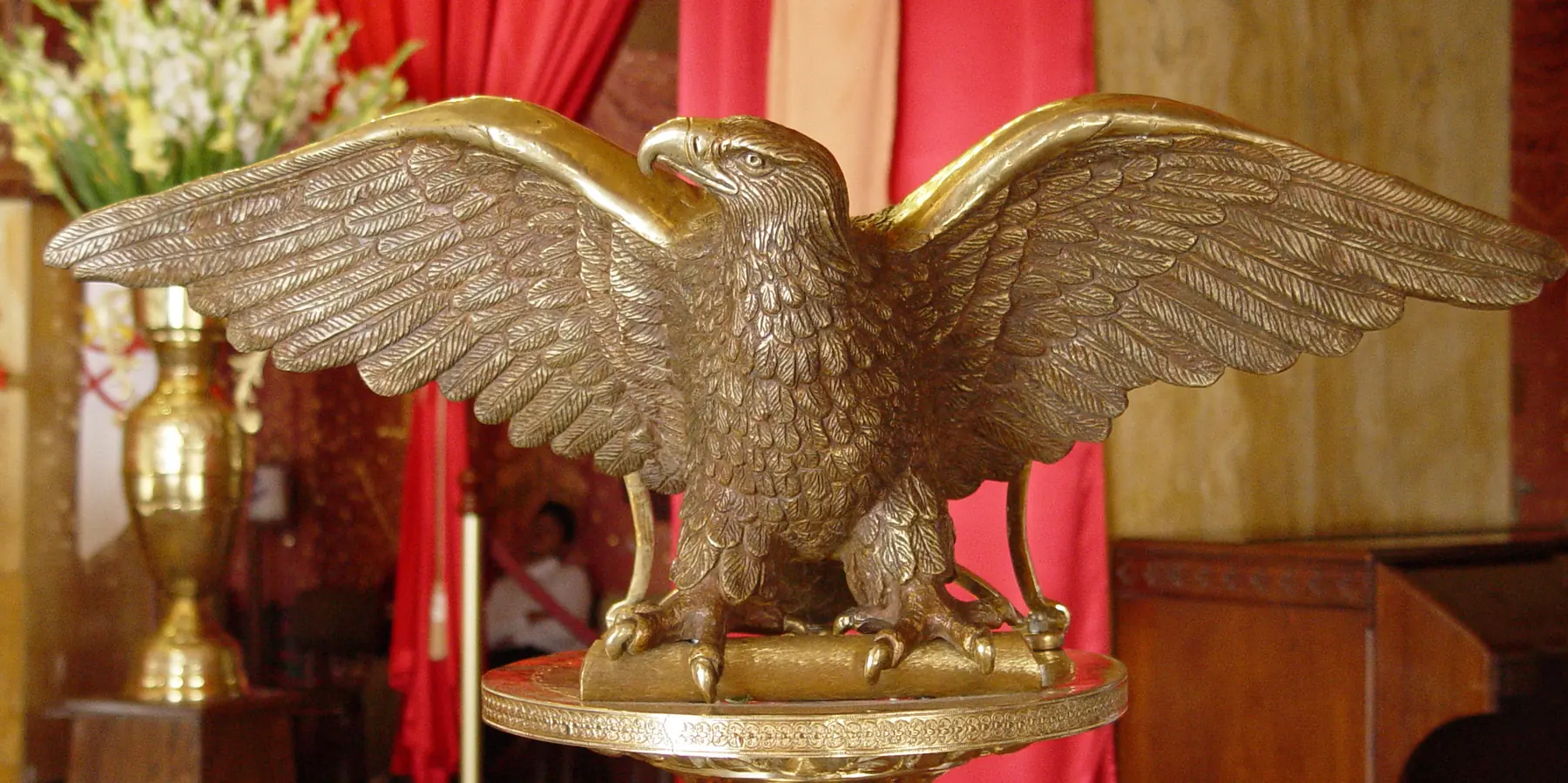
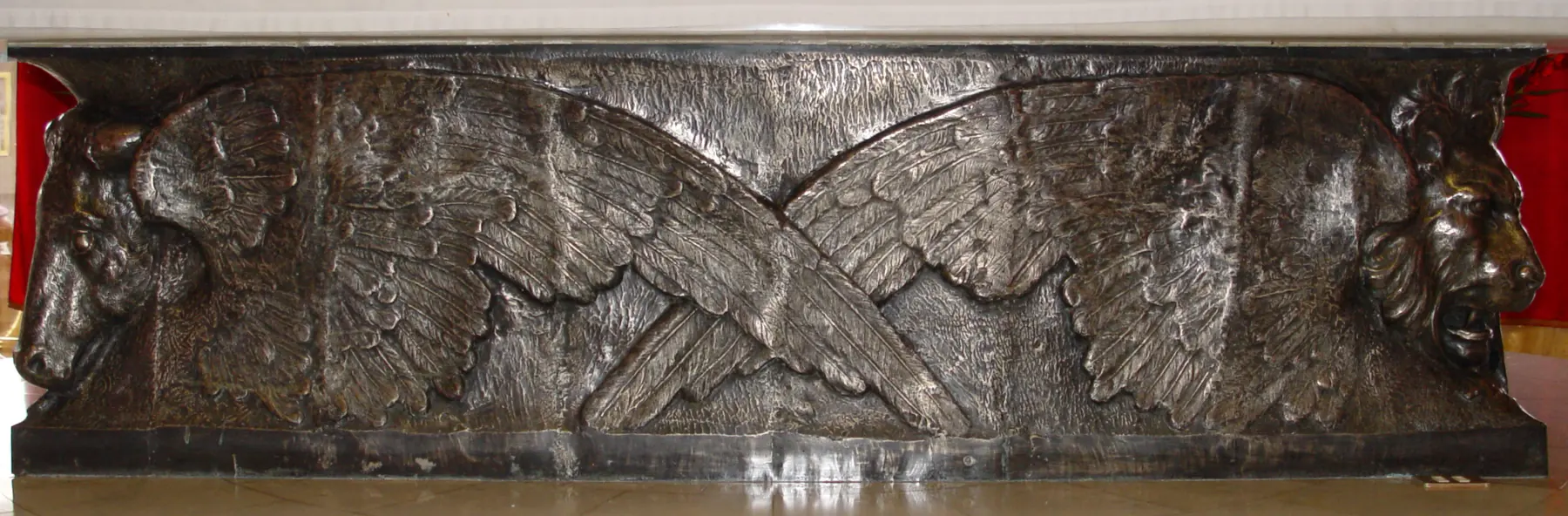
The altar bears the four living creatures of the Book of Revelation, which represent the Evangelists: the ox, Saint Luke; the angel, Saint Matthew; the lion, Saint Mark; and the eagle, Saint John. The ox is king of domestic animals; the eagle, of the birds of the sky; the angel, of beings endowed with reason; and the lion, of the beasts. All of them lie at the feet of Christ, King of kings.
Eucharistic treasure
The Monumental Monstrance
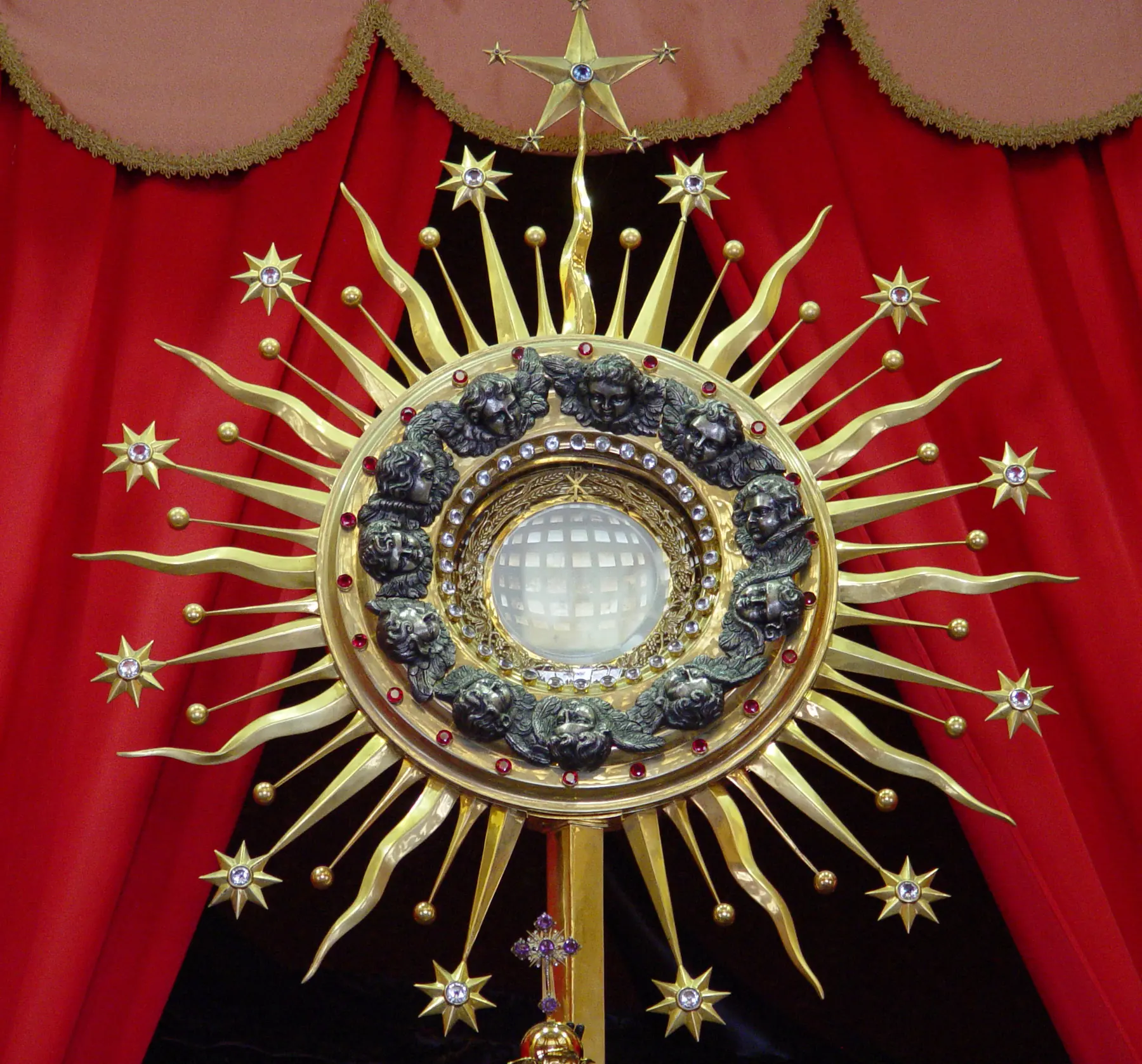
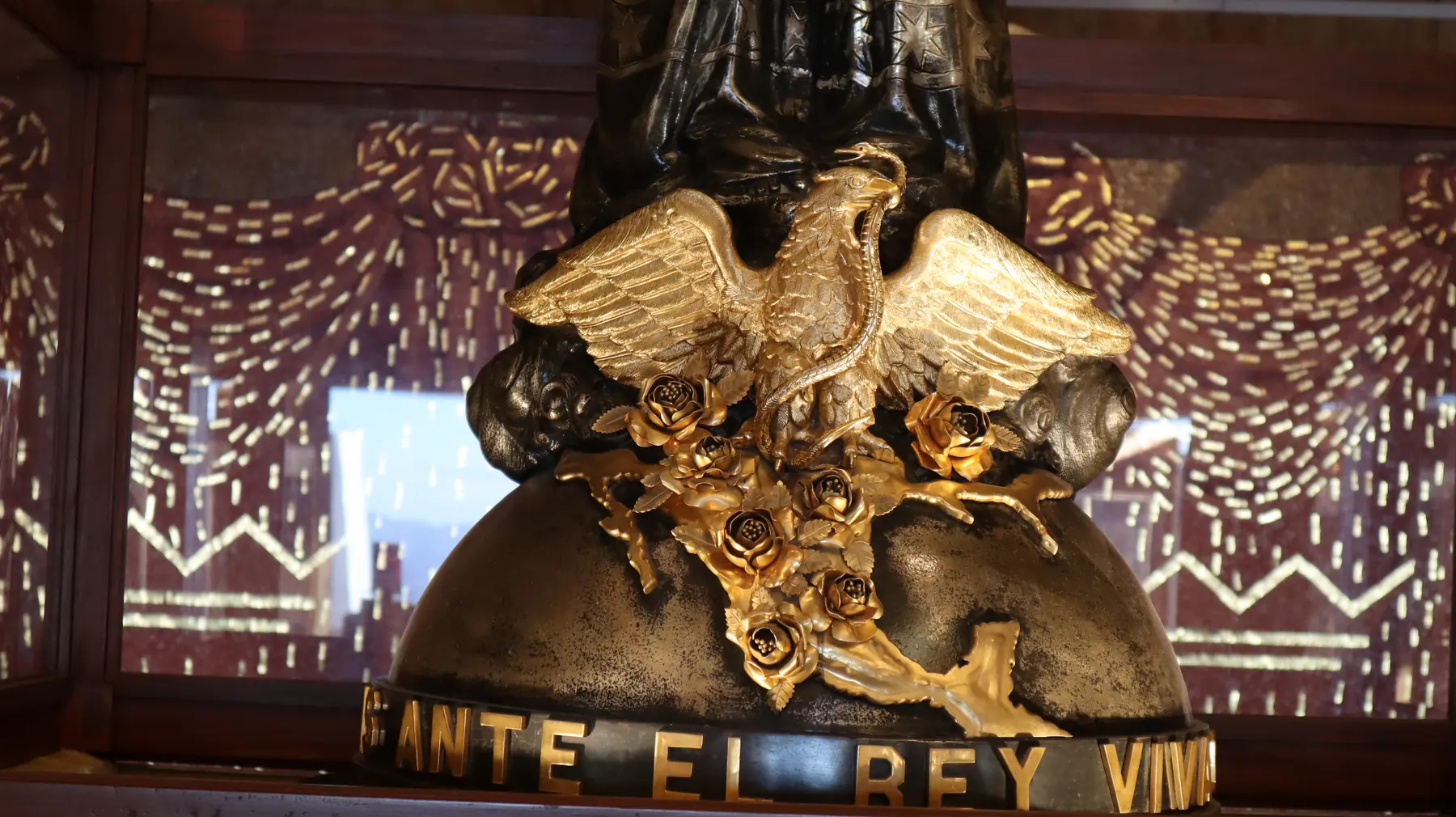
One of the most precious jewels of the Shrine is the Monumental Monstrance, where Our Lord in the Blessed Sacrament dwells. This beautiful work is made up of a sunburst, where the Blessed Sacrament is placed, held up by two angels bearing the royal crown and the crown of martyrdom, standing on the globe. It also includes a scepter held in the hands of an angel.
On the globe are symbols of our homeland: the roses, which represent Our Lady of Guadalupe, and the map of Mexico.
Behind the sanctuary
The Eucharistic mural
Behind the sanctuary is a Byzantine mosaic mural with Eucharistic images:
- The fish. The Greek word Ichthys (“fish”) is an acrostic of the name and mission of Jesus: “Jesus Christ, Son of God, Savior.”
- The pelican. An image of Jesus Christ, who gives the last drop of His blood for humanity: it was said that the pelican, when it finds no food, wounds its own breast to feed its chicks with its blood.
- The basket of hosts. It represents the Eucharist.
The color of the marble
The Shrine’s marble is red and grows lighter as it approaches the pyramid of the altar, which is white: it represents the blood of Christ, which washes away our sins and turns them into purity.
Gallery
The Shrine in detail
Come and contemplate it
Discover these signs in person on the summit of Cubilete.