Panel 3 of 11
The four monuments
The monuments that came before today’s, from 1920 to 1942.
Leer en español · Another language? The page translates into your phone’s language.
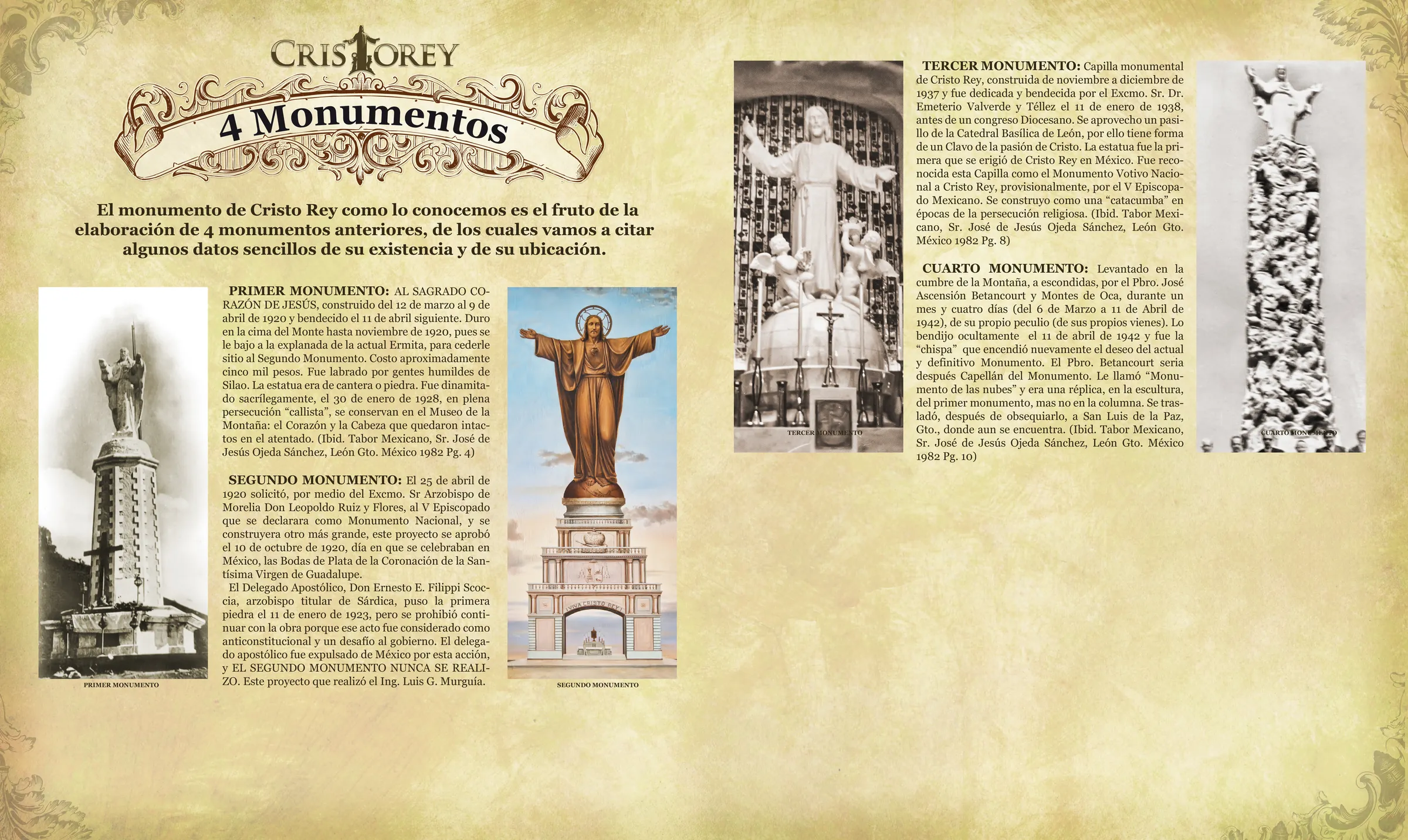
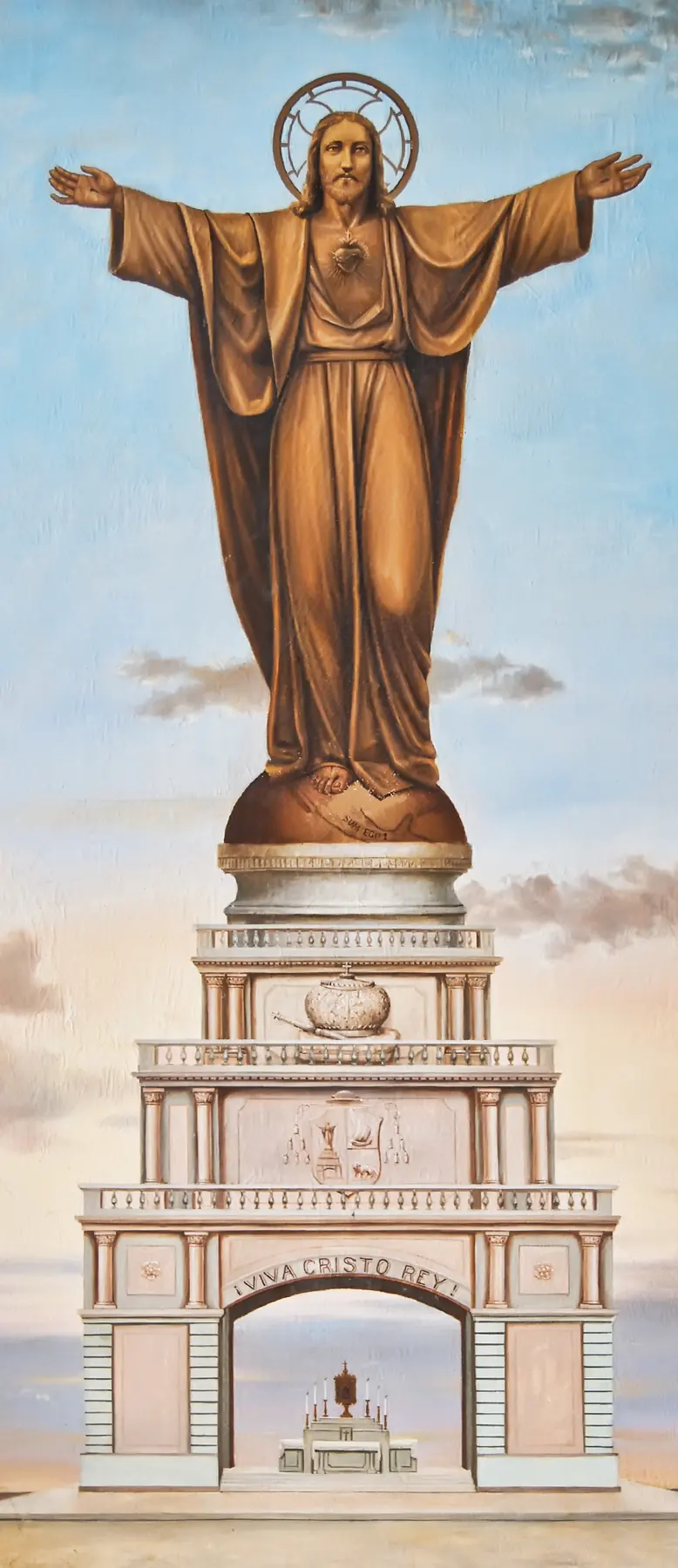
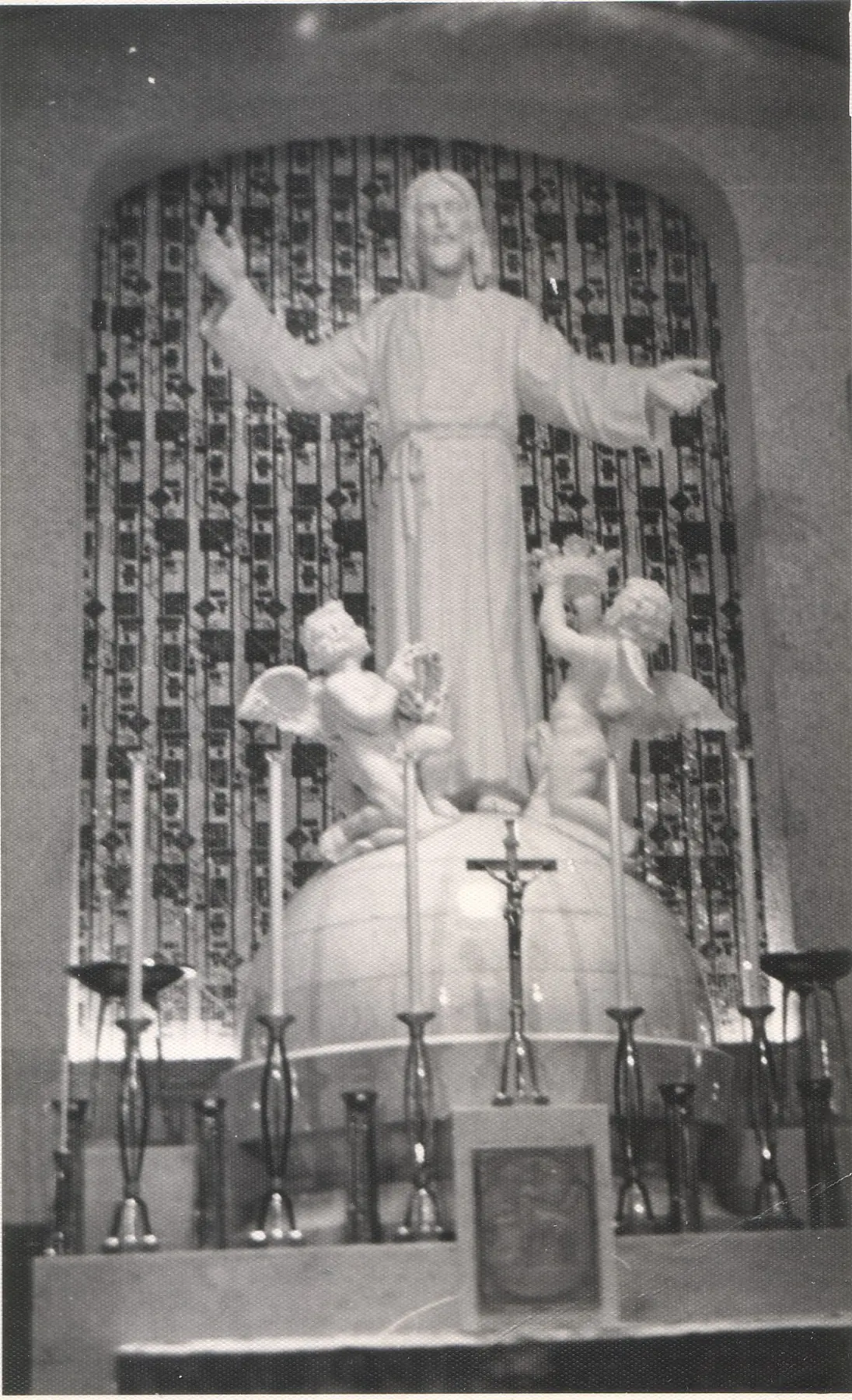
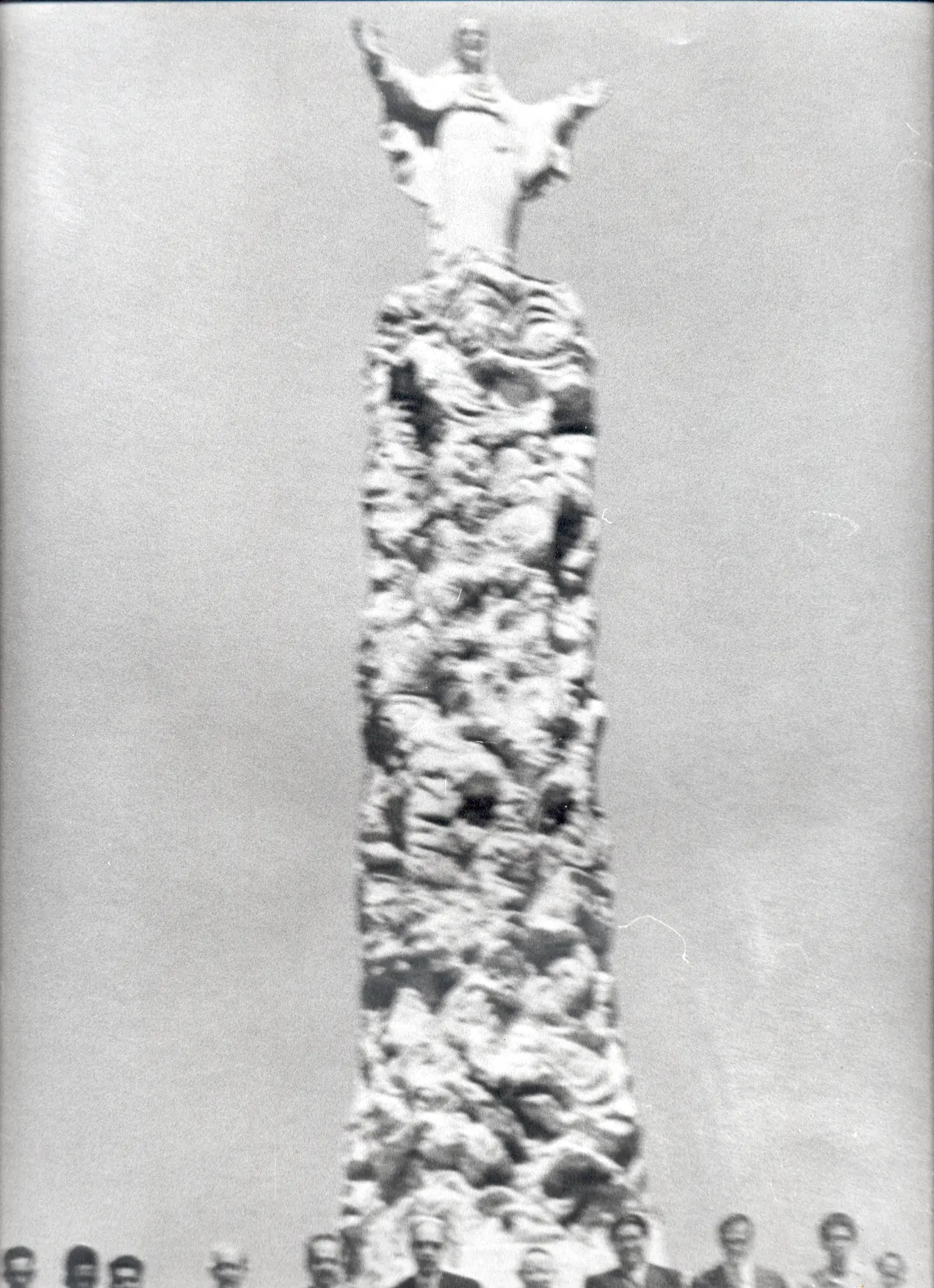
The monument to Christ the King as we know it is the fruit of four earlier monuments. Here are a few simple facts about each of them and where they stood.
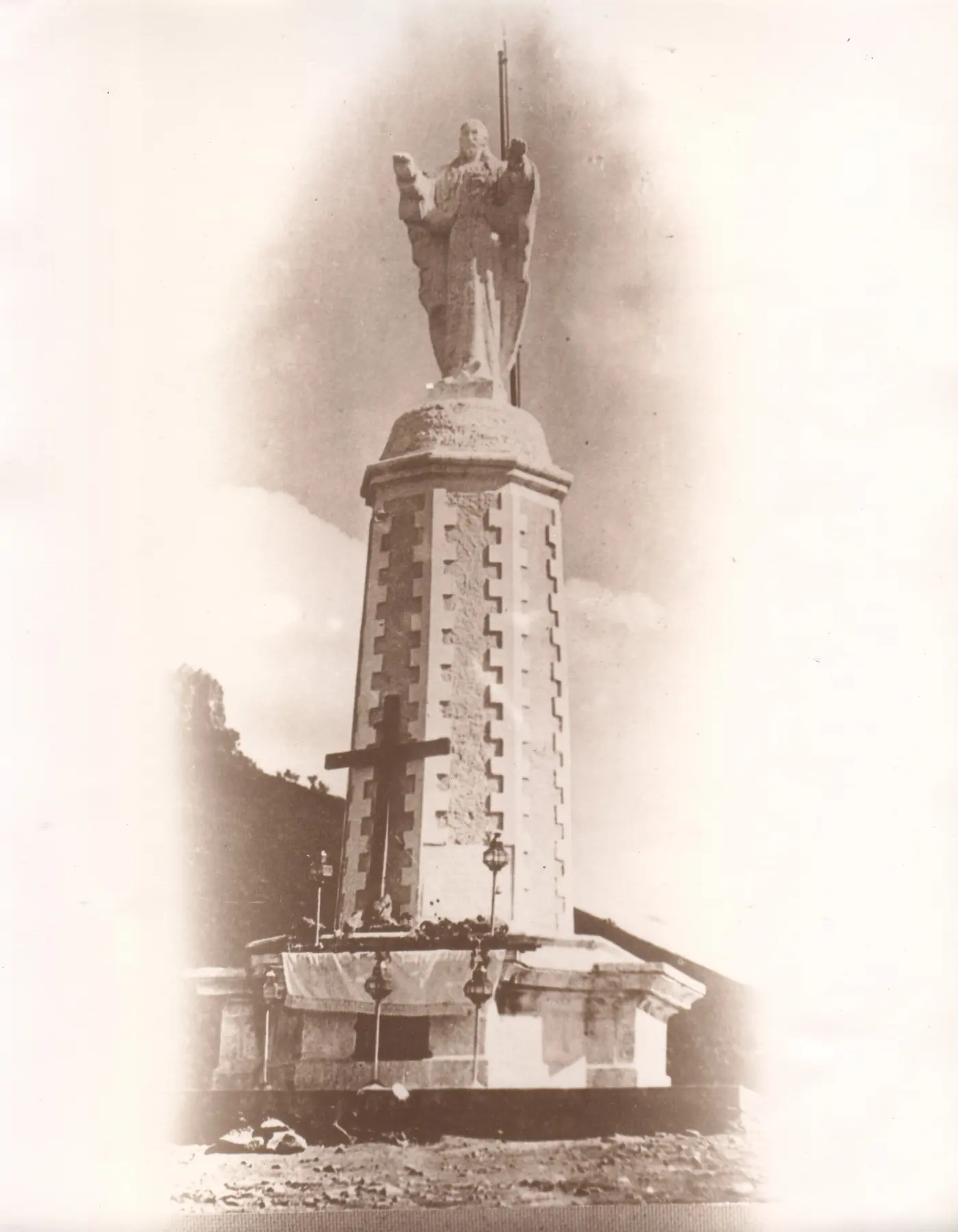
First monument: to the Sacred Heart of Jesus
Built between March 12 and April 9, 1920, and blessed on April 11. It stood on the summit until November 1920, when it was moved down to the esplanade of today’s Hermitage to make room for the second monument. It cost about five thousand pesos and was carved by humble people of Silao. The statue was made of quarried stone. It was sacrilegiously dynamited on January 30, 1928, at the height of the persecution under President Calles; the Heart and the Head, which survived the attack intact, are kept in the Mountain’s Museum.
Source: Tabor Mexicano, José de Jesús Ojeda Sánchez, León, Gto., Mexico, 1982, p. 4.
Second monument
On April 25, 1920, the Bishops were asked, through Archbishop Leopoldo Ruiz y Flores of Morelia, to declare it a National Monument and to build a larger one. The project was approved on October 10, 1920, the day Mexico celebrated the silver jubilee of the Coronation of Our Lady of Guadalupe.
The Apostolic Delegate, Archbishop Ernesto E. Filippi Scoccia, titular Archbishop of Sardica, laid the first stone on January 11, 1923, but the work was forbidden because the act was considered unconstitutional and a challenge to the government. The Delegate was expelled from Mexico for it, and the second monument was never built. It had been designed by the engineer Luis G. Murguía.
Third monument
A monumental chapel of Christ the King, built between November and December 1937 and dedicated and blessed by Bishop Emeterio Valverde y Téllez on January 11, 1938, before a diocesan congress. It occupies a passage of León’s Cathedral Basilica, which is why it is shaped like one of the nails of Christ’s Passion. Its statue was the first ever raised to Christ the King in Mexico. The Mexican Bishops provisionally recognized this chapel as the National Votive Monument to Christ the King. It was built as a “catacomb” during the years of religious persecution.
Ibid., p. 8.
Fourth monument
Raised in secret on the summit by Fr. José Ascensión Betancourt y Montes de Oca in one month and four days (March 6 to April 11, 1942), with his own money. He blessed it quietly on April 11, 1942, and it was the “spark” that rekindled the desire for today’s definitive monument. Fr. Betancourt later became chaplain of the Monument. He called it the “Monument of the Clouds”; its sculpture was a replica of the first monument’s, though not its column. After he gave it away, it was moved to San Luis de la Paz, Guanajuato, where it still stands.
Ibid., p. 10.