
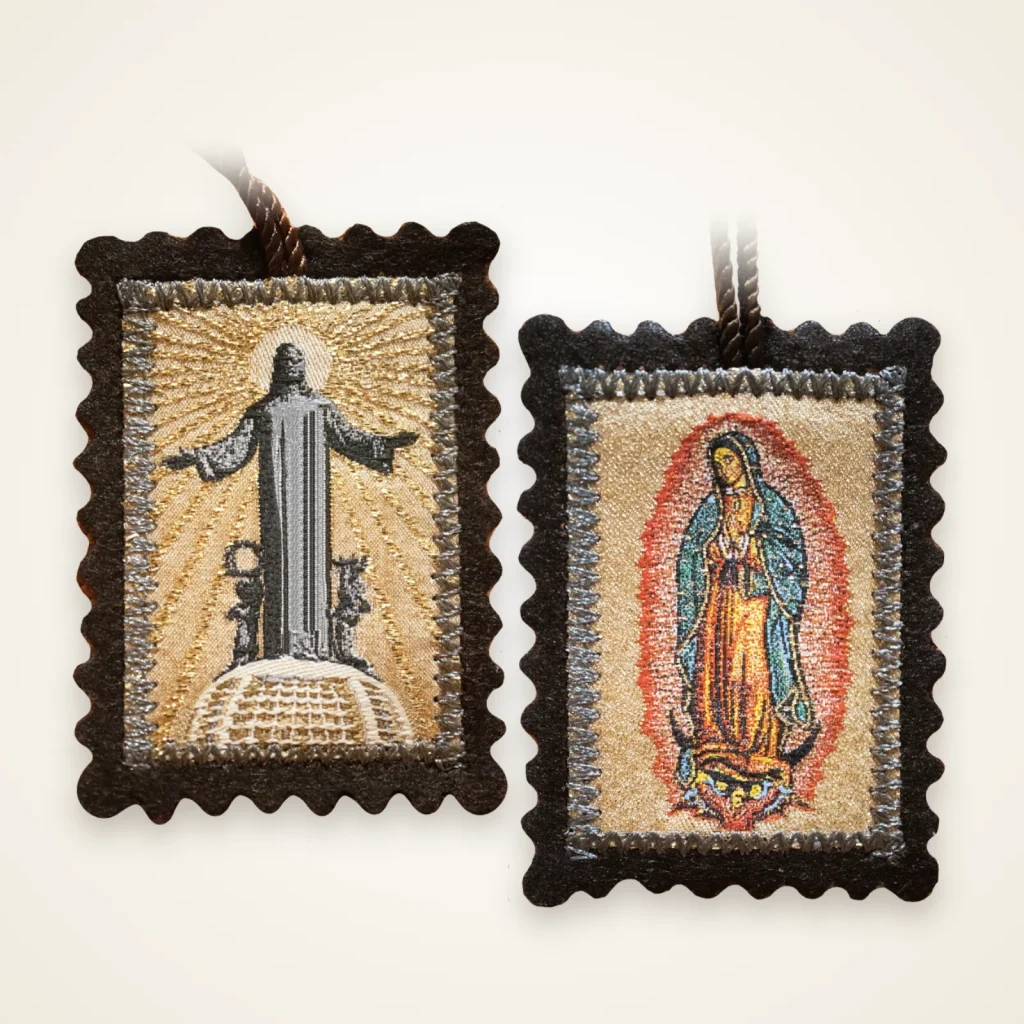
Seen up close, the Official Scapular of the Shrine of Christ the King reveals something a photograph can barely show: it is not printed, it is woven. Behind each piece lies patient work that brings together design, textile craft and devotion.
From image to loom
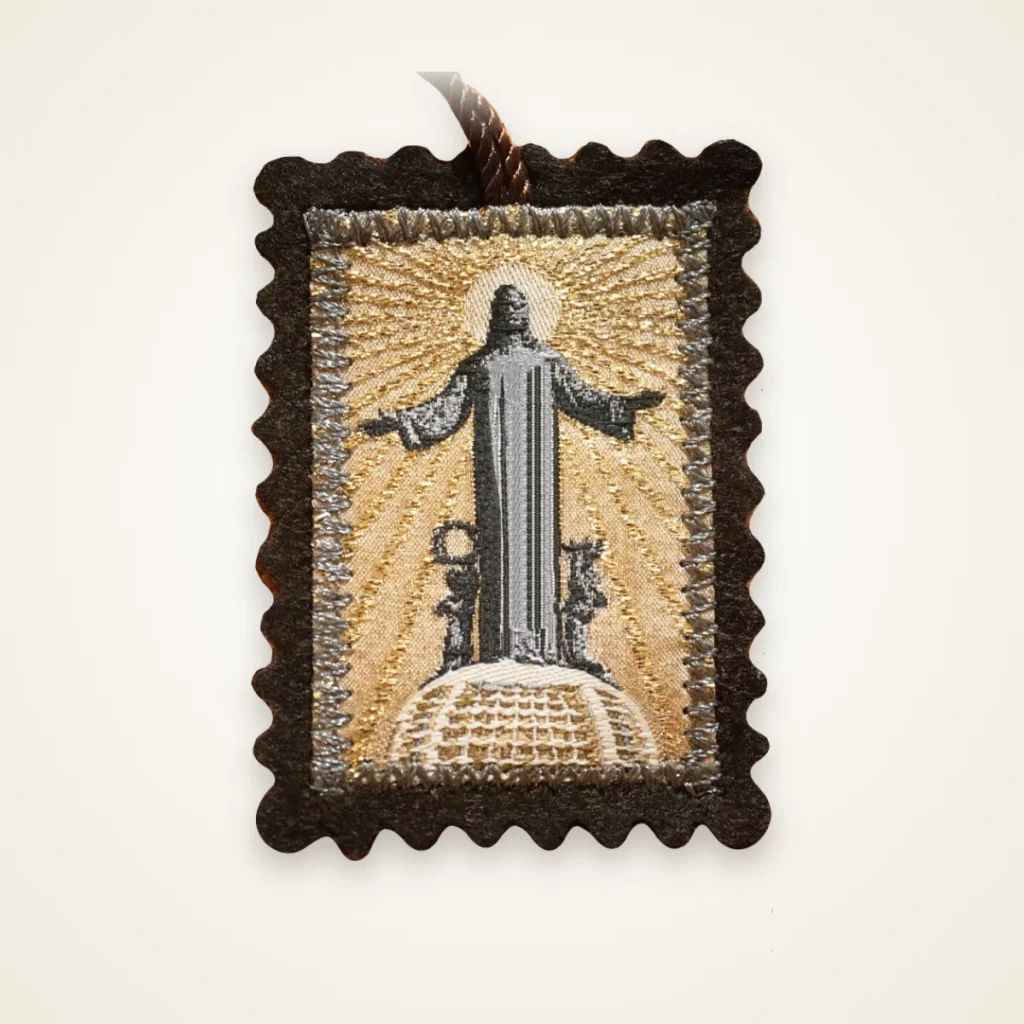
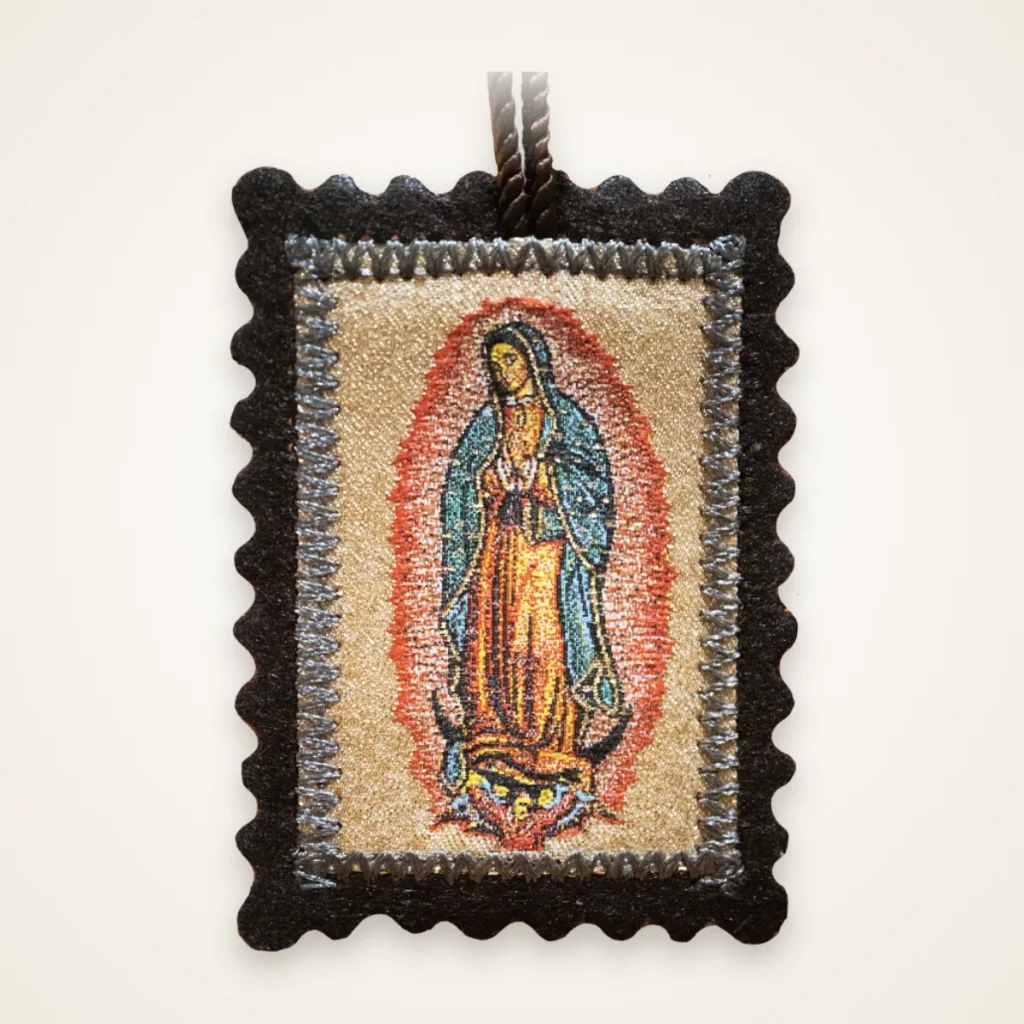
It all begins with the scapular’s two images: Christ the King of Cubilete and Our Lady of Guadalupe. Each is redrawn as a map of points, where every point indicates how the threads will cross. Fine details, such as the face, the hands or the mantle, are drawn by hand, and the gold tones are applied one by one so that the shine falls exactly where it should.
More than 3,200 threads
The finished design goes to a jacquard loom, which controls every thread independently. In this way, more than 3,200 threads are interlaced to form each piece. It is woven in a damask weave, which gives the surface a soft relief and a distinctive sheen, while gold metallic thread lights up the rays around Christ the King and the radiance of the Virgin.
From the loom to your hands
The pieces leave the loom already separated by heat cutters, which seal their edges so they do not fray. Then each one is assembled with its cord, until it becomes the scapular the pilgrim carries.
Why woven and not printed?
A woven scapular does not fade with wear or washing: the image is part of the fabric itself. That is why it keeps its color and detail for years and becomes a keepsake worthy of being passed down from one generation to the next.
Who weaves it
The Official Scapular is designed and woven in Mexico by Scapulare, a workshop specializing in high-definition woven scapulars, which works with the Shrine of Christ the King to create this edition.
An edition for the Jubilee Year
The 2026–2027 edition brings together Christ the King and Our Lady of Guadalupe, the two images of the cry of the Cristero Resistance, in the year we celebrate its centenary. It is a limited edition, sold exclusively at the Shrine.