Panel 2 of 11
Allegory of the Dream of Valverde
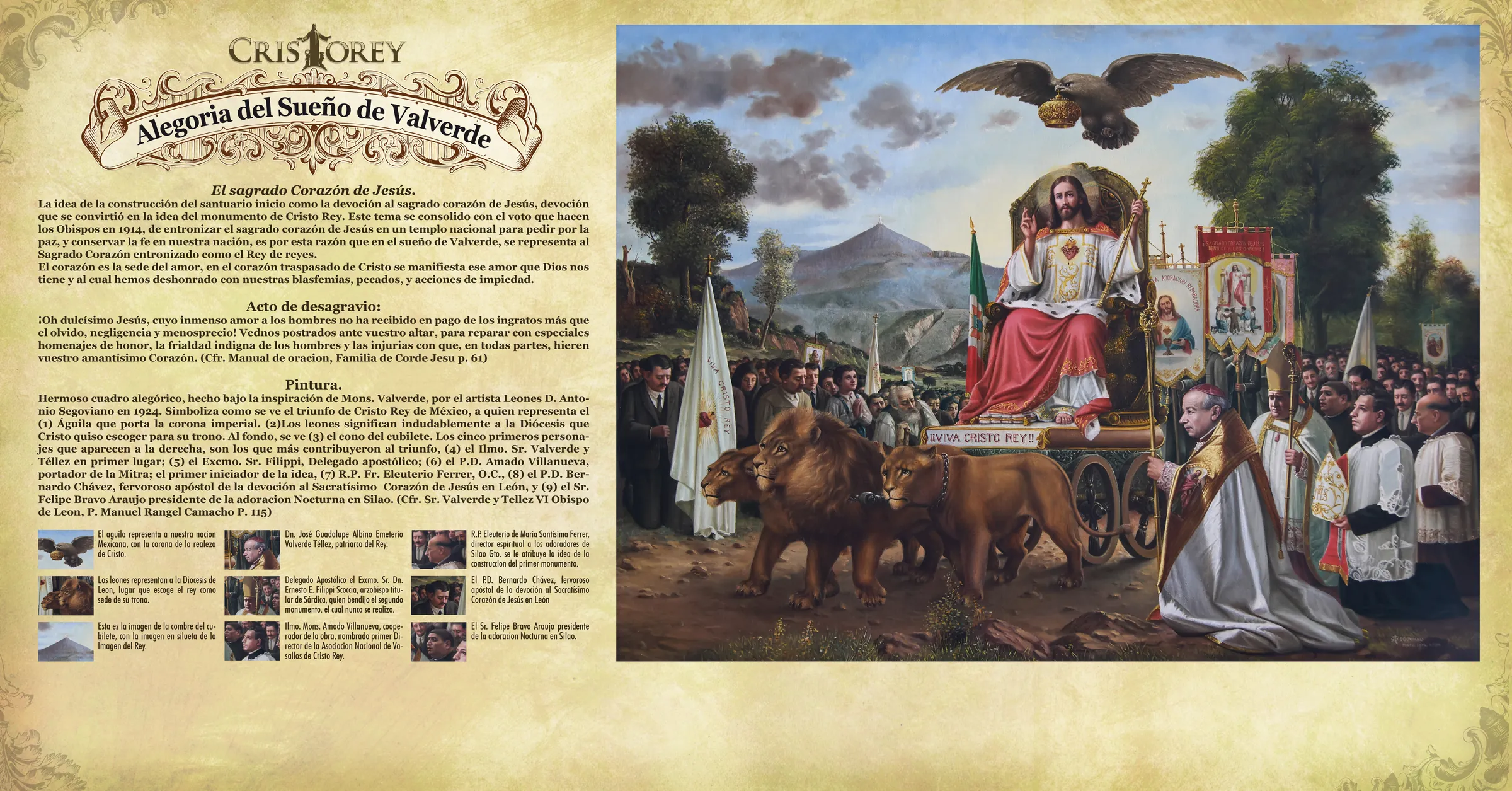
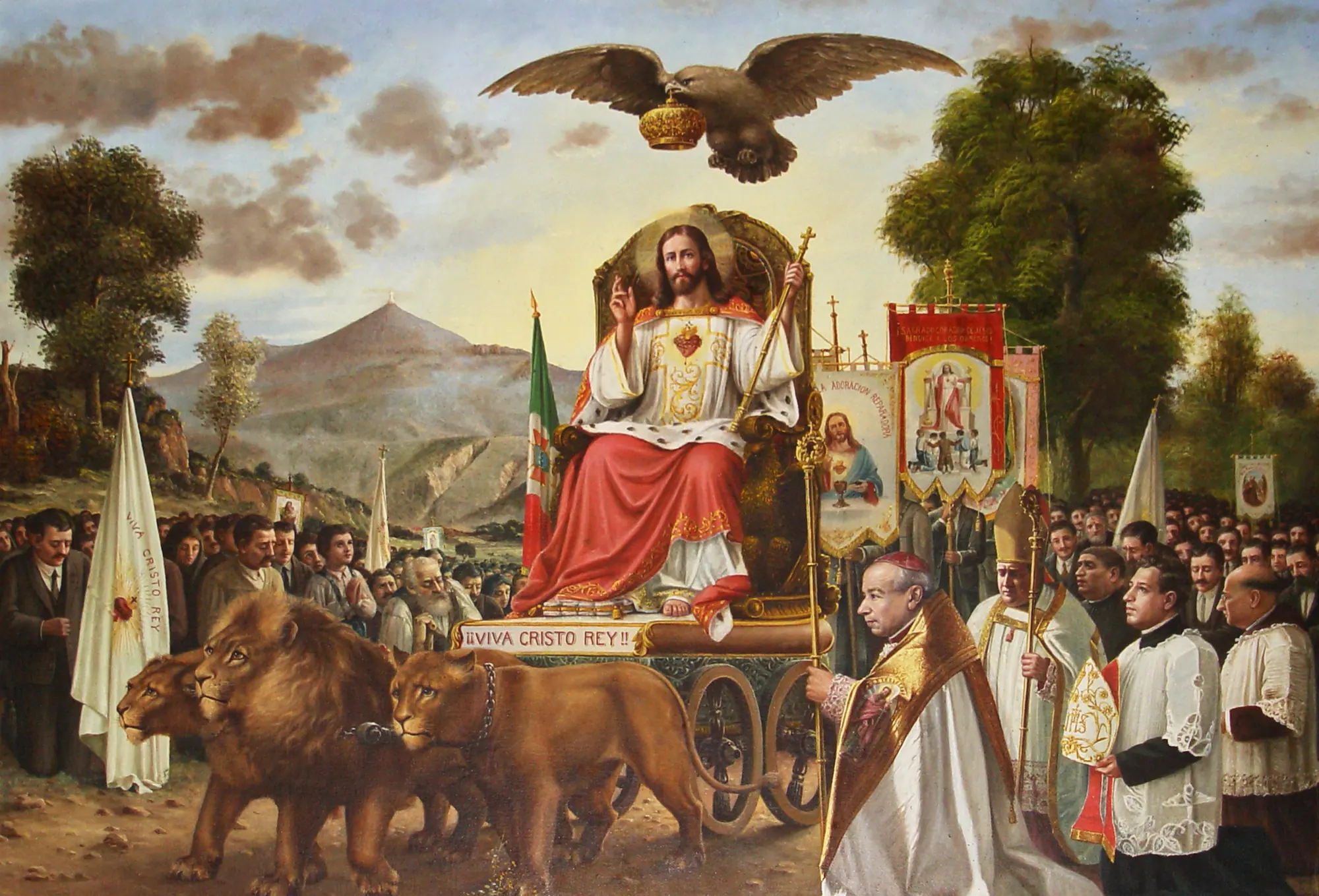
The 1924 painting and the Sacred Heart enthroned as King of kings.
Leer en español · Another language? The page translates into your phone’s language.
The Sacred Heart of Jesus
The idea of building the Shrine began as devotion to the Sacred Heart of Jesus, which grew into the idea of the monument to Christ the King. It was confirmed by the vow the Bishops made in 1914 to enthrone the Sacred Heart of Jesus in a national temple, to pray for peace and to preserve the faith of our nation. That is why the Dream of Valverde shows the Sacred Heart enthroned as King of kings.
The heart is the seat of love. The pierced Heart of Christ reveals the love God has for us, a love we have dishonored by our blasphemies, sins and acts of impiety.
Act of Reparation
O sweetest Jesus, whose immense love for mankind has been repaid by the ungrateful with nothing but forgetfulness, neglect and contempt: behold us prostrate before your altar, eager to make amends with special honor for the unworthy coldness of men and for the insults with which, everywhere, they wound your most loving Heart.
cf. Manual de oración, Familia de Corde Jesu, p. 61
The painting
This beautiful allegorical painting was made in 1924 by the León artist Antonio Segoviano, inspired by Bishop Valverde. It symbolizes the triumph of Christ the King of Mexico. The first five figures on the right are those who contributed most to that triumph.
- The eagle represents the Mexican nation, carrying the crown of Christ’s kingship.
- The lions represent the Diocese of León, the place the King chose as the seat of His throne.
- The summit of Cubilete, with the silhouette of the image of the King.
- José Guadalupe Albino Emeterio Valverde Téllez, patriarch of the King’s monument.
- The Apostolic Delegate, Archbishop Ernesto E. Filippi Scoccia, titular Archbishop of Sardica, who blessed the second monument, which was never built.
- Msgr. Amado Villanueva, bearer of the mitre and collaborator in the work, appointed first director of the National Association of Vassals of Christ the King.
- Fr. Eleuterio de María Santísima Ferrer, spiritual director of the adorers of Silao; the idea of the first monument is attributed to him.
- Fr. Bernardo Chávez, fervent apostle of devotion to the Most Sacred Heart of Jesus in León.
- Felipe Bravo Araujo, president of the Nocturnal Adoration in Silao.
Source: Fr. Manuel Rangel Camacho, Sr. Valverde y Téllez, VI Obispo de León, p. 115.