Panel 1 of 11
The fifth monument
From Bishop Valverde’s wish in 1919 to the statue blessed in 1950.
Leer en español · Another language? The page translates into your phone’s language.
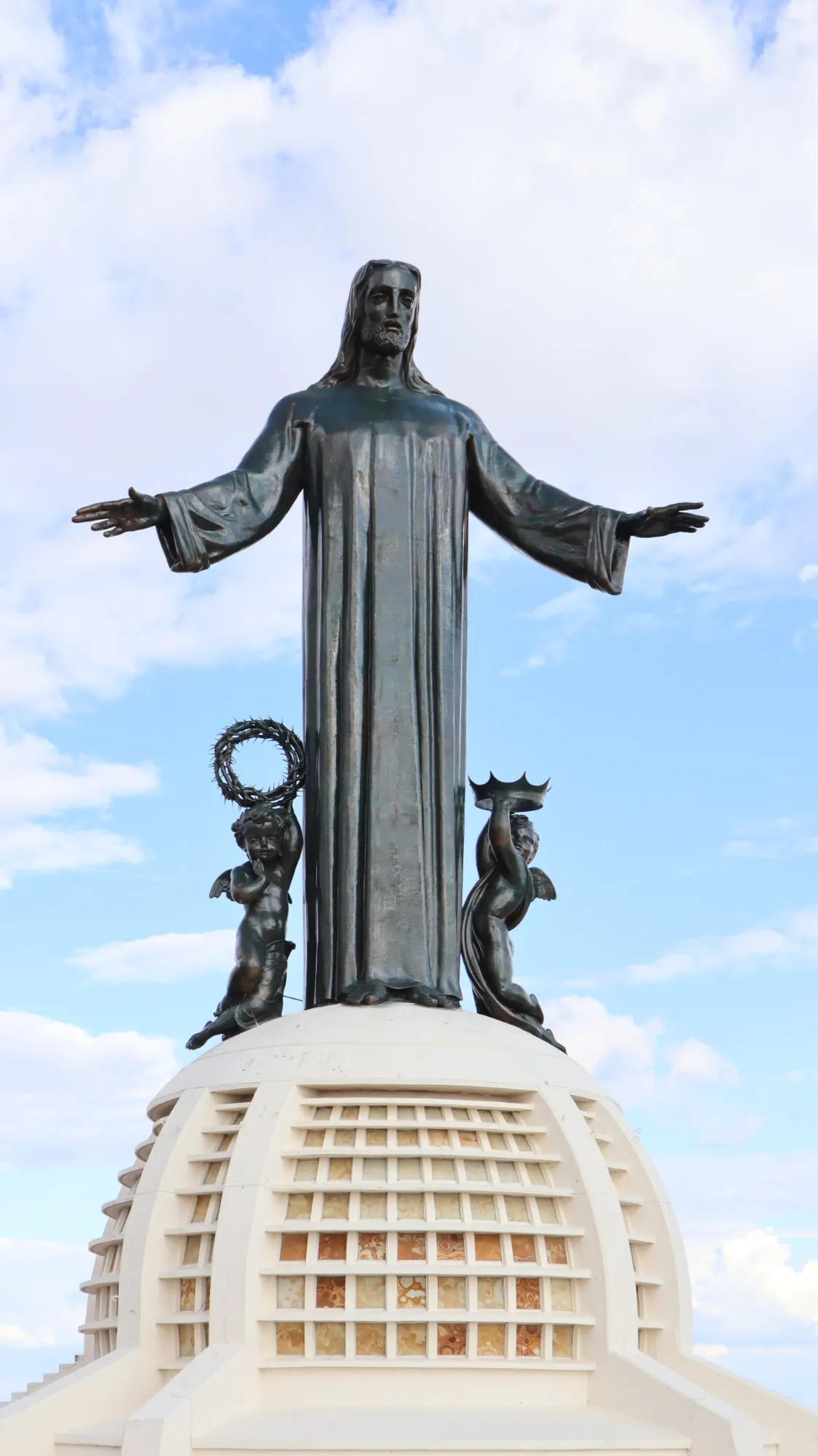
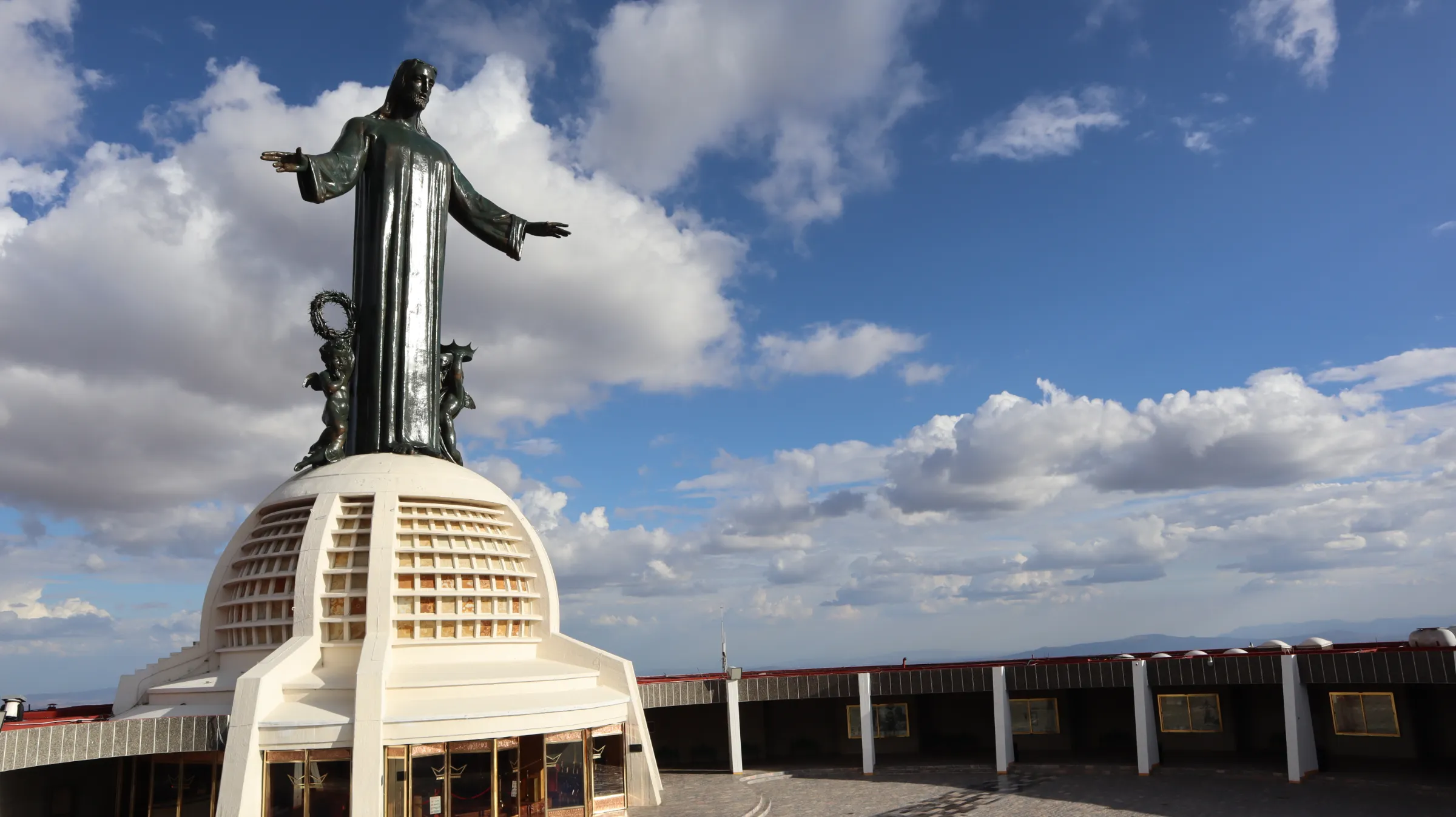
Construction of today’s monument to Christ the King began on Cubilete Hill on December 11, 1944, when the sixth Bishop of León, José Guadalupe Albino Emeterio Valverde Téllez, blessed and laid the first stone. It is the fifth of the monuments raised to Christ the King.
The idea of raising a monument to Christ goes back to November 1919. During a pastoral visit to Silao, Bishop Valverde, staying at the church of the Lord of Forgiveness (Señor del Perdón) in the care of the Carmelites, gazed at Cubilete Hill and felt the desire to celebrate Mass on its summit. The local section of the Nocturnal Adoration of the Blessed Sacrament learned of the Bishop’s wish and, as the date of their “Vigil of the Wheat Ears” was approaching, decided to hold it on the hill and close it with Holy Mass celebrated by the Bishop.
Fr. Eleuterio de María Santísima Ferrer, a Carmelite priest and spiritual director of the adorers, proposed placing a commemorative plaque; the section’s president, Felipe Bravo Araujo, suggested building a monument instead. Fr. Eleuterio agreed, asking that it be crowned with an image of the Sacred Heart of Jesus. Bishop Valverde gladly accepted and made it a diocesan monument: he laid the first stone on March 12 and dedicated it on April 11, 1920.
Later, at its meeting of April 25, 1920, the Mexican Nocturnal Adoration —through Reynaldo Manero, president of its Supreme Council— asked the Bishops, through Archbishop Leopoldo Ruiz y Flores of Morelia, to declare it a National Monument and to replace it with a grander one. This was approved on October 10, 1920, the day Mexico celebrated the silver jubilee of the Coronation of Our Lady of Guadalupe.
It was also called Votive, because in this way the Bishops would fulfill the vow they made to the Sacred Heart on June 11, 1914: to build Him a national temple and enthrone Him at the heart of Mexico, to obtain peace and preserve the faith.
Work began on the second monument: the Apostolic Delegate, Archbishop Ernesto E. Filippi Scoccia, titular Archbishop of Sardica, laid its first stone on January 11, 1923, but the work was forbidden because the act was considered unconstitutional and a challenge to the government. The first monument, which had been moved down to where the Expiatory Hermitage stands today, was dynamited on January 30, 1928. The third monument is the Chapel of Christ the King in the Cathedral Basilica of Our Most Holy Mother of Light in León, built in secret and blessed on January 11, 1938.
Advanced in years, Bishop Valverde worried that he would never be able to build the monument on the “Mountain of Christ the King” without government permission, but he trusted it would rise when Divine Providence so disposed. That day came when Fr. José Ascensión Betancourt built the fourth monument, known as the “Monument of the Clouds,” which he blessed on April 11, 1942. The Bishop was delighted, and soon a new design by the architect Nicolás Mariscal Piña was presented to him.
The Bishops approved the project on November 1, 1943. Archbishop José Garibi Rivera of Guadalajara and Archbishop Luis María Martínez of Mexico City obtained permission from the President of Mexico, Manuel Ávila Camacho.
On December 11, 1944, Bishop Valverde blessed and laid the first stone of the fifth monument, and that same day he blessed the Expiatory Hermitage, built on the spot where the first monument had been dynamited, to ask forgiveness for that sacrilegious attack.
Structure of the monument
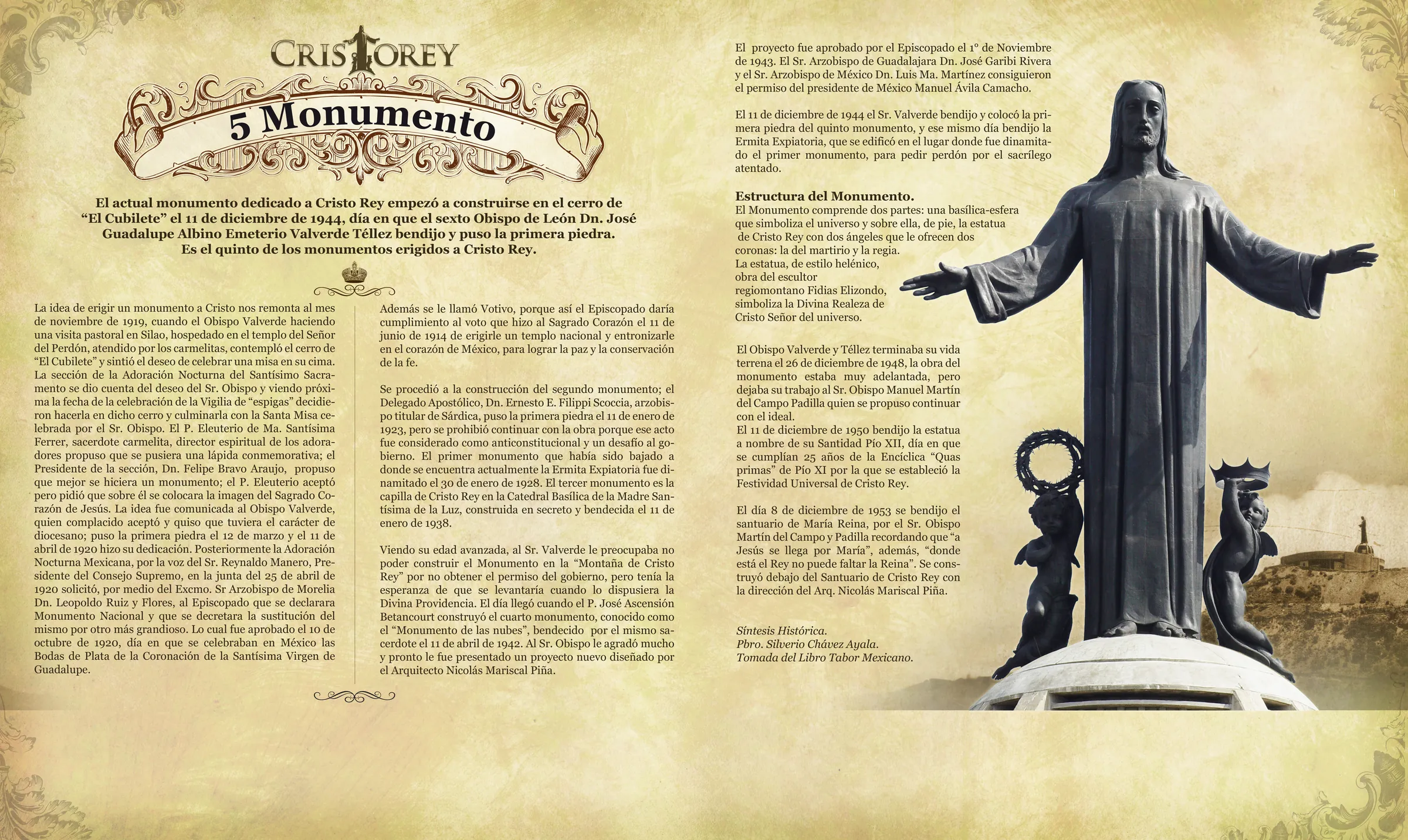
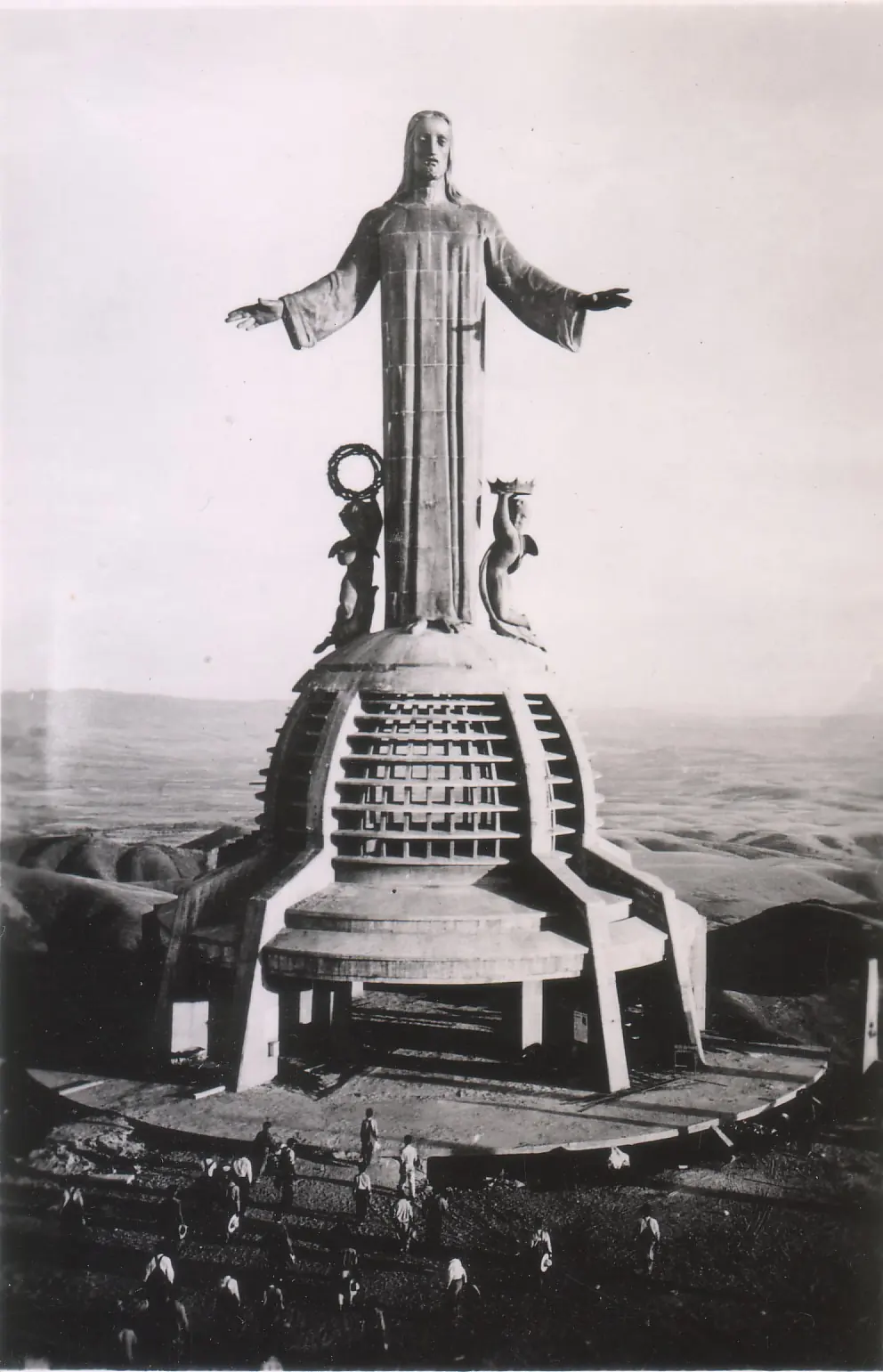
The monument has two parts: a basilica in the shape of a sphere that symbolizes the universe and, standing on it, the statue of Christ the King with two angels offering Him two crowns: the crown of martyrdom and the royal crown. The Hellenic-style statue, by the Monterrey sculptor Fidias Elizondo, symbolizes the divine kingship of Christ, Lord of the universe.
Bishop Valverde y Téllez ended his earthly life on December 26, 1948. The work was well advanced and passed to Bishop Manuel Martín del Campo Padilla, who resolved to carry on the ideal. On December 11, 1950 he blessed the statue in the name of Pope Pius XII, on the 25th anniversary of Pius XI’s encyclical Quas primas, which established the universal feast of Christ the King.
On December 8, 1953, Bishop Martín del Campo y Padilla blessed the shrine of Mary Queen, recalling that “we reach Jesus through Mary” and that “where the King is, the Queen cannot be absent.” It was built beneath the Shrine of Christ the King under the direction of the architect Nicolás Mariscal Piña.
Historical summary by Fr. Silverio Chávez Ayala, from the book Tabor Mexicano.